
Reviewed · KUTNA HORA & OSSUARY EXCURSIONS
Kutna Hora and Bone Chapel Private Day Trip from Prague
Kutná Hora feels like a whole other country, even though it sits just outside Prague. You get a guided circuit through the UNESCO-listed silver town, plus the Sedlec Bone Ossuary and its bone decorations. I especially like the private, air-conditioned transport and the way the day mixes big monuments with small, explain-it-to-you details. I also love that your guide, Eva, clearly enjoys the stories and keeps the pace friendly on foot. One possible drawback: a day like this packs a lot of stops, so if you want nonstop narration during the drive, ask how the guide will balance conversation and breaks.
On the ground, Kutná Hora is all angles, stone, and quiet impact. You’ll walk through places tied to mining wealth, Gothic water engineering, and Baroque reconstructions, then step into a cemetery church where bones became art. It’s not for everyone if you prefer only upbeat sights, but if you can handle the strange and the solemn, this tour hits its mark well.
In This Review
- Key highlights worth planning around
- Why Kutná Hora beats a typical Prague day trip
- Private pickup, comfort, and the role of Eva and her driver
- St. Barbara’s Church: the miner’s cathedral that dominates Kutná Hora
- Rejsek Square Gothic Stone Fountain: water, pipes, and a 1493 story
- St. James Church and the mining-ground problem you can still see
- Jesuit College and the pseudo-bridge effect near St. Barbara’s
- St. John of Nepomuk: Baroque energy in a town of Gothic lines
- Italian Court: where the silver money story becomes real
- Sedlec Cathedral and the baroque-gothic rebuild you won’t expect
- All Saints Cemetery Church and the moment the day turns solemn
- The Sedlec Bone Ossuary: bones arranged into meaning
- Lunch break: a recommended Czech meal, at your own pace
- Price and value: what $355.27 really covers
- Who should book this Kutná Hora private day
- Should you book this Kutná Hora and Bone Chapel trip?
- FAQ
- What is the duration of the Kutná Hora and Bone Chapel tour?
- Is hotel pickup and drop-off included?
- Is the tour private?
- What language is the tour offered in?
- Are mobile tickets provided?
- Are entrance fees included for the main sites?
- What about lunch?
- Can I cancel for a full refund?
Key highlights worth planning around
- UNESCO silver-town focus with St. Barbara’s Church and the medieval streetscape at the center of Kutná Hora’s wealth
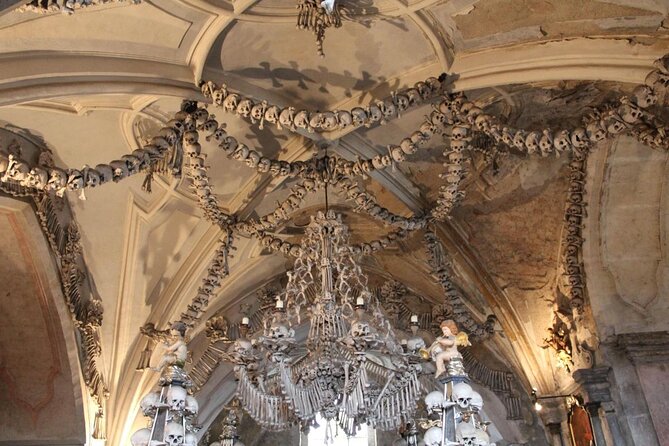
- Sedlec Ossuary after-18th-century craftsmanship, where bones were arranged into recognizable forms by František Rint in 1870
- A tightly guided route that saves you time on navigation and helps you understand what you’re looking at
- Czech lunch on your schedule, with a recommended local restaurant spot so you do not eat generic tourist food
- Eva’s on-the-day hosting style, based on real guest feedback like prompt pickup, great explanations, and warm conversation at lunch
Why Kutná Hora beats a typical Prague day trip
Kutná Hora earns its nickname as the national treasury for a reason. Silver mining made this town rich, and that wealth shaped churches, streets, and monuments that still feel “finished,” not worn out. When you leave Prague for the day, the change is instant, and it stays that way all the way to Sedlec.
The tour also solves a common problem with Czech side trips: you do not just see buildings, you understand why they exist. The route ties together Gothic mining-era ambition, later Baroque rebuilds, and then the Sedlec Ossuary, which turns plague-era tragedy into a very specific kind of spectacle.
If you like structure, you get it. If you like flexibility, you get some, too, because the itinerary is built around walking the key sights without rushing you through every single doorway.
Private pickup, comfort, and the role of Eva and her driver
This is a private experience, so you are not sharing a van full of strangers. Hotel pickup and drop-off are included, and the vehicle has air-conditioning plus bottled water. That matters because the day runs about 7 hours, and you want to start fresh and stay comfortable.
The guide on many days is Eva, and her style shows up in the best feedback: prompt pickup, clear explanations, and a natural flow of conversation during the day. People also praise her lunch recommendation, which is one of those practical details that can make or break a day trip.
One thing to consider, based on less-positive feedback: on at least one occasion, the guide’s attention was split more than expected during the drive, with Czech conversation aimed at the driver rather than at the group. If you really want nonstop English storytelling during transit, it is smart to set that expectation at the start, and keep asking quick questions when you can.
More silver-town chapels and bone churches:
- From Prague: Kutna Hora UNESCO Site Tour with Bone Chapel
★ 4.6 · 1,917 reviews - From Prague: Kutná Hora, St.Barbara’s Church, Sedlec Ossuary
★ 4.3 · 851 reviews - Kutná Hora from Prague – The Bone Church & St. Barbara’s
★ 4.3 · 620 reviews
St. Barbara’s Church: the miner’s cathedral that dominates Kutná Hora
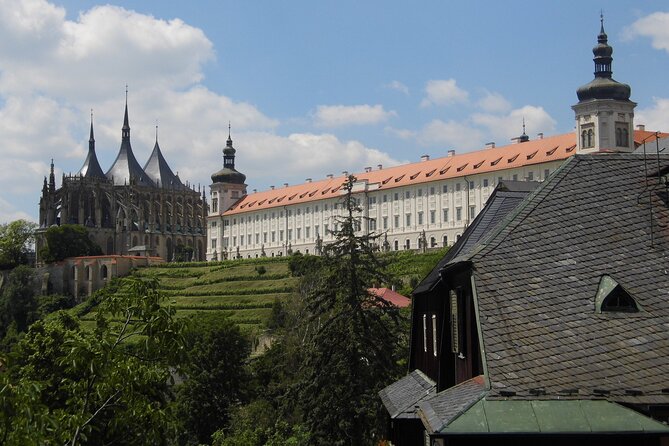
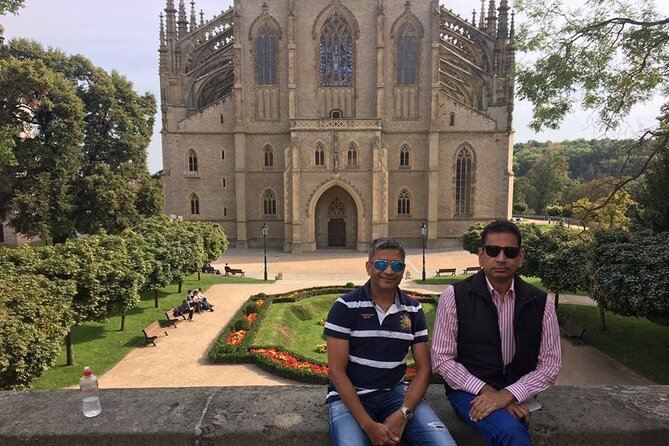
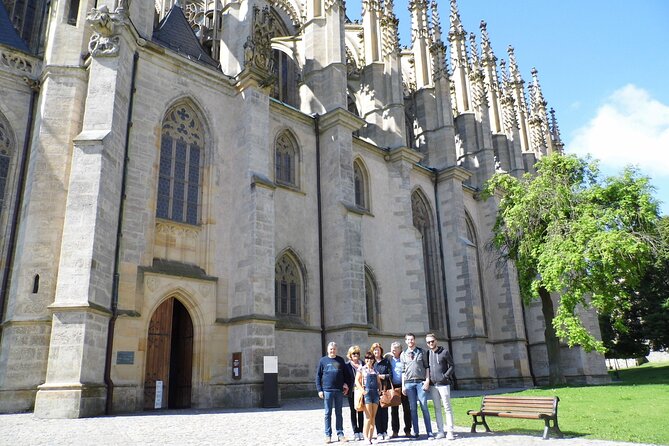
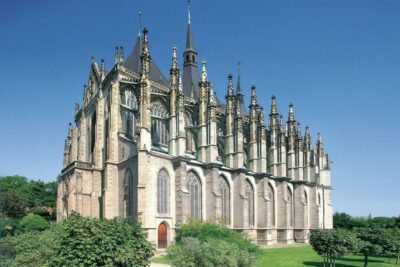
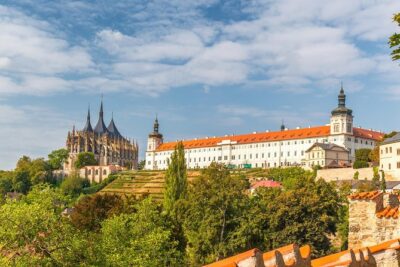
You begin in Kutná Hora with St. Barbara’s Cathedral, the late Gothic landmark tied to the town’s mining identity. St. Barbara is the patron saint of miners, so the church is not just pretty architecture. It’s basically a monument to the work and risk that created the money behind the buildings.
The cathedral’s look is very specific: a three-tent roof and intricate flying buttresses. It’s the kind of building where you can stand in one spot and still notice new details as you shift your angle. Admission is not included, so you will want to plan for the extra ticket cost.
How long you have here is short, about 30 minutes. That’s enough if you keep moving, but it is also long enough to do one calm loop inside, if interior access is your priority. If you’re the type who likes quiet photos, arriving ready to pause and look helps.
Rejsek Square Gothic Stone Fountain: water, pipes, and a 1493 story
Next comes the Gothic Stone Fountain on Rejsek Square, built in 1493 by Matěj Rejsek. The fact that one architect links both this fountain and St. Barbara’s Church adds a fun “local genius” thread to the day.
This fountain is unusual in its size and shape: twelve-sided, about four meters tall, and originally topped with a hexagonal roof. What I like most is the practical backstory. It supplied water when local supply was cut off due to silver mining, with water carried through wooden pipes from a well roughly four kilometers away.
It’s free to visit here, and you’ll get only about 15 minutes. Use that time smart. Pause first to take in the form, then look up for the details, then snap a photo if light is good. If you’re visiting at dusk, this fountain is lit beautifully, so time of day can shift the experience a lot.
Also chalked up in Prague

St. James Church and the mining-ground problem you can still see
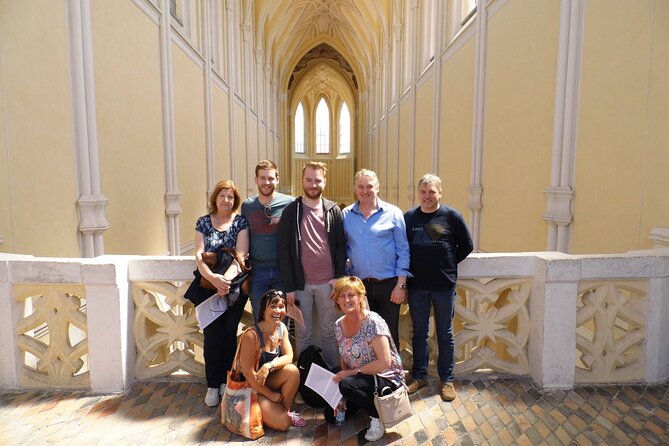
The Church of Saint James is the skyline-definer with its slender tower, about 86 meters tall. Construction began in 1330 and ended in 1420, and this church gives you a vivid lesson in how mining affected everything, even building stability.
You’ll hear a key detail that makes the church memorable: they planned two towers, but the ground was too unstable because of silver mining. The result is an unfinished section of the second tower, still visible on the exterior. That physical “oops” becomes part of the story, and it helps you understand why Kutná Hora’s buildings look the way they do.
Admission is free here, and you’re given around 30 minutes. That’s enough to take a slow exterior look and then decide if you want interior time too. Inside, the mix of Gothic, Renaissance, and Baroque artifacts creates a “timeline in a single stop” feel.
Jesuit College and the pseudo-bridge effect near St. Barbara’s
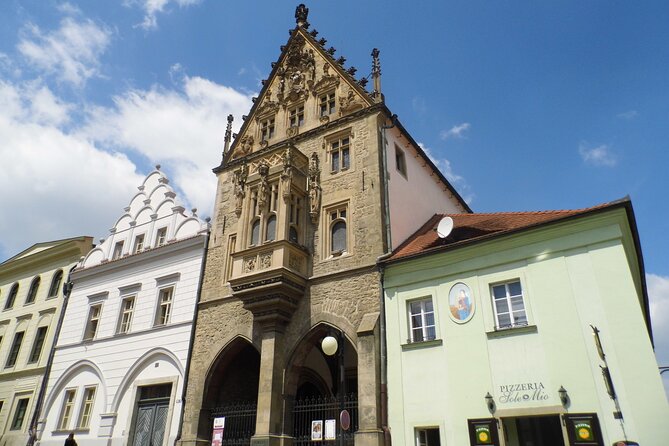
Then you walk toward the Jesuit College, tied to the Counter-Reformation era. The Jesuits arrived in 1626 and focused on converting the town to Catholicism. They also built a college next to St. Barbara’s Church, connecting the two with a covered bridge.
The building itself was constructed between 1667 and the mid-18th century, and it once had three towers. Stability forced the removal of the middle one in the mid-19th century. In front, a man-made terrace and a low wall were created, lined with 13 saint statues. The layout is meant to resemble Prague’s Charles Bridge and Royal Route, so you get a little “Prague echo” while still staying in Kutná Hora.
This stop is short, about 15 minutes, and it’s free. Use the time to notice the space and perspective. It’s one of those places where you appreciate it more once you understand what they were trying to imitate.
If the art gallery is open during your visit, you might want to look for that option, but the timing you’re given is mainly for orientation and exterior context.
St. John of Nepomuk: Baroque energy in a town of Gothic lines
Next is Kostel sv. Jana Nepomuckého, the Church of St. John of Nepomuk. This is the only Baroque church in Kutná Hora, built in the mid-18th century. Part of the construction involved Kilián Ignác Dientzenhofer, a big name in Czech architecture.
On your schedule, you’ll have about 15 minutes. That’s enough to get the “richly decorated interior” effect if you step inside and keep moving. It’s also used for concerts and exhibitions, which tells you the interior is not only for religious function. It can handle performances and public events, so the space feels alive.
Admission is free here. That makes it a very good stop value-wise. If you only have energy for one interior after all the outdoor walking, this is one of the best choices on the route.
Italian Court: where the silver money story becomes real
The Italian Court is one of the quiet plot twists in the day. This is where silver coins were produced during the Middle Ages, during Kutná Hora’s peak wealth.
It connects to a 1300 monetary reform under King Wenceslas II. Florentine bankers were summoned to implement the reform, and the mints that had been scattered across the kingdom were shut down. A central mint was established in Kutná Hora’s Italian Court.
You’ll hear about the switch in coin type: silver Prague groschen replaced thinner, inferior silver coins. The story frames these groschen as among Europe’s strongest currencies at the time. That matters because it links architecture and power. Money flow shaped who could build what, and how long it could last.
This stop has an admission ticket not included, and you’ll have about 30 minutes. If you care about economic history, this is your best match. If you mainly want dramatic buildings, treat it as a short but meaningful “how wealth worked” stop.
Sedlec Cathedral and the baroque-gothic rebuild you won’t expect
After the Kutná Hora center, you move to Sedlec. The Cathedral of the Assumption of Our Lady and St. John the Baptist is a UNESCO World Heritage site, connected to the former Cistercian monastery founded in the early 1300s when Kutná Hora was at its richest.
You’ll get the big historical beats: the monastery and church were burned down by the Hussites in 1421, then not renovated until the early 18th century. The key creative force is Jan Blažej Santini, who rebuilt the monastery into a unique Baroque Gothic style. The cathedral shows that combined look clearly.
Admission is not included here, and you have about 30 minutes. This is one of the best places to slow down. The style blend is the point. You’ll want time to notice how Gothic bones and Baroque shapes work together rather than feeling like two different eras fighting.
You’ll also hear what happened after religion reform. In 1783, the Cistercian monastery closed as part of emperor Joseph II religious reforms. In 1812, a tobacco factory was established there, and it is still run today by Philip Morris. That “history keeps changing jobs” detail is surprisingly grounding.
All Saints Cemetery Church and the moment the day turns solemn
Then you’re at the Cemetery Church of All Saints, the Gothic structure dating from the end of the 13th century and rebuilt in Baroque style in 1698. It sits in the middle of a cemetery, so the setting does part of the work even before you go inside.
Admission is not included at this stage, and the time you’re given is short, about 15 minutes. I recommend using those minutes to take in the setting. It changes how you experience the next stop, which is the reason many people come here.
If you do not like grim themes, this is where you decide. The ossuary is not just a novelty. It’s based on real deaths, including plague.
The Sedlec Bone Ossuary: bones arranged into meaning
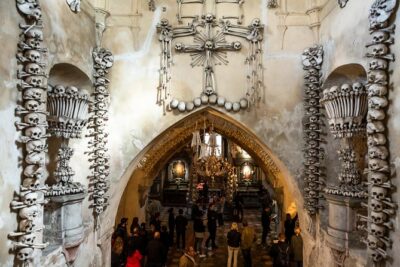
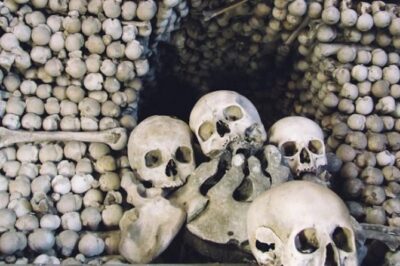
The Sedlec Ossuary is the signature stop, and it’s one you should approach with a calm mind. It’s in the underground chapel of the Church of All Saints, and it contains the bones of about 40,000 people.
The story is clear and specific. About 40,000 people died of the plague in 1318 and during the Hussite wars in the 15th century. They were originally buried in the cemetery. When the cemetery closed at the end of the 15th century, the exhumed bones were moved to the chapel and arranged into pyramids.
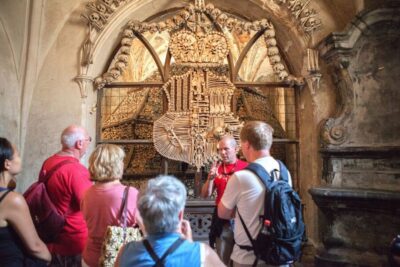
Then comes the part that turns the ossuary into a recognizable attraction. In 1870, František Rint arranged the bones and skulls into decorative forms. You’ll see elements like bells, the Schwarzenberg coat-of-arms, and a chandelier.
Admission is not included here, with a listed fee of €9 per person. Your time is about 30 minutes, which is enough to take it in and then step out to reset your brain.
Practical tip for your mood: keep your phone mostly for a few photos early, then switch to just looking. The effect gets stronger once you stop trying to capture it and start noticing how the shapes read together.
Lunch break: a recommended Czech meal, at your own pace
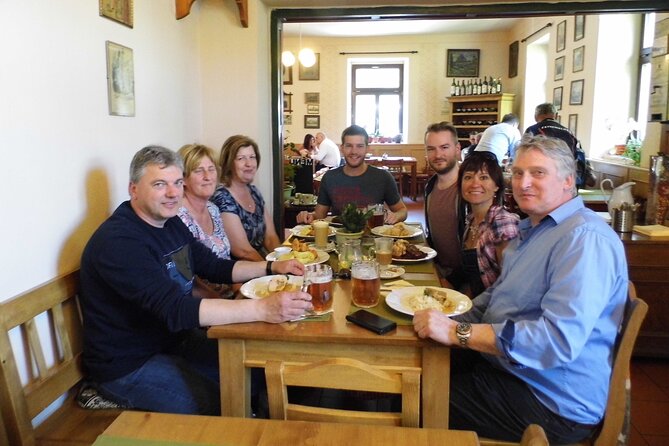
Lunch is optional, on your own expense, and this is where I think the tour earns its keep. You’re guided to a local Czech restaurant in Kutná Hora’s center, with guidance on what to order and how to make it feel like a real day, not a bus stop.
Based on guest feedback, the lunch recommendation lands well. That matters more than it sounds. A good lunch keeps the day human, and it gives you a chance to chat with the guide.
Time-wise, the tour still moves, but the lunch break is part of the experience flow. If you’re hungry, plan to eat without rushing. You’ll have walking ahead, especially once you return toward Prague afterward.
Price and value: what $355.27 really covers
This trip costs $355.27 per person for a private day around 7 hours. That price is not just transport. You’re getting hotel pickup and drop-off, a professional guide, an air-conditioned vehicle, and bottled water.
The catch is admissions. Several key sites are listed as extra, with fees spelled out for some stops:
- St. Barbara Cathedral: €10
- Sedlec Ossuary: €9
- Sedlec Cathedral: €9
- Church of St. James: €4
Other stops are free, including Rejsek Square’s fountain and several churches, but you should still expect to pay at the major interiors.
So, is it worth it? For me, it comes down to your priorities. If you want to make the day smooth, with no map stress, and you care about understanding what you’re seeing, the guide and private transport justify the higher cost compared with public options. If you only want photos and you’re comfortable reading on your own, you might see less value in the guide portion.
Still, the Sedlec Ossuary and the UNESCO context are exactly the kind of sights where explanations improve the experience fast.
Who should book this Kutná Hora private day
This tour is a great fit if you:
- want a one-day UNESCO hit outside Prague
- like guided context for Gothic and Baroque architecture
- prefer private comfort with pickup and drop-off
- can handle a solemn theme like the bone ossuary
It might not be your best match if you hate historical sites that include plague-era tragedy, or if you want long, unstructured time at each building. The schedule is focused, and you will be moving.
For couples, small groups, or anyone visiting Prague with limited time, this is a strong way to get a real Czech town day without turning it into a logisitics project.
Should you book this Kutná Hora and Bone Chapel trip?
I’d book it if you want a well-shaped day with the major sights connected by meaning, not just sightseeing. The private transport, Eva’s hosting style, and the focus on UNESCO and the Sedlec bone story make this a practical and memorable use of a day outside Prague.
I’d think twice if you’re extremely sensitive to grim themes, or if you require constant English narration during every minute of driving. In that case, message the provider before you go and set your expectation that you want the guide to talk throughout transit.
If you’re flexible and curious, this is one of those day trips that turns Prague from a “city break” into a fuller Czech story.
FAQ
What is the duration of the Kutná Hora and Bone Chapel tour?
The tour runs for about 7 hours.
Is hotel pickup and drop-off included?
Yes. Pickup and drop-off are included from your hotel or Airbnb, and the meeting point is listed as Prague Marriott Hotel.
Is the tour private?
Yes. It is a private tour, and only your group participates.
What language is the tour offered in?
The tour is offered in English.
Are mobile tickets provided?
Yes. A mobile ticket is included.
Are entrance fees included for the main sites?
No. Entrance fees are not included for several sites, including St. Barbara Cathedral (€10 per person), the Sedlec Ossuary (€9 per person), the Sedlec Cathedral (€9 per person), and the Church of St. James (€4 per person).
What about lunch?
Lunch is at your own expense. The tour includes a lunch stop at a recommended Czech restaurant.
Can I cancel for a full refund?
Yes, you can cancel up to 24 hours in advance for a full refund. If you cancel less than 24 hours before the start time, the amount paid is not refunded.
Newly posted under the arches of Prague

Kutna Hora & Ossuary Excursions, compared.
Kutná Hora, St.Barbara’s Church, Sedlec Ossuary
Read our review →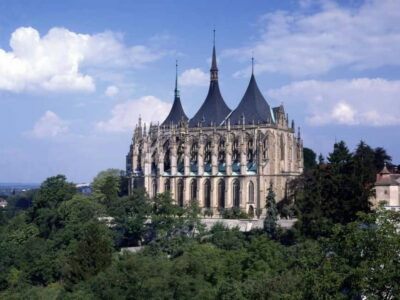
Kutná Hora from Prague – The Bone Church & St. Barbara’s
Read our review →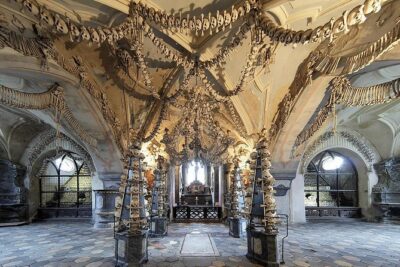
Kutna Hora Day Tour Including Sedlec Ossuary from Prague
Read our review →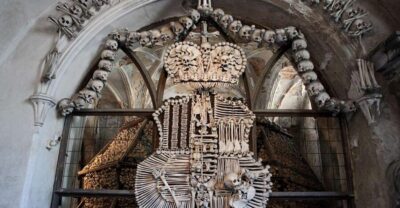
Half Day Trip to Kutna Hora and Bone Church from Prague
Read our review →Browse the lists this tour appears in