Reviewed · TOURS
Prague: Mozart, Dvořák, Czech Folk Tour with a Guitarist
Prague sounds different when a guitarist is leading. This 90-minute walk turns major landmarks into music cues, with live Czech ballads and protest songs performed on guitar, plus classical excerpts that connect directly to the city’s story. I also love the way you hear Mozart, Smetana, and Dvořák tied to places where their cultural momentum made sense, not as random trivia. One thing to consider: it is a walking tour outdoors for most of the time, so dress for weather, because the guide may adjust with an indoor song break if conditions turn.
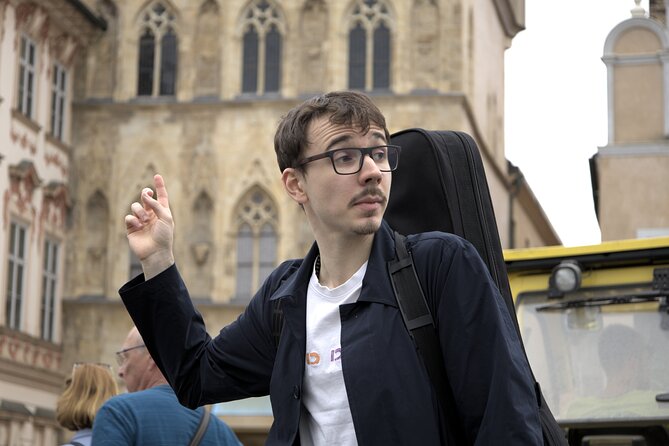
I joined my planning with one goal, find something more personal than the usual Prague checklist. This tour is run by Marek Prague Guide, and it uses music to do the teaching, not long lectures. You finish at Lavička Václava Havla, so the closing note lands where modern Czech identity meets art and politics in the same breath.
If you like music and you don’t mind moving at a steady walking pace, this is a smart use of time in a city that can otherwise feel like one long photo stop after another.
In This Review
- Key things I’d plan around
- A One-Of-A-Kind Prague Music Walk, with Live Guitar in the Lead
- Meeting Near the Estates Theatre and Getting Oriented Fast
- Estates Theatre: Where the Tour Turns Into a Performance
- Old Town Square: The Famous View, but with Meaning Attached
- Rudolfinum and a Real “Concert Feeling” on the Street
- Charles Bridge: Photo Stop, but Still Part of the Story
- Prague Lesser Town: Music Meets the Softer Slope of the City
- The Lennon Wall: Protest Art with Songs That Explain the Why
- Ending at Lavička Václava Havla: A Closing Note That Feels Personal
- Mozart, Smetana, and Dvořák, plus the Songs that Carried a Nation
- Pricing and Value: Why $34 Can Work If Music Is Your Priority
- Weather, Pacing, and What You Can Do to Enjoy It Fully
- Who Should Book This Prague Mozart and Czech Folk Guitar Tour
- Should You Book It? My Take
- FAQ
- Where is the meeting point?
- How long is the tour?
- What languages are offered?
- Is live music part of the experience?
- Are food and drinks included?
- Is the tour wheelchair accessible?
Key things I’d plan around
- Live guitar throughout with Czech ballads and protest songs that fit the street corners you’re standing on
- Mozart, Smetana, and Dvořák in context, with excerpts played as you reach key buildings
- Czech history tied to what you hear, including Václav Havel, the Velvet Revolution, and the Prague Spring
- A short, focused route (about 90 minutes) through Estates Theatre, Rudolfinum, Charles Bridge, and the Lennon Wall
- A take-home cultural map with musical tips to keep exploring after the tour
- High question tolerance from Marek, with real patience if you want to ask follow-ups
A One-Of-A-Kind Prague Music Walk, with Live Guitar in the Lead
Most Prague tours throw facts at you. This one does the opposite. Music first. Then the story clicks into place.
The big idea is simple: your guide performs Czech songs live on guitar, and the city becomes the stage. You’ll sing along in your head more than out loud, but that’s fine. You get the emotional meaning before the historical details. And since the tour includes excerpts from big classical names, you’re not only hearing Czech folk traditions, you’re also hearing how that tradition talks back to famous European composers.
I especially like the structure. It’s not one museum stop after another. It’s a walking sequence where each landmark feels like it has a soundtrack, and the guide keeps the momentum moving so your attention stays on what you’re seeing and hearing right now.
Meeting Near the Estates Theatre and Getting Oriented Fast
You meet behind the Estates Theatre. That area is a natural launch point because it puts you right next to a cluster of architectural and cultural landmarks, and it makes the first minutes efficient.
The tour’s starting point is listed as Charles University Rectorate, so you’ll likely get oriented in that general start zone. Either way, arrive a bit early, because the first stop sets the tone. You’ll want to be settled before the guitar starts and the guide begins linking the music to Czech identity.
This is not a grab-what-you-can tour. It’s a “listen, then walk” tour. That means good shoes help, and so does paying attention when the guide cues the classical excerpts that will come later.
Also chalked up in Prague
- Prague: 50-Minute Sightseeing Evening Cruise
★ 4.2 · 33,780 reviews - Prague: Medieval Dinner with Unlimited Drinks
★ 4.4 · 19,847 reviews - Prague: Skip-the-line Castle Ticket and Optional AudioGuide
★ 4.3 · 11,121 reviews
Estates Theatre: Where the Tour Turns Into a Performance
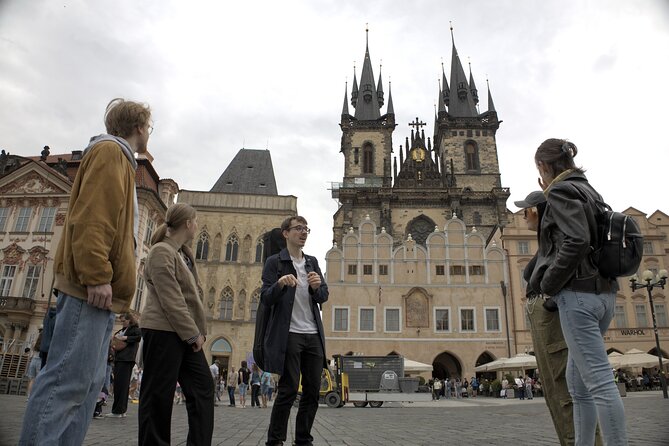
The first major stop is the Estates Theatre, with a guided look around for about 10 minutes. This isn’t just a quick exterior check. You’re getting the sense of a performance culture taking root in Prague, and you’re also getting the emotional context for why later music matters.
What makes this stop work is the method. The guide doesn’t treat the building like a static photo background. Instead, you experience it as a place where music once had a role beyond entertainment, almost like public life had a soundtrack.
A small practical note: since the early segment is quick, keep your phone handy but don’t start filming everything immediately. Let the guide get rolling, then capture the moments that match the music you just heard.
Old Town Square: The Famous View, but with Meaning Attached
Next comes Old Town Square for around 10 minutes. This is the kind of place many visitors see fast, then move on. Here, you get a different assignment: treat the square as a social space, not only a landmark.
The value of this stop is the timing. You hear part of the story, then you walk forward while the ideas are still fresh. That’s key in Prague, where you can easily lose the thread when streets all look charming and historic. The guide helps you keep a through-line, especially as the tour moves from classical references toward political and cultural ones.
If you’ve been in Prague long enough to feel museum fatigue, Old Town Square can still feel worth it, because you’re not only looking at sights. You’re checking your understanding against what you hear next.
A courtyard deeper into Prague:

Rudolfinum and a Real “Concert Feeling” on the Street
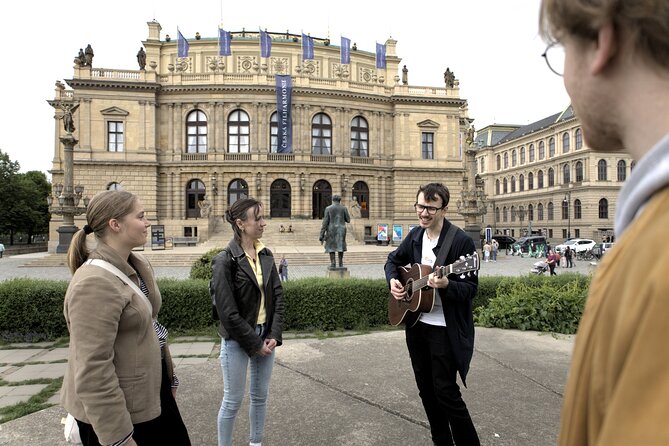
Rudolfinum is a highlight, with roughly 15 minutes for guided sightseeing and a concert moment. This stop is where the tour shifts from live guitar storytelling into classical excerpts that play in the space around you, supported by speakers.
You’ll hear excerpts tied to Mozart, plus Smetana’s Vltava and Dvořák’s music themes, all layered onto the idea of Czech national identity. The result feels like you’re standing between a lecture hall and a concert hall, except you’re walking and taking in the architecture.
One unique detail you shouldn’t miss: the tour includes mention of Dvořák’s New World Symphony, including the connection that the symphony traveled to the Moon with Neil Armstrong. That kind of fact lands differently when you hear it while you’re near a venue that feels built for music and attention.
Practical advice: at Rudolfinum, the sound moments matter. Keep your group position steady and try not to wander off for photos until the guide finishes the musical cue. You’ll hear more that way.
Charles Bridge: Photo Stop, but Still Part of the Story
Charles Bridge is a photo stop of about 10 minutes. Yes, you’ll take photos. Prague’s most famous bridges do not ignore the camera.
But you should know this stop has a job. It’s a visual pause that keeps the tour connected. You move from a building-centered music stop to an open-air city corridor, and you get a breather without losing the story flow.
If crowds are heavy, don’t fight for the perfect angle. Take a solid shot, then step aside when the guide asks you to listen. This is especially important because the tour uses sound cues, and it’s easier to catch the significance when you’re not constantly turning your head away.
Prague Lesser Town: Music Meets the Softer Slope of the City
Prague Lesser Town is where the tour slows into something more intimate, with about 15 minutes for guided sightseeing and another concert moment. This segment is useful if you want Prague to feel less like a postcard and more like a lived-in city.
The guide uses this shift in scenery to talk about how music shaped Czech identity. You’ll connect the dots between famous classical composers and the music that carried Czech voices through tougher years, including underground protest music.
It’s also a good spot to notice how Prague’s neighborhoods can feel different within a short distance. The tour doesn’t just name things. It helps you feel why people cared about songs, not just buildings.
The Lennon Wall: Protest Art with Songs That Explain the Why
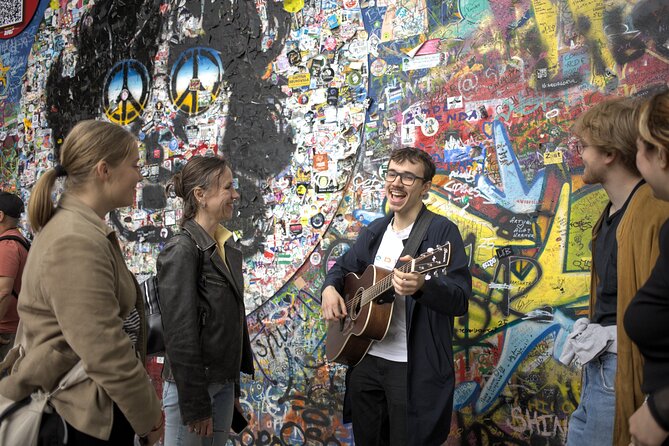
The John Lennon Wall is one of the most recognizable landmarks in Prague, and this tour gives it about 15 minutes for guided sightseeing and concert moments.
This stop is where music and politics stop being separate topics. You’ll link what you see on the wall with stories around Václav Havel, the Velvet Revolution, and the Prague Spring, and you’ll hear Czech ballads and protest songs that help explain why art was treated like a public statement.
The Lennon Wall works best when you treat it as a message board in human form, not only a colorful wall for photos. The guide’s musical cues make that shift happen fast.
Also, because it’s a popular site, manage expectations. You’ll likely have to share space. Focus on listening when the guide cues the next musical excerpt or live performance, then enjoy the visuals around you after.
Ending at Lavička Václava Havla: A Closing Note That Feels Personal
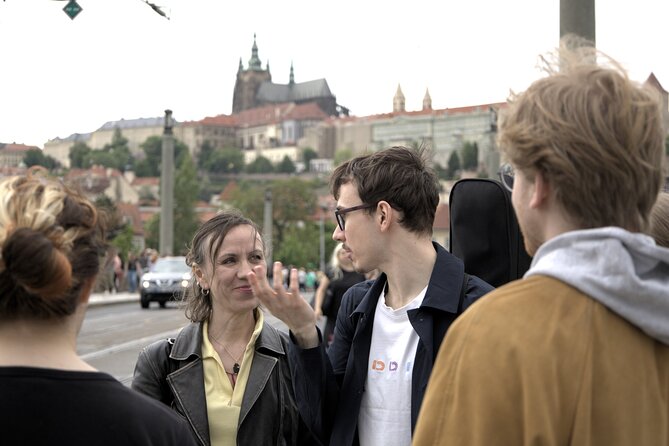
You finish at Lavička Václava Havla. That’s a smart ending, because it pulls the story back to the modern era and keeps the tour grounded in Czech voices.
It feels appropriate to end a music-based tour at a place named for a person tied to the political shifts the tour discusses. The guide’s job here is to connect themes, not to add new facts you’ll have to memorize. When the walk ends, you should feel like you understand why music mattered in Prague, not just that it existed.
If you’re the type who likes to keep momentum going, this ending location also gives you a natural starting point for your next stop on foot.
Mozart, Smetana, and Dvořák, plus the Songs that Carried a Nation
Here’s what I think makes the music choices more than a marketing hook.
This tour doesn’t treat classical names like museum objects. Instead, it uses them as anchors. You’ll hear excerpts connected to major works, including Don Giovanni, Vltava, and Dvořák’s New World Symphony. Then the guide threads those musical ideas into Czech cultural identity, including the music that grew during the communist era and the protest songs that carried meaning when open speech was risky.
That comparison matters. It shows you a spectrum: from the formal world of celebrated composers to the street-level urgency of protest culture. Prague, after all, is a city where you can stand in one place and feel multiple eras talking to each other.
The moon connection is the kind of detail that makes the classical portion memorable. But the bigger win is how the tour keeps the focus on Czech identity, not only on famous composers. If you’re curious about how art becomes a form of resilience, you’ll enjoy this approach.
Pricing and Value: Why $34 Can Work If Music Is Your Priority
The price is $34 per person for 90 minutes. For Prague, that’s not just a “cheap walking tour” price. It reflects real value because the experience includes:
- Live music performance by the guide
- A professional licensed tour guide
- A Reduta Jazz Club discount
- A free cultural map with musical tips to keep you exploring after
If you only care about architecture and you want a pure sight-based route, you may feel the cost is higher than a basic walking tour. But if music is part of how you travel, this is the kind of deal that can make your whole day better. The tour is short enough to fit into a packed itinerary, and the sound element does the heavy lifting, so you don’t need extra tickets or reservations to get the “special” feeling.
Also, you don’t have to add food to the cost. Food and drinks are not included, but that’s normal for walking tours. Use this as a chance to plan a meal afterward with recommendations you might get from your guide.
Weather, Pacing, and What You Can Do to Enjoy It Fully
The guide’s approach is flexible. One practical example: if weather pushes you inside, the tour may shift and you could get extra song time at a cafe, including additional songs performed and sung. That matters because Prague weather can change fast, and you don’t want your tour to feel cut short.
You should also plan for pacing. It’s 90 minutes, with multiple quick segments. That’s ideal if you like movement and hate being stuck in one spot for too long. It’s less ideal if you want long, slow museum-style time with frequent breaks.
Bring comfortable shoes, keep a light layer handy, and if you have questions, ask them. Marek is described as patient, and that kind of responsiveness tends to make the tour better, not worse.
Who Should Book This Prague Mozart and Czech Folk Guitar Tour
This is a great fit if you are:
- A music lover who likes hearing the story behind the songs
- Curious about how Czech history links to art and public life
- Traveling with limited time and want a focused route with personality
- The type who will use a cultural map afterward to build your next hours in Prague
It may not be the best choice if you:
- Want a strictly architecture-heavy tour with minimal sound
- Get impatient with a walking pace and short stop durations
- Prefer tours where you read signage and self-navigate without guidance
Should You Book It? My Take
Yes, I’d book it if you want Prague to feel less like a checklist and more like a soundtrack you can walk through.
The strongest reason is the combination of live Czech guitar and clear cultural storytelling. Many tours claim to be unique, then turn into a standard route with a funny guide voice. Here, the music is the engine, and the guide uses it to connect classical composers with Czech folk and protest traditions.
Second, the experience is short. Ninety minutes means you can fit it early in your trip to get oriented, or late in your trip as a way to make the city feel more personal.
If you’re even a little interested in Mozart, Smetana, or Dvořák, and you like the idea of hearing them linked to Czech identity and political history, this is a good use of your time in Prague.
FAQ
Where is the meeting point?
Meet behind the Estates Theatre.
How long is the tour?
The tour lasts 90 minutes.
What languages are offered?
The tour is available in English and Spanish.
Is live music part of the experience?
Yes. Your guide performs live music on guitar during the tour.
Are food and drinks included?
No. Food and drinks are not included.
Is the tour wheelchair accessible?
Yes, the tour is wheelchair accessible.
Newly posted under the arches of Prague


Tours, compared.
Castle Tour with Local Guide and Entry Ticket
Read our review →
Oldtown, Medieval Underground & Dungeon History Tour
Read our review →
Prague Castle 2.5-Hour Tour Including Admission Ticket
Read our review →
3-Hour Walking Tour of Old Town & Prague Castle
Read our review →
3-Hour Old Town and Prague Castle Tour in German
Read our review →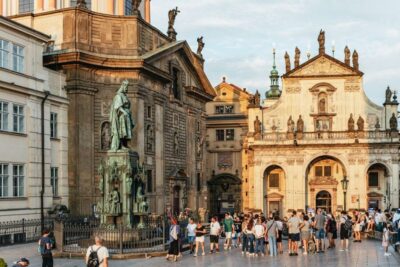
Ghost Walking Tour Where Legends Come To Life
Read our review →
Ghosts, Legends, Medieval Underground & Dungeon Tour
Read our review →