Reviewed · TOURS
Prague Tour in Spanish
Prague has a way of talking back. This Prague tour in Spanish uses a local guide to connect the city’s legends to major turning points, from Austro-Hungarian rule to the Velvet Revolution. I especially like the focus on how Prague’s streets reflect Czech identity, and the way stories help you understand the city without a big lecture. One thing to keep in mind: it is a walking experience, so you’ll want solid shoes even when the weather is fine.
You’ll get a professional, certified guide speaking Spanish, and that matters because the details are in the storytelling, not in a list of dates. The tour runs 150 minutes, long enough to get oriented and understand the “why” behind the city, short enough that you can still enjoy the rest of your day. If you only want museum-style stops or you prefer a self-guided route, this may feel more like an ideas-first city walk than a “see every landmark” plan.
In This Review
- Key highlights worth planning around
- Why this 150-minute Prague tour is a smart use of your time
- Meeting point, getting there, and how weather affects the experience
- The guide makes the difference: Spanish storytelling that stays practical
- Austro-Hungarian rule to Czech nationalism: the core story you’ll hear on the streets
- World wars and the communist period: how the city changes without changing shape
- Velvet Revolution to capital status: the end of one era and the start of another
- Legends, Vltava river perspective, and the hundred spires feeling
- What you get, what you pay extra for, and what it means for your budget
- Who should book this Prague Tour in Spanish
- Quick booking checklist before you go
- Should you book the Prague Tour in Spanish?
- FAQ
- What language is the Prague Tour in Spanish offered in?
- How long is the tour?
- How much does it cost per person?
- Where do I meet the guide?
- Is the tour canceled if it rains?
- Is transport included in the price?
- Are entrance fees included?
- Is the tour wheelchair accessible?
- What is the cancellation policy?
Key highlights worth planning around
- Local Spanish guide, with certified expertise and story-first pacing
- History in context, from Austro-Hungarian domination through nationalism and major 20th-century shifts
- Legends and Czech culture, so Prague feels more than pretty photos
- Vltava river setting, part of the city’s identity and how it’s told
- 150 minutes at a sweet spot, enough to connect eras without draining your day
Why this 150-minute Prague tour is a smart use of your time
At 150 minutes, this is one of those rare tours that gives you real context without stealing your whole afternoon. Prague can look like one postcard after another, but the story behind the “hundred spires” feeling is what makes it stick. This tour is built to do that through a guided walk and narrative, so you leave with a framework you can reuse while wandering on your own.
Value also matters. At $24 per person, you’re mostly paying for the guide and the storytelling engine, not for transport or entrance tickets. That can be a good deal if you want the city explained and you’re planning to explore further independently afterward.
The format is ideal if you:
- are visiting for the first time and want fast orientation
- enjoy hearing how politics and culture show up in real streets
- speak Spanish (or you want to practice it in a practical, friendly way)
Meeting point, getting there, and how weather affects the experience
You’ll meet a guide who’s easy to spot: a person carrying a navy blue umbrella and/or a sign with the Turistico logo. It’s a small detail, but it saves time when you’re in a big city and trying not to waste your first minutes of the walk.
This is rain or shine. That means you should treat it like a real outdoor walk. Wear comfortable shoes, even if you think you’ll be fine because the forecast looks calm. Prague streets can get slippery, and you do not want to spend the tour thinking about your footing instead of the stories.
The tour is also wheelchair accessible, which is a big practical plus if you need step-free movement.
If you’re tight on mobility or you’re traveling with someone who needs frequent breaks, it’s worth knowing that “walking tour” still means you’ll be on your feet through most of the 150 minutes.
Also chalked up in Prague
- Prague: 50-Minute Sightseeing Evening Cruise
★ 4.2 · 33,780 reviews - Prague: Medieval Dinner with Unlimited Drinks
★ 4.4 · 19,847 reviews - Prague: Skip-the-line Castle Ticket and Optional AudioGuide
★ 4.3 · 11,121 reviews
The guide makes the difference: Spanish storytelling that stays practical
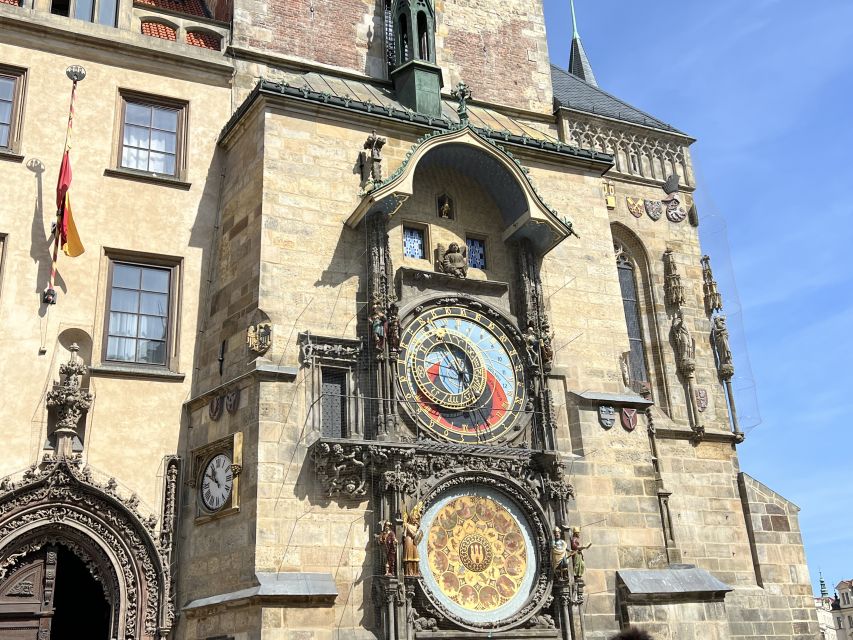
A guided tour lives or dies on clarity and pacing. This one is led by a professional and certified guide, and that shows in the way the story is structured around major eras. Even better, the tour runs in Spanish live, so the information lands in the language you’ll be thinking in, not translated later in your head.
One review highlighted quick, attentive care connected to the guide María. That kind of responsiveness matters on a walking tour, because questions come up in the moment. You want to ask without feeling rushed.
What I like about a story-led guide is that you do not just memorize events. You learn how those events changed daily life and Czech cultural momentum. That’s what turns Prague from a scenic city into a city you understand.
Austro-Hungarian rule to Czech nationalism: the core story you’ll hear on the streets
The tour focuses on Prague’s transformation under the Austro-Hungarian Empire, and then how the city became a center for Czech nationalism and cultural and intellectual activity. This is the part that helps you stop seeing history as a timeline and start seeing it as a pressure system shaping language, identity, and public life.
Here’s what this usually means as you walk:
- You hear how imperial power influenced local society.
- You connect that to cultural expression and national awakening.
- You understand why Prague’s intellectual life mattered, not just who ruled it.
It’s a useful approach because Prague’s architecture and street layout can feel “staged,” like everything was always dramatic. The guide’s explanation adds the missing layer: many elements you see today reflect what people wanted to preserve, promote, or reclaim during different political periods.
If you like political history but get bored by textbook pacing, this is a good style. The stories are aimed at making sense of Prague as a living city, not as a set of isolated facts.
A courtyard deeper into Prague:

World wars and the communist period: how the city changes without changing shape
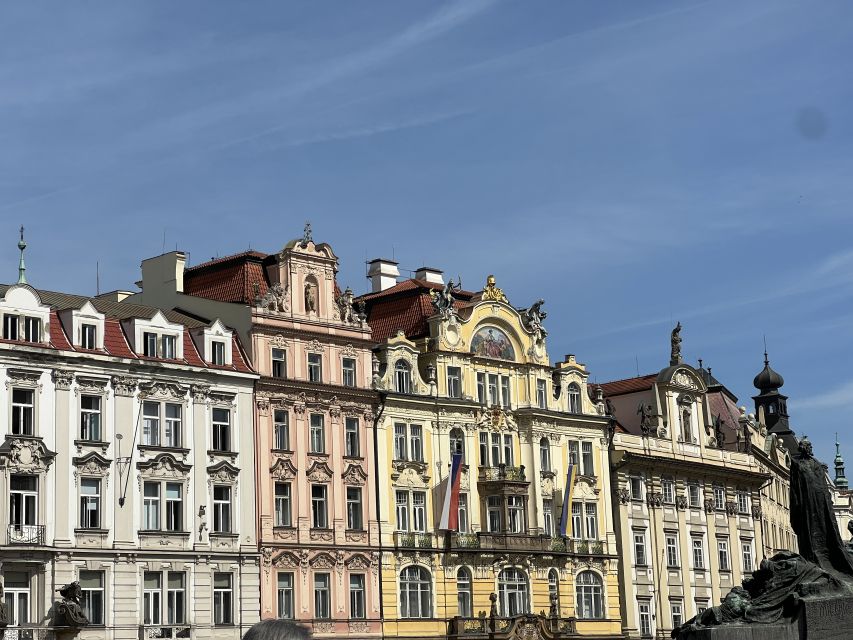
The tour also covers how World wars affected Prague, then what happened through the communist period, including how the city emerged afterward. Even without naming exact buildings, the guided narrative helps you read the city as a place shaped by interruption and control.
That matters, because it answers questions you might have while sightseeing:
- Why does the city feel layered, with different “moods” close together?
- Why do certain themes repeat in stories about national identity?
- Why do people talk about resilience and reinvention?
In many cities, 20th-century history can feel heavy and distant. Here, the goal is practical: to help you connect those shifts to what you see and what locals remember. That gives meaning to Prague beyond the view from a viewpoint.
There is also an important emotional beat in this section. Prague is not presented as only surviving. It’s presented as adapting, and that makes the later part about the post-communist era more powerful.
Velvet Revolution to capital status: the end of one era and the start of another
A key final arc is the Velvet Revolution, and how Prague moved forward from the communist period. The tour explains how Prague became the capital of the city, and why that role matters in the Czech story.
If you’re wondering why Prague gets treated differently than other Czech cities, this is where you get a clearer answer. Capital status is not just a map detail. It changes where institutions gather, where political energy concentrates, and how culture gets funded and broadcast.
I like that the tour doesn’t treat the Velvet Revolution as a single dramatic moment. It frames it as a turning point that connects the past to the present, so the city’s current vitality feels earned rather than accidental.
By the time you reach this part of the walk, Prague stops feeling like a museum of styles and starts feeling like a city that keeps rewriting its identity.
Legends, Vltava river perspective, and the hundred spires feeling
Prague is described as being spotted by the Vltava river, and that geographic detail matters because the river is part of how the city grew, connected, and showed itself to the world. You’ll also hear legends and fascinating stories tied to Czech culture.
That “legend” piece is not there just for fun. It’s a way to understand how people talk about their city when official history is complicated. Legends often fill in emotional meaning: what locals want to remember, what they hope will return, and what they warn you about.
And yes, Prague’s “hundred spires” vibe comes up in the tour framing. Even if you don’t count them, you get why the spires matter: they’re visual proof of ambition and continuity, especially in a city that has gone through political changes.
By the end, it’s easy to understand the playful idea that Prague streets feel alive. The guide’s job is to help you notice why the city seems to speak, not just look pretty.
What you get, what you pay extra for, and what it means for your budget
Included in the price:
- Professional and certified tour guide
Not included:
- transport
- entrance fees
At $24 per person, this is a strong value if you plan to do your own sightseeing after the walk and you’re not relying on paid entry points during the tour. Since entrances are not included, you should treat this as a context-building experience first. If you want a tour that also bundles major ticketed sights, you’ll likely need a different option.
For budget planning, think like this:
- You pay for interpretation and local storytelling.
- You handle your own transit and any museum or tower tickets later.
That setup is often better than it sounds. You keep flexibility. You can choose what you want to see next based on what the guide made you care about.
Who should book this Prague Tour in Spanish
I’d recommend it if you:
- want a guided city walk focused on history and Czech cultural identity
- prefer live explanation in Spanish
- like stories about how major events shaped everyday life, not just famous landmarks
- want a 150-minute plan that works even if your schedule is tight
I’d consider a different type of tour if:
- you want mostly photo stops with minimal narrative
- you need transport included or want a fully ticketed route
- Spanish is not an option and you were hoping for another language (the tour data only confirms Spanish)
If you fall somewhere in the middle, this tour still works well as your first guided layer. Then you can roam with better questions.
Quick booking checklist before you go
Here’s what to lock in before your time window:
- Bring comfortable shoes for a rain-or-shine walk
- Plan to cover your own transport to the meeting area
- Expect live Spanish guidance for the full experience length
- Look for the guide with the navy blue umbrella or the Turistico logo sign
- Wear something you can move in, since this is a walk through central Prague
Should you book the Prague Tour in Spanish?
Yes, if your goal is to understand Prague, not just see it. This is a value-priced 150-minute walk that gives you a coherent story: Austro-Hungarian domination, Czech nationalism, the shocks of the World wars, the communist period, and the Velvet Revolution, all tied to why Prague became the capital.
The strongest reason to book is the story format delivered by a certified Spanish guide, with clear praise for guide María and the attention you get in real time. If you like the idea of hearing legends and Czech culture woven into the big historical shifts, you’ll get more from Prague afterward because you’ll have the context in your head while you explore.
If you tell me your travel dates and whether you speak Spanish comfortably, I can also suggest how to pair this with the next best activity in Prague for a smooth day plan.
FAQ
What language is the Prague Tour in Spanish offered in?
The live tour guide speaks Spanish.
How long is the tour?
The duration is 150 minutes.
How much does it cost per person?
The price is $24 per person.
Where do I meet the guide?
Look for a person carrying a navy blue umbrella and/or a sign with the Turistico logo.
Is the tour canceled if it rains?
No. The tour takes place rain or shine.
Is transport included in the price?
No, transport is not included.
Are entrance fees included?
No, entrance fees are not included.
Is the tour wheelchair accessible?
Yes, it is wheelchair accessible.
What is the cancellation policy?
You can cancel up to 24 hours in advance for a full refund.
Newly posted under the arches of Prague


Tours, compared.
Castle Tour with Local Guide and Entry Ticket
Read our review →
Oldtown, Medieval Underground & Dungeon History Tour
Read our review →
Prague Castle 2.5-Hour Tour Including Admission Ticket
Read our review →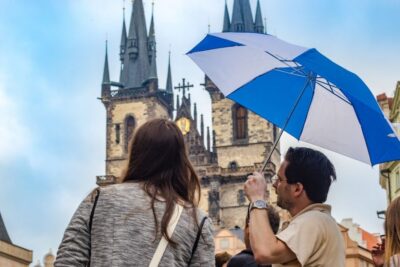
3-Hour Walking Tour of Old Town & Prague Castle
Read our review →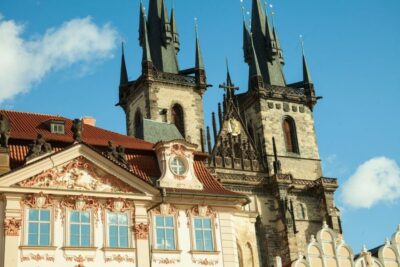
3-Hour Old Town and Prague Castle Tour in German
Read our review →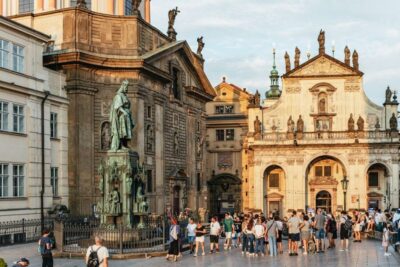
Ghost Walking Tour Where Legends Come To Life
Read our review →
Ghosts, Legends, Medieval Underground & Dungeon Tour
Read our review →