
Reviewed · TEREZIN & MEMORIAL SITE VISITS
Private Former Concentration Camp Terezin Tour from Prague
One quiet sentence can change your whole view. This private Former Concentration Camp Terezin tour turns a long trip outside Prague into a focused, respectful route through the Small Fortress, the ghetto sites, and the crematorium area, all with time to ask questions. I especially love the private guide format, because it keeps the pace human, not rushed, and it lets you pause where your mind needs a break. The one real consideration is that this day is heavy, physically and emotionally, so you should plan for walking and for moments when your attention will drift.
I also like the practical side of the tour: comfortable round-trip transportation and entrance planning handled for you. That matters in Terezin, where you want your energy for the exhibits and memorial spaces, not for ticket lines or logistics. The drawback to consider is simple, you cannot treat this like a normal sightseeing loop, the material is difficult on purpose, and you will need patience with the story and the space.
In This Review
- Key points before you go
- Why Terezin is worth the trip from Prague
- Price and value: what $356.42 buys you
- Getting started: 9:00 pickup, private pacing, and what to wear
- Mala Pevnost (Small Fortress): from fortress walls to prison walls
- Terezín Memorial National Cemetery: the part built after liberation
- The Ghetto Museum: schooling the mind through exhibits
- A small prayer hall and the story of František Bubák
- Magdeburg Barracks: administration, art, and the ache of normal culture
- The Jewish Cemetery crematorium: understanding how the system worked
- How a private guide helps you actually absorb Terezin
- Should you book this private Terezin tour?
- FAQ
- What’s the duration of the Private Former Concentration Camp Terezin Tour from Prague?
- Where does the tour start in Prague?
- Do you offer pickup from my hotel or Airbnb?
- Is this tour private?
- What language is the guide available in?
- Are entrance tickets included?
- How long do you spend at each main site?
- What’s the dress code?
- Are children allowed?
- What’s the cancellation policy?
- Can most people participate?
Key points before you go
- Private, English-speaking guide for a quieter, more personal pace through the sites
- Hotel or Airbnb pickup in Prague area, starting from the Prague Marriott Hotel meeting point
- Skip the ticket line with included entrance for the main stops
- Stop-by-stop timing that totals about 6 hours, even with travel and memorial time
- Terezín in layers, from the Small Fortress prison to ghetto museums, prayer spaces, barracks, and the Jewish cemetery crematorium
- Designed for questions, so you can connect dates, places, and terminology as you walk
Why Terezin is worth the trip from Prague
Terezin, also known as Theresienstadt, is close enough to do as a half-day outing from Prague, but it is not a “day trip attraction” in the usual sense. It’s a place where history shows up in buildings, in layouts, and in the way space was used to control people. Your route matters here, because the Small Fortress, the ghetto-era sites, and the cemetery are different kinds of evidence, each with their own emotional weight.
I like that this tour builds that context as you go. You’re not just ticking off locations. You start with the Small Fortress, then you move into the memorial structures that explain what happened after the war, and then you pass through spaces tied to daily life under confinement, including a museum focused on the ghetto’s cultural world.
This is also a smart way to protect your focus. A private group means you can slow down without feeling like you’re holding anyone back. And if you need a moment of silence to reset, you usually get it.
Price and value: what $356.42 buys you
At $356.42 per person for about 6 hours, this is not a bargain tour, but it is also not overpriced if you value time and clarity. You are paying for a private guide, comfortable round-trip transportation, and access management that skips the ticket line for the included sites.
Here’s how that translates for you. You lose less time figuring out where to go next. You walk in the right order for meaning, which matters when the story stretches across multiple locations and decades. And you can ask the small questions that turn dates into real understanding, like why the Small Fortress was built, how it became a prison network, and what the ghetto institutions were doing day to day.
You also get a format that keeps you from rushing. Reviews for this tour style put a lot of emphasis on the guide relationship, including guides like Eva (bilingual Czech and English in the write-ups) and drivers such as Jindra in some departures. That kind of personal attention is usually what justifies the extra cost for a site this intense.
Other visits to the Terezin memorial site:
- From Prague: Terezin Concentration Camp Guided Tour w/ Audio
★ 4.6 · 2,248 reviews - Terezin Concentration Camp Day Tour from Prague
★ 4.0 · 1,007 reviews - From Prague: Terezín and Ghetto Museum Guided Tour
★ 4.3 · 571 reviews
Getting started: 9:00 pickup, private pacing, and what to wear
The day starts at 9:00 am. The official meeting point is the Prague Marriott Hotel, V Celnici 8, Nové Město. From there, pickup is offered from your hotel or Airbnb as long as you share the exact name and address. The tour ends back at the same meeting point, so you don’t have to plan a separate ride home.
You’ll want smart casual clothes. On top of that, think about comfort. Even with a guided route, you are moving through outdoor fortress areas and memorial grounds, so wear shoes you trust for walking. If you’re the type who likes photos, keep in mind that this setting calls for restraint. The best experience is usually the one where you let your eyes follow details first, and your camera comes second.
This is a private activity. Only your group participates, so you are not stuck with a slow walker in a larger crowd, and you’re also not expected to keep up with speed for the group’s sake.
Mala Pevnost (Small Fortress): from fortress walls to prison walls
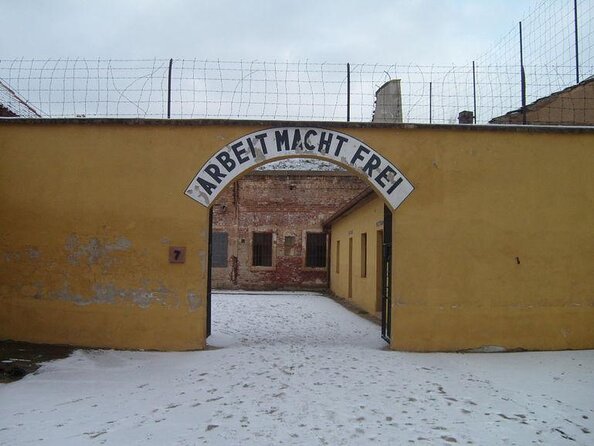
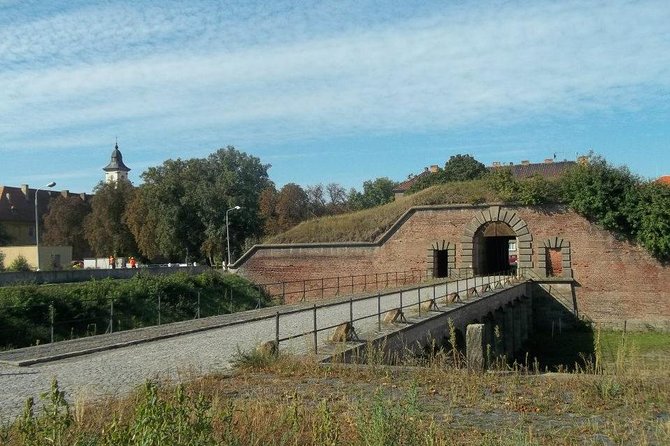
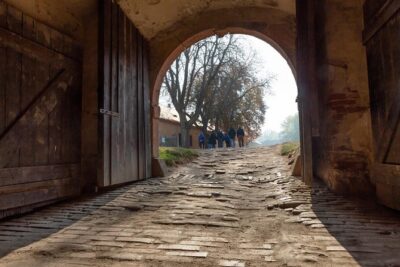
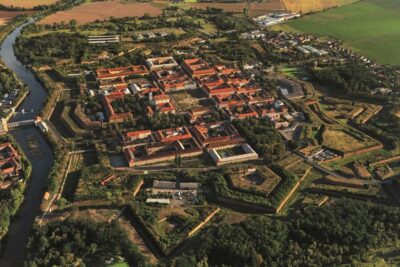
You begin at Mala Pevnost, the Small Fortress. Built in the late 18th century to be an impregnable fortress, it was surrounded by walls and protected by a flood-trench system. The grim punchline is that it never stayed a fortress of defense. Terezín was designed to become a jail, first in the mid-19th century, and later as a far more systematic prison under Nazi control.
One reason this stop hits hard is the way the place keeps changing roles. The description points to an early famous prisoner, Gavrilo Princip, brought here in 1914. He is linked to the chain of events that started the First World War after the Sarajevo attack.
Then you move into the WWII era. In 1940, the Small Fortress became a prison of the Prague Gestapo, sending especially political prisoners to this site. Only a year later, the town’s function shifted again, becoming a collective and pass-through camp for Jews.
Why this matters for your understanding is that you’re seeing a prison space that was adapted and re-used rather than created from scratch. You can read the physical environment as part of the machinery of control, not just as background scenery.
You’ll have about 1 hour here, and the entrance ticket is included. That hour is the right length for seeing the main areas without feeling like you’re rushing.
Also chalked up in Prague



Terezín Memorial National Cemetery: the part built after liberation
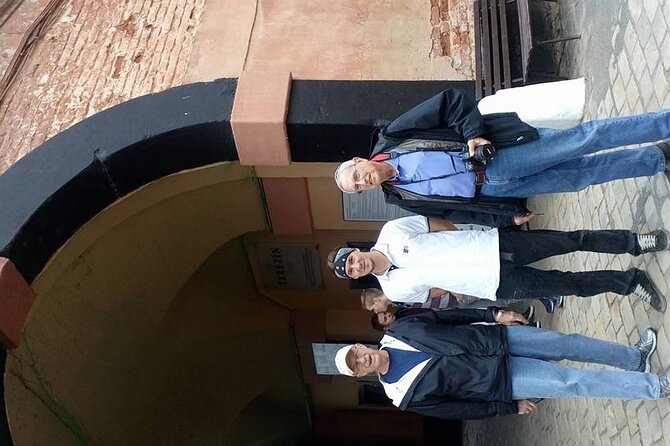
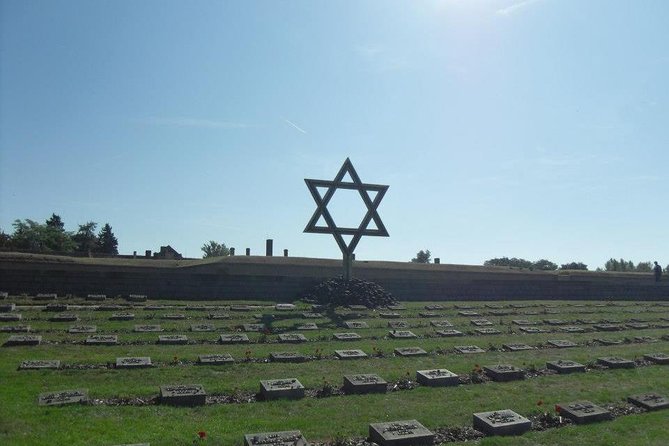
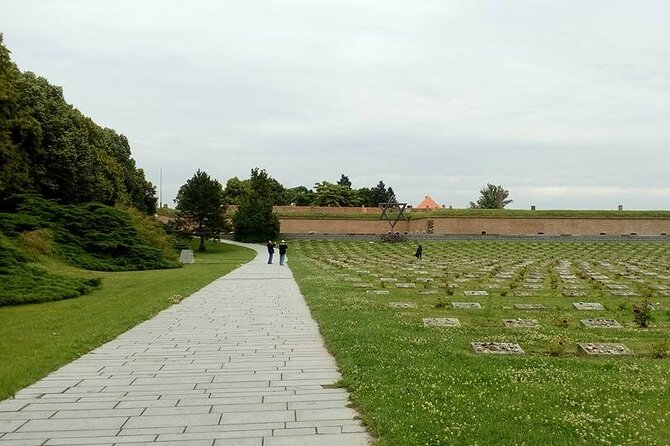
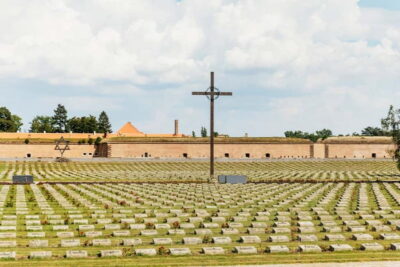
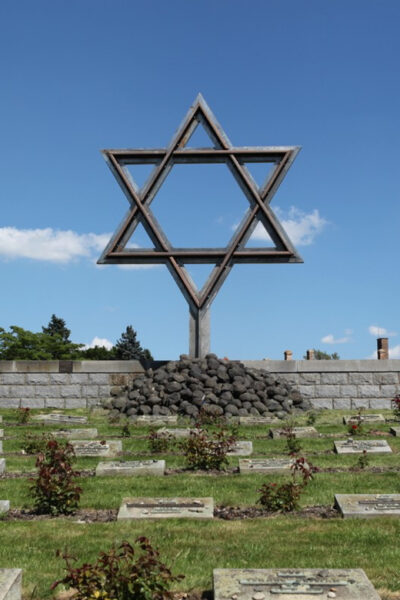
Next comes Terezín Memorial, the National Cemetery. This space wasn’t created during the war as a burial plan you could call permanent. It was made after liberation, in 1945, with a specific purpose: to honor the dead by gathering and preserving remains.
The memorial story is tied to exhumations. Physical remains were taken from six mass graves located in the ramparts of the Small Fortress. The time window given is March 1st to May 7th, 1945, including prisoners from death marches that arrived at the Small Fortress in May 1945.
This is a short stop, about 15 minutes, and the ticket is free. But don’t underestimate it. The space helps you understand the afterlife of atrocity work: how survivors and heirs pushed for a formal remembrance, and how institutions turned scattered remains into a dedicated site.
If you’re tempted to skim because it’s brief, don’t. In a day like this, the short stops often carry the clearest focus.
The Ghetto Museum: schooling the mind through exhibits
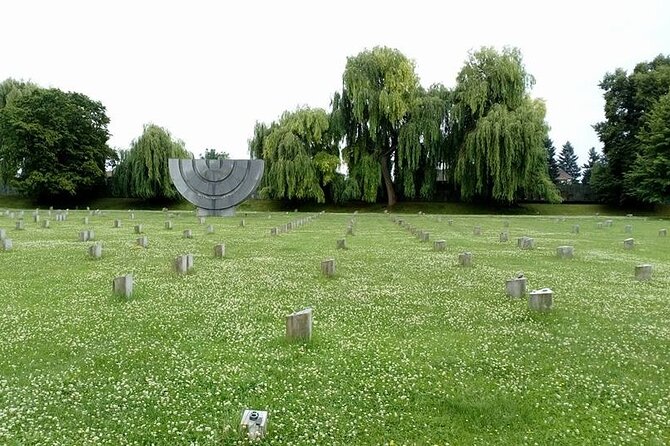
The tour continues to the Terezín Ghetto Museum, set in the former municipal school. The museum opened in 1991, and that timing is itself meaningful. It took decades to build a dignified public explanation of what happened there, with the memorial staff and former inmates all contributing to how the story should be framed.
The museum’s permanent exhibition was inaugurated in 2001 with the title Terezín in the Final Solution of the Jewish Question 1941 to 1945. You’ll also see spaces dedicated to children, including a Memorial Hall of the Terezín Ghetto’s Children.
A detail I think you’ll appreciate is that the exhibits include drawings made by children in the ghetto and a scale model of the ghetto. The model comes with an electronic orientation system that helps visitors connect thematic areas with geography. There’s also a reading room and a cinema where documentary films are screened.
Plan for about 45 minutes at this stop. That’s enough time to read without feeling trapped. If you’re a slow reader, this is the place to slow down, because the museum is designed for comprehension, not speed.
A small prayer hall and the story of František Bubák
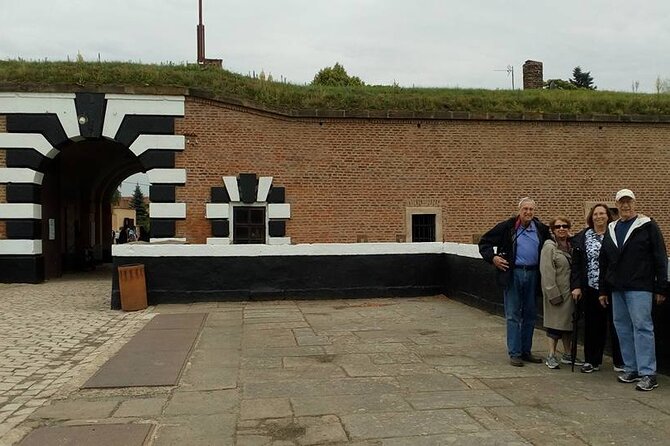
Not every memorial stop is a big museum. One of the most moving elements in the route is the small Jewish prayer hall, a space founded during the ghetto period to meet prisoners’ spiritual needs.
This stop also carries an important thread about secrecy and survival after the war. The prayer hall is linked to František Bubák, who owned the property. Before WWII, it served as part of a funeral parlor. During WWII, his family was forced to leave Terezín in 1942. After the war, Bubák reclaimed the property, but because his family feared repercussions from the Communist regime, they kept the room’s existence secret for years, using it for storage.
Only after the 1989 Velvet Revolution did the family’s descendants notify the authorities, and visitors have been allowed to see the room since the late 1990s.
This is about 30 minutes and includes the entrance. Why it’s worth your attention: it reminds you that religious life and community practices were part of the human story, not only the camp administration.
Magdeburg Barracks: administration, art, and the ache of normal culture
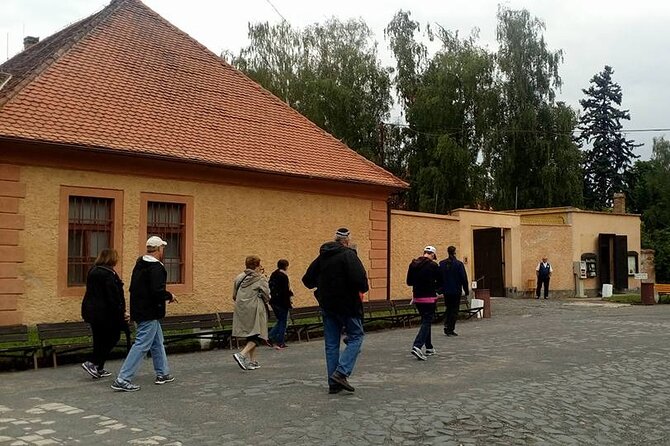
At Magdeburská Kasarna (Magdeburg Barracks), you move from the memorial and exhibition mode into the realities of how the ghetto was run. The Jewish ghetto’s local government was headquartered in this building. Officially, it handled internal affairs, but the description makes the control structure clear: important issues were under the command of the SS.
Today, the building functions as an exhibition space opened in 1997 after renovations. You’ll see a replica of prison barracks from the ghetto period, along with items tied to the ghetto’s cultural life.
That cultural angle is not meant to soften what happened. It’s meant to show the human response under forced confinement. The exhibition includes artifacts connected to music, visual arts, literature, and theatre. The point is the forced inhabitants’ desire for humanity and hope, even inside a system built to crush them.
There’s also an educational Meeting Centre here.
Expect about 30 minutes. This stop is often the one that gives you something to hold onto mentally because it forces you to notice people were creating meaning, not just enduring punishment.
The Jewish Cemetery crematorium: understanding how the system worked
The final major stop is the Jewish Cemetery, with a focus on the crematorium built by ghetto prisoners by order of SS commanders. Operations began at the start of October 1942.
The site is described with a level of detail that you should treat seriously, because it helps you understand the machinery involved. The central part of the crematorium had four oil-powered incinerators, supplied by Ignis Hüttenbau from Teplice-Šanov. The front section was used for unloading corpses from coffins. The annex bordered with an autopsy room and included guards made up of Czech police officers and prisoners working at the crematorium.
The description also specifies how labor changed with the death rate. At the highest mortality rate, there could be up to eighteen prisoner workers rotating in permanent shifts. When mortality dropped, the number of workers decreased to four.
Supervision was handled by SS-Scharführer Heindl, described as one of the camp’s feared top officers. Routine checks were carried out by camp commanders as well.
This stop takes about 30 minutes and includes entrance. It’s sobering in a way that doesn’t rely on shock tactics. You’re meant to see that the system relied on organization, staffing, and routine procedures. That is part of what makes it important to have a guide here. When you can ask what terms mean, and how different areas connected, you don’t have to guess.
If you like a reflective ending, there is one extra detail that appears in at least one private-tour account: a pause at a river area where ashes of over 20,000 who died were dumped as the war’s end approached. That sort of stop is not guaranteed in every itinerary, but it’s the kind of moment that some guides add to give you space to process.
How a private guide helps you actually absorb Terezin
A private guide isn’t just about comfort. At Terezin, it’s about emotional pacing and correct framing.
The strongest feedback on this tour format is that it helps you avoid turning the visit into a quick photo sprint. With a private group, you can keep your tone low and your questions high. You can also get explanations for what you’re seeing in each place, from why the Small Fortress mattered as a prison to how the ghetto museum exhibits build context.
Guides described in this tour style are often bilingual, with Czech and English mentioned for Eva in the write-ups. There’s also a theme of “guide therapy” in plain terms: someone who can handle the difficult material gently and answer your questions without turning the visit into a lecture.
Practical tip: before you arrive, decide what you want to understand. Are you focused on the fortress and prison systems, the ghetto institutions, or the crematorium and cemetery mechanics? If you go in with a question, you’ll leave with better notes in your head.
Also, bring patience for silence. This place asks for it. If you feel yourself getting overwhelmed, tell your guide. Private pacing is built for that.
Should you book this private Terezin tour?
Book it if you want a structured, respectful day with hotel pickup, skip-the-ticket-line access, and a guide who can help you connect the dots across multiple sites. This is a good choice if you’re going on your first visit to Terezin and you want the story explained in the right order, without rushing.
Skip this option if you prefer going fully on your own and you know you’re comfortable managing tickets and timing yourself. Also skip if you are looking for a light day. This is memorial space, and even with a private guide and smart pacing, you should expect the emotional weight.
If you can handle a difficult day and you value clarity over chaos, this is an excellent way to do Terezin from Prague.
FAQ
What’s the duration of the Private Former Concentration Camp Terezin Tour from Prague?
The tour lasts about 6 hours.
Where does the tour start in Prague?
The meeting point is the Prague Marriott Hotel, V Celnici 8, Nové Město, 110 00 Praha-Praha 1, Czechia. The tour also ends back at this meeting point.
Do you offer pickup from my hotel or Airbnb?
Yes. Pickup is offered from your hotel or Airbnb. You need to share the exact name and address of where you want to be picked up.
Is this tour private?
Yes. It is a private tour/activity, so only your group participates.
What language is the guide available in?
The tour is offered in English.
Are entrance tickets included?
Entrance tickets are included for the main memorial sites listed in the route, with the National Cemetery ticket noted as free in the schedule. Each stop has its own admission info included or free as stated.
How long do you spend at each main site?
Based on the schedule provided: Mala Pevnost about 1 hour, National Cemetery about 15 minutes, Ghetto Museum about 45 minutes, prayer hall about 30 minutes, Magdeburg Barracks about 30 minutes, and Jewish Cemetery about 30 minutes.
What’s the dress code?
The dress code is smart casual.
Are children allowed?
Children must be accompanied by an adult.
What’s the cancellation policy?
You can cancel for a full refund up to 24 hours in advance of the experience start time. If you cancel less than 24 hours before, the amount paid is not refunded.
Can most people participate?
The information provided says most travelers can participate.
Newly posted under the arches of Prague

Terezin & Memorial Site Visits, compared.
Terezin Concentration Camp Guided Tour w/ Audio
Read our review →
Terezin Concentration Camp Day Tour from Prague
Read our review →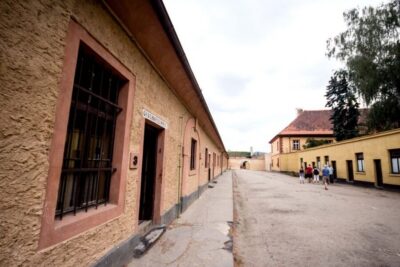
Terezin & Bohemian Switzerland from Prague: Bastei, Narnia & Café
Read our review →
Browse the lists this tour appears in