Reviewed · PRIVATE
Private Thousand Years of Prague Architecture Tour
Three hours, a thousand years of Prague. This private architecture walk in the city center uses a real guide to help you read Prague’s buildings by style, from older Romanesque forms to later Art Nouveau details, as you move through the major squares and landmarks. I love the private guide attention, and I love the style-spotting lessons that make the whole route click.
The one possible drawback is pacing. You cover a lot in about 3 hours, with quick stops, so if you want to linger or go inside lots of buildings on your own, you may feel a bit rushed.
In This Review
- Key things I’d focus on before you go
- A 3-hour architecture plan that helps you actually read Prague
- Staromestske namesti and the Astronomical Clock: where your style lessons begin
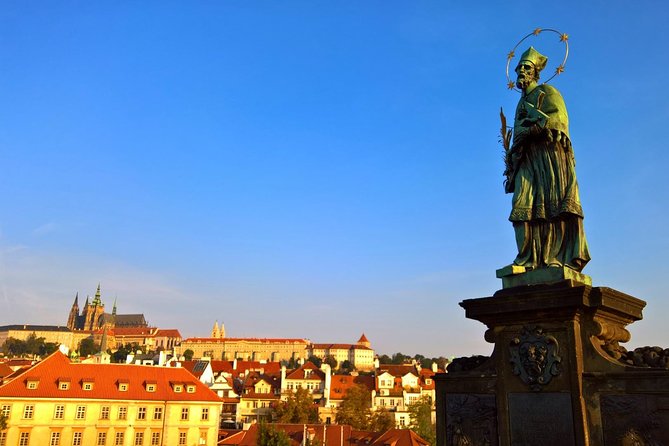
- Charles Bridge: a 30-minute stop that turns photos into learning
- Wenceslas Square: seeing New Town energy through an architectural lens
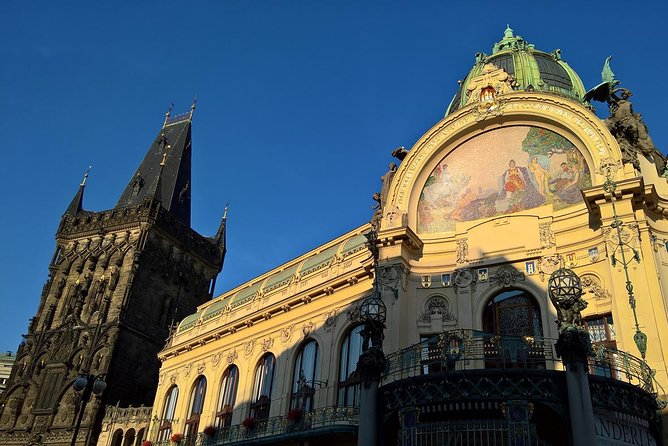
- Republic Square: Municipal House and the Art Nouveau next to Gothic
- Josefov and the Jewish Quarter synagogues: architecture tied to place and community
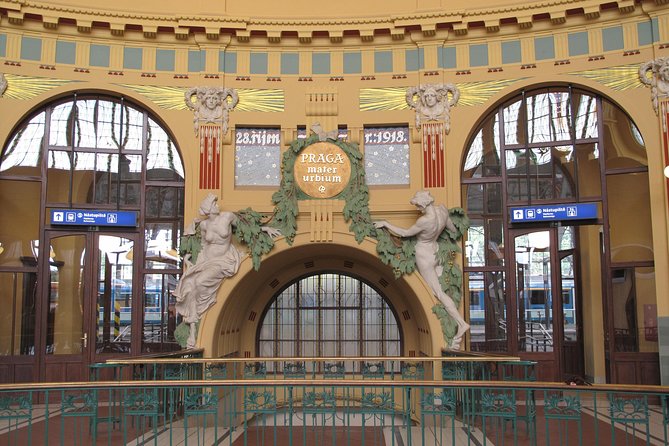
- Praha hlavni nadrazi: the main train station as a civic landmark moment
- National Theatre on the National avenue: finishing with a grand city statement
- Price and what $87.24 buys you in real value
- Why the guide matters, especially when the storytelling is praised
- Who this tour suits best, and who should think twice
- Should you book this Prague architecture tour?
- FAQ
- How long is the private Thousand Years of Prague Architecture Tour?
- How much does it cost?
- Is it a private tour?
- Are pickup and a meeting point included?
- What places are included on the route?
- Is a ticket required for the stops?
- Do I get a mobile ticket?
- What if I cancel?
- When do I get confirmation?
- Is the tour difficult to participate in?
Key things I’d focus on before you go
- Private group, hotel meeting keeps it personal and saves you from hunting for your start point.
- A style “decoder” for your eyes so Gothic, Romanesque, Baroque, Art Nouveau, and even cubist forms become recognizable.
- A tight route through the core sights including Old Town Square, Charles Bridge, Wenceslas Square, Republic Square, Josefov, and the National Theatre area.
- Synagogues in Josefov adds a distinct, meaningful stop beyond the usual postcard sights.
- Mobile ticket means less fuss before you start.
- Guide standout name: Eva Dvorokova got serious praise for architectural storytelling and keeping it engaging.
A 3-hour architecture plan that helps you actually read Prague
Prague can feel like one giant open-air textbook, but only if you know what to look for. This tour is built to give you that “translator” effect fast. In roughly three hours, you get walked through central landmarks while your guide explains where architectural styles came from and how to spot their features in real streetscapes.
What makes this format practical is that it trains your eyes, not just your memory. You are not only looking at pretty buildings. You are learning how to separate periods and styles as you move from one square to the next. That matters on a first visit because Prague’s center can be overwhelming. Once you have a few visual anchors, you start noticing patterns on your own later that you would otherwise miss.
Another smart part is that you are not stuck in one neighborhood. The route spans the kind of areas where Prague’s layers show up clearly: Old Town Square, the bridge approach zone, Wenceslas Square and surrounding streets, Republic Square, Josefov, and then major civic landmarks like the train station and National Theatre.
This is not a long museum day. It is a focused walking tour. If you plan the rest of your trip with that in mind, you will get more out of every stop you revisit.
Staromestske namesti and the Astronomical Clock: where your style lessons begin
You start at Staromestske namesti, the big Old Town Square with the Town Hall and the Astronomical Clock. The tour gives you about 30 minutes here, which is just enough time to get your bearings and have the guide point out how different architectural languages show up in the same general area.
Old Town Square is also a great starting point because it is visually concentrated. When a guide tells you what to look for, you can actually compare features side by side instead of chasing them across the city. Expect to get explanations tied to how styles developed and what design cues give them away.
Practical tip: bring your best walking shoes and expect crowds around the square, especially near the clock area. Since the stop is time-limited, it helps to choose where you stand first so you do not spend your minutes wandering.
Value check at this stop: you are training your eye on a place everyone recognizes, so your brain gets a quick win. That makes it easier to notice the next transitions in the route.
Also chalked up in Prague
- Prague: 50-Minute Sightseeing Evening Cruise
★ 4.2 · 33,780 reviews - Prague: Medieval Dinner with Unlimited Drinks
★ 4.4 · 19,847 reviews - Prague: Skip-the-line Castle Ticket and Optional AudioGuide
★ 4.3 · 11,121 reviews
Charles Bridge: a 30-minute stop that turns photos into learning
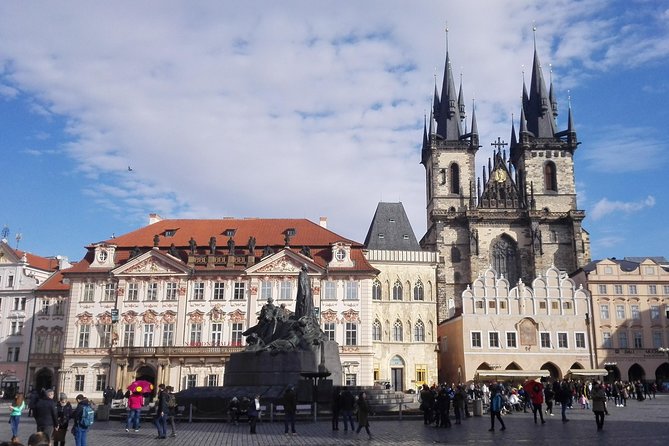
Next is the Charles Bridge, with another 30-minute window. This is one of those Prague highlights that you probably already expect to see, but here it serves a different purpose. The bridge becomes a moving classroom: you can look at the approaches, the building outlines, and the way the city’s older center presents itself.
Bridges are tricky for architecture spotting. You see angles and layers, and your perspective keeps changing. That is exactly why a guided approach helps. Your guide can tell you what to pay attention to, so you do not just get stuck with the classic postcard view.
Practical tip: if you care about photos, decide early whether you want a close-up view or a wider shot. The bridge gets busy, and the tour time is capped.
Drawback to consider: because this stop is also a public landmark, you might spend some of the time working around foot traffic. That does not ruin the tour, but it does affect how long you can linger in one spot.
Wenceslas Square: seeing New Town energy through an architectural lens
Your third stop is Wenceslas Square, plus the surrounding area, with about 30 minutes. This is where Prague shifts mood, and that shift is visible in the buildings and street layout. When you are already thinking in style terms, Wenceslas Square feels less like a single location and more like a chapter in the city’s growth.
This stop is useful because it adds contrast. You start with Old Town’s compact, historic core, then move to a larger, more boulevard-like setting. That change alone helps you understand why styles look the way they do in different city planning eras.
What I like about this part is that it helps you build a mental map. You begin connecting squares to the larger story of Prague’s development, not just to individual monuments.
One caution: with only about half an hour, you cannot treat this like a full exploration. If you want to shop, people-watch, or pop into nearby spots on your own, do it after the tour, when you have the guide’s context in your head.
A courtyard deeper into Prague:



Republic Square: Municipal House and the Art Nouveau next to Gothic
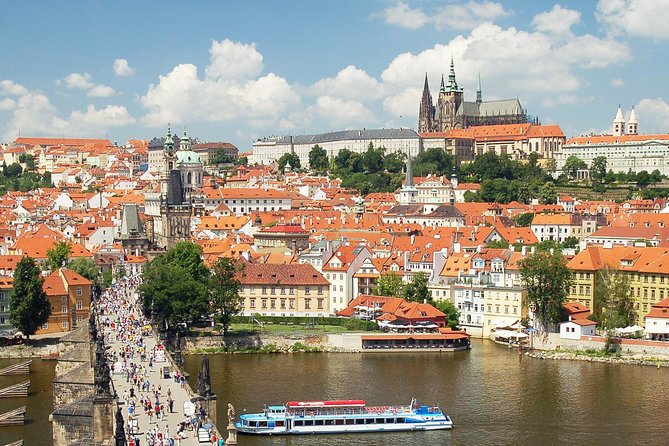
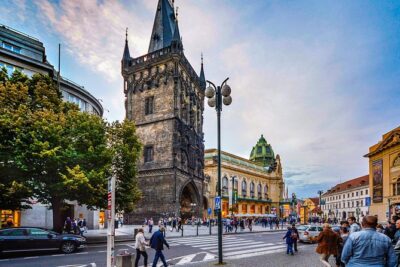
Then you head to Republic Square, home to the Municipal House and the Powder Tower area. This stop is around 20 minutes, and it carries a particularly useful design lesson: Art Nouveau style next to Gothic.
That kind of side-by-side contrast is gold for learning. When you can see two styles in close proximity, your brain stops treating architecture as random aesthetics. You start recognizing how different periods solve similar problems, like how they frame entrances, how they shape windows, and how they handle ornament.
The short timing here is intentional. This is a “spot the difference” moment. If your guide does their job well, you leave Republic Square looking around at the surrounding details with a new question in mind: what period is this, and what feature gave it away?
Practical tip: wear something comfortable for quick street turns. Republic Square is easy to reach, but your focus should be on the buildings your guide is pointing out, not on wandering streets randomly during the time window.
Josefov and the Jewish Quarter synagogues: architecture tied to place and community
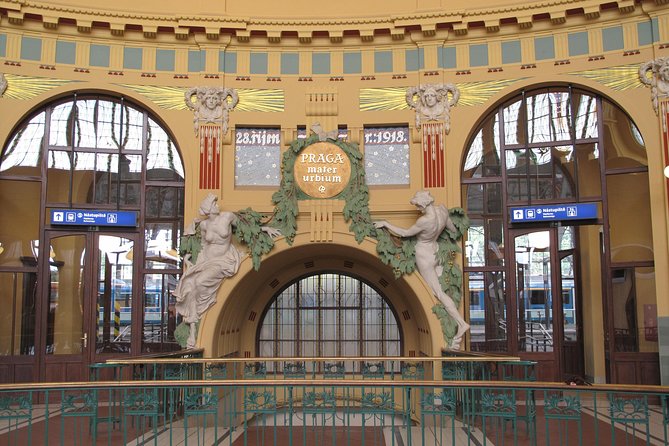
You spend about 20 minutes in Josefov, the Jewish Quarter, with a focus on the synagogues in the area. This stop is important because it adds meaning beyond what you see in the typical top-sights loop.
Architectural style in Josefov matters not just as design, but as evidence of cultural presence and community identity over time. Even with limited time, the guide’s explanations can help you see why these buildings feel different from the surrounding civic and commercial landmarks.
What to expect practically: you are in a dense area, and the tour time is short. Take a moment to slow down and look at what the guide highlights. If you try to pack in your own extra stops during the guided window, you might miss the point.
Possible consideration: if you are hoping for lots of time inside religious buildings, this tour may feel brief. The route gives you a structured architectural look at the area, not an extended independent visit.
Praha hlavni nadrazi: the main train station as a civic landmark moment
Next is Praha hlavni nadrazi, the historical building of Prague’s main train station, with about 20 minutes. A train station can feel like just a way to get somewhere, but on this tour it plays a useful role: it is a major civic structure that helps you broaden your view beyond old-town streets.
This stop also helps break the rhythm of walking through squares and narrow streets. It gives you a chance to look at architecture at a different scale, where the design is meant for movement, crowds, and public life.
What I’d do with this time: stand where you can see the front or main façade clearly, and listen for the guide’s explanation of what architectural cues signal a different era or style category.
If you’re traveling by rail later in your trip, this stop doubles as a practical orientation moment too. Even if you do not go inside, you become more comfortable with how the station fits into the city.
National Theatre on the National avenue: finishing with a grand city statement
Your final named stop is the National Theater area, on the National avenue, with about 30 minutes. This is a strong way to end because the Theatre sits in a setting that feels ceremonial and city-focused.
By now, your brain has had enough context to start noticing patterns on your own. The finishing stretch works well if you want your last moments to feel like a synthesis, where you compare what you learned at Old Town, along the bridge, and around Republic Square.
Practical tip: use your last 10 minutes to look back at the route view from where you are standing. You can often see how the architecture lesson connects to the broader layout of Prague, not just to isolated buildings.
Price and what $87.24 buys you in real value
The tour price is $87.24 per person, and it runs about 3 hours. For me, the value question is not only cost. It is what you are paying for: guided interpretation, private time, and a route built to cover multiple architectural eras without you having to plan it all yourself.
You get a private group setup, plus a guide, and you meet at your hotel. You also get a mobile ticket, which saves time right at the start. Most of the listed stops are free for entry, so a big chunk of what you pay for is the guide’s explanations rather than ticket fees for attractions.
Is it “worth it” if you love architecture? Yes, because the tour is basically buying you years of architectural vocabulary condensed into a few recognizable visual cues. Is it worth it if you just want casual sightseeing? It can still be worth it, but only if you are willing to engage with the style talk, at least a little.
One more detail I like: the tour is booked well in advance, which usually means the schedule slots go quickly. If you want a specific time, you should plan early rather than hoping for last-minute availability.
Why the guide matters, especially when the storytelling is praised
A private architecture tour lives or dies on the guide’s ability to explain. This experience pairs a local guide with a professional guide, and the result is meant to be interactive. You are not being lectured at. You are walking, looking, and connecting.
One standout name showed up in the best written feedback: Eva Dvorokova. A French review praised her for the beauty of her city storytelling and for architectural narration that felt both passionate and varied, like the façades of Prague themselves. That is the exact kind of guide you want on an architecture tour, because the point is to help you see what is in front of you.
If you get a guide with that same energy, you will likely leave with more than photos. You will have a framework for what to notice next time you walk around Prague.
Who this tour suits best, and who should think twice
This tour is ideal if:
- You want to understand Prague architecture fast, without building your own self-guided route.
- You like walking tours and can comfortably cover about 3 hours in the center.
- You care about recognizing Gothic, Romanesque, Baroque, Art Nouveau, and cubist design cues.
- You prefer your own group experience, with a guide who can tailor explanations to your questions.
Think twice if:
- You hate tight schedules and want long stops at every site.
- You plan to spend lots of time going inside many buildings during the tour window.
- You want a purely relaxed sightseeing day with minimal talking.
Should you book this Prague architecture tour?
I think you should book it if you are a first-time visitor or if you want a smart way to reset your understanding of Prague’s styles. The route hits the landmarks that help you build an architectural map, and the private guide format makes the “style spotting” instruction feel practical instead of academic.
Skip it only if your travel style is more about slow wandering and deep, solo time inside attractions. This is a focused, explanatory walking tour. When you match it with your expectations, it is an efficient way to turn Prague from a pretty city into a readable one.
FAQ
How long is the private Thousand Years of Prague Architecture Tour?
It is about 3 hours.
How much does it cost?
The price is $87.24 per person.
Is it a private tour?
Yes. It is a private group tour, with only your group participating.
Are pickup and a meeting point included?
Yes. Meeting at your hotel is included, and pickup is offered.
What places are included on the route?
You visit Old Town Square (with the Town Hall and Astronomical Clock), Charles Bridge, Wenceslas Square, Republic Square (Municipal House and Powder Tower area), Josefov (Jewish Quarter and synagogues), Praha hlavni nadrazi (Prague main train station), and the National Theatre area.
Is a ticket required for the stops?
The listed stops on the route are marked as free (admission ticket free).
Do I get a mobile ticket?
Yes, a mobile ticket is included.
What if I cancel?
You can cancel for free up to 24 hours before the experience’s start time for a full refund.
When do I get confirmation?
Confirmation is received at the time of booking.
Is the tour difficult to participate in?
Most travelers can participate. Service animals are allowed, and it is near public transportation.
Newly posted under the arches of Prague


Private, compared.

Shared Group/Private Segway Tour with Hotel Transfer
Read our review →
Winter Charm of Prague – private tour with PERSONAL PRAGUE GUIDE
Read our review →