Reviewed · PRAGUE TOURS & EXPERIENCES
The Plague Doctor of Prague
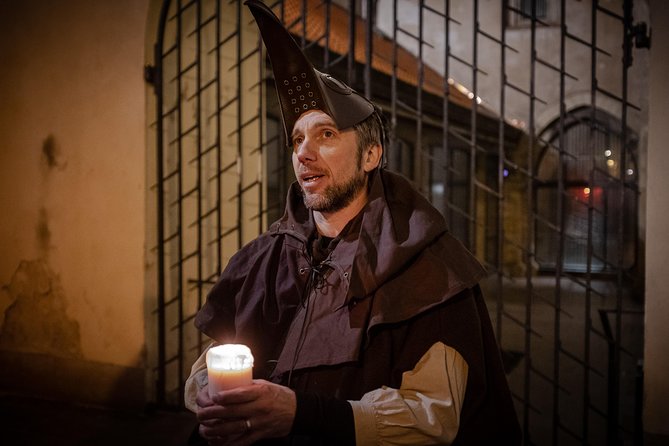
A plague doctor story makes Prague feel brand new. In about 1 hour 30 minutes, you follow Alexander Schamsky through central Prague on an English tour that mixes street-level storytelling with 1715 public-health beliefs, from saints to quarantine. It has earned attention from major outlets like The New York Times, Vogue, and Forbes, so the concept is more than a gimmick.
Two things I really like. First, the group stays small, with a maximum of 10 people, so you can hear every detail and the guide can keep the performance tight. Second, the experience stays funny and spooky without ignoring the real stakes, including how the plague affected Jewish communities.
One drawback to consider: if you’re hunting for a purely architecture-focused walking tour, this leans more toward everyday life under plague conditions, medical ideas, and social impact than toward deep building history at every stop. Also, keep in mind that one person noted the costume could use a freshen-up, so if you’re very sensitive to smells, choose where you stand when the guide gets close.
In This Review
- Key points worth knowing before you go
- Why Prague’s Plague Doctor tour feels like theater with useful context
- Stop 1 at Aurus Hotel Prague: Alexander Schamsky and 1715 plague beliefs
- New Town Hall and Klementinum: quarantine life and how people tried to survive
- Staroměstské náměstí: merchants, saints, and the Thirty Years’ War ripple
- Franz Kafka statue and the Jewish Quarter: plague fear through community life
- Church of Saint Simon and Jude plus Na Frantisku hospital: healing methods and medical “unknown heroes”
- National Gallery Prague, Convent of St. Agnes: the closing summary and what disease looks like now
- Timing, walking pace, and how to set yourself up for a great evening
- Who this tour suits best (and who might want a different style)
- Price and value: is about $26.61 worth it?
- Should you book the Plague Doctor of Prague?
- FAQ
- How long is the Plague Doctor of Prague tour?
- Where does the tour start?
- What language is the tour offered in?
- Does the tour include a mobile ticket?
- What is the maximum group size?
- Are there admission tickets for the stops?
- Where does the tour end?
- Is the experience suitable for most travelers?
- Is good weather required?
- What is the cancellation window?
Key points worth knowing before you go
- Small group size (max 10) keeps the tour clear and interactive.
- English mobile ticket plus a straightforward route through Prague’s core sights.
- 1715 framing gives you a focused time window, not a random timeline mash-up.
- Jewish Quarter stop connects plague fear to a real community story, not just general doom.
- Old hospital and medical methods get real attention, including what “healing” meant then.
- Ends with a group photo and a final wrap-up at a quieter convent setting.
Why Prague’s Plague Doctor tour feels like theater with useful context
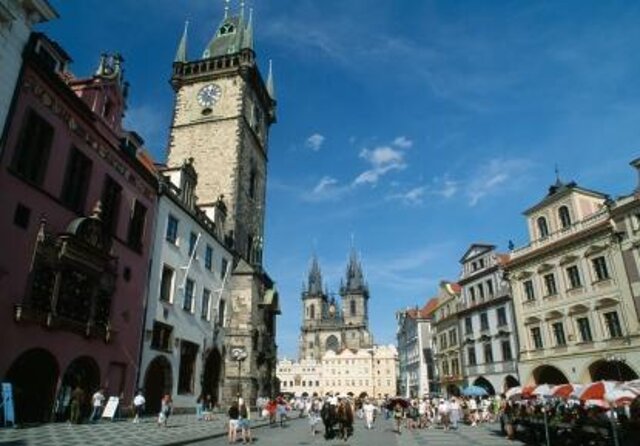
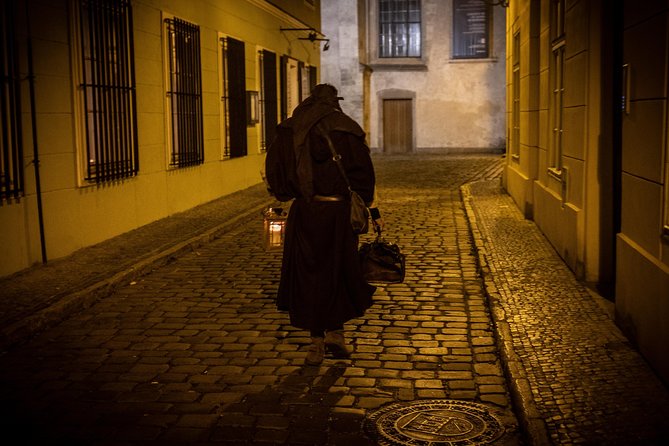
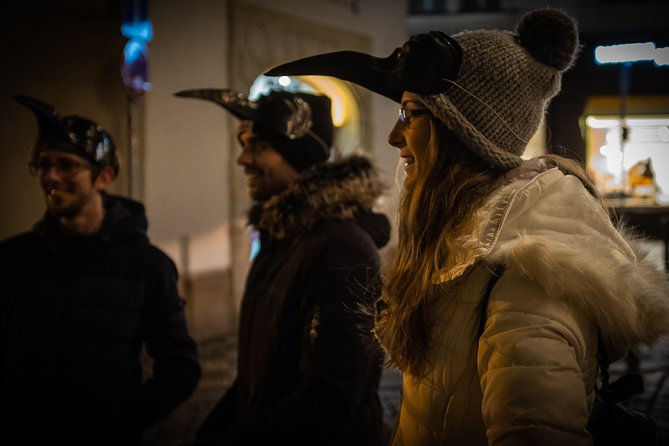
This is an evening walk built around performance. You start with the plague doctor character and then you move site to site, letting Prague’s streets do the work of “taking you back” to how people thought about illness. The big win is that the story keeps switching angles: saints and folk explanations, quarantine behavior, everyday merchants and the war-scarred city, and then the medical side.
I also like the balance. You get creepy imagery, but you also get practical explanations for why quarantine happened and how different groups were affected. The tour’s approach is value-shaped for real people: it’s long enough to feel like an event, short enough that you can still enjoy Prague afterward.
At around $26.61, you’re paying for an hour-and-a-half guided program with a small cast, not museum admission. The stops themselves are listed as admission-free during the tour, which helps keep your evening from turning into a stacking-expenses trip. If you want a night out that mixes history, public health themes, and a bit of theater, this one fits.
Stop 1 at Aurus Hotel Prague: Alexander Schamsky and 1715 plague beliefs
Your tour starts at Aurus Hotel Prague, at Karlova 3 in Prague 1, near the Old Town area. The guide introduces Alexander Schamsky and sets the frame in the year 1715, which keeps the whole route from feeling scattered. Instead of jumping around randomly, you’re anchored to how people in that era explained the plague.
From there, you get the building connection: the start location is also referred to as the House of the Golden Well. The storytelling then moves to the saints people linked with plague protection, especially St. Sebastian and St. Rochus. That matters, because it shows you how fear shaped belief systems before modern medicine existed.
You also hear about the root causes people believed in at the time. The practical takeaway for you is that the plague was not only a disease story. It was also a worldview story, where explanations affected everything from behavior to who felt safe and who felt doomed. This stop is short, about 10 minutes, but it sets the tone and the vocabulary for the rest of the walk.
Also chalked up in Prague
- Prague: 50-Minute Sightseeing Evening Cruise
★ 4.2 · 33,780 reviews - Prague: Medieval Dinner with Unlimited Drinks
★ 4.4 · 19,847 reviews - Prague: Skip-the-line Castle Ticket and Optional AudioGuide
★ 4.3 · 11,121 reviews
New Town Hall and Klementinum: quarantine life and how people tried to survive
The next stop brings you to New Town Hall, and along the way the tour points you toward the old monastery Klementinum plus the nearby library and town-hall setting. This part shifts from saints and causes into how society actually handled outbreaks.
You’ll hear about different types of the Black Death and then the uneven impact on Prague. The guide contrasts the wealthy and the common people: who could isolate, who could hide, and who had fewer options when illness hit. That contrast is one of the most useful ideas for you to carry around after the tour, because it’s easy to forget that “plague history” is also about inequality.
Then comes the most direct quarantine element. You get an overview of what life in quarantine meant, and how people interpreted those restrictions. Even if you know modern quarantine basics, seeing the historical version helps you understand human behavior under fear. This stop is also about 10 minutes, so the message is focused, not slow.
Staroměstské náměstí: merchants, saints, and the Thirty Years’ War ripple
At Staroměstské náměstí, you stand in the big market square and connect the plague story to the city’s larger stress. The tour highlights sights like the Hussite Church, Týn Church, and the Old Town Hall area, but the point isn’t just the postcard view.
The guide talks about merchants and daily commerce during plague times. That’s a smart angle for you, because illness changed money, movement, and trust. Markets were places where people had to share space, and that created constant friction between survival needs and disease risk.
Then you get an excursion into the Thirty Years’ War. That part gives important context: in eras of conflict, people move, resources tighten, and institutions strain. Even when the plague is the headline, war shapes the conditions that let outbreaks spread and linger. The stop runs about 10 minutes, so it’s a quick bridge from disease to the wider historical environment.
A courtyard deeper into Prague:


Franz Kafka statue and the Jewish Quarter: plague fear through community life
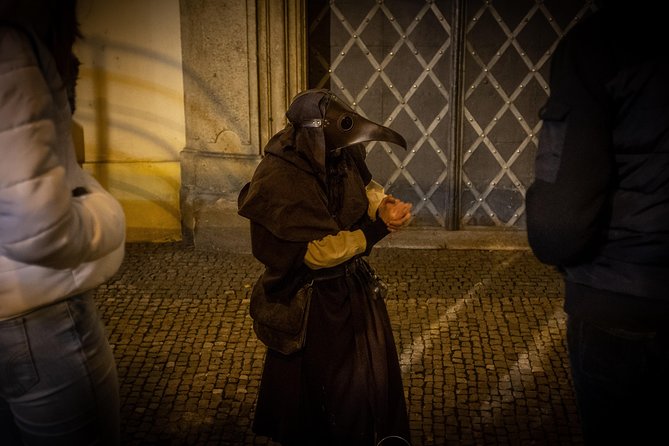
This part starts near the Franz Kafka statue and uses a quick Kafka introduction to set a literary, human tone. The guide then shifts into plague-era insights about Jewish communities in Prague and across Europe.
You also enter the Jewish Quarter here, which turns the story from general and abstract into specific place-based context. The tour additionally connects plague experience to La Peste by Albert Camus. Even if you don’t plan to reread it, that reference helps you understand how later writers kept returning to plague themes: fear, isolation, and the moral pressure of a public crisis.
This segment is only about 5 minutes, so it doesn’t try to cover everything. Instead, it gives you a doorway. For you, that means you can decide after the tour how much deeper to go, because you leave with clear subject lines rather than a vague “history lesson.”
Church of Saint Simon and Jude plus Na Frantisku hospital: healing methods and medical “unknown heroes”
Stop 5 is one of the most substantial pieces of the route. You visit the Church of Saint Simon and Jude and explore the old hospital Na Frantisku. This is where the tour leans hardest into the medical side.
You’ll get a look at healing methods used in that era and more medical background on the disease that killed about 200 million people worldwide. That global number is heavy, but it helps you keep plague history from feeling like a local legend. It was a world-scale catastrophe.
The guide also introduces unknown heroes of medicine who worked in that hospital. That detail is especially satisfying if you love practical history, because it shifts attention from famous figures to the people doing daily work under impossible conditions. The tour spends about 15 minutes here, and that extra time pays off because it gives you space to absorb how medicine functioned without modern germ theory.
If you’re the type who likes to connect past medicine to present public health themes, this stop is a strong reason to book. You’ll come away thinking about what “treatment” meant when the cause was misunderstood and when prevention tools were limited.
National Gallery Prague, Convent of St. Agnes: the closing summary and what disease looks like now
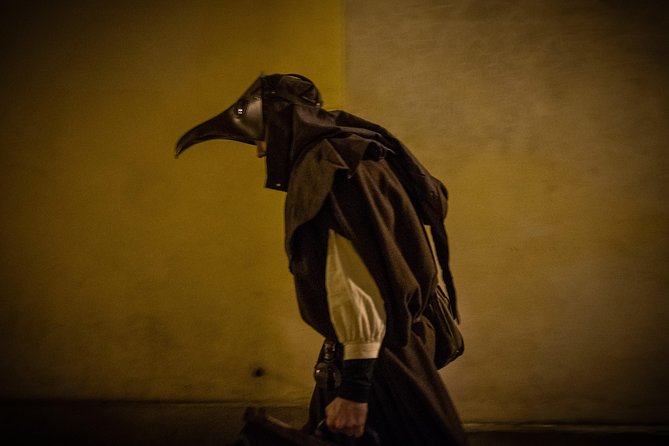
You end at the National Gallery Prague Convent of St. Agnes, described as a hidden monastery setting for the final moments. The guide introduces St. Agnes of Bohemia and then wraps with a summary of plague times in Prague and Europe.
This ending is valuable because it’s structured. Instead of stopping mid-story, you get closure: key ideas are restated, and the guide brings in current status facts about the disease. That last piece helps you connect the historical discussion to today without turning the tour into a modern science lecture.
You also finish with a group picture with the plague doctor, which gives the evening a fun punctuation mark. This stop is about 15 minutes, and it’s where the guide often delivers the final “carry this with you” messages.
One practical note for you: the tour ends in a different location than where it starts. The details are provided at booking time, so check your confirmation so you’re not walking around guessing where to meet up afterward.
Timing, walking pace, and how to set yourself up for a great evening
The tour runs about 1 hour 30 minutes total, with short stops timed around 5 to 15 minutes each. In practice, that means you’re walking at a comfortable group pace and getting enough time at each stop to actually hear what matters.
The group size cap of 10 also helps your experience. Smaller groups mean less crowding and fewer moments where you’re straining your ears. It’s also a tour that works well for different ages and fitness levels, since the stops are close enough together for a manageable pace.
Two practical tips. Wear shoes you’re comfortable with for cobblestones and uneven pavements, because that’s how Old Town feels. And since the experience requires good weather, check forecasts. If rain hits, you might need to reschedule, but the operator notes weather can trigger a change or a full refund.
Who this tour suits best (and who might want a different style)
This is a great fit for you if you like history that talks about real life, not just monuments. The tour covers plague beliefs, quarantine behavior, social impact, and medical ideas, all while keeping the tone creepy-funny enough that it doesn’t feel like a lecture.
It’s also a good choice for families and teens. The material is serious in themes, but the delivery is playful and engaging, with the guide staying in character. If you’re traveling with a range of ages, this structure often works because it offers story moments plus information moments without forcing everyone to sit still for too long.
If, however, your travel style is mostly architecture and museum galleries, you might find this slightly lighter on that side. One person specifically felt the historical narrative could be stronger, which is a fair heads-up. This tour prioritizes plague everyday life and public health themes, then uses architecture as a stage set rather than the main event.
Price and value: is about $26.61 worth it?
For roughly $26.61, you’re buying three things at once: a guided walking route through central Prague, an in-character performance by the plague doctor setup, and an education framework about plague beliefs and impacts. Because the stops are listed as admission free during the tour, you avoid the common “hidden museum ticket” problem.
The small group size is part of the value. With a maximum of 10 people, you’re not fighting for hearing space. That matters on a tour built around storytelling, timing, and character work.
Also, the tour has a track record of staying highly rated, with a 4.9 overall rating and a strong recommendation rate. While numbers won’t tell you if it matches your taste, they do suggest people consistently leave feeling entertained and informed, not bored or confused.
If you’re planning an evening in advance, note that it’s often booked about 16 days ahead on average. Prague fills up in peak seasons, so booking early is smart if you want a slot that fits your schedule.
Should you book the Plague Doctor of Prague?
Book it if you want an evening that mixes spooky theater with practical history about how pandemics shape behavior. You’ll get a focused time setting around 1715, stop-to-stop storytelling across key Old Town landmarks, and a meaningful Jewish Quarter segment tied to plague impact in Prague and Europe. The Na Frantisku hospital stop and the explanation of healing methods are also strong reasons to choose this over a generic walking tour.
Skip it if your top priority is heavy architecture analysis or you’re looking for a strictly quiet museum-style experience. This one is built to be performed, laughed at in the right places, and used to make plague history feel human.
If you want a memorable night in Prague that connects the city’s streets to public health themes, this is an easy yes.
FAQ
How long is the Plague Doctor of Prague tour?
It’s approximately 1 hour 30 minutes.
Where does the tour start?
The tour starts at Aurus Hotel Prague, Karlova 3, 110 00 Prague 1.
What language is the tour offered in?
The tour is offered in English.
Does the tour include a mobile ticket?
Yes, it includes a mobile ticket.
What is the maximum group size?
The tour has a maximum of 10 travelers.
Are there admission tickets for the stops?
Admission is listed as free for the stops included in the tour.
Where does the tour end?
It ends in a different location than the start. Your booking details should show the exact end point.
Is the experience suitable for most travelers?
Most travelers can participate.
Is good weather required?
Yes. The experience requires good weather, and if it is canceled due to poor weather, you’ll be offered a different date or a full refund.
What is the cancellation window?
You can cancel for a full refund if you cancel at least 24 hours before the experience starts. Within 24 hours, the amount paid is not refunded.
Newly posted under the arches of Prague

Prague Tours & Experiences, compared.

Skip-the-line Castle Ticket and Optional AudioGuide
Read our review →
Castle Tour with Local Guide and Entry Ticket
Read our review →
Oldtown, Medieval Underground & Dungeon History Tour
Read our review →
Prague Castle 2.5-Hour Tour Including Admission Ticket
Read our review →