
Reviewed · WALKING TOURS
Alternative Prague Walking Tour
Street art as a way to understand Prague. This alternative walking tour uses Holešovice and short tram hops to show a version of the city that locals say is more than old-stone postcard views. You start with quick Czech history, then you move into murals, street artists, and creative spaces tied to what happened after communism.
I love that the tour keeps one foot in art and one in real life. You’ll stop for big visuals like the Milada Horáková mural, then you’ll hear how minorities, atheism, and the LGBT+ community fit into today’s Prague.
One thing to plan for: you’ll use public transport, so bring the correct ticket and expect about 150 minutes on your feet, with a coffee break mid-tour.
In This Review
- Key things I’d mark on your Prague map
- Meeting at Palladium, then leaving “Disneyland Prague” behind
- Why street art here feels tied to recent history
- Holešovice, the district your guide treats like home
- Stop 1, Prague Centre for Contemporary Arts backyard
- Milada Horáková mural and the powerful photo-stop moments
- Tram rhythm toward Vltavská, then into the creative engine
- Holešovice Market: where the Vietnamese story becomes part of today
- Tusarova and the practical arts browsing break
- Hidden skatepark time, with a legal graffiti wall
- Steampunk underground club detour, for pure alternative vibes
- Point and the small wooden installations you’ll learn to spot
- Institute of Crypto Anarchy, plus murals by Dede, Tim Marsh, and AEC
- Vnitroblock break: a secret café in a former factory
- Cross Club finale: techno in a recycled-metal world
- Price and logistics, is $32 good value
- What the guides do really well, and why it shows
- Who this tour suits best
- Should you book this alternative Prague walking tour?
- FAQ
- How much does the Alternative Prague Walking Tour cost?
- How long is the tour?
- What language is the guide?
- Where do I meet the guide?
- Do I need a public transport ticket?
- Is there a break during the tour?
- What if my plans change, can I cancel?
Key things I’d mark on your Prague map
- Street art with political context, not just pretty photos
- Holešovice first, so you see neighborhoods beyond the center
- Design and social stops, including Vnitroblock and Cross Club
- Community stories, including Vietnamese history and LGBT+ life
- Artist callouts you’ll actually spot, like Point and small wooden installations
- A guide-led route with tram hops, so it stays efficient
Meeting at Palladium, then leaving “Disneyland Prague” behind
Your day starts at a very practical place: the main entrance of the Palladium shopping center in Republic Square, outside the Foot Locker store window. Look for your guide holding a black or dark blue umbrella. It’s easy to find, and that matters because the tour is moving from the start.
From there, you get that quick orientation plus recent history, so street art doesn’t feel like random graffiti on random walls. The guide frames Prague as a city with a living present, not only a preserved past. Locals even joke that the central tourist zone feels like Disneyland, and this tour is built to get you past that bubble early.
Why street art here feels tied to recent history
Prague has famous sights, but they can feel like museum pieces. This tour answers a different question: what happened when communism ended, and how did people express the shift?
You’ll hear that through murals and installations that speak about politics, identity, and everyday creative life. A standout example is the mural dedicated to Milada Horáková, a Czech political prisoner executed by the communist regime. Seeing that kind of message in a neighborhood context makes the art land differently than if you just saw it in a photo on your phone.
You’ll also learn about atheism in the Czech Republic and hear what the current situation is for the LGBT+ community. The goal isn’t heavy-handed lectures. It’s more like getting the missing context that helps you understand why certain imagery exists on certain walls.
More lanes taken at street level:
- Prague: 3-Hour Walking Tour of Old Town & Prague Castle
★ 4.7 · 5,696 reviews - Prague: Ghost Walking Tour Where Legends Come To Life
★ 4.4 · 5,253 reviews - Prague: Jewish Quarter Walking Tour with Admission Tickets
★ 4.7 · 3,729 reviews
Holešovice, the district your guide treats like home
The heart of this experience is Holešovice. It’s the area locals often recommend when they want to show you Prague with actual street energy, studios, and hangout spots. The tour is designed around it, which means you spend your time where the creative scene is part of daily life.
Holešovice also helps you see the city’s layers. You’ll move through former industrial spaces that got repurposed, and you’ll notice how community spaces now hold festivals, markets, and exhibitions. Even the tram hops feel purposeful, more like “travel by local rhythm” than “tourist transport.”
Stop 1, Prague Centre for Contemporary Arts backyard
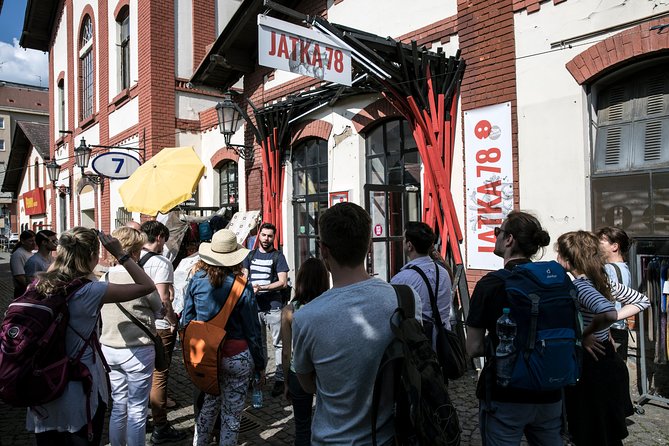
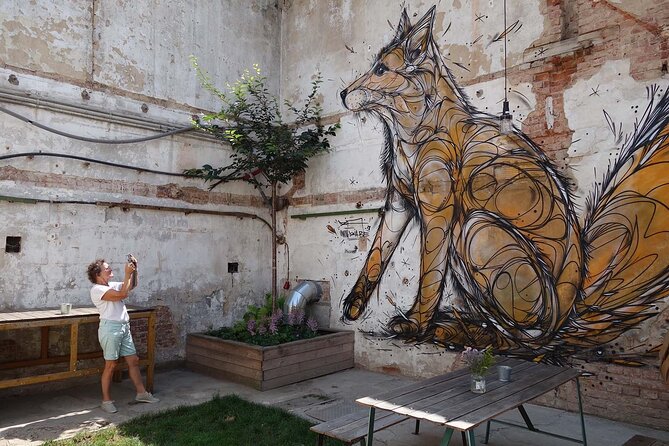
You begin with a visit to the backyard of the Prague Centre for Contemporary Arts. It’s a hidden cultural pocket off the tourist map, the kind of place you would not stumble into just by walking from Old Town.
Why it works: it sets the tone. Before you go heavy on street walls and skate spots, you get a feel for the city’s current art scene and how it operates in spaces that aren’t built for mass tourism.
Potential drawback: if you want only outdoor murals, this first stop might feel calmer and more gallery-like. Still, it’s short, and it helps connect the dots later.
Also chalked up in Prague

Milada Horáková mural and the powerful photo-stop moments
Next comes a photo stop at M. Horákové 9, where you’ll see the powerful mural dedicated to Milada Horáková. This is one of those moments where the guide’s context matters. Without the background, it’s easy to just register an image. With the background, it becomes a signpost to how Prague remembers its political past in public space.
You’ll also make a stop for the Church of St. Anthony of Padua. It’s listed as a photo stop, so don’t expect a long interior visit. But that mix, sacred architecture followed by political street art, is part of the tour’s trick: it shows how different kinds of meaning share the same city.
Tram rhythm toward Vltavská, then into the creative engine
After a quick tram transfer, you’ll hit Vltavská for another photo stop and sightseeing. This is the kind of stretch where the guide uses short pauses to point out how neighborhoods and river-adjacent areas shape daily movement.
Then you move into the bigger change of pace: the market and creative district stops. The tour uses these tram hops to keep your legs fresh and your time efficient, so you aren’t just walking in a straight line for 2.5 hours.
Holešovice Market: where the Vietnamese story becomes part of today
One of my favorite parts to recommend on this tour is Holešovice Market. You get a photo stop plus a guided walk and time that’s built around food and atmosphere, including street food.
The key detail: it’s not just a market that happens to be in Holešovice. It’s a former industrial area that once held a large Vietnamese community. Today, it hosts festivals, parties, markets, and exhibitions. That means the space isn’t only about commerce, it’s about cultural continuity and change.
If you like eating while you learn, this is a strong moment. You can sample something, then use the guide’s stories to connect it to the neighborhood’s past.
Tusarova and the practical arts browsing break
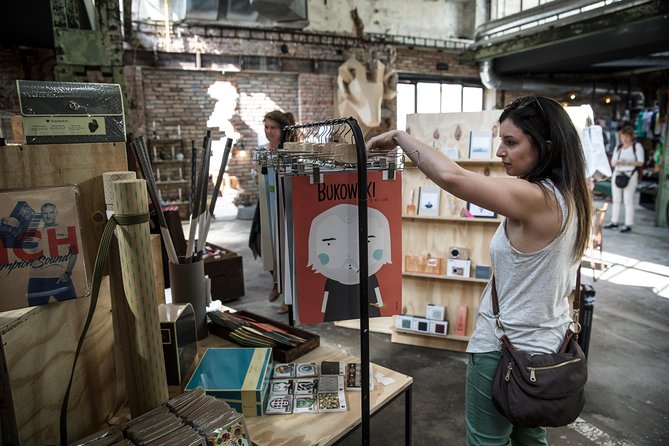
Around Tusarova, the tour leans more casual. You get photo time, plus options for beer, coffee, and street food. There’s also free time with shopping and an arts and crafts market visit.
This part is underrated because it breaks the “walk nonstop” feeling. It also helps you slow down just enough to look at details in the street art you’ve been seeing, without your brain already being on the next stop.
Planning note: it’s still a guided tour schedule, so don’t treat this as a free day. But it’s a good place to grab something and reset.
Hidden skatepark time, with a legal graffiti wall
After that, you’ll head to a hidden skatepark with a legal graffiti wall. The purpose isn’t just to show cool visuals. It’s to show how graffiti and street art are handled when they’re allowed to exist in a structured way.
You’ll learn how many street artists start small, and you can see that development in real time. If you’re into the process behind the art, not only the finished pieces, this is a highlight.
What to watch: the skatepark stop is about art and the scene, not a formal “performance.” If you’re expecting a long skateboard show, you might be disappointed. If you’re happy to observe, take photos, and listen, you’ll enjoy it.
Steampunk underground club detour, for pure alternative vibes
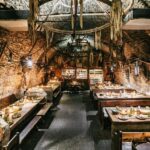
The tour also makes room for an off-the-beaten-track detour to a steampunk underground club. This is where the experience stops feeling like a history lecture and starts feeling like an afternoon with people who know where the interesting doors are.
Why it’s valuable: it shows how alternative Prague isn’t only murals on exterior walls. It’s also themed spaces, music culture, and creative community building.
Point and the small wooden installations you’ll learn to spot
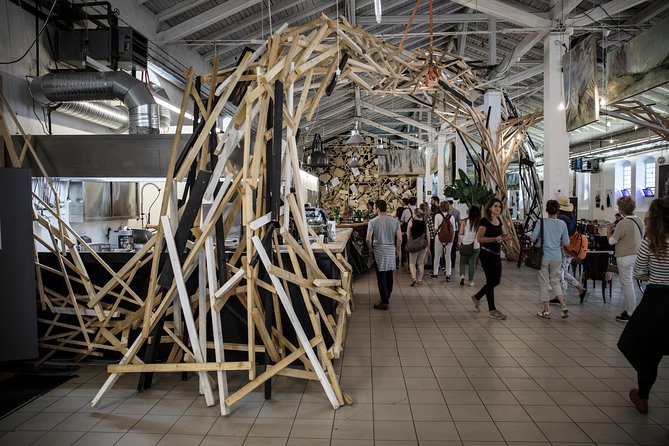
One of the better teaching tricks in this tour is when the guide introduces you to specific artists and then helps you find their work as you move. You’ll hear about street artist Point, who installs small wooden births all over Prague, and you’ll spot some of them during the tour.
This is great for two reasons. First, it turns the walk into a scavenger hunt. Second, it helps you understand street art as a network of creators and interventions, not random tags.
If you love noticing details, you’ll feel like you’re “reading” the city by the end.
Institute of Crypto Anarchy, plus murals by Dede, Tim Marsh, and AEC
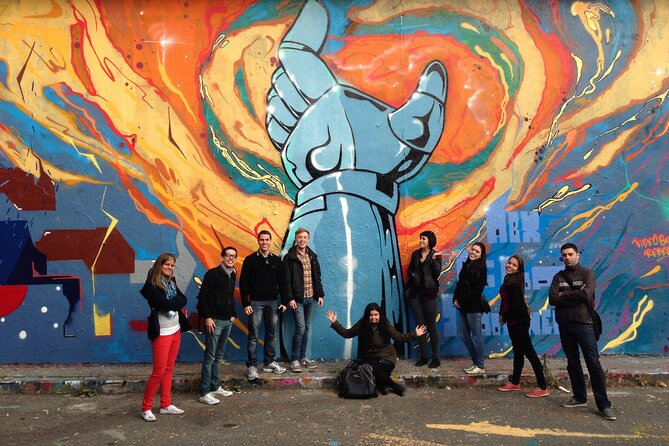
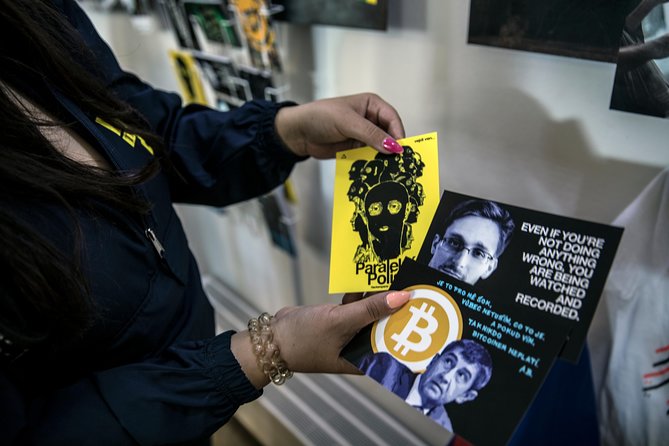
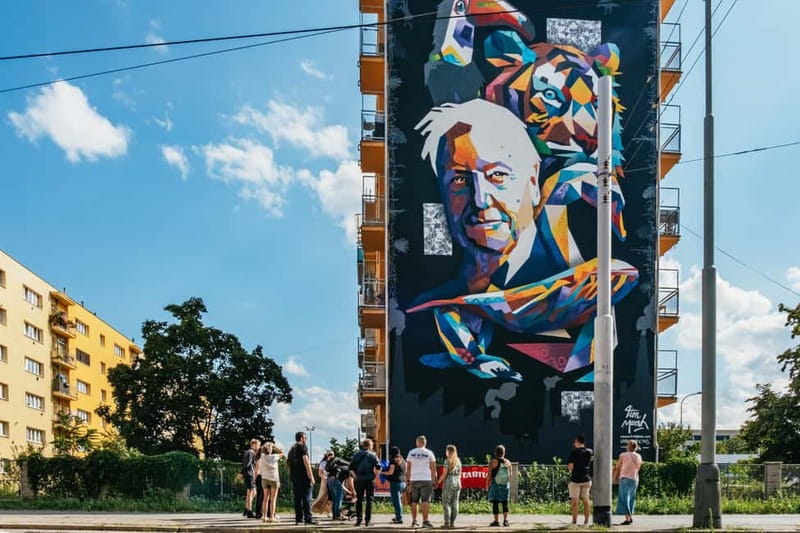
Later in the route, you’ll learn about the Institute of Crypto Anarchy and see murals painted by Dede, Tim Marsh, and AEC. The names matter here because they ground the visuals in an ongoing scene.
This is also where the tour ties in post-socialist changes in a more grounded way. Street art becomes a way to negotiate identity, politics, and subculture, especially when institutions do not represent everyone equally.
If you’re the type who likes understanding why people create what they create, this segment usually lands extremely well. It’s not just “what you’re seeing,” it’s “what it means that it exists here.”
Vnitroblock break: a secret café in a former factory
Then you reach Vnitroblock, described as a cool hipster secret café in a former factory. This is your coffee break window in the middle of the tour, about 15 minutes, so you get a breather without falling behind the schedule.
What makes Vnitroblock worth the stop:
- You can browse for unique fashion pieces
- You can try homemade gin from a local distillery
- You might see an exhibition
- You can just sit and study the murals and décor
It’s also a place where you can watch how Prague creative culture mixes work and play. That matters because later, at the end, you’re not just visiting a music venue. You’re stepping into a space that’s part art, part community.
Cross Club finale: techno in a recycled-metal world
You end at CROSS Club, a community space and home to one of Prague’s famous techno clubs. It’s iconic for its industrial look, built from old buses, cars, and other recycled metal parts.
This ending works because it ties everything together. Earlier, you learned about art as a public voice and about alternative neighborhoods as living spaces. At CROSS Club, you see how that same DIY spirit becomes a nightlife institution.
The tour ends with a photo stop and a guided look, and there’s typically an option to catch the vibe while street food and drinks are available around the venue area. Even if the exact timing of any event varies, the place itself is the point.
Price and logistics, is $32 good value
At $32 per person for about 150 minutes, the price feels fair for what you’re getting: a structured route, a live English guide, multiple off-center stops, and a strong emphasis on context.
Public transport is the only extra requirement, and you’ll need valid tickets since the tour uses trams. The guidance is to use either two 90-minute tickets or a 24-hour ticket, and that also lets you revisit recommended areas the same day or the next day.
Here’s how I think about value:
- If you only want Old Town monuments, this won’t feel worth it.
- If you want a guided path into neighborhoods like Holešovice, plus real local tips for bars, clubs, galleries, and underground events, then $32 is a bargain.
What the guides do really well, and why it shows
The guide quality is the repeated theme in this experience. You’ll see names like Eduardo, Ed, Tomas, Anna, Sany, and Sandra show up again and again, and the praise is consistent: guides are friendly, organized, and tuned into Prague’s alternative culture.
The best part is that the guides tend to connect dots for you. They explain street art sources and tell you how post-communist life shaped creative expression. They also share practical “after the tour” ideas, like where to shop, which bars to try, and which neighborhoods are worth exploring next.
If you’re worried about being left behind at tram stops or feeling rushed, that’s the part you should be confident about. The tour is paced with short segments, photo stops, and built-in breaks.
Who this tour suits best
Book this if you:
- Want Prague through street art, design, and music culture
- Care about what happened after communism and how that appears in public space
- Like neighborhoods, not only landmarks
- Want inclusive stories that touch on minorities and LGBT+ life
- Prefer walking with a guide who can point out details you’d miss alone
Skip it if you:
- Only want the “big five” classic sights
- Dislike political context in art
- Prefer museums with quiet interiors for most of the day
Should you book this alternative Prague walking tour?
Yes, if your Prague bucket list includes seeing what’s current and local, not just historic center highlights. This tour gives you that counterweight, with a clear path through Holešovice, strong visual stops like the Milada Horáková mural, and a finale at CROSS Club that makes the whole day feel like part of the city’s real rhythm.
If you’re short on time and only want Old Town, take the classic monuments tour instead. But if you want Prague with present-day attitude, this one is hard to beat for the price.
FAQ
How much does the Alternative Prague Walking Tour cost?
The tour costs $32 per person.
How long is the tour?
The duration is about 150 minutes.
What language is the guide?
The guide speaks English.
Where do I meet the guide?
Meet your guide outside of the Foot Locker store window at the main entrance of the Palladium shopping center in Republic Square. The guide will be holding a black or dark blue umbrella.
Do I need a public transport ticket?
Yes. The tour uses public transportation, so you must have a valid ticket (either two 90-minute tickets or a 24-hour ticket).
Is there a break during the tour?
Yes. There is a 15-minute coffee break in the middle of the tour, and there are several opportunities to use the restroom.
What if my plans change, can I cancel?
You can cancel up to 24 hours in advance for a full refund.
Newly posted under the arches of Prague

Walking Tours, compared.
3-Hour Walking Tour of Old Town & Prague Castle
Read our review →
Ghost Walking Tour Where Legends Come To Life
Read our review →
Jewish Quarter Walking Tour with Admission Tickets
Read our review →
Prague Guided Walking Tour and Cruise with Authentic Czech Lunch
Read our review →
Old Town and Jewish Quarter Guided Walking Tour
Read our review →
Prague Ghost and Legend of Old Town Walking Tour
Read our review →
Prague 3-hour Afternoon Walking Tour including Prague Castle
Read our review →
Ghosts and Legends Nighttime Guided Walking Tour
Read our review →Browse the lists this tour appears in