
Reviewed · WALKING TOURS
Prague: a walk among the installations of David Černý or a visit to the Mausoleum
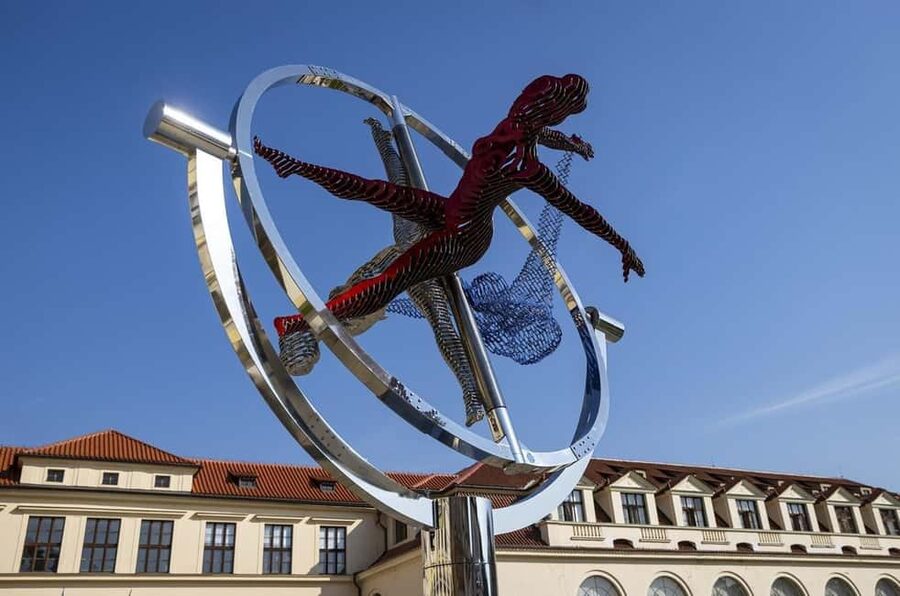
Prague has a funny way of getting under your skin. This guided tour uses David Černý sculptures to read the city with new eyes, either on a street-walk route or inside Černý’s Mausoleum, where you get context you will not see from the sidewalk. I especially love the critical, in-depth explanations of how these works use irony, provocation, and social commentary, and I really like how the guide connects the artworks to Prague’s cultural DNA.
One thing to plan around: this experience is not suitable for people with mobility impairments, and the outdoor option also involves walking between several stops. If you are sensitive to edgy humor and political targets, also know the tone is intentionally blunt and discussion-friendly.
In This Review
- Key points to know before you go
- Prague through David Černý, not postcard sights
- Two routes in 1 to 3 hours: city installations vs the Mausoleum
- Option 1: Walk the public installations across central Prague
- Option 2: Step into Černý’s private world at the Mausoleum
- The outdoor stop list, explained like a real conversation
- Equestrian St. Wenceslas: the route’s loud opening
- Freud suspended: the unsettling idea of looking at the self
- Embryo: where the body becomes a question
- Havel Memorial: politics without polite distance
- Franz Kafka’s rotating head: disorientation as a design feature
- Three women on the Deymov Palace: dignity, weirdness, and social signals
- Woman at the Václav Havel Library: art and power in the same sentence
- Butterflies on the Maj Palace: light visuals, heavy reading
- Piss: provocation as a pressure test
- V.E.R.A.: initials that feel like a clue
- Babies in Kampa: the problem with innocence
- Tank Torso: the body of war reduced to fragments
- Lilith (optional): myth in modern costume
- Pink tank (route drop-off): leaving with the statement still loud
- The Mausoleum option: why the private collection changes everything
- Why Lorenzo Polo is a big deal on this tour
- Price and value: is $42 worth it?
- Who should book this, and who might not love it
- Language, timing, and practical tips for the walk
- Should you book this David Černý tour or skip it?
- FAQ
- How long does the Prague David Černý tour take?
- What are the two options for this experience?
- Where do I meet for the tour?
- Is the tour available in English?
- How big is the group?
- Is this tour suitable for people with mobility impairments?
Key points to know before you go
- Two clear options: an outdoor route among public Černý installations, or a visit to David Černý’s Mausoleum in Smíchov.
- Italian-language tour: the guided experience runs in Italian, and some content may be shown in its original language.
- Small group, limited to 5: more room for questions and back-and-forth at each stop.
- Stop list includes the big hits: Freud suspended, Kafka’s rotating head, V.E.R.A., the Tank Torso, and more.
- You’ll get frequent photo stops with short guided reading moments (ideal if you like to slow down and really look).
- Guided by Lorenzo Polo: praised for being friendly, highly knowledgeable, and able to answer questions without rushing you.
Prague through David Černý, not postcard sights
David Černý does not do subtle. His sculptures interrupt the usual Prague rhythm. On this tour, you follow that interruption on purpose, and it changes how you see the streets.
You are not just ticking off famous statues. The guide leads a critical reading of each piece, focusing on how Černý mixes humor with discomfort, and how the work can feel both personal and political at the same time. You will talk through what you notice, and you do not have to speak in a single “correct” way. The point is to notice the layers, then compare your interpretation with the group.
The best part for me is that Černý’s art keeps moving when you look at it with a guide. It becomes less about spotting a sculpture and more about asking: why is it placed here, what does it imply, and why does it provoke?
Two routes in 1 to 3 hours: city installations vs the Mausoleum
You choose your own route, and the choice affects the vibe.
More lanes taken at street level:
- Prague: 3-Hour Walking Tour of Old Town & Prague Castle
★ 4.7 · 5,696 reviews - Prague: Ghost Walking Tour Where Legends Come To Life
★ 4.4 · 5,253 reviews - Prague: Jewish Quarter Walking Tour with Admission Tickets
★ 4.7 · 3,729 reviews
Option 1: Walk the public installations across central Prague
This is the street version. You start at the equestrian Statue of St. Wenceslas and then work your way through key sites where Černý’s works interact with Prague architecture and history. Along the route, you hit a mix of surreal forms, kinetic or interactive elements, and overt provocations.
Expect a rhythm of short guided readings, brief breaks, and photo stops. The walking segments are short between points, which keeps the pace friendly for an art-focused afternoon. If you like structure, this option gives it. If you like wandering, it still feels guided, not rigid.
Option 2: Step into Černý’s private world at the Mausoleum
If you want something more complete, you choose the Mausoleum. This is a private exhibition space, and it is where you see Černý’s creative universe in a tighter, more intimate setting.
Here you are not only looking at the finished public sculptures. The Mausoleum experience includes unpublished works, drawings, miniatures, portraits, early pieces, kinetic sculptures, and design projects that do not show up elsewhere. For many people, that is the “aha” moment, because you see the evolution of thinking and technique, not just the final public shock.
Also, your starting and ending point changes with this option. You meet at the Mausoleum address in Smíchov (Nádražní 2, 150 00 Praha 5-Smíchov), and you leave from there too.
Also chalked up in Prague
The outdoor stop list, explained like a real conversation
The city route is designed around a core set of works. Here is what each stop is really doing, and what to watch for when you get there.
Equestrian St. Wenceslas: the route’s loud opening
You start with the equestrian St. Wenceslas installation. It sets the tone fast. This is Prague’s symbol language made physical, so it is a strong way to begin a tour about how Černý challenges, repurposes, and re-frames meaning.
Freud suspended: the unsettling idea of looking at the self
Freud suspended brings a psychoanalytic angle into public space. Look closely at how the sculpture positions the body and the viewer’s gaze. You will likely discuss how Černý uses recognizable cultural references and twists them into something tense.
Embryo: where the body becomes a question
Embryo leans into the idea of origins, vulnerability, and what people try to keep hidden. In a guided setting, this stop becomes more than an object. It turns into a prompt: what does it mean to stage beginnings in public?
Havel Memorial: politics without polite distance
The Havel memorial connects Černý’s style to Czech political memory. You will get guidance on how the work reflects more than one layer of society, and why provocation can function as critique rather than just shock.
Franz Kafka’s rotating head: disorientation as a design feature
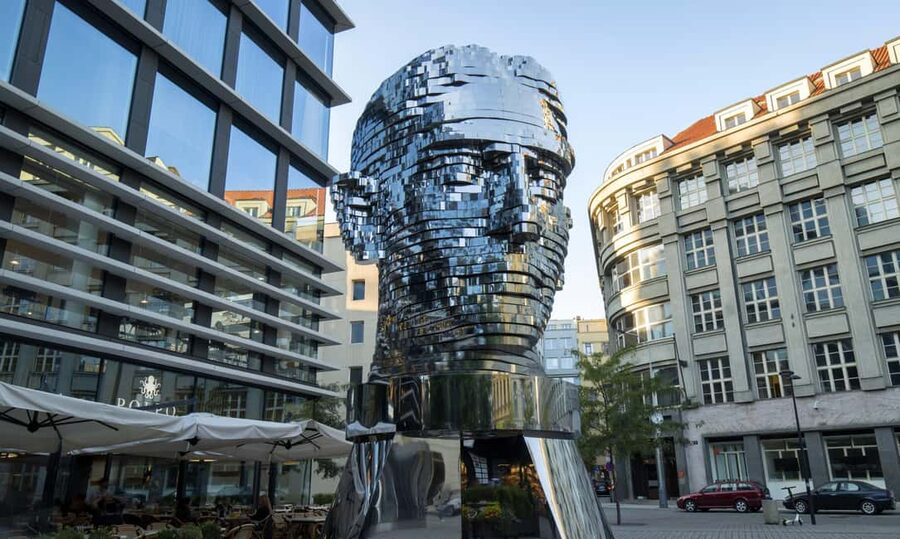
One of the most fun stops is Kafka’s rotating head. The word rotating matters here. It changes the experience of looking from a fixed viewpoint into something reactive. You get a literal sense of uncertainty, perspective shifting as you move.
Three women on the Deymov Palace: dignity, weirdness, and social signals
This is one of those placements where the building matters as much as the sculpture. The guide’s critical reading helps you connect the figures to the broader social vibe of the neighborhood, not just their visual form.
Woman at the Václav Havel Library: art and power in the same sentence
This stop links Černý’s sculptural language to a cultural institution. In practice, it pushes you to ask: how does public art behave when it sits near places built for ideas and speech?
Butterflies on the Maj Palace: light visuals, heavy reading
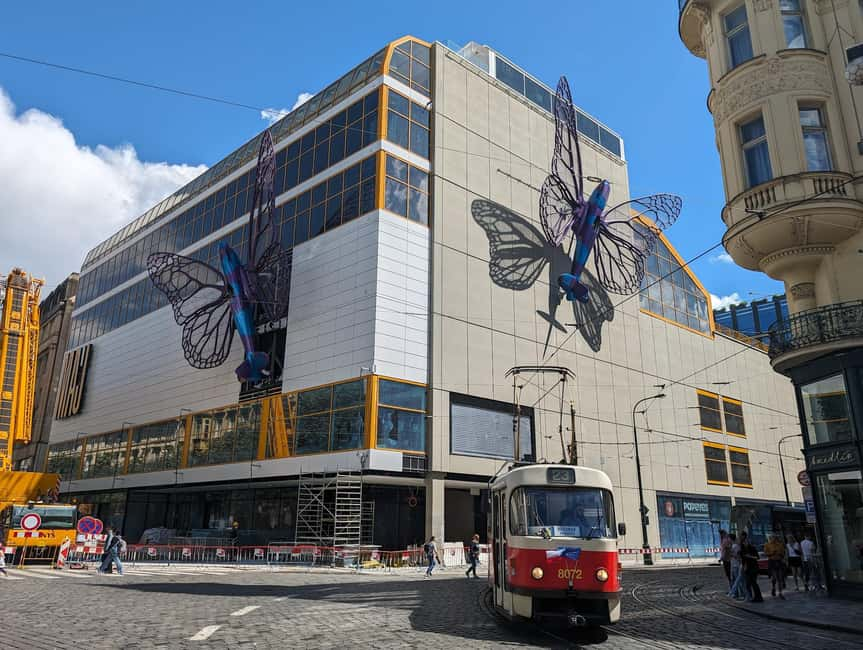
Butterflies sound harmless, but Černý rarely lets the first impression be the final one. This stop is a good example of why the tour’s guided commentary matters. The humor and the symbolic weight can pull against each other.
Piss: provocation as a pressure test
Piss is exactly what it sounds like, and the point is that discomfort has meaning. Your guide will help you interpret the work beyond the reaction, focusing on how the sculpture challenges public norms and forces a question about what society tolerates.
V.E.R.A.: initials that feel like a clue
V.E.R.A. is the kind of piece you can easily skim past without context. With a guide, it becomes more of a puzzle: a name built from letters, meant to trigger interpretation. It is the sort of work where discussion is the whole value.
Babies in Kampa: the problem with innocence
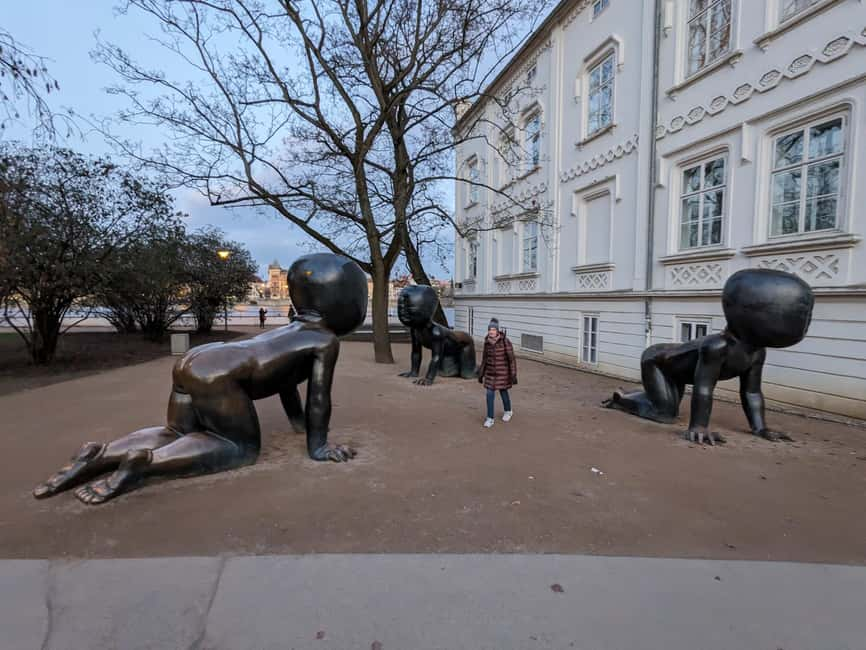
Babies in Kampa brings an emotional charge. It is hard to look at without bringing your own feelings. That is why the tour’s open dialogue works so well here. You compare interpretations and learn how Černý uses innocence as a counterweight to satire.
Tank Torso: the body of war reduced to fragments
Tank Torso shifts from offense to analysis. You are looking at a broken-down idea of force. It helps to pay attention to what remains, what is missing, and how that changes the viewer’s moral distance.
Lilith (optional): myth in modern costume
Lilith is optional, so whether you see it depends on your route flow. It fits the tour’s theme of layered language, mixing mythic reference with Černý’s habit of turning familiar stories into uncomfortable mirrors.
Pink tank (route drop-off): leaving with the statement still loud
If you do the outdoor route, you finish at the pink tank. The color gives it a surreal snap, but you should treat it like a final thesis: Černý makes contradiction part of the message.
The Mausoleum option: why the private collection changes everything
The Mausoleum visit is for people who want to see how the public pieces get made.
In this setting you can look at unpublished works, drawings, and miniatures. That matters because sculpture in public space can feel like a finished announcement. Here, you see the drafting process, the early experimentation, and the design logic.
You also get to view kinetic sculptures and design projects that are not visible in the street circuit. For me, this is where the tour earns its money. You are not paying just to get into a building. You are paying to understand how Černý’s ideas migrate from sketch to form, and how technique supports the critique.
If you care about art history but do not want a museum lecture, this option gives you a guided path that still feels like discovery.
Why Lorenzo Polo is a big deal on this tour
A lot of art tours talk. This one listens while it talks, and the guide matters.
Lorenzo Polo stands out for being described as friendly and deeply connected to the subject. In particular, the tour experience highlights that he is personally connected to David Černý, which can translate into insider context you would not normally get. That kind of access is valuable when the works themselves are built to be misunderstood at first glance.
The other practical plus: the pace is guided but not rushed. The vibe is conversation-like, with thoughtful answers to questions. If you enjoy asking why something is there, or what a specific detail might be doing, this tour supports that style.
Price and value: is $42 worth it?
At about $42 per person for a tour lasting 1 to 3 hours, value depends on what you want from your time in Prague.
If you only want casual sightseeing, this might feel like too much focus on interpretation. But if you like art that pushes back, and you want more than surface captions, the price starts to make sense for three reasons:
- A guide-led reading at multiple stops: you are not just looking at sculptures, you are learning a way to look.
- Small group size (limited to 5): you get interaction time, which is rare for walking tours that cover lots of ground.
- Two formats: the outdoor route gets you street context, while the Mausoleum adds behind-the-scenes development.
For the outdoor option, think of it as a guided “look closer” ticket. For the Mausoleum option, think of it as a shorter but smarter way to understand an artist’s career arc.
Who should book this, and who might not love it
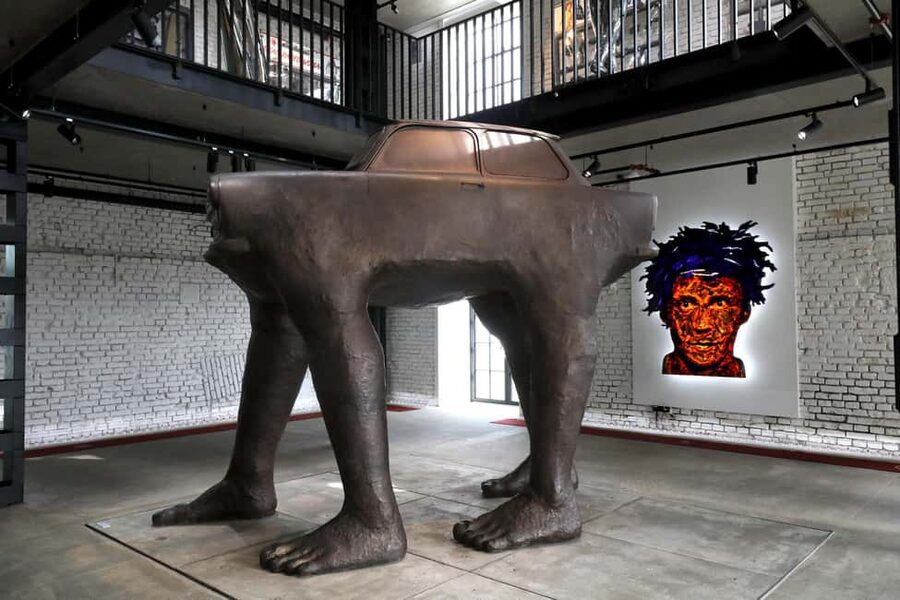
This is a great fit if you:
- like contemporary art that is not afraid to be uncomfortable
- enjoy political or social commentary, especially when it is delivered with humor
- want a guide who will help you interpret, not just point
This is less ideal if you:
- need step-free access or mobility support, since it is not suitable for people with mobility impairments
- prefer tours that stay family-neutral in tone, because Černý’s work leans provocative by design
- expect a silent self-guided museum experience
Also note the tour language is Italian. If you do not speak Italian, your experience may depend on how much content is offered in original language and how much can be followed through the guide’s delivery.
Language, timing, and practical tips for the walk
The tour runs in Italian with Lorenzo Polo as the live guide, and some content may appear in its original language. If you have basic Italian, you will likely catch more of the nuance. If you are starting from zero, still go with an open mind, but be ready for some parts to fly by faster than you want.
Timing-wise, it is built for 1 to 3 hours. That window is long enough to have a real guided discussion and short enough to fit into a busy Prague itinerary.
Two practical notes:
- Bring a camera or phone you like using, since there are multiple photo stops.
- Wear comfortable shoes. Even if segments are short, you are doing a walking route through central Prague.
Should you book this David Černý tour or skip it?
Book it if you want Prague to feel modern, messy, and thought-provoking. This is not the tour for people who only want the pretty side of the city. It is for people who like art that makes you pause, argue with your own first impression, and then rethink.
Skip it if you want straightforward sightseeing with minimal discussion, or if you need mobility-friendly access. And if Italian is a challenge, consider the route that best matches your comfort with language, because the guide experience is central to the value.
If you are already a fan of Černý’s style, this is the kind of tour that helps you become more of one. If you are not yet a fan, it gives you a strong chance to understand why his work keeps causing reactions.
FAQ
How long does the Prague David Černý tour take?
The duration is 1 to 3 hours, depending on which option you book and the starting time available.
What are the two options for this experience?
You can choose an outdoor route that walks among David Černý’s public installations in Prague, or you can visit David Černý’s Mausoleum, his private museum.
Where do I meet for the tour?
Meeting points vary by option. For the outdoor route, you meet at the Equestrian Statue of St. Wenceslas. For the Mausoleum option, you meet at David Černý’s Mausoleum, Nádražní 2, 150 00 Praha 5-Smíchov.
Is the tour available in English?
The live tour guide runs in Italian, and some content may be shown in its original language.
How big is the group?
The group is small, limited to 5 participants.
Is this tour suitable for people with mobility impairments?
No, it is not suitable for people with mobility impairments.
Newly posted under the arches of Prague



Walking Tours, compared.

3-Hour Walking Tour of Old Town & Prague Castle
Read our review →
Ghost Walking Tour Where Legends Come To Life
Read our review →
Jewish Quarter Walking Tour with Admission Tickets
Read our review →
Prague Guided Walking Tour and Cruise with Authentic Czech Lunch
Read our review →
Old Town and Jewish Quarter Guided Walking Tour
Read our review →
Prague Ghost and Legend of Old Town Walking Tour
Read our review →
Prague 3-hour Afternoon Walking Tour including Prague Castle
Read our review →
Ghosts and Legends Nighttime Guided Walking Tour
Read our review →Browse the lists this tour appears in