
Reviewed · WALKING TOURS
Prague Art Nouveau and Cubism Walking Tour
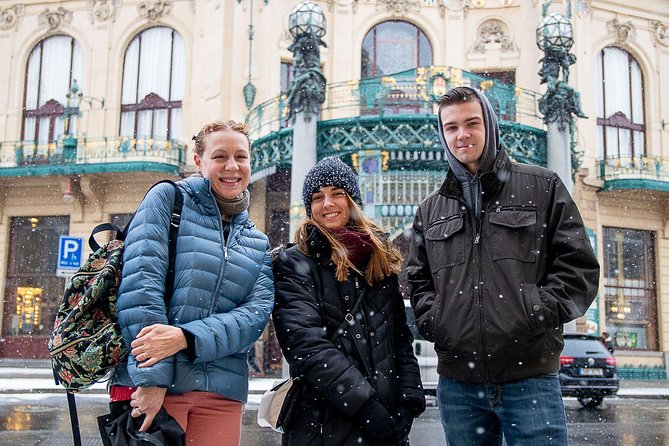
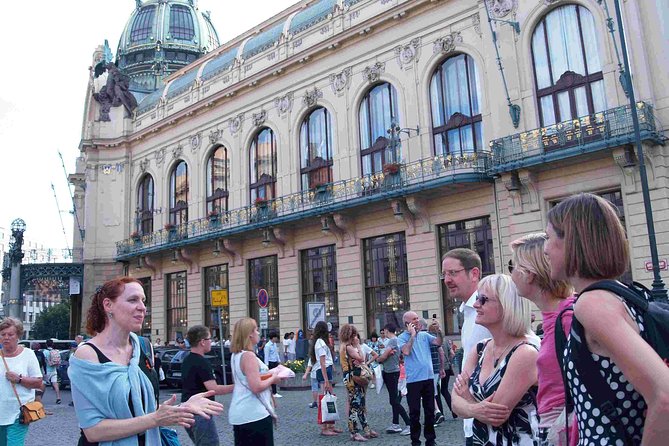
Prague’s buildings tell stories fast. On this 3-hour walking tour, I love how Art Nouveau and Cubism architecture are read side by side, and I love the small-group format with a historian guide who keeps the explanations clear and interactive. One consideration, you will walk between multiple sites, so comfortable shoes matter, especially on rainy days.
For the price of $126.71 per person, you are not just buying photos and street scenery. You get a guided, design-focused route that points out specific details, plus a mobile ticket for smoother entry at the stops. If you are expecting a long sit-down with lots of food included, plan on buying your own meals since food and drinks are not included unless specified.
In This Review
- Key things that make this tour worth your time
- Prague’s Art Nouveau and Cubism: The Big Idea
- Price and value: what $126.71 really buys you
- Starting at Ovocný trh and ending by Café Louvre
- House of the Black Madonna: Prague’s Cubist punch
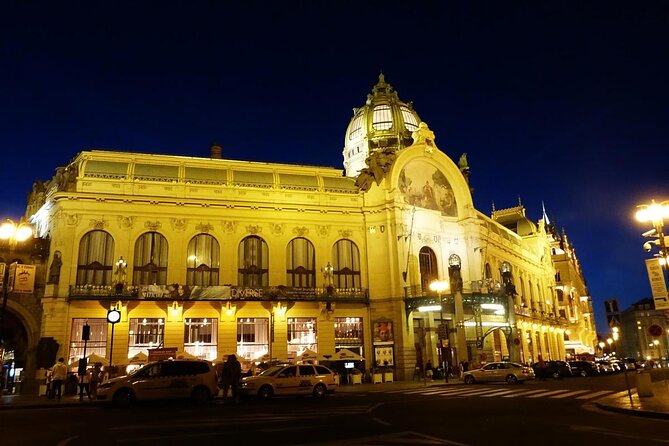
- Obecní dům and K+K Hotel Central: Art Nouveau you can actually spot
- Café Imperial and the inside story of Art Nouveau taste
- Czechoslovak Legion Bank: Cubism with a national story
- Prague Main Train Station dome: where style meets engineering
- Wenceslas Square, Lucerna Music Bar, and Prague’s design mood shifts
- The upside-down King Wenceslas: reading symbols, not just sculptures
- How the historian guide improves your attention span
- Practical tips so you get the most from each stop
- Should you book this Prague Art Nouveau and Cubism walking tour?
Key things that make this tour worth your time
- Small group (max 8 people), so you can ask questions without shouting into the wind
- Historian guide who connects architecture to Czech history and politics
- Art Nouveau plus Cubism contrasts, with clear prompts for what to look at on façades and interiors
- Iconic stops including Obecní dům, K+K Hotel Central, and the Prague Main Train Station dome
- Practical route flow, ending near Café Louvre so you can keep the day going
Prague’s Art Nouveau and Cubism: The Big Idea
This tour works because Prague lets you see change in real time. Art Nouveau in Prague leans into nature shapes and decorative elegance, with details like gingko leaves on façades and flowing, curvy design cues. It also reflects broader influences, including how Eastern art and aesthetics affected the look of the movement, from ornate light fixtures to distinctive typography.
Then, instead of treating Cubism like a totally separate topic, the walk flips to crystal-like forms and sharp geometry. Prague once played a major role in European Cubism, and the city shows it through pyramids, faceted surfaces, and bold structural shapes you can spot if somebody points them out. That contrast is the heart of the experience: you stop, you look, you learn what the style is doing, and then you notice it again on the next corner.
You also get context for why these design movements matter. The buildings are not just pretty. They are fingerprints of optimism, modern thinking, and later, the disruptions of European wars that changed the course of Prague history. That history layer turns architecture from decoration into a narrative you can follow.
Price and value: what $126.71 really buys you
At $126.71 per person for roughly 3 hours, the value comes from three things: time, expertise, and access to meaning.
First is time efficiency. In one morning or afternoon block, you cover a route that hits both architectural styles and key landmarks, instead of bouncing randomly across town. Second is the historian guide. The guide is there to show you what to notice: light fixtures, lettering, geometric language, and how engineering and civic design show up in everyday buildings.
Third is that many stops are listed as admission ticket free, which helps keep the cost predictable. You still pay for the guidance, but you are not likely to get nickeled and dimed by attraction fees at every stop.
One thing to keep in mind: this is a walking tour, not a museum crawl. If you want long indoor time in dim galleries, you may feel the pace is quick. If you enjoy exterior details and brief interior glimpses, this route hits a sweet spot.
More lanes taken at street level:
- Prague: 3-Hour Walking Tour of Old Town & Prague Castle
★ 4.7 · 5,696 reviews - Prague: Ghost Walking Tour Where Legends Come To Life
★ 4.4 · 5,253 reviews - Prague: Jewish Quarter Walking Tour with Admission Tickets
★ 4.7 · 3,729 reviews
Starting at Ovocný trh and ending by Café Louvre
You meet at Ovocný trh 19 in Staré Město. That location is central and also convenient for public transportation, which matters because you can build your day around the tour without complicated transfers. The tour can run in the morning or afternoon, so you can pick the departure that matches your sightseeing rhythm.
You finish at Café Louvre, Národní 22, close to lots of restaurants and attractions. This is a smart ending point. It gives you a natural place to pause, cool down if needed, and decide what to do next without dragging yourself across town.
Café Louvre also adds a nice cultural touch. The café opened in 1902, and famous figures connected with Czech and European intellectual life, including Franz Kafka, Albert Einstein, and T. G. Masaryk, were associated with the place. Even if you just do a quick drink or pastry afterward, it helps close the day with a turn-of-the-century atmosphere.
House of the Black Madonna: Prague’s Cubist punch
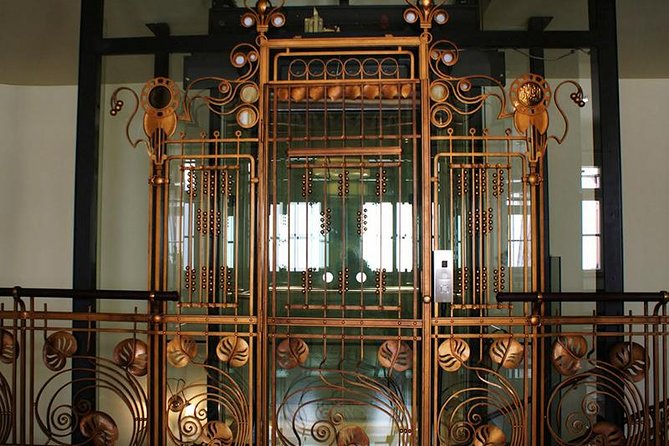
The tour opens at House of the Black Madonna, where you get your first hit of Prague Cubism. The building’s style is described as uniquely Cubist, and that matters because it sets expectations for the rest of the walk. You are not just learning definitions of Cubism. You are learning how it looks when it is built into real urban architecture.
This stop is short, about 10 minutes, which is exactly right for an opening. You need enough time to orient your eye: to notice sharp angles, faceted surfaces, and the overall geometric mood. Then the guide can contrast that quickly with the next style so your brain starts building the comparison right away.
If it is rainy, this stop is still valuable. You will not be stuck reading a plaque. You can watch how the shape language carries through even when the street is wet and gray. And by the time you reach the next landmark, you will have a clear mental baseline for what counts as Cubist in Prague.
Also chalked up in Prague
Obecní dům and K+K Hotel Central: Art Nouveau you can actually spot
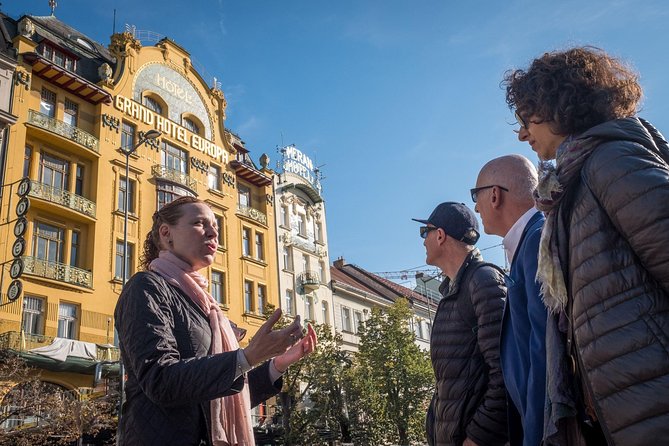
Next you head to Obecní dům, an iconic Art Nouveau landmark. This stop is about 15 minutes, giving you more time to look at the building’s character. Obecní dům is the kind of place where, once you know what to look for, you start noticing layers: decorative forms, ornamental rhythm, and the way elegance gets translated into stone.
From there, you move to K+K Hotel Central, noted as the first Art Nouveau building in Prague. That detail is more than trivia. It helps you understand why the early Art Nouveau look is so confident and stylistically distinct. It is like seeing the first draft of a major visual language before it spreads and evolves.
Between Obecní dům and K+K Hotel Central, the guide’s prompts matter. You learn to spot nature-inspired shapes like gingko leaves, and to notice how the style uses curved, graceful lines rather than straight, purely functional geometry. If you love visual pattern recognition, this is a highlight.
A small consideration: these are close enough to walk, but your eyes will want to linger. You have to trust the pacing, because the tour saves time for later contrasts, especially the Cubism and technology part.
Café Imperial and the inside story of Art Nouveau taste
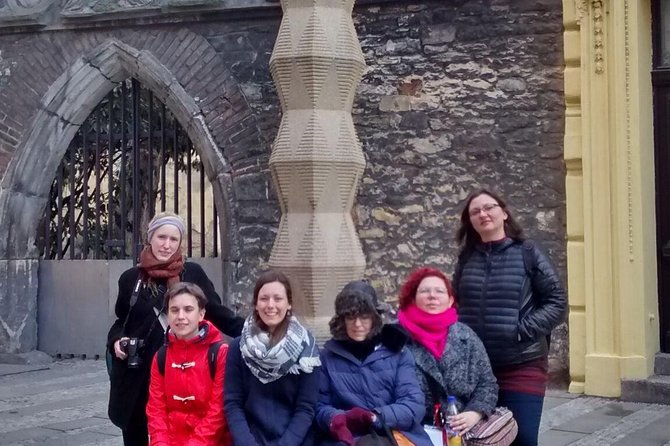
At Café Imperial, you get a look at a distinctive Art Nouveau interior. The timing is brief, around 5 minutes, but interior stops on architectural tours can be more about directing your attention than about fully “touring” a room.
This is where you start connecting the outside façade look to inside design choices. Art Nouveau is not only about decoration on the street. It is about how lighting, fixtures, and interior mood create a complete environment. The guide ties it to Eastern art influences too, which helps explain why some of the ornamental choices feel both local and surprisingly cosmopolitan.
If you enjoy atmospheric spaces, you will likely want to do a quick second look afterward on your own time. Just remember, short interior moments mean you should be ready with your camera and your focus, not your phone doomscroll.
Czechoslovak Legion Bank: Cubism with a national story
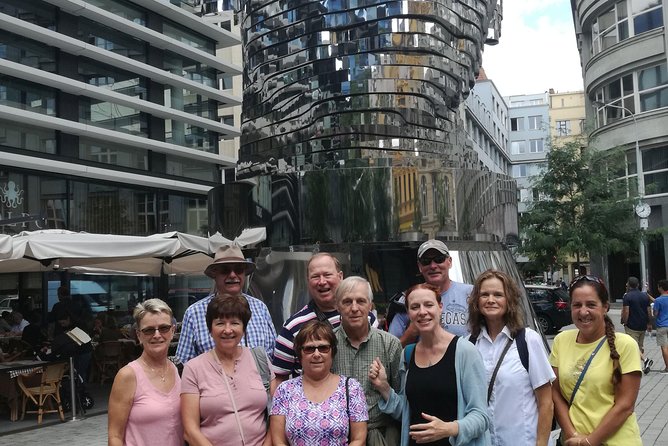
The tour then moves to Czechoslovak Legion Bank, with both Cubist architecture and an interior dedicated to the Czechoslovak Legion of the 1st World War. This stop is about 10 minutes.
This is one of the best “meaning” stops on the route, because it links style to identity. Architecture can look abstract, but buildings can also carry a message about national effort, memory, and political turning points. The bank’s dedication to the Legion helps you see why Cubism in Prague could function as more than an aesthetic trend. It could be part of a modern, forward-looking national narrative.
As you look around, pay attention to how the geometry feels like it has purpose, not just decoration. The guide typically frames it as part of Prague’s larger story, where art, politics, and modernization overlap.
Prague Main Train Station dome: where style meets engineering
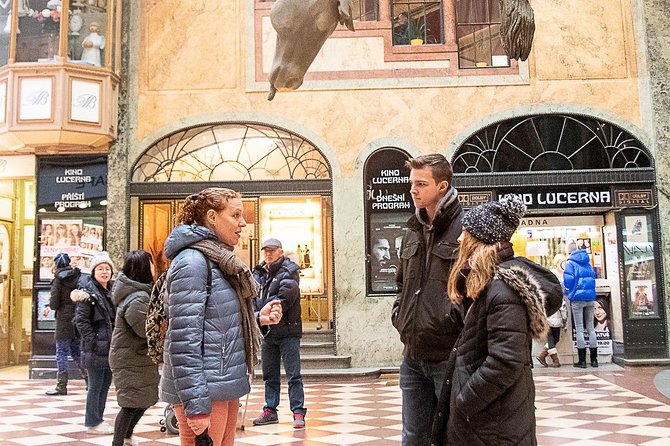
You end up at Praha hlavní nadrazi, Prague Main Train Station, known for a magnificent interior Art Nouveau dome. This stop is around 10 minutes.
This is a big one because it combines two things people often separate: beauty and infrastructure. The tour also highlights the construction technologies associated with the era, including central heating and ventilation, drinking water systems, hydraulic elevators, steam-powered laundry, and an intercom system. Those details make the station feel less like a random landmark and more like a snapshot of how modern life was being built.
If you get lost in big stations, you are in luck. The guide spends time helping you navigate the main station area, so it stops being intimidating and becomes usable. Even if you do not plan to take a train that day, the ability to move through the space confidently is a real practical payoff.
Wenceslas Square, Lucerna Music Bar, and Prague’s design mood shifts
Wenceslas Square is next, with talk centered on Art Nouveau and Art Deco architecture in the area. The stop is about 15 minutes. This is where you learn to spot how the city moves from one look to another without leaving the same street personality behind. It also helps you recognize Prague as a timeline of design choices, not a single frozen era.
Then you go to Lucerna Music Bar, about 10 minutes. The focus here is the Art Nouveau interior of the arcade spaces, described as some of the most beautiful arcades in Prague. Lucerna is also tied to the broader mood of the time: turn-of-the-century Czech optimism and avant-garde movements.
The guide then brings in the darker counterpoint. Wars changed Prague’s path, and those events influence what gets remembered, renovated, or repurposed. That kind of context makes the architecture feel less like a slideshow and more like a conversation between the past and the present.
The upside-down King Wenceslas: reading symbols, not just sculptures
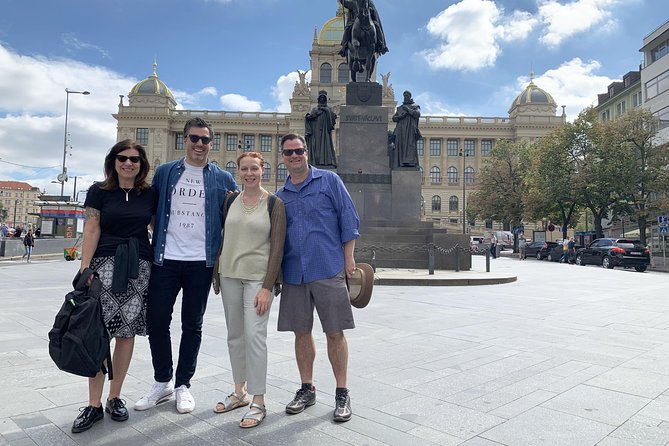
Near the end, you visit the Upside-Down Statue of King Wenceslas Riding a Dead Horse. This stop is around 10 minutes.
This is not the kind of statue you interpret by instinct. You need the story. The tour frames the symbolism in the context of Czech history and the Czech National Revival. That background helps you see it as political commentary, not just a quirky photo.
This final stop also helps you prepare for what happens after the tour: you start noticing symbolic choices in signage, façades, and memorials all over Prague. Once you learn to ask why something is shaped that way, you read the city differently.
How the historian guide improves your attention span
The tour lives or dies by the guide’s ability to turn architecture into something you can actively see. That is the major strength behind the consistently high ratings and the reason this walk is so repeatable as a learning experience.
Here is the guiding style you should expect:
- You get a historian who keeps explanations grounded in design choices, not abstract art theory
- You get time for questions while you are looking at actual buildings
- You get tailoring based on your interests, such as focusing more on Cubism or Art Deco depending on your preferences
- You might see smarter pacing options, including using public transit briefly if the group needs help covering distance efficiently
Some names that show up with strong feedback include Vadim, Betty, Matous, and Bonita, each bringing a different rhythm, but with the same goal: help you connect the look of the architecture to the lived story of Prague.
If you like being an active participant, this tour is a good match. If you prefer to just wander and absorb quietly, you can still do that, but you may want to ask at least a few questions so the guide can point out what you might otherwise miss.
Practical tips so you get the most from each stop
A few small moves help you enjoy the tour more, because the route is detail-heavy.
- Wear shoes you trust. You are walking between multiple landmarks in about 3 hours.
- Bring a camera, but also bring patience. Short interior moments work best if you quickly scan, then listen.
- Look for prompts. Think gingko leaf shapes for Art Nouveau and sharp, crystal-like geometry for Cubism.
- Plan your next meal near the ending point. The tour finishes near Café Louvre, where you can keep the day going without traveling far.
If you are traveling in rain, do not skip it. The guide still points out façade details and contrasts, and Prague’s stone and wet air can make the building textures feel even more dramatic.
Should you book this Prague Art Nouveau and Cubism walking tour?
Book it if you want a fast, focused way to understand Prague’s design identity. It is a good choice if you like architecture, enjoy history tied to real buildings, and prefer a small-group format where you can ask questions. The route hits major landmarks like Obecní dům, K+K Hotel Central, the Prague Main Train Station dome, and Lucerna Music Bar, while also connecting the aesthetics to practical and political context, including the role of technology in construction and the effects of war.
Skip it or rethink it if you dislike walking tours, or if you want long, deep museum time and minimal street-level stops. This is about seeing and learning from what is already in front of you, and doing it in a single half-afternoon or morning.
If you want Prague to feel like more than a collection of postcard streets, this tour is one of the better ways to get that “I understand what I am seeing” feeling early in your trip.
Newly posted under the arches of Prague

Walking Tours, compared.
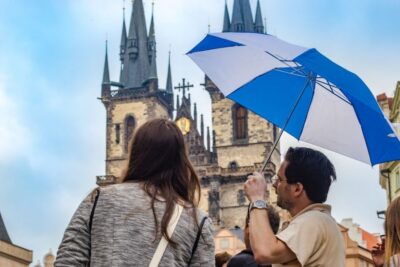
3-Hour Walking Tour of Old Town & Prague Castle
Read our review →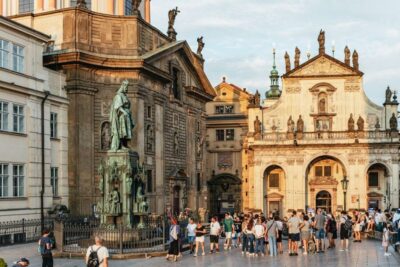
Ghost Walking Tour Where Legends Come To Life
Read our review →
Jewish Quarter Walking Tour with Admission Tickets
Read our review →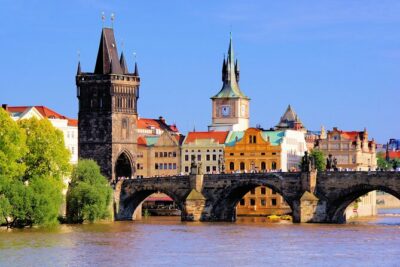
Prague Guided Walking Tour and Cruise with Authentic Czech Lunch
Read our review →
Old Town and Jewish Quarter Guided Walking Tour
Read our review →
Prague Ghost and Legend of Old Town Walking Tour
Read our review →
Prague 3-hour Afternoon Walking Tour including Prague Castle
Read our review →
Ghosts and Legends Nighttime Guided Walking Tour
Read our review →Browse the lists this tour appears in