
Reviewed · WALKING TOURS
Prague: Highlights Walking Tour to the German embassy 1989
Some days in Prague feel like sightseeing, then history steps in. This 150-minute walk turns Charles Bridge and Old Town into a story about 1989, straight from the streets.
I like how the route balances big postcard sights with small, specific moments tied to real people and real events. You get two clear anchors, Jan Palach Square and the German Embassy balcony associated with Hans-Dietrich Genscher.
Two things I especially appreciate: the clear focus on the day-to-day geography of communist Prague during 1968 and 1989, and the fact you see major landmarks while staying human-scale, on foot. The guide also answers questions in a way that makes the political story easier to follow, even if you only know the basics.
One consideration: this is a walking tour and it is not suitable for people with mobility impairments, so wear good shoes and plan for uneven sidewalks and steady strolling.
In This Review
- Key Things You’ll Notice on This Prague Walk
- Why This 150-Minute Highlights Tour Feels Personal in Prague
- Meeting at the Faculty of Law, Then You’re Off
- Charles Bridge Photo Stop: Prague Icons With 1989 in the Background
- Old Jewish Cemetery and Josefov Stops: Place Matters
- Jan Palach Square and the 1968 Shock You Can See in Context
- Velvet Revolution Memorial: How the Decade Connects
- Walking the Charles Bridge Again, Then Lennon Wall Next
- Wenceslas Square and Prague National Museum: Big Central Prague Energy
- Lesser Town Stops and the Long Walk Toward the Embassy
- The German Embassy Balcony of Hans-Dietrich Genscher: The Emotional Climax
- Price and Value: Is $32 Worth 150 Minutes?
- Who This Tour Suits Best, and Who Might Want Something Else
- Should You Book This Prague Highlights Walking Tour?
- FAQ
- How long is the tour?
- What language is the guide speaking?
- Where do I meet the group?
- Is the German Embassy interior open during the tour?
- What’s included in the price?
- Is there pickup from my hotel?
Key Things You’ll Notice on This Prague Walk
- A tightly planned route that connects the 1989 refugee route story to Prague street corners
- Charles Bridge plus a focused look at the German Embassy area from the outside
- John Lennon Wall as a visible memory marker, not just street art
- Jan Palach and 1968 Prague Spring context placed where it makes sense geographically
- Velvet Revolution Memorial stop that helps tie the decade-long arc together
- A German-speaking guide who keeps the pace readable and the explanations clear
Why This 150-Minute Highlights Tour Feels Personal in Prague
Prague can be a lot of things at once: gorgeous river views, Old Town squares that beg for photos, and alleyways that quietly hold decades of change. This tour uses that same city texture, but it gives you a spine to follow. Instead of random stops, you walk through neighborhoods while your guide connects them to key moments in the fall of communism.
The emotional payoff comes from how specific the history is. You’re not just hearing about 1989 in the abstract. You’re guided toward the balcony connection tied to Hans-Dietrich Genscher’s famous speech, and you also see memorial and remembrance points connected to earlier shocks like Jan Palach during the Prague Spring in 1968.
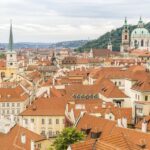
I also like that the tour treats Prague as a living map. The route moves through Old Town, Lesser Town (Malá Strana), and the former Jewish quarter area, so you can start to understand how different parts of the city relate to different periods of the 20th century.
Meeting at the Faculty of Law, Then You’re Off
You meet in front of the Faculty of Law at Charles University, nám. Curieových 7, in Prague’s Old Town. If you’re using metro, get off at Staromětká (about 550 meters away). Prefer tram? Tram 17 to Pravnicka Fakulta works well.
If you want a calmer start, pickup is optional in Prague 1, 2, 3, or in the city center near Můstek. This matters because the tour ends in Lesser Town, so starting near transit can help you avoid backtracking later.
My practical tip: arrive a few minutes early and use that time to get your bearings. Once the walking begins, the stops are timed like photo and orientation breaks, not long museum sessions.
More lanes taken at street level:
- Prague: 3-Hour Walking Tour of Old Town & Prague Castle
★ 4.7 · 5,696 reviews - Prague: Ghost Walking Tour Where Legends Come To Life
★ 4.4 · 5,253 reviews - Prague: Jewish Quarter Walking Tour with Admission Tickets
★ 4.7 · 3,729 reviews
Charles Bridge Photo Stop: Prague Icons With 1989 in the Background
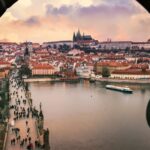
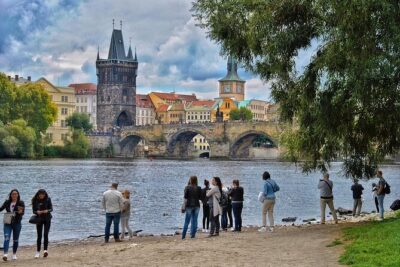
The tour kicks off with a Charles Bridge area photo stop, and you’ll also get scenic viewpoints along the way. It’s classic Prague territory, but here the bridge is more than a viewpoint. It’s a route marker in your mind, the kind you’ll remember later when you revisit the area.
Even if you’ve seen Charles Bridge before, this approach helps. You’re walking with a storyline in place, so each visual reminder feels connected instead of generic. And because the tour moves efficiently, you still keep time for the other key memories along the walk.
Old Jewish Cemetery and Josefov Stops: Place Matters
Next come photo stops connected to the Old Jewish Cemetery and then Josefov. These are short, but they’re meaningful, especially within a tour that also discusses displaced people, refugees, and political pressure in the 20th century.
A good way to use these stops is simple: look around and try to imagine daily life and scale, not just the headline. Even with limited time, you can tell when a guide is pointing out details that help the city feel lived-in rather than staged.
A courtyard deeper into Prague:
Jan Palach Square and the 1968 Shock You Can See in Context
One of the tour’s most powerful moments is stopping at Jan Palach Square, with a guided look that explains his role and what happened during the Prague Spring in 1968. The big idea here is that political change did not happen on a clean timeline. It came with pain, suppression, and symbols that people could not ignore.
If you care about 20th century European history but hate lectures, this stop is a good fit. You get the context, then you’re physically in the area where it matters, so the story sticks.
Velvet Revolution Memorial: How the Decade Connects
From there, you move to a Velvet Revolution Memorial stop. This is the kind of stop that helps you connect dots between the 1960s and the late 1980s.
Think of it like a hinge. Jan Palach’s story sits earlier in the arc, then the Velvet Revolution point helps explain how momentum gathered and then changed shape. It’s also a useful reset if the history has started to feel heavy, because it gives you a clearer sense of direction.
Walking the Charles Bridge Again, Then Lennon Wall Next
Yes, the tour includes Charles Bridge again, with photo stop, guided tour, sightseeing, and walking time. This repetition is not lazy. It’s a technique that helps you lock in your mental map. By the time you walk it, you’re no longer just seeing a bridge. You’re seeing a route through the city that matches the historical narrative you’ve been given.
After the bridge, you get to the John Lennon Wall. This stop matters because it represents memory as public space. You’re not reading a textbook page, you’re looking at a wall where people have left messages, and your guide helps you understand why it fits this story of dissent and hope.
I love this sequence because it moves you from official landmarks toward an expressive one. It’s one thing to talk about political events. It’s another to see how people used art, slogans, and marks on a wall to say something when other outlets were limited.
Wenceslas Square and Prague National Museum: Big Central Prague Energy
Then it’s Wenceslas Square with photo stop, visit, guided tour, and sightseeing time, followed by a brief Prague National Museum photo stop. This section shifts the feel to the wide-open, grand axis of central Prague.
You might not spend long at each single point, but that can be a plus. The tour keeps you moving while your guide connects the dots between what you’re looking at now and how the city functioned during the communist period.
A simple strategy here: don’t try to do the whole square in one moment. Instead, look at where people flow, what buildings frame the space, and how your earlier history stops help you interpret what this place represented. Even a short time can help you stop treating Prague as only beautiful, and start treating it as strategic.
Lesser Town Stops and the Long Walk Toward the Embassy
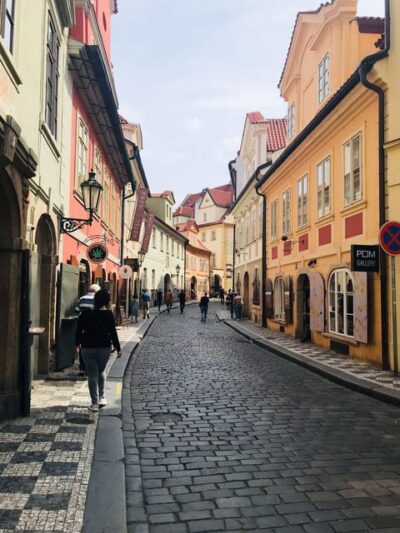
The route continues toward Malostranské Square, then moves on foot for a short stretch. This is the part where Prague starts to feel more intimate again, with smaller streets and a sense of being closer to daily life.
These stops also set you up for the tour’s climax. Without pushing into extra stops, your guide times the walk so you arrive near the German Embassy area with enough energy to actually absorb what you’re about to see.
The German Embassy Balcony of Hans-Dietrich Genscher: The Emotional Climax
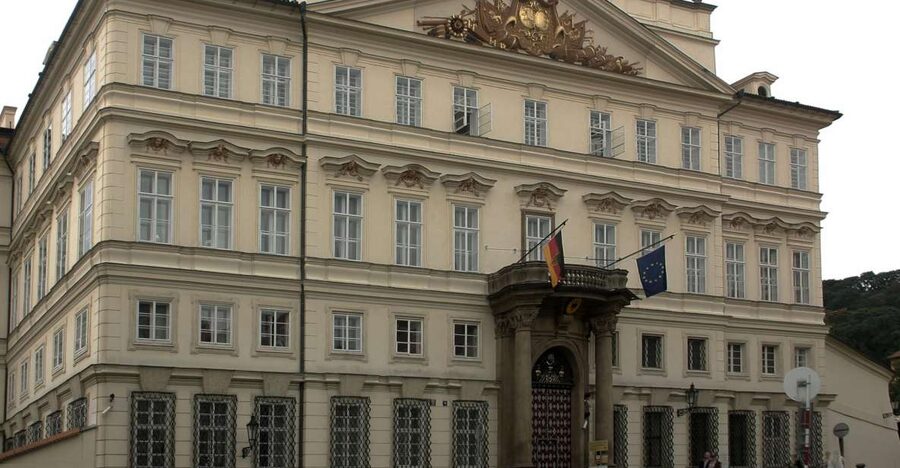
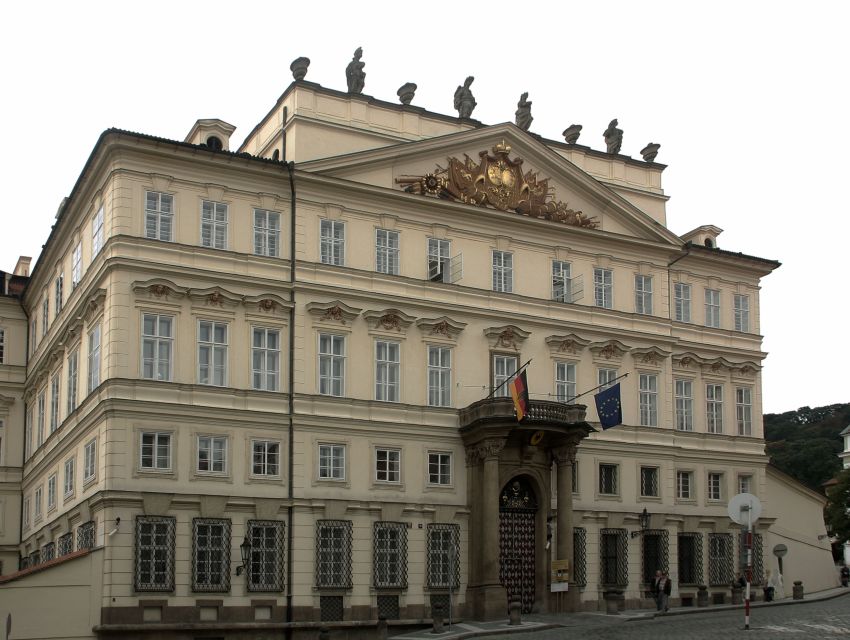
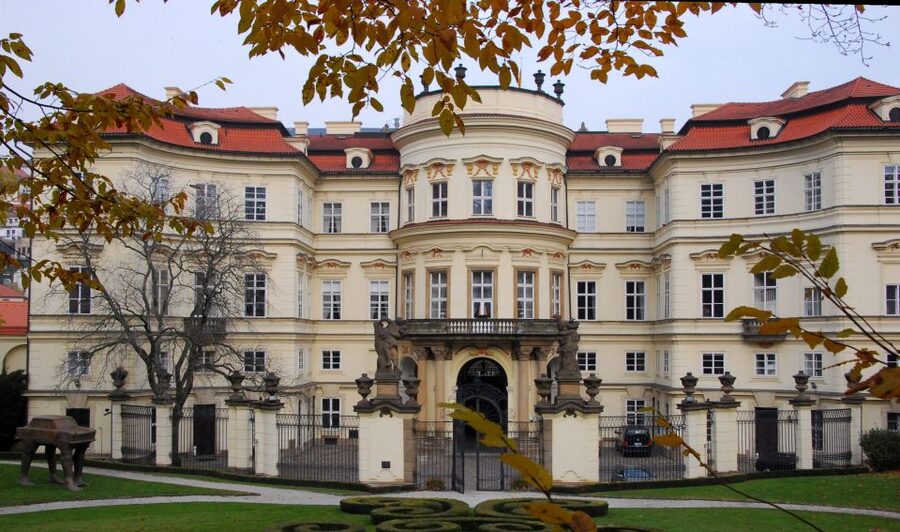
This is the moment most people remember. You reach the Embassy of Germany, Prague area for a photo stop and sightseeing. The guide points out the balcony connection tied to Hans-Dietrich Genscher’s famous speech.
The history thread matters here. The tour describes how East German citizens fled, including the path described as through Poland and Hungary, heading toward the West German Embassy in Prague. Even if you know the headlines, putting that story right where it happened in your imagination makes it hit harder.
The embassy interior is not open to the public, but that does not mean the stop is thin. You still get the exterior view, you still get the balcony direction, and you get the context that explains why that balcony became a symbol.
I also appreciate how the stop can land emotionally. One review story highlighted returning to that balcony area after decades, with the kind of personal memory that makes history feel less like a chapter and more like a lived moment. If you like your tours to have a human center, this is where it shows.
Price and Value: Is $32 Worth 150 Minutes?
At $32 per person for a 150-minute licensed German-speaking guided walk, the value is in what you get between the photos.
You’re paying for:
- a route that groups major attractions into one coherent historical narrative
- a guide who can answer questions during stops, not just recite a script
- time saved, because you’re moving efficiently across Old Town and Lesser Town with a plan
You’re not paying for food, and there’s no hotel meal stop built in. So if you’re doing this as your one history-heavy activity in Prague, plan a snack and water before you start.
For me, the best value comes when you want more than a general walking tour. If you’re curious about 1968 Prague Spring, the fall of the Iron Curtain, and why Prague became part of the refugee escape story, this tour offers a tight way to connect it all.
Who This Tour Suits Best, and Who Might Want Something Else
This walking route is a good match if you:
- want major Prague sights paired with 20th century context
- prefer guided storytelling in German with time for questions
- like history you can locate geographically, stop by stop
It’s less ideal if you:
- need mobility-friendly routing, because it is not suitable for mobility impairments
- expect museum time or indoor access, since the embassy interior is not open
If you’re visiting for the first time, this is also a smart way to get your bearings fast. You end in Malostranské náměstí, which is a convenient base for continuing your own explorations in Lesser Town.
Should You Book This Prague Highlights Walking Tour?
I’d book it if you want Prague to feel connected, not just photographed. The combination of Jan Palach Square, the Velvet Revolution Memorial, John Lennon Wall, and the German Embassy balcony story gives you a rare mix of iconic places plus pointed history.
Book it sooner rather than later in your trip if your goal is to understand the city’s layout and its modern meaning. And if you’re a history reader who also wants practical sightseeing payoff, this tour makes both happen within a comfortable, short walking window.
FAQ
How long is the tour?
The tour lasts 150 minutes.
What language is the guide speaking?
The live tour guide speaks German.
Where do I meet the group?
Meet in front of the Faculty of Law. If you arrive by metro, get off at Staromětká. By tram, take tram 17 and get off at Pravnicka Fakulta.
Is the German Embassy interior open during the tour?
No. The interior is not open to the public, so you’ll see the embassy area from the outside.
What’s included in the price?
The tour includes a licensed German-speaking guide. Food and drinks are not included.
Is there pickup from my hotel?
Pickup is optional in Prague 1, 2, 3, or in the city center near Můstek, otherwise you meet at the Faculty of Law.
Newly posted under the arches of Prague

Walking Tours, compared.
3-Hour Walking Tour of Old Town & Prague Castle
Read our review →
Ghost Walking Tour Where Legends Come To Life
Read our review →
Jewish Quarter Walking Tour with Admission Tickets
Read our review →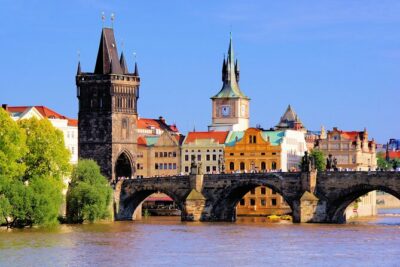
Prague Guided Walking Tour and Cruise with Authentic Czech Lunch
Read our review →
Old Town and Jewish Quarter Guided Walking Tour
Read our review →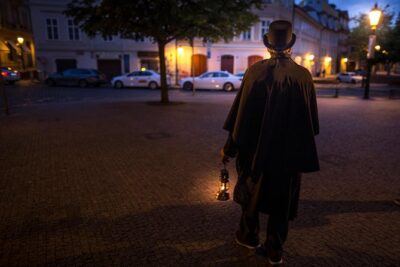
Prague Ghost and Legend of Old Town Walking Tour
Read our review →
Prague 3-hour Afternoon Walking Tour including Prague Castle
Read our review →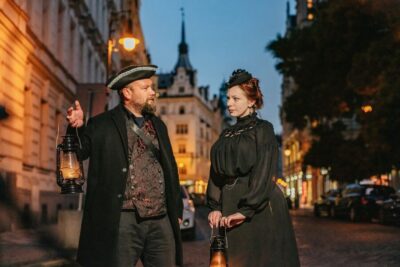
Ghosts and Legends Nighttime Guided Walking Tour
Read our review →Browse the lists this tour appears in