
Reviewed · WALKING TOURS
Prague Introduction Walking Tour
Prague gets personal in three hours. I love the historian guide who connects buildings to ideas, and I especially love the way Parizska Street frames the Jewish Ghetto story. One thing to consider, the tour leans fairly hard into religion and Czech political history, so if you want lots of modern Prague detail, you may feel a bit shortchanged.
You’ll start in the Old Town area and move through Old Town and New Town, with a small group (max 6). There’s a morning or afternoon departure, and you finish with a strong city-center ending that includes a look out toward Prague Castle from the Vltava River area.
In This Review
- Key highlights worth planning for
- A 3-hour orientation that does more than check boxes
- Where you start, how you get oriented, and what to wear
- Old Town Square to Charles Bridge: the story begins where trade and power meet
- Bethlehem Chapel and St. Giles Church: reformation debates in church form
- Medieval Prague streets, architecture from 1370, and the Charles University photo moment
- Old Town Hall and the Astronomical Clock, plus Jan Hus in bronze
- New Town: Holy Roman Empire power, Wenceslas Square, and Mozart’s link
- Parizska Street: the Jewish Ghetto story you can walk through
- St. Nicholas Church, then modern symbols at Metronome and Kafka
- Ending near the Vltava River: the Prague Castle view that ties it all together
- Price and value: what you pay for, and why it can be worth it
- What I love, what to watch for, and who will enjoy it most
- Should you book this Prague Introduction Walking Tour?
- FAQ
- How long is the Prague Introduction Walking Tour?
- Where does the tour start and end?
- Is the tour offered in English?
- Is there a morning and afternoon option?
- What’s included in the price?
- What is not included?
- What kinds of places will we see during the walk?
- Are there admission tickets required for the stops?
- What is the cancellation policy?
Key highlights worth planning for
- A historian guide who explains why Prague looks the way it does, not just what you’re seeing
- Charles Bridge and the Baroque saint statues, all wrapped into one 600+ year story
- A real walking lesson on the Jewish Ghetto of Prague through Parizska Street
- Old Town Hall and the Astronomical Clock, including what the symbolism means
- New Town landmarks tied to the Holy Roman Empire and big European themes
- David Černý’s Kafka statue and the Stalin-era Metronome site, for modern Prague context
A 3-hour orientation that does more than check boxes
This is a compact introduction to Prague that’s long enough to change how you see the city, but short enough to keep your feet happy. It runs about 3 hours and moves at a walking pace designed for first-timers who want context fast.
Because the group is capped at 6 travelers, you’re not just watching a parade of sights. I like that the guide can answer questions and adjust the focus if you’re curious about art, religious shifts, or why certain places matter politically.
Where you start, how you get oriented, and what to wear
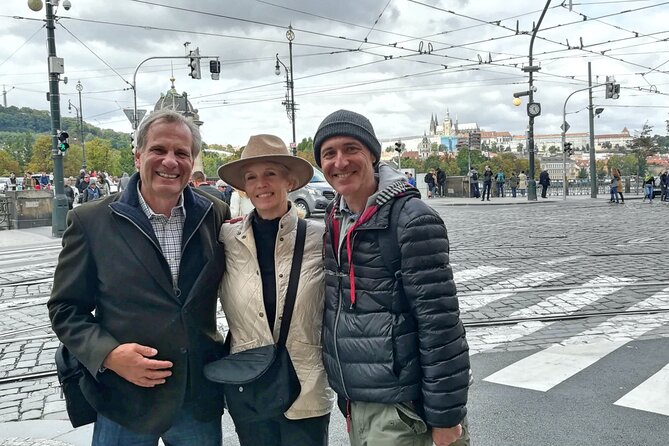
The meeting point is Cukrarna Mysak, 710/31 Vodičkova, Nové Město. The tour ends in the center at Wenceslas Square, Václavské nám., and along the way you’ll get a big look toward Prague Castle from the Vltava River area.
Plan for real city walking. This is Prague, so expect mixed weather, including rain. One practical tip from real-life experience: pack a compact rain layer. Even when it’s wet, the tour still works because it’s built around covered streets, squares, and close-up viewing points.
More lanes taken at street level:
- Prague: 3-Hour Walking Tour of Old Town & Prague Castle
★ 4.7 · 5,696 reviews - Prague: Ghost Walking Tour Where Legends Come To Life
★ 4.4 · 5,253 reviews - Prague: Jewish Quarter Walking Tour with Admission Tickets
★ 4.7 · 3,729 reviews
Old Town Square to Charles Bridge: the story begins where trade and power meet
You begin in the Old Town area, starting with Old Town Square vibes and medieval context. This matters more than it sounds. When the guide explains how the market helped shape Prague as a trading center, you instantly understand why the streets feel arranged for movement and influence.
From there, you head toward Charles Bridge. This stop is built around the bridge’s 600+ year history, its Gothic identity, and the Baroque statues of saints that line it. The best part here is the way the guide links the bridge to Prague’s growth and the city’s role as a crossroads.
Bethlehem Chapel and St. Giles Church: reformation debates in church form
Two of the early stops are religious sites, and they’re not treated like museum labels. At Bethlehem Chapel, you get a clear explanation of Jan Hus and why his ideas mattered for the Catholic church and later Protestant Reformation thinking.
Then you move to St. Giles Church, where the guide points out how Prague’s religious wars and the Reformation and Counter-Reformation show up in the Baroque interior decoration of a Gothic church. The takeaway is simple: the building is doing propaganda work, even when it looks like ornament.
If religion is not your thing, don’t panic. The tour still makes it practical by tying the symbols to what you’re seeing outside. But if you hate long talk about faith and power, this tour might feel heavy.
Also chalked up in Prague



Medieval Prague streets, architecture from 1370, and the Charles University photo moment
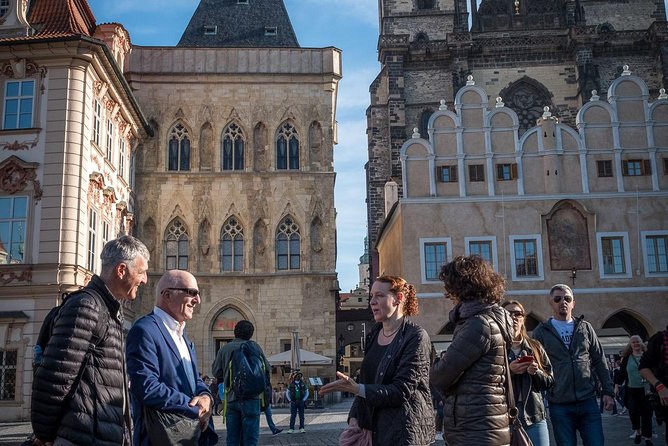
As you walk through Old Town, the guide keeps nudging you to look closely. You’ll be pointed toward architecture with roots as far back as 1370, which is a big deal in a city where many visitors only notice the “pretty” layer.
There’s also a specific photo moment that’s worth planning around: the Gothic oriel window tied to Charles University’s oldest remaining structure. Bring your camera, but also pause for a moment without shooting. That window is easier to appreciate when you stop treating it like a quick landmark.
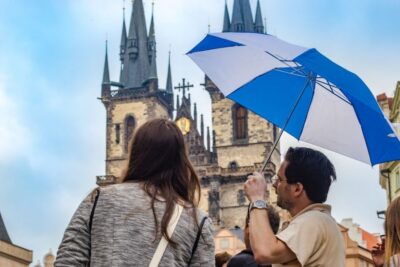
The guide also calls out major Old Town landmarks like the Gothic towers of Týn Church and the area around Old Town Hall, so you’re not just walking, you’re building a mental map.
Old Town Hall and the Astronomical Clock, plus Jan Hus in bronze
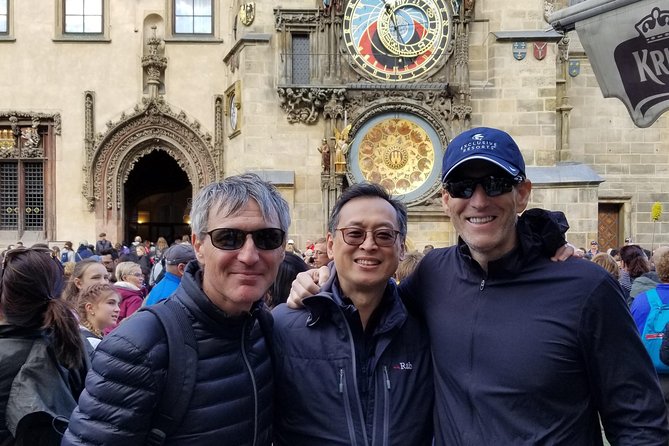
Old Town Hall with the Astronomical Clock is one of the tour anchors. The guide doesn’t just point at it. You’ll learn how the clock’s design connects to the place and why it became a symbol worth building into the city’s identity.
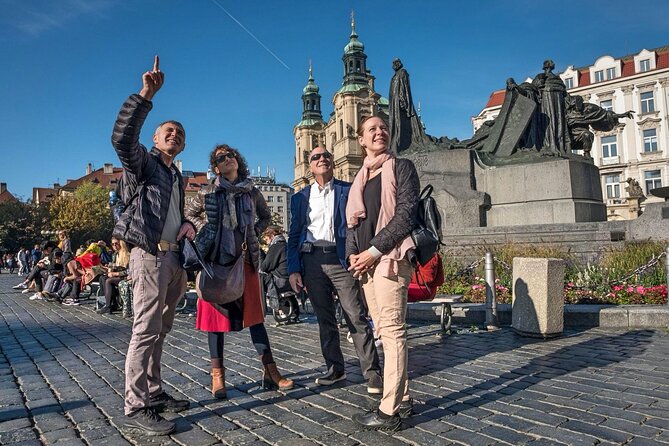
Not far away, you get the Jan Hus Monument stop. This is framed around his role as a revolutionary force in European Christianity and the broader story of Czech lands. Hus can feel like a name on a plaque to many people. Here, the guide makes him feel like a turning point.
Then you return to Old Town Square itself, where the guide expands the story into politics and architecture tied to the ancient town market. By this point, the square stops being “the place where tourists take pictures” and becomes a reference point for how Prague worked.
New Town: Holy Roman Empire power, Wenceslas Square, and Mozart’s link
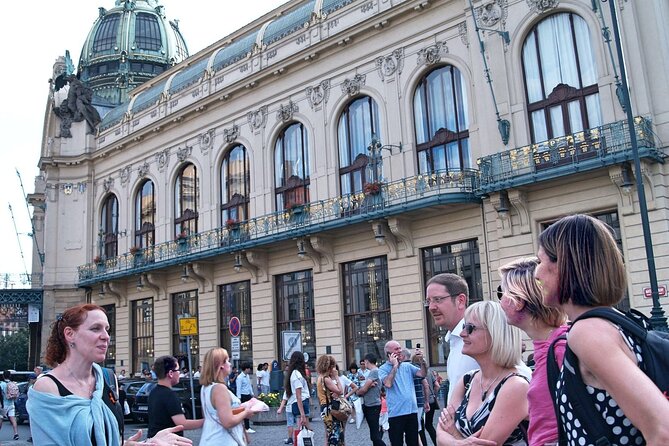
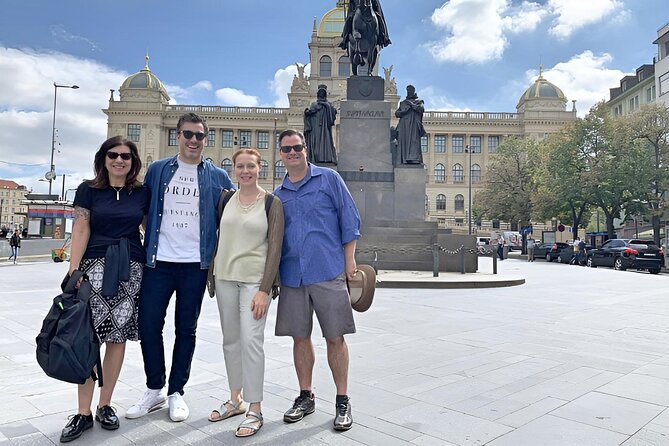
After Old Town, you shift into New Town (Nove Město) and get context for Prague’s status. This part of the tour ties Prague to the role of the capital in the Holy Roman Empire, helping explain why the city expanded the way it did over centuries.
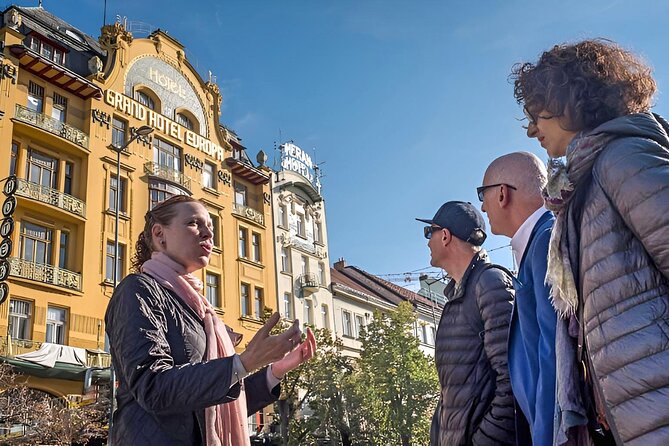
Next comes Wenceslas Square, where the guide puts the square into the story of Prague and the Czech Republic. Even if you’ve seen photos already, this kind of explanation helps you read the space and what it has meant over time.
You’ll also pause at Theatre des Etats, where the guide connects Prague to Mozart and to the broader Age of Enlightenment ideas moving through Europe.
Parizska Street: the Jewish Ghetto story you can walk through
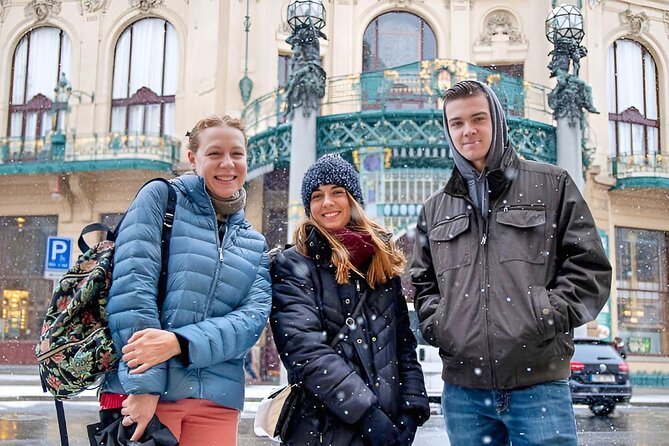
One of the tour’s biggest reasons to book is the stop on Parizska Street. This is where the guide focuses on the history of the Jewish Ghetto of Prague and the destruction it faced.
I like this approach because it’s not only about tragedy. The guide gives you enough context to understand why the street and the neighborhood layout matter. You’re also learning in a place where the story is physical, not just explained in the air.
If you want Prague history with a human edge, this is where you feel it.
St. Nicholas Church, then modern symbols at Metronome and Kafka
Next up is St. Nicholas Church, and the tour uses it to explain Czech religious reversals of fortune plus the way Baroque and Gothic architecture can coexist in one place.
Then the tour shifts to more modern street-level symbolism. You’ll stop at the Metronome, where the guide explains the site’s Stalinist history and what the sculpture represents. It’s a quick stop, but it changes how you think about Prague as more than old stone and famous bridges.
After that comes Franz Kafka’s revolving, kinetic statue made by Czech artist David Černý. It’s short, but it’s fun in the practical way. You’ll want a couple of photos because the statue’s motion makes the stop memorable.
Ending near the Vltava River: the Prague Castle view that ties it all together
The tour ends with a strong geographic payoff. As you reach the Vltava River area, you’ll get an unobstructed view toward Prague Castle and additional historical insight from your guide.
That ending helps you connect two sides of the city. Old Town and New Town start to feel like two chapters in one story, and the castle view gives the whole walk a sense of “now I get where the power sat.”
Price and value: what you pay for, and why it can be worth it
At $126.15 per person for about 3 hours, the price may look steep if you’re comparing it to a basic walking tour. Here’s why it can still feel like good value.
First, you’re paying for a historian guide who provides explanations tied directly to architecture, religion, and politics. That kind of storytelling is what turns a list of sights into understanding.
Second, the itinerary includes major landmarks where the guide gets you up close to what matters. The listed stops note Admission Ticket Free for each sight on the route, which reduces friction and lets you spend time looking rather than figuring out extra fees.
Finally, the group size is small, and there are group discounts. If you’re traveling with a partner or a friend and you value high-quality explanations, this is the type of tour that can justify itself.
What I love, what to watch for, and who will enjoy it most
The best parts tend to be the guide. In particular, I’ve seen examples of Valerie delivering standout city and nation context, and Vladim/Vadim earning praise for combining architectural, religious, and even literature connections in an engaging, human way. Those names are not promises, but they point to what the guide style tends to be: fast, clear, and story-driven.
Another big win is the range. You start with famous medieval Prague icons, then shift into reformation-era thinking, then into Jewish Ghetto history, and finally into modern political symbolism. That blend makes it a smart first-day option.
Now the considerations. This tour can feel more focused on religion and Czech political history than on later 20th-century city design. If you’re mainly interested in modern architecture or contemporary culture, you might wish the route spent more time there. Also, some guides may share personal opinions in the conversation, including angles tied to American politics. For most people, that’s fine, but if you want strictly neutral narration, you should keep that in mind.
Should you book this Prague Introduction Walking Tour?
Book it if you want a high-context orientation to Prague, with a historian guide and a route that connects Old Town and New Town into one story. I’d also book it if you care about how religion shaped art and buildings, and if you want a real walk-through of Jewish Ghetto history on Parizska Street.
Skip it, or pair it with something else, if you mainly want modern Prague visuals, or if you strongly prefer tours that avoid religion and politics. For first-time visitors who want to leave with a mental map and a deeper read on what you’re seeing, this one is a solid pick.
FAQ
How long is the Prague Introduction Walking Tour?
The tour lasts about 3 hours.
Where does the tour start and end?
It starts at Cukrarna Mysak, 710/31 Vodičkova, Nové Město and ends at Wenceslas Square, Václavské nám., Nové Město.
Is the tour offered in English?
Yes, the tour is offered in English.
Is there a morning and afternoon option?
Yes. You can choose a morning or afternoon departure, and you should advise your choice at booking.
What’s included in the price?
The tour includes a historian guide. You also receive a mobile ticket.
What is not included?
Food and drinks are not included unless specified, and hotel pickup and drop-off are not included.
What kinds of places will we see during the walk?
You’ll pass well-known sights such as Charles Bridge, Old Town Hall with the Astronomical Clock, Wenceslas Square, and a stop on Parizska Street connected to the Jewish Ghetto story, plus other churches and monuments.
Are there admission tickets required for the stops?
For the stops listed on the itinerary, the entry note is Admission Ticket Free.
What is the cancellation policy?
You can cancel for a full refund with free cancellation up to 24 hours in advance of the experience start time. If you cancel less than 24 hours before, the amount paid is not refunded.
Newly posted under the arches of Prague

Walking Tours, compared.
3-Hour Walking Tour of Old Town & Prague Castle
Read our review →
Ghost Walking Tour Where Legends Come To Life
Read our review →
Jewish Quarter Walking Tour with Admission Tickets
Read our review →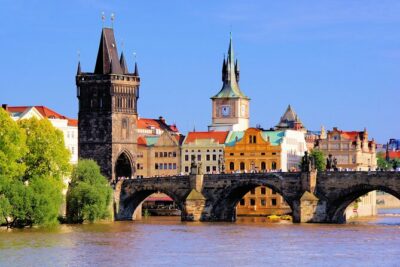
Prague Guided Walking Tour and Cruise with Authentic Czech Lunch
Read our review →
Old Town and Jewish Quarter Guided Walking Tour
Read our review →
Prague Ghost and Legend of Old Town Walking Tour
Read our review →
Prague 3-hour Afternoon Walking Tour including Prague Castle
Read our review →
Ghosts and Legends Nighttime Guided Walking Tour
Read our review →Browse the lists this tour appears in