
Reviewed · WALKING TOURS
Prague: Nightwatchman of Prague Walking Tour
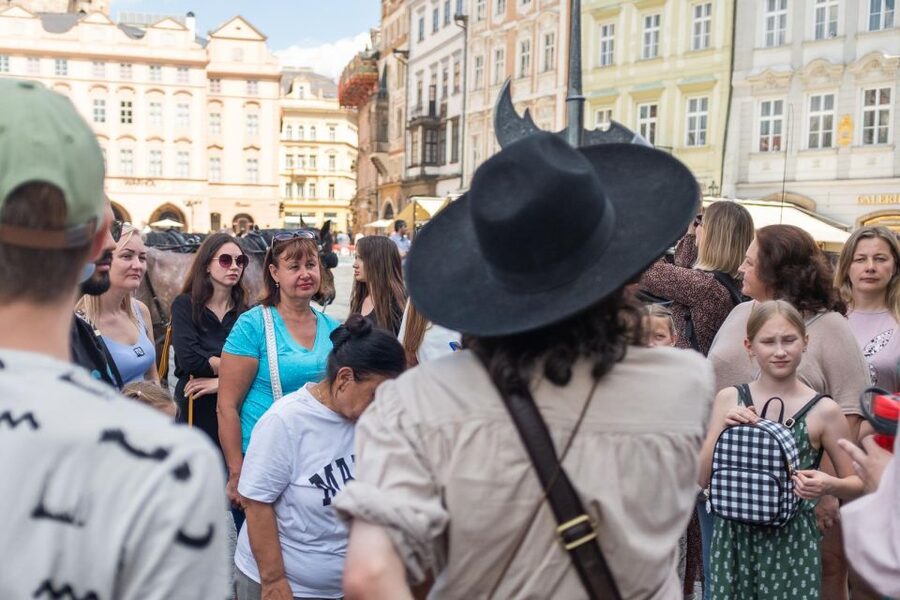
Prague at night feels like a secret key, and this walk uses it. You follow a Nightwatchman through 17th-century streets, with a guide in historical dress and a route that connects major landmarks while crowds thin out. The lantern, the halberd, and the stories make the city feel less like a postcard and more like a place people lived.
I especially love how the tour keeps the focus on everyday life, not just famous buildings. You learn the duty of the Nightwatchmen and how the city functioned when fear, illness, and war shaped daily routines. I also like the pacing, with a relaxed stroll and real time to ask questions, even when the group is talking over cobblestones.
One possible drawback: you are on foot for about 90 minutes, and it is an evening walk, so you will want weather-appropriate clothing and comfortable shoes. If you prefer quiet, no-interaction sightseeing, the guide’s costumed performance and group moments may be a bit lively.
In This Review
- Key things I found most impressive
- Why this Nightwatchman tour feels different from a standard Prague walk
- Starting at Náměstí Republiky and the Powder Gate entrance
- Powder Tower and Ovocný trh: learning the city by walking its edges
- Estates Theatre and the streets between scenes
- Prague Astronomical Clock and Old Town Square at night
- Jan Hus Monument: religion, conflict, and why Prague argued loudly
- Vltava River at sunset: the calm break with a castle-view payoff
- Charles Bridge and the Charles IV statue finish
- Price and value: is $23 worth it?
- What kind of traveler should book this Nightwatchman tour
- Should you book the Prague Nightwatchman walking tour?
- FAQ
- How long is the Prague Nightwatchman walking tour?
- Where does the tour start?
- How much does it cost?
- What languages is the live guide available in?
- Is the tour wheelchair accessible?
- What should I bring?
Key things I found most impressive
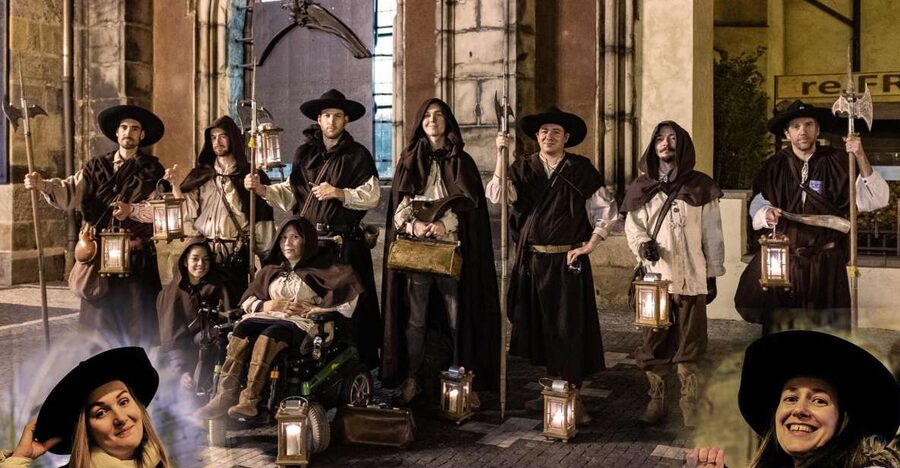
- Costumed, character-based guiding that turns landmarks into lived scenes
- Old Town after dark when the streets feel calmer and more readable
- Nightwatchmen history focused on duty, danger, and community life
- A scenic break by the Vltava with castle views at night
- Route that hits the big stuff (Old Town Square, Astronomical Clock area, Charles Bridge) without rushing
- A guide who manages the group well, including safety and bringing everyone in
Why this Nightwatchman tour feels different from a standard Prague walk
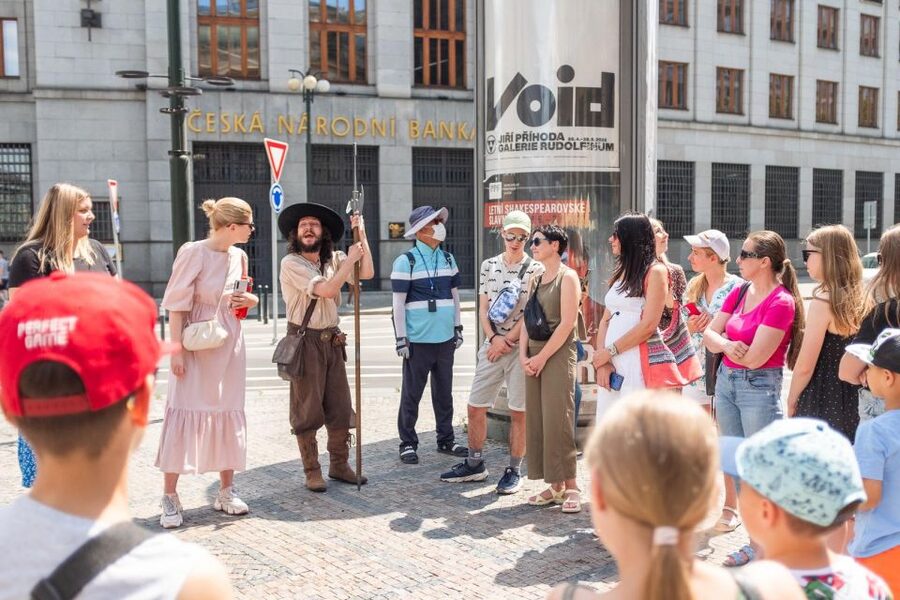
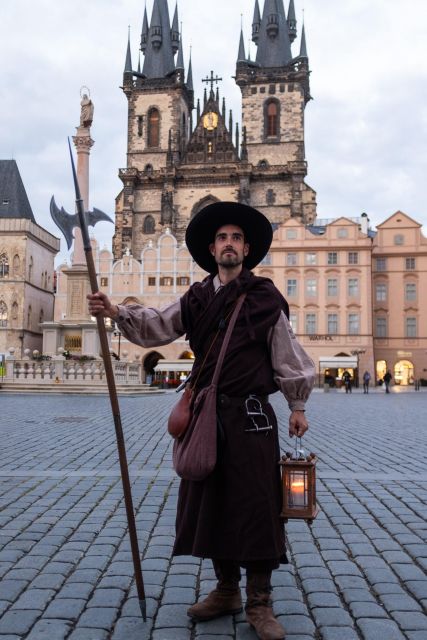
Most Prague walks show you monuments. This one shows you context. The Nightwatchman role matters because it frames what you see through the job of protecting the city at night, carrying a lantern and a halberd, and responding to threats that were real in the 1600s.
I love the timing of this type of experience. When you reach the central sights in the evening, the contrast is immediate. The same squares and bridges that can feel crowded by day become calmer, and you can actually read details on buildings and street layouts. That makes it easier to understand why certain places mattered, and why fear, fire, and illness were not side topics in medieval and early modern life.
The best part is how the tour blends major landmarks with smaller clues. You are not just being marched from stop to stop. You are being given a thread: noblemen and common people, wars and plague, the rhythms of work and watch duty, and fun historical facts that do not feel like homework.
Your guide is also part of the value. In this tour, the guide works in historical dress of a Nightwatchman of the year 1633, and you can really feel the difference when someone treats the role as a storytelling tool. People in costume tend to speak with more intention, and you get a clearer picture of how the city sounded and moved back then.
If you are trying to decide what kind of Prague experience you want, this is a great pick if you like character, stories, and street-level history. It is less ideal if you only want museum-grade facts and perfect silence.
Starting at Náměstí Republiky and the Powder Gate entrance
The meeting point is simple and easy to spot: you start at Nám. Republiky 5, and the tour begins in front of the Powder Gate, about a five-minute walk from Republic Square. That matters because it reduces stress. You are not hunting for a hidden side street while everyone else is already starting.
From the first moments, you get the right atmosphere. The Powder Gate is a dramatic entry point into the old core of Prague, and it sets the tone for the 17th-century theme. This is where the tour’s role-playing begins to make sense. Instead of treating the gate as just an impressive structure, you treat it like a checkpoint, a boundary, and part of the city’s defenses.
Expect a quick orientation at the beginning and then a smooth transition into sightseeing. The tour is listed for 90 minutes, so you get enough time to feel like you are walking with the guide through multiple neighborhoods without feeling stuck in a long, exhausting march.
Practical note: because this is an evening activity, you should dress for Czech weather. In winter, evenings can be cold fast. Bring layers you can keep on while still moving comfortably.
More lanes taken at street level:
- Prague: 3-Hour Walking Tour of Old Town & Prague Castle
★ 4.7 · 5,696 reviews - Prague: Ghost Walking Tour Where Legends Come To Life
★ 4.4 · 5,253 reviews - Prague: Jewish Quarter Walking Tour with Admission Tickets
★ 4.7 · 3,729 reviews
Powder Tower and Ovocný trh: learning the city by walking its edges
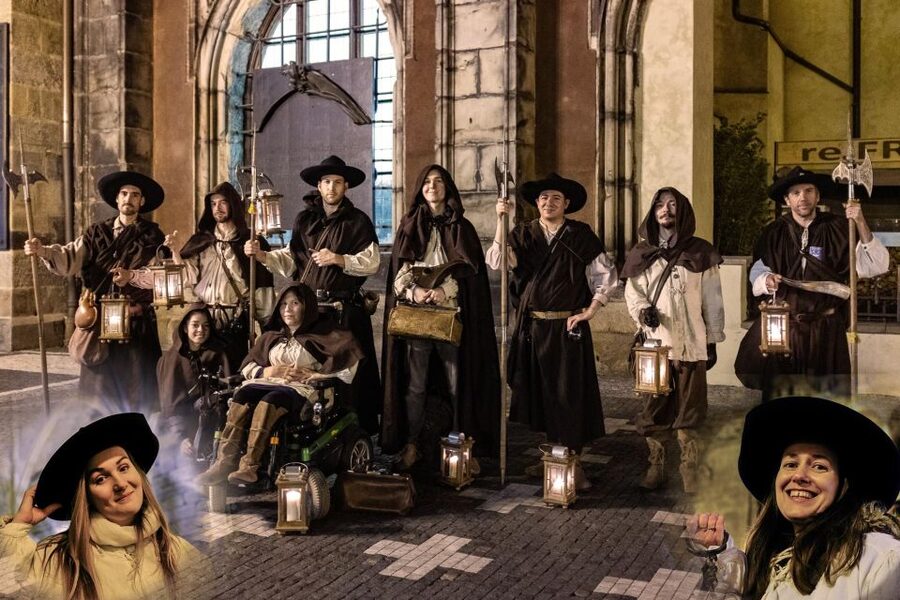
The first proper sightseeing stop is the Powder Tower, where you get about 10 minutes to take it in. This stop is more than a photo stop. The guide’s job here is to give you the city’s logic, why certain structures exist, and how they helped protect and regulate life.
Then you move toward Ovocný trh (another 10 minutes). This area is useful for understanding Prague as a working city, not just a sightseeing circuit. Markets and public spaces were the social glue, and they were also where tensions could spill over. If your guide includes the kinds of jokes and fun facts people often mention in their reviews, you will probably hear how daily habits, food, and even drink shaped city life. One guide-style story I liked from past retellings of this tour: the idea that beer culture was so intense it felt like it was consumed almost as regularly as water.
The point here is not to memorize a list. It is to start seeing the city like a map of human behavior. Where people gathered, where goods moved, where news spread, and where danger could rise.
If you like history that connects to daily routines, this is a sweet spot. If you want only the famous landmark “wow,” you might feel these early stops are less visually flashy. But they set you up to enjoy the bigger hits later.
Estates Theatre and the streets between scenes
Next you pass by the Estates Theatre for about 10 minutes. Even if you only know the name and not the full background, it helps because theaters represented more than entertainment. In early modern cities, cultural life could act like a mirror for power, identity, and change.
This stop works best if you pay attention to how your guide ties it to the rest of the walk. The tour’s theme is “the city over time,” so each stop becomes a clue for a larger story. You should get the sense that Prague in the 1600s was not frozen. It kept changing, and that change was tied to politics, religion, conflict, and public life.
What I like about this pacing is that it avoids the all-or-nothing approach. You are not sprinting to the next stop every 3 minutes. Instead, you get enough time to orient yourself, listen, and then continue walking without losing the thread.
Also chalked up in Prague

Prague Astronomical Clock and Old Town Square at night
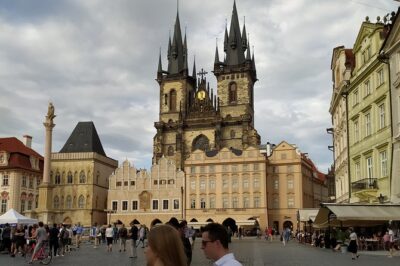
One of the busiest areas by day is Old Town Square, and the tour gives you a chance to see its energy without the worst crowd pressure. You stop near the Prague Astronomical Clock for about 5 minutes, then spend around 15 minutes at Old Town Square.
This is a high-value section of the walk for two reasons.
First, the Astronomical Clock area is loaded with symbolism. Even if you do not plan to watch a full show from the square, standing there at night makes it easier to appreciate the idea of timekeeping as a public statement. You are also better positioned to notice how the square functions as a stage.
Second, your guide connects this space to the bigger historical story. The Nightwatchman theme helps here because time was not abstract. Night was when watch duty mattered most, and when the city needed eyes on the streets.
At Old Town Square, your guide typically uses the square as a living classroom. You are not just told what is there. You learn why it mattered and how it fits into the centuries-long narrative your tour is chasing.
If you love street photography, night is a gift here. Try to slow down and look at the edges of buildings, not just the center. Prague’s details show up better when the lighting is softer.
Jan Hus Monument: religion, conflict, and why Prague argued loudly
Next you reach the Jan Hus Monument for about 10 minutes. This is a meaningful stop because it anchors the tour’s discussion of upheaval and belief.
Even if you only know Jan Hus as a historical name, the guide’s job is to explain why his legacy mattered to Prague’s social tension. One style of detail that comes through in this tour format is how religion and public action connected, from protest movements to citywide consequences. In other words, the guide does not treat Hus as a statue. They treat him as a turning point.
This stop also gives you a good reset in the walk. By now, you have already absorbed a few layers of the city’s structure. The monument becomes the “why did the streets feel unsafe or volatile” checkpoint. It is where you understand the human stakes behind the architecture.
For me, this is one of the best “not tourist-only” moments on the route. It helps you understand Prague as a place that argued, resisted, and survived.
Vltava River at sunset: the calm break with a castle-view payoff
Then you move to the Vltava River, with a short sunset segment of about 5 minutes. It is not long, but it is placed perfectly.
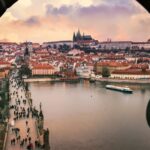
This is where the tour does something clever: it gives you a breath between dense history stops. You stand by the water, you look toward the castle area, and the mood shifts. Prague is one city where reflections matter, and night makes it even more obvious. The guide’s storytelling continues, but you also get to experience the city’s scale.
If you have only seen the river as a daytime stroll, this is a different perspective. The river becomes a boundary, a line of sight, and a reminder that the city depended on routes and crossings, not just streets.
I also like this break because it makes the final walking section feel easier. After the river, Charles Bridge makes emotional sense, since you have already absorbed the city’s nighttime layout.
Charles Bridge and the Charles IV statue finish
The last major sightseeing stop is Charles Bridge, with about 15 minutes allocated for it. Finishing at the Charles IV statue gives you a natural wrap-up point, and it helps you connect the last scene to the broader theme of leadership and history.
This is where nightwatch stories fit best. A bridge is a choke point, and a city at night needs watchers. So even if you are simply enjoying the view, the tour’s framework makes you notice the practical side of crossing. Who moved at night? Who controlled access? How did city rules shape the flow of people?
The guide also tends to include fun medieval-era details here, the kind that make you look at the stones and think about the people who stood there centuries earlier, not just the view you are capturing now.
One tip for after the tour: if you still have energy, stay in the old town a bit longer. The astronomical clock area can feel even more magical as darkness settles in, and the streets you walked earlier start to feel like your own private Prague. (This is the simplest way to extend the value of your 90 minutes.)
Price and value: is $23 worth it?
At about $23 per person for a 90-minute guided experience, this tour is priced in the “good value, not bargain hunting” range. The reason it feels fair is the package you get: a licensed guide, a costumed character in 1633 Nightwatchman dress, and a route that stitches together multiple landmarks into one coherent evening story.
You are also paying for time efficiency. Instead of piecing together your own night route, you get a guided line from Powder Gate to the river and across to Charles Bridge. That saves mental energy, and it also prevents the common issue where you miss the context that makes architecture meaningful.
Also, you are not stuck with just “stand and read.” The tour is walking-based, and the pace is designed to keep you engaged without feeling rushed. Many people come away specifically mentioning how relaxed it feels and how the guide includes the whole group.
So, if you want a guided evening that is equal parts sights, stories, and atmosphere, this is a solid deal. If you only want quick photos and zero conversation, you might decide you prefer a self-guided audio walk instead.
What kind of traveler should book this Nightwatchman tour
This tour is a great fit if you:
- Like history told through people, jobs, and daily life
- Enjoy costumes and storytelling that feel more like theater than lecture
- Want to see Prague’s core at night when it is easier to breathe
- Prefer a structured route with enough time at each key stop
It is less ideal if you:
- Want a quiet, minimalist tour with no group interaction
- Have trouble with a 90-minute walking evening
- Expect deep museum-style detail at every stop
Language is listed as English and German, and the tour has options for private groups if you want it more tailored. It is also wheelchair accessible, which is a big practical plus when you are dealing with older streets and uneven ground.
Should you book the Prague Nightwatchman walking tour?
If you want Prague after dark, with a guide who treats the city like a story instead of a checklist, I think this is worth booking. The combination of nightwatchmen history, the costumed 1633 character, and the route through Old Town, the river, and Charles Bridge makes it feel like more than sightseeing.
Book it especially if you value safety, group management, and a guide who keeps things engaging. If you are the type who loves asking questions, you will likely appreciate how the tour encourages participation.
Just plan for an evening walk. Wear layers, wear shoes you trust on stones, and give yourself enough time afterward to enjoy the old town when it finally quiets down.
FAQ
How long is the Prague Nightwatchman walking tour?
The tour lasts about 90 minutes.
Where does the tour start?
You meet in front of the big Powder Gate. The listed starting location is Nám. Republiky 5, about a five-minute walk from Republic Square.
How much does it cost?
The price is $23 per person.
What languages is the live guide available in?
The tour is offered with a live guide in English and German.
Is the tour wheelchair accessible?
Yes, it is listed as wheelchair accessible.
What should I bring?
Wear weather-appropriate clothing, especially since it is an evening walking tour.
Newly posted under the arches of Prague

Walking Tours, compared.
3-Hour Walking Tour of Old Town & Prague Castle
Read our review →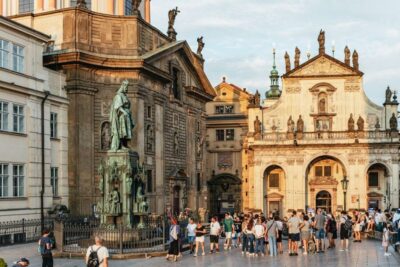
Ghost Walking Tour Where Legends Come To Life
Read our review →
Jewish Quarter Walking Tour with Admission Tickets
Read our review →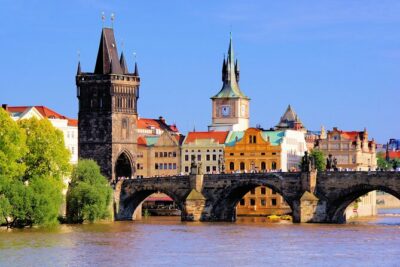
Prague Guided Walking Tour and Cruise with Authentic Czech Lunch
Read our review →
Old Town and Jewish Quarter Guided Walking Tour
Read our review →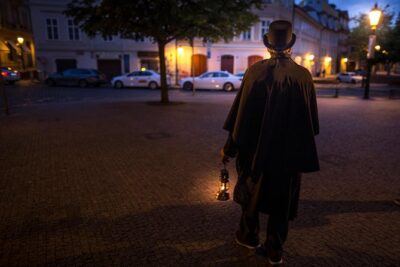
Prague Ghost and Legend of Old Town Walking Tour
Read our review →
Prague 3-hour Afternoon Walking Tour including Prague Castle
Read our review →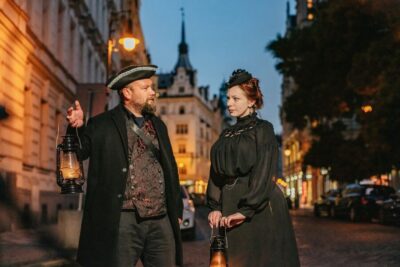
Ghosts and Legends Nighttime Guided Walking Tour
Read our review →Browse the lists this tour appears in