
Reviewed · HISTORIC OLD TOWN WALKS
Prague Old Town and Jewish Quarter Walking Tour
Prague’s Old Town can feel like a blur, fast. This walking tour gives you clear bearings while you bounce between major landmarks and the stories behind them. I like that it is short enough to fit a busy day, and I also like how the guide helps you notice details you would skip alone. One heads up: some synagogue interiors may be closed on Jewish holidays, so you may get more exterior viewing than you expected.
The meeting spot is easy to find in the Old Town, and the pace stays relaxed even though the stops are close together. I also appreciate the small-group feel when it happens, since you can ask questions without shouting at your guide.
If you hate stairs or have mobility concerns, plan to take it slow. One previous guest noted a tour with guide Maxim involved a lot of steps, so it is worth asking what kind of terrain you will face that day.
In This Review
- Key highlights
- Why a 2-hour Old Town and Jewish Quarter walk is the right kind of first day
- Meeting at Týnská 627/7, then getting oriented immediately
- Old Town anchors: Týn Church, Stone Bell House, and Jan Hus
- Old Town Hall and the Astronomical Clock: three time systems, explained
- Theatre Des Etats, Karolinum, and Prague’s layers you feel in your feet
- Church of St. James, the Black Madonna, and Týn Yard-Ungelt
- Entering the Jewish Quarter: Maisel, Klausen, and the Old-New Synagogue
- Old Jewish Cemetery and the Spanish Synagogue, Jewish Museum
- Kafka statue: the last stop that sticks in your head
- Price, value, and who this tour is best for
- Should you book this Old Town and Jewish Quarter walking tour?
- FAQ
- How long is the Prague Old Town and Jewish Quarter walking tour?
- Where does the tour start and end?
- What time does the tour begin?
- Is the tour offered in English and do I get a mobile ticket?
- Is admission included for every stop?
- How large is the group?
- Are children allowed, and are kids free?
- What if the tour is canceled due to minimum numbers or close to departure?
Key highlights
- Old Town orientation: Fast context for the big sights so Prague starts making sense.
- Astronomical Clock focus: Not just a photo, but how medieval timekeeping worked.
- Gothic to Cubist Prague: Stop for the Church of Our Lady before Tyn and the House of the Black Madonna.
- Jewish Quarter landmarks: Maisel, Klausen, Old-New, plus the cemetery area and nearby synagogues.
- Small group potential: Several experiences reported parties around 3 to 5 people.
- Meaningful ending: Franz Kafka statue ties the day to Prague’s literary shadow side.
Why a 2-hour Old Town and Jewish Quarter walk is the right kind of first day
This tour makes sense when you want a first-pass Prague overview without losing half a day to transit. You get a tight loop through the Old Town core and into the Jewish Quarter, with short stops that keep momentum. That structure is ideal for travelers who want the city to click, fast.
I also like that it is not just “look here, photo here.” The guide’s job is to connect what you are seeing to why it matters, so the Astronomical Clock and the synagogues do not feel like random buildings on a checklist.
Finally, the price is fairly friendly for what you get. For $24.19, you are paying for a local guide and a guided walk across two of Prague’s most visually dense areas. You also avoid the stress of figuring out the route while reading every plaque yourself.
Meeting at Týnská 627/7, then getting oriented immediately
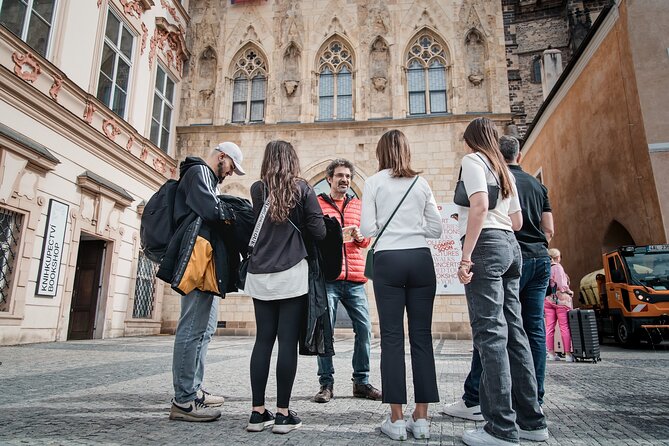
You start at Týnská 627/7 in Staré Město, in front of the building used by McGee’s Trips & Tickets. Starting here matters because it puts you right at the Old Town’s nerve center, so you spend your energy walking and learning, not hunting for landmarks.
The tour begins at 10:30 am, and it ends back at the meeting point. That “return to base” format is handy, since you can then branch out for lunch or a museum without needing a second plan.
One more practical note: your ticket is mobile. You will receive confirmation at booking, and the tour runs in English. Service animals are allowed, and the group has a maximum of 30. In real life, smaller groups are a common feature of this kind of tour, which is a big deal if you do not want to feel rushed or blocked by taller people.
Other Jewish Quarter and Josefov history walks:
- Prague: Jewish Quarter Walking Tour with Admission Tickets
★ 4.7 · 3,729 reviews - Prague: Old Town and Jewish Quarter Guided Tour in German
★ 4.8 · 3,143 reviews - Prague: Old Town and Jewish Quarter Guided Walking Tour
★ 4.6 · 2,847 reviews
Old Town anchors: Týn Church, Stone Bell House, and Jan Hus
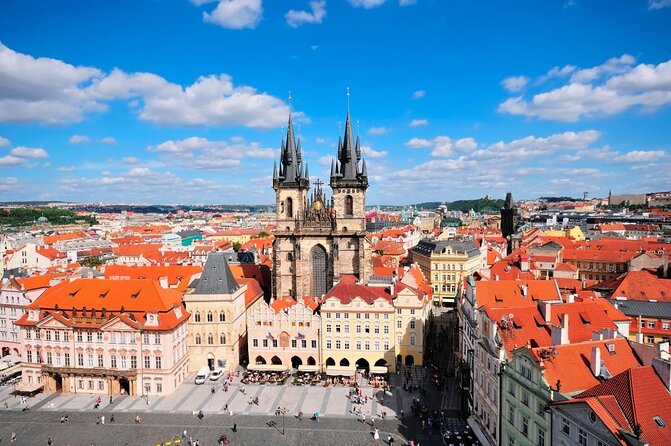
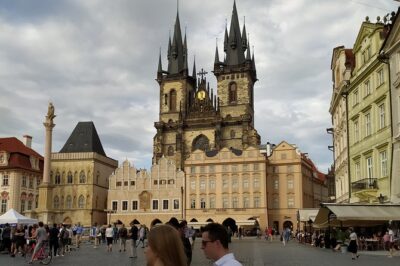
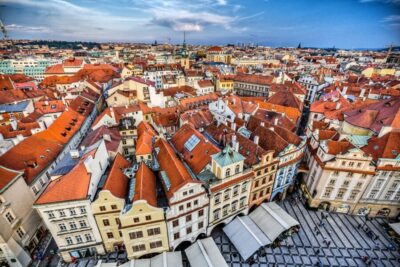
After kickoff, you head to Staroměstské náměstí, the Old Town Square, where you get an introduction to Czech history. This stop is more useful than it looks because the square is basically Prague in miniature: medieval buildings, religious sites, and politics all stacked within walking distance.
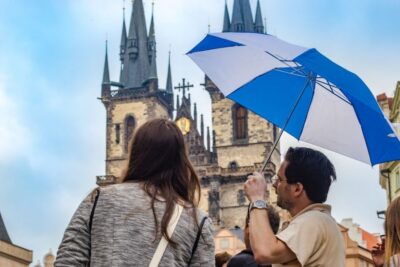
Then it is on to the Church of Our Lady before Tyn area. Even as a quick stop, it gives you a handle on Czech historical context and the city’s religious identity. Gothic architecture in Prague is dramatic, but without context you might only admire shapes. With context, you start seeing symbolism.
From there, you stand near the Stone Bell House, one of the key Gothic buildings in the area. The guide connects the building to a famous Czech ruler, Charles IV, by mentioning its association as a birthplace. That kind of detail turns a quick look into something memorable.
Next up: the Jan Hus Monument. Hus is often called a Czech reformer tied to religious conflict, and the comparison to Martin Luther comes up as part of the explanation. It helps you place him in the big story of Europe, not just Prague.
Old Town Hall and the Astronomical Clock: three time systems, explained
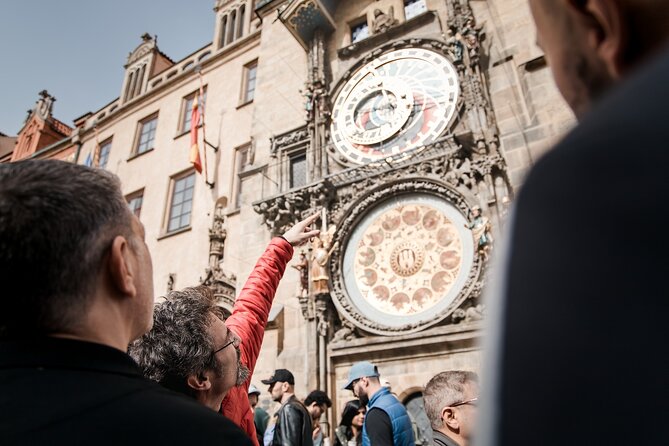
The Old Town Hall with the Astronomical Clock is the tour centerpiece in the best way. You are not just stopping for a snapshot. The guide explains the medieval miracle behind it, including the idea that multiple timekeeping systems were displayed at once.
This matters because the Astronomical Clock can look like a busy gadget if you only glance at it. The explanation gives you a way to interpret what you are seeing, including references to the position of stars and the Moon and Sun. That turns your 5-minute stop into a real learning moment.
I like this part of the tour because it also gives you permission to slow down briefly. You can stand, look, ask, and actually process. Then you move on before your feet start to protest.
If you want a tip for the photo side, come ready to frame the clock with patience. This is a popular spot, and your best shot often comes from waiting for a clear moment rather than rushing.
More cobbles between the spires:
Theatre Des Etats, Karolinum, and Prague’s layers you feel in your feet
After the clock area, you keep walking through pockets of Old Town that reveal how Prague grew. Karolinum (the exterior view) is tied to the history of the first university in Central Europe. You see the building, but the point is what it represents: the city’s long academic thread.
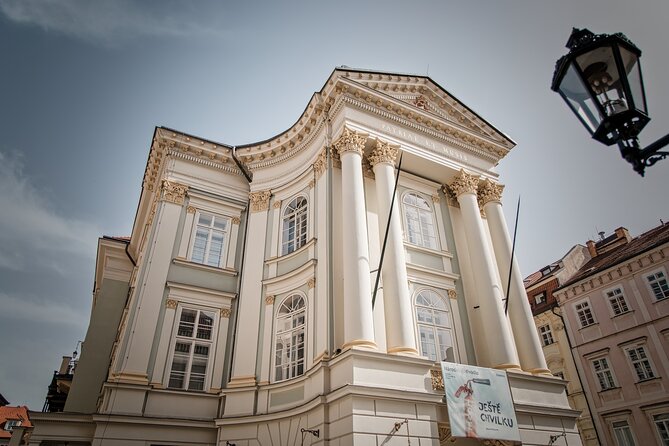
Then you stop at Theatre des Etats. The highlight here is the connection to performance history, including the fact that Mozart’s Don Giovanni was premiered there. You might not be stepping inside, but you still get the cultural map.
These quick stops are a good reminder of what Prague does well: it preserves layers. You do not get “one style only.” You get the medieval base, then later eras adding their marks. When the guide points out those links, Prague stops being a pretty backdrop and becomes a timeline you can walk through.
If you are a first-time visitor, this is where the tour earns its keep. You start to understand how the city evolved, one neighborhood and one building at a time.
Church of St. James, the Black Madonna, and Týn Yard-Ungelt
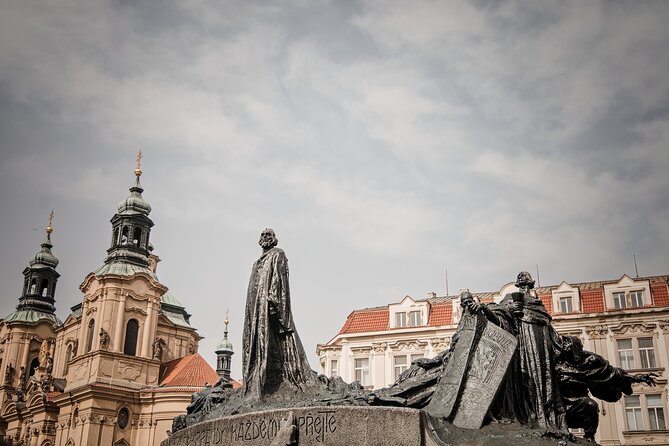
Two stops that tend to be visual favorites are House of the Black Madonna and Church of St. James.
At the Black Madonna building, the guide frames it as the only pure Cubist building in Prague, anchored in a style associated with the Czech lands. That is a strong contrast with the Gothic landmarks you just saw. If your brain needs variety after medieval stone, this is it.
Then the tour reaches Church of St. James, where the story includes a cycle of destruction and rebuilds: Gothic foundations, a Baroque rebuild after a fire, plus an interior detail tied to a local legend. The guide also mentions a hand hung from the ceiling on the right side of the main entrance. Even if you do not go inside, hearing the legend changes how you look at the exterior.
Finally, you get the Týn Yard – Ungelt courtyard, a unique medieval space hidden in the center of Prague. The guide explains that it was tied to foreign merchants paying customs for goods brought into Prague. That sounds dry until you realize the courtyard is basically a leftover “economics room” from the city’s trading days.
If you love small places with big stories, this courtyard stop is often the calm breath in the middle of the walk.
Entering the Jewish Quarter: Maisel, Klausen, and the Old-New Synagogue
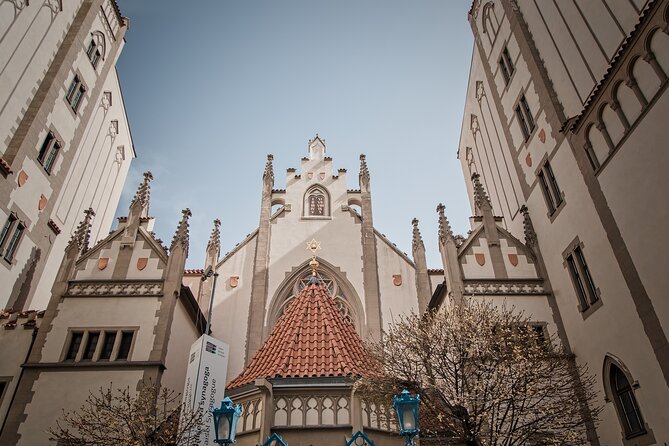
Once you move into the Jewish Quarter area, the tone changes in a thoughtful way. You get a sequence of synagogue landmarks that helps you connect architecture to community life.
You start with Maisel Synagogue as an exterior view, with the guide sharing key facts from Jewish history in the Czech lands. Then you move to Klausen Synagogue, where you hear about Jewish customs and burial ceremonies tied to the community’s traditions.
Next is the Old-New Synagogue, one of the first Gothic synagogue buildings in Prague. The guide highlights its place as the oldest surviving medieval synagogue of twin-nave design. It also includes a bold claim often repeated in local lore: the building allegedly incorporated stones associated with the Solomon Temple in Jerusalem. Even if you take legends with a grain of salt, the story shows you how the community understood its place in a much larger tradition.
This part of the tour is valuable if you want more than “here is a synagogue.” You want context for why these buildings matter and how they connect to rituals, history, and identity.
Old Jewish Cemetery and the Spanish Synagogue, Jewish Museum
The Old Jewish Cemetery is part of the route, and it is specifically marked as not included for admission. That means if you want to go inside or have a longer look, you may need to budget separately or follow what your guide is able to do that day.
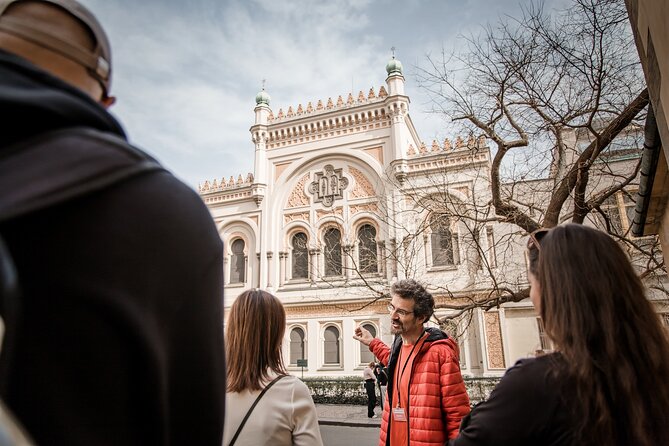
Then you reach Spanish Synagogue, Jewish Museum in Prague, again with exterior viewing and the promise of a Moorish-style interior described as influenced by the Alhambra. This is one of the places where expectations should be flexible.
A previous guest noted disappointment because the Spanish Synagogue was closed to the public for Jewish holidays. That is the kind of real-world thing that can affect interior access. My practical advice: if you care a lot about the interior, ask your guide on the day what is open. If it is closed, you can still get architectural context, but you may not see the full interior experience.
This stop works best if you approach it with a respectful, curious mindset rather than a must-see checklist. Even exterior context here can be powerful when the guide explains what you are looking for.
Kafka statue: the last stop that sticks in your head
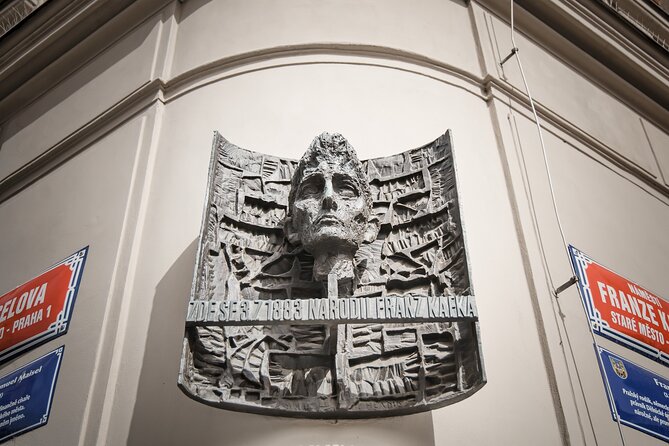
You finish at the Statue of Franz Kafka by Jaroslav Rona. The guide connects Kafka to themes of darkness and suffering, even using language about depression. Whether that tone matches your taste or not, Kafka’s presence fits Prague. It is the literary shadow hovering over the city’s real-world stone and ritual life.
This final moment helps you land the walk with an emotional aftertaste, not just a pile of names. If you are the type who likes to pair your sightseeing with a story that lingers, this ending will do the job.
Price, value, and who this tour is best for
At $24.19 for about 2 hours, this is strong value if you want guided context over self-guided wandering. The tour also includes a local guide, which is the real cost driver for a walk like this.
Most stops are marked as free admission ticket stops, with the Old Jewish Cemetery not included. That matters because you avoid “surprise pricing” every few steps. You pay for the guide’s time and the route, not for a chain of ticket lines.
Who it fits best:
- First-time Prague visitors who want Old Town plus Jewish Quarter without planning
- Travelers who like short, well-connected stops instead of long museum marathons
- People who want to ask questions, especially when the group is small
Who should consider extra planning:
- Anyone sensitive to stairs or uneven terrain, since one guest reported a high number of steps on a tour led by Maxim, and another person flagged that stairs could be a challenge for their heart condition
- Anyone who needs interior access at specific synagogues should keep holiday closures in mind and confirm what is open that day
A big plus from the guide side: several named guides stood out in past experiences. Allen and Richard were singled out for their energy and strong historical explanations. Vojtech and Vorta were praised for engagement and the ability to answer questions. Radek and Martin were also noted for clear English and humor, plus helpful local tips. That range tells me the tour leans on storytelling skill, not just rote facts.
Should you book this Old Town and Jewish Quarter walking tour?
I think you should book it if you want a smart, compact overview that helps Prague make sense. It is a good use of time when you only have one day to orient yourself. The stops are the right mix of iconic landmarks and lesser-noticed corners like Týn Yard – Ungelt.
I would skip or reconsider if your main goal is museum-quality interior access, especially for the Spanish Synagogue. In that case, be prepared for the possibility of closures on Jewish holidays, and plan a backup approach.
If you go in with comfy shoes, a bit of patience at the Astronomical Clock, and a respect for the stories behind each place, you will come away with a much clearer picture of Prague than you would get from wandering alone.
FAQ
How long is the Prague Old Town and Jewish Quarter walking tour?
It runs for about 2 hours.
Where does the tour start and end?
It starts at Týnská 627/7, Staré Město, and ends back at the same meeting point.
What time does the tour begin?
The start time is 10:30 am.
Is the tour offered in English and do I get a mobile ticket?
Yes, it is offered in English, and you receive a mobile ticket.
Is admission included for every stop?
Admission is included for most stops, and the Old Jewish Cemetery is specifically not included.
How large is the group?
The tour has a maximum of 30 travelers.
Are children allowed, and are kids free?
Children up to 6 are free of charge, and children must be accompanied by an adult.
What if the tour is canceled due to minimum numbers or close to departure?
There is a minimum number of travelers required, and if the minimum is not met you will be offered an alternative date or a full refund. The tour also allows free cancellation up to 24 hours in advance for a full refund.
Lanes at Street Level
- Prague: Ghost Walking Tour Where Legends Come To Life★ 4.4 · 5,253 reviews
- Prague Guided Walking Tour and Cruise with Authentic Czech Lunch★ 5.0 · 3,627 reviews
- Prague Ghost and Legend of Old Town Walking Tour★ 4.5 · 2,630 reviews
- Prague 3-hour Afternoon Walking Tour including Prague Castle★ 5.0 · 1,899 reviews
Newly posted under the arches of Prague

Historic Old Town Walks, compared.
3-Hour Walking Tour of Old Town & Prague Castle
Read our review →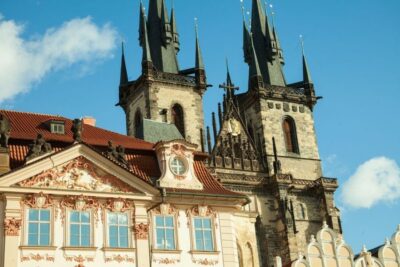
3-Hour Old Town and Prague Castle Tour in German
Read our review →
Prague Old Town, Medieval Underground and Dungeon Historical Tour
Read our review →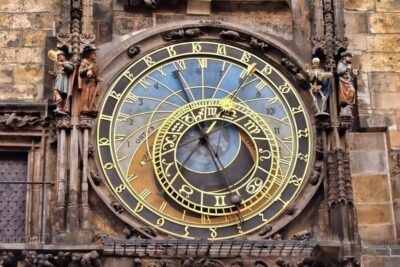
Old Town and Jewish Quarter Guided Tour in German
Read our review →
Ghosts and Legends of the Old Town Evening Tour
Read our review →
Old Town and Jewish Quarter Guided Walking Tour
Read our review →Browse the lists this tour appears in