
Reviewed · WALKING TOURS
Prague Renaissance and Baroque Gardens Walking Tour
One step into Prague’s gardens and you start reading power in plants. This Renaissance-to-Baroque walk is one of the best ways to understand how rulers used garden design to show taste and control, from Ferdinand I’s Italian teams to the Wallenstein Garden. I also love the small, specific details, like the Singing Fountain and the Fig House crops. The one thing to consider is the walking, including narrow and sometimes steep stairs at the castle.
I especially like that the tour feels relaxed and well-led, with historian guide Miriam called out for being both very informative and easygoing. In just 3 hours, you get a clear story arc, not a random checklist. You’ll move from grand castle pleasure spaces to showy theatrical Baroque moments, then end in a quieter corner of Mala Strana.
Do note one practical wrinkle: some of the gardens you’ll see are inside paid areas, and admission fees are not included. So you’ll want to budget a little extra for those entrances, and plan for some stairs even if the pace is steady.
In This Review
- Key things I’d clock before you go
- Renaissance classicism on purpose, not decoration
- Belvedere Summer Palace and the Singing Fountain
- Fig House, Orangery, and the story of exotic plants
- Stag moat, Bull Stairs, and the South Gardens terraces
- Wallenstein Garden: albino peacocks and Baroque theater
- Vrtba Garden in Mala Strana, a Baroque walled world from 1720
- Price and value, plus what to budget for entrances
- Who should book this garden walk
- Should you book Prague Renaissance and Baroque Gardens?
- FAQ
- Where does the tour start?
- How long is the walking tour?
- What is included in the price?
- Is the entrance to Prague Castle gardens included?
- Is Vrtba Garden admission included?
- What language is the tour guide speaking?
- Is the tour private or small group?
- Is this tour suitable if I have mobility issues?
- What is the cancellation and payment flexibility?
Key things I’d clock before you go
- Italian Renaissance gardeners in Prague Castle gardens, hired by Emperor Ferdinand I, and why that mattered north of the Alps
- Belvedere Summer Palace and the Singing Fountain, cast in bell bronze in 1564 so falling water resonates
- Fig House and Orangery crops, including figs, almonds, oranges, and lemons grown for the first time in Central Europe
- Tulips arriving via a diplomatic gift, tied to an exotic story about the Sultan of Constantinople
- Wallenstein Garden’s theatrical details, from albino peacocks to Mannerist statues and mythical fountains
- Vrtba Garden’s Baroque walled layout from 1720, with marine-themed grotto views at the top courtyard
Renaissance classicism on purpose, not decoration
This tour works because it treats gardens like public messaging. In many eras, garden design was basically politics with a watering can. You see that right away when you hear how Emperor Ferdinand I brought Italian landscapers and architects to Prague. The message was simple: if the court wants to look modern, cultured, and cosmopolitan, it needs the right kind of design. In the Italian Renaissance style, gardens were built to signal order, harmony, and control over nature.
What I like for you is the way the guide connects plantings and structures to ideas people actually argued about. We’re not just looking at pretty terraces. You’ll hear about the transition from Renaissance classicism to Baroque thinking, and why the later style felt more dramatic, more emotional, and more theatrical.
You’ll also get context on earlier roots. The bigger garden idea in Prague grew over time, from medieval herb gardens preserved in select Gothic cloisters, to old vineyard culture on surrounding hills, and then into the larger palace garden concept that took off in the 1500s. By the time you reach the big showpiece gardens, you’ll understand why the details were chosen, not just what they look like.
Belvedere Summer Palace and the Singing Fountain
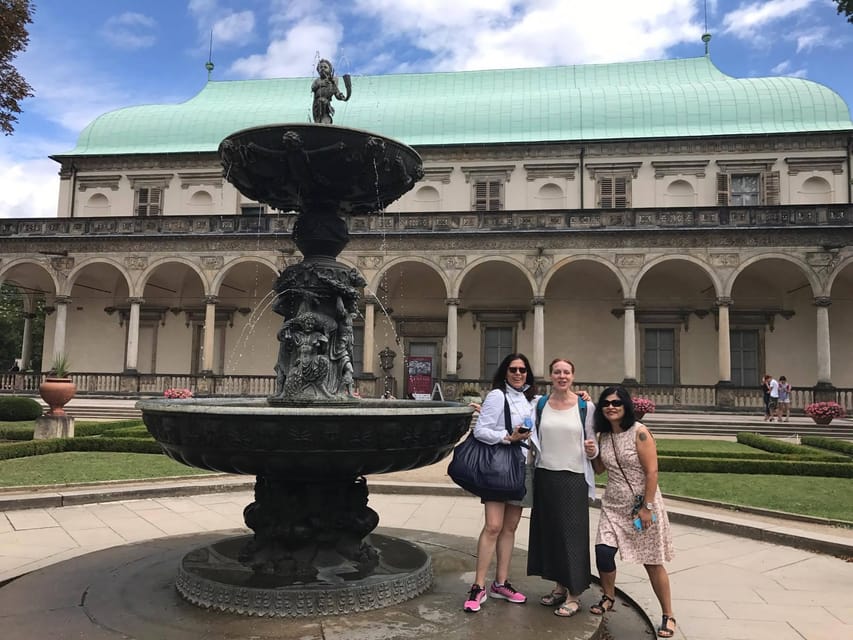
Your first big pull is the Prague Castle Gardens story centered on Ferdinand I. The Belvedere Summer Palace is commissioned as a gift for Ferdinand’s wife, Queen Anne, although she did not live to see its completion. Standing around these spaces, it’s easier to grasp how the court used a small “pleasure palace” to communicate status, romance, and cultural reach.
One especially memorable detail is the relief showing Ferdinand presenting Queen Anne with a flower from the Royal Gardens. It’s a small moment, but it’s also a clue: the palace garden isn’t background scenery. It’s part of the court narrative.
Right in front, you’ll hear about the Giardinetto and the Singing Fountain, cast in 1564 in bell bronze. Here’s the clever part: the water drops into a bowl so it resonates, creating a kind of singing effect. Whether you think of it as music or just clever acoustics, it’s a great example of how Renaissance design could be playful while still feeling controlled and refined.
This stop is also a reminder that the gardens were never just for walking. They were for looking back at the palace, receiving guests, and showing off the court’s ability to import high-style design from Italy.
More lanes taken at street level:
- Prague: 3-Hour Walking Tour of Old Town & Prague Castle
★ 4.7 · 5,696 reviews - Prague: Ghost Walking Tour Where Legends Come To Life
★ 4.4 · 5,253 reviews - Prague: Jewish Quarter Walking Tour with Admission Tickets
★ 4.7 · 3,729 reviews
Fig House, Orangery, and the story of exotic plants
After the pleasure palace, the walk shifts from stone elegance to horticultural ambition. The tour takes you to the Fig House and Orangery, where crops like figs, almonds, oranges, and lemons were grown. The key point is what the guide frames as a milestone: these plants were grown for the first time in Central Europe.
That’s more than trivia. It’s how the court demonstrated both power and curiosity. You needed expertise, money, and infrastructure to pull this off, and the garden became a living proof-of-concept. In other words, the architecture and the plants were working together.
Then comes the tulip story, one of the more fun moments if you like garden lore. As you get toward the western end of the garden, you’ll hear how tulips were introduced to the Royal gardens through a gift connected to the Sultan of Constantinople. If you’ve ever wondered why certain flowers become status symbols, this part gives you the how and the why.
Practical note: even though this segment is about plant history, you’ll still be moving through areas with stairs and changes in level as you go. Comfortable shoes matter here more than anything else.
Stag moat, Bull Stairs, and the South Gardens terraces
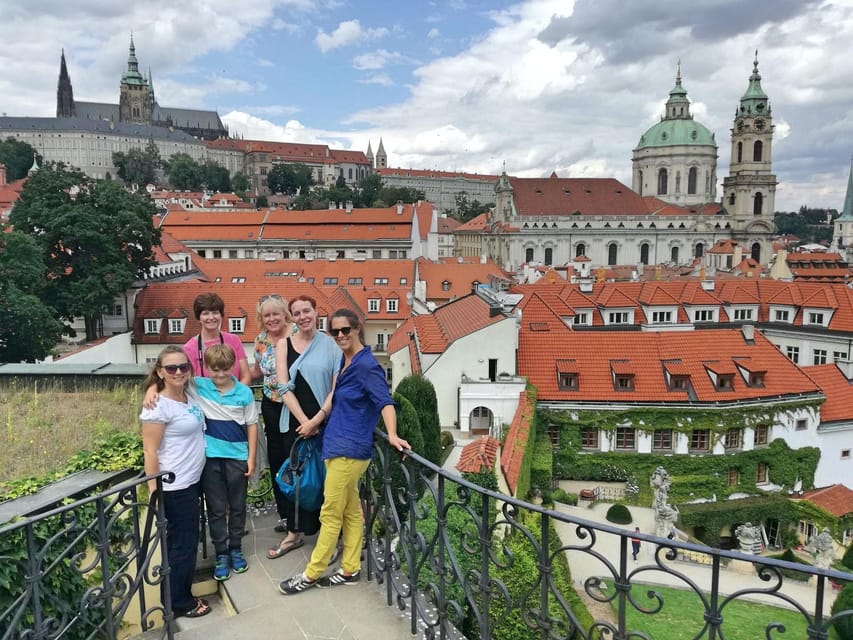
From the castle courtyard, the route descends via the Bull Stairs and heads toward the South Gardens. Before the descent, you pass the stag moat, which helps set the scene. It’s a reminder that these were designed spaces shaped by court life, including controlled animal and water features, not wild growth.
When you reach the lower levels, the tour starts showing how the garden becomes a sequence of rooms. You’ll explore the Garden of Paradise and the Garden on the Bulwark, then continue down through terraced gardens below the castle. This is where the “walk” part feels meaningful, because the design rewards movement. The views shift as you drop in elevation, and the garden’s story becomes easier to follow when you experience it step by step.
What I like here for you is pacing. The guide doesn’t just stop to point. You’ll connect what you’re seeing to the era’s ideas about form and spectacle. The Renaissance focus tends to feel orderly and ideal. Then, as you get closer to the Baroque climax later, you’ll notice the mood shift.
One consideration: narrow or steep stair sections are part of this route. The official accessibility note flags this clearly. If you know stairs are a challenge for you, a private tour could let the guide adjust the route and skip some of the more difficult sections.
Also chalked up in Prague




Wallenstein Garden: albino peacocks and Baroque theater
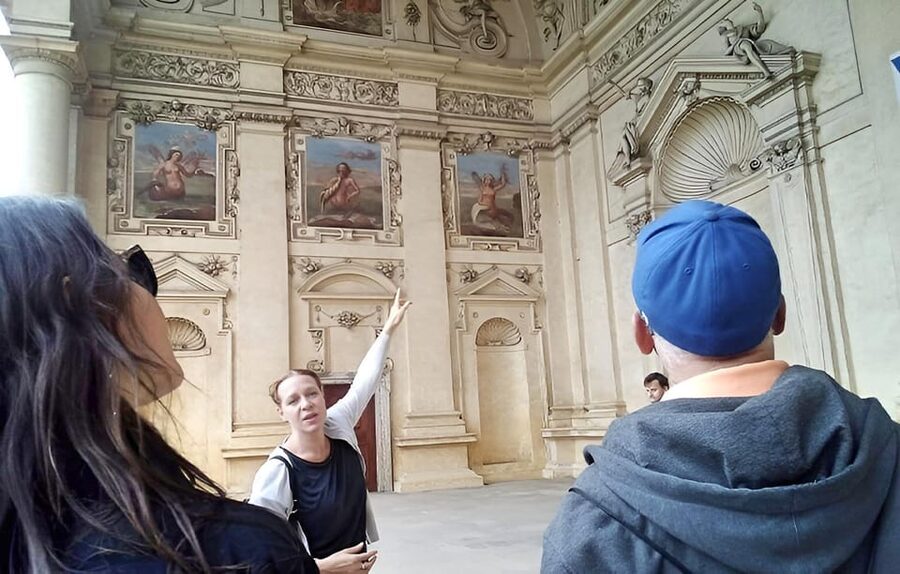
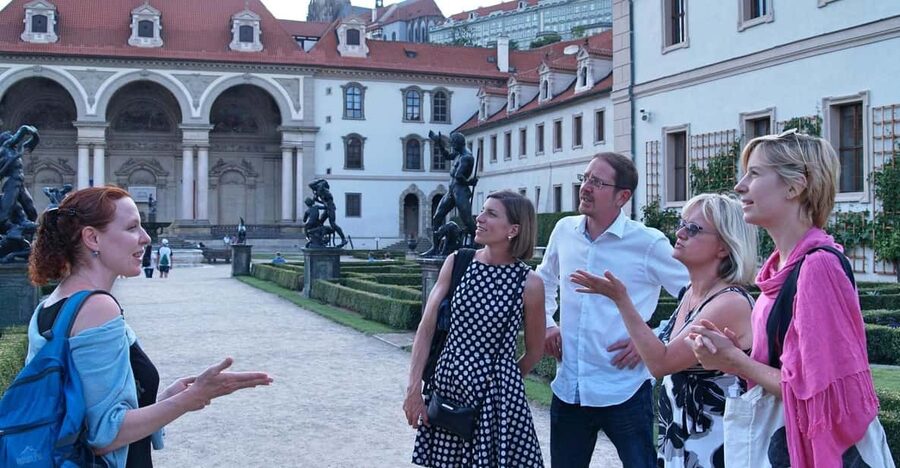
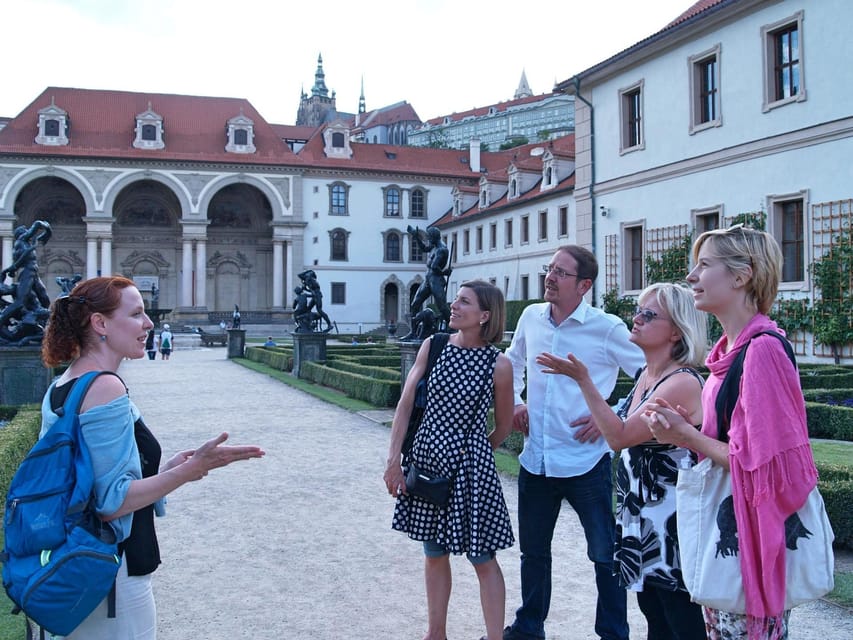
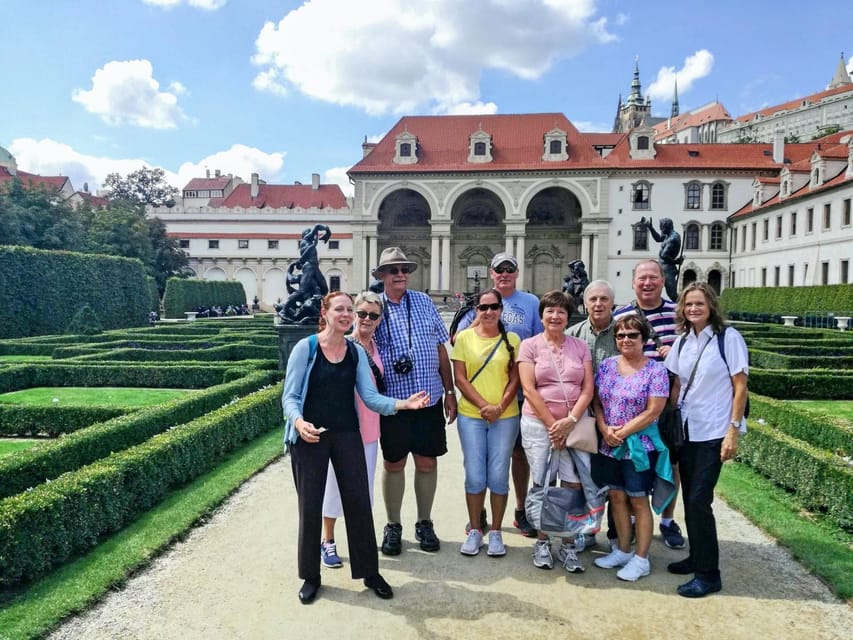
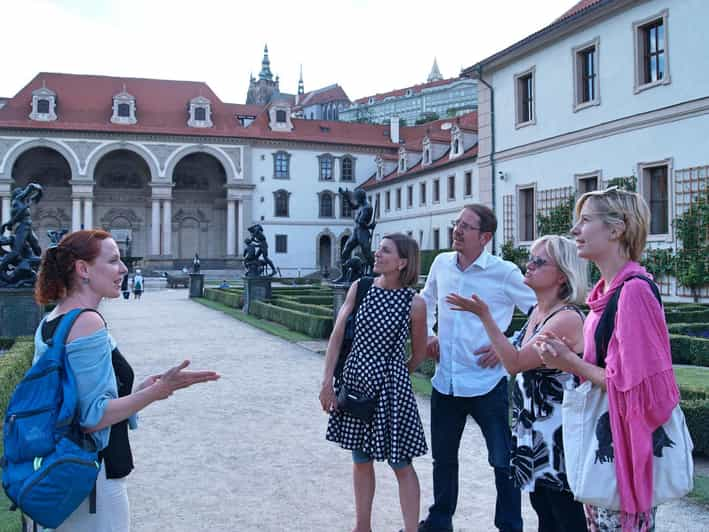
Then the tour hits its star. The Wallenstein Garden is grand and dramatic, with a mix of visual surprises and myth-themed storytelling. You’ll see albino peacocks, Mannerist statues, a grotto wall, and mythical fountains. It’s hard not to feel like the garden commissioner was aiming for awe, not calm.
This is also the point where the historical explanation really locks into place. The guide walks you through the shift from Renaissance classicism to Baroque philosophies, and the dramatic life of the commissioner, Albrecht von Wallenstein. Once you hear that, the garden elements read differently. The fountains and grotto effects stop being random decorations and start feeling like parts of a larger theatrical plan.
I especially love how the garden includes both “play” and “power.” Albino peacocks are striking and a little surreal. Mythical fountains invite imagination. Meanwhile, the overall layout and the presence of statues keep it anchored in an official, controlled world. Baroque gardens often aim to produce feelings, and here you can almost see the intended emotion being engineered into the walk.
If you only have time for one big garden moment in Prague, this is the one the story leads you toward. And because your guide ties the design choices to the commissioner’s life and the era’s worldview, it’s also the most satisfying stop intellectually.
Vrtba Garden in Mala Strana, a Baroque walled world from 1720
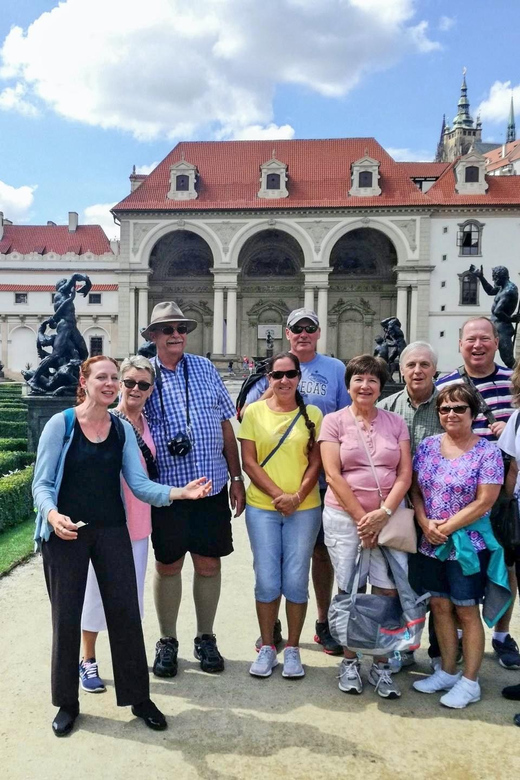
After the grand Wallenstein moment, the tour ends with a calmer kind of wonder. You’ll visit Vrtba Garden, a walled Baroque garden dating from 1720, located in Mala Strana. This is the segment that many people miss on their own because it requires knowing where to look and how to understand what you’re seeing.
What’s special is the way the garden feels like a private estate. You’ll learn about the noble life in the 18th century and the aesthetics of Baroque landscaping through the layout and changes in perspective. When you climb to the very top courtyard, you’ll also encounter a marine-themed grotto. It’s an added layer of symbolism and spectacle, and it comes with practical rewards: you get stunning vistas of Prague’s cityscape.
For me, Vrtba is the best “wrap-up” garden because it’s both visually rewarding and conceptually useful. You see the Baroque love of enclosed space, staged views, and themed effects, then you look outward and connect garden design back to the city.
Price and value, plus what to budget for entrances

The tour costs $123 per person and lasts 3 hours. That price lands in a sweet spot if you want guided context without committing to a full day. You’re paying for a historian guide and a route that strings together several major garden moments into one coherent narrative. The best value here is how much meaning you get per stop, not just access to sights.
The catch is admissions. Prague Castle garden areas have an admission fee that is not included, and Vrtba Garden admission is also not included. So think of the ticket price as the guide and the walking tour storytelling, then add the garden entry costs on top.
If you’re cost-conscious, it’s still often worth it because the guide’s explanations make the details click. If you prefer to wander alone, you might skip the tour. But if you like understanding why Ferdinand I imported Italian designers, why the tulip story matters, and why Baroque design feels more emotional than Renaissance design, this guide-led approach is where your money goes.
Who should book this garden walk
This is a great fit if you:
- Like history, but you also want it attached to something you can see in front of you
- Enjoy garden specifics, from specific buildings like the Belvedere Summer Palace to the mechanics and symbolism of fountains
- Want a structured route that still allows you to pause and look
- Appreciate storytelling guides, especially ones who keep things relaxed, like Miriam, who people highlight for being excellent and easy to listen to
If you are very sensitive to stair sections, you should consider a private or small-group option so the guide can tailor the route and skip harder pieces.
Should you book Prague Renaissance and Baroque Gardens?
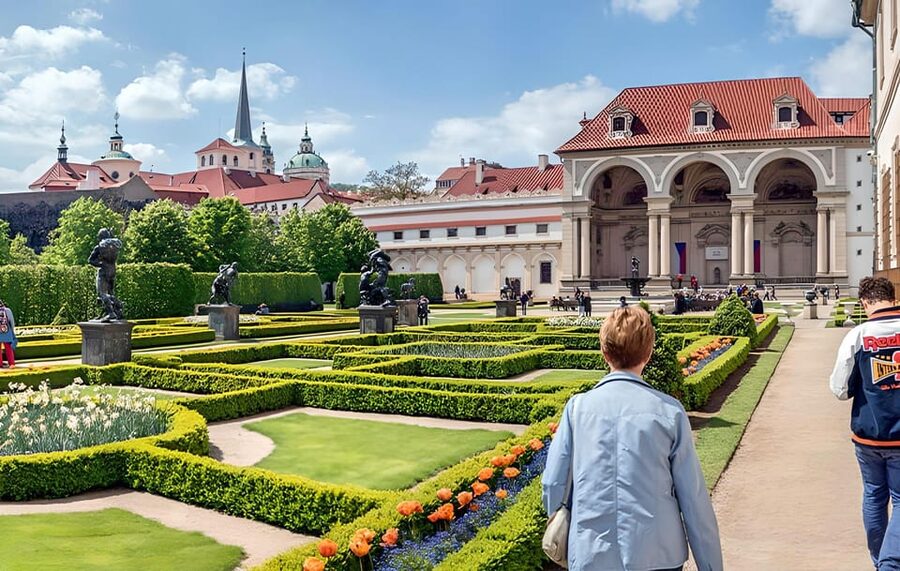
Yes, I’d book it if you want Prague gardens with explanation and momentum. The tour connects Renaissance classicism and Baroque philosophy to real places, and it does it with memorable visual anchors like the Singing Fountain, the Fig House and Orangery crops, and the Wallenstein Garden’s albino peacocks and myth fountains. Ending at Vrtba Garden gives you a distinct shift in mood, plus city views.
Skip or rethink it if you want mostly flat ground, or if you strongly dislike paying extra for entrances. But for most people, this 3-hour format gives you a lot of garden meaning without turning your day into a marathon.
FAQ
Where does the tour start?
Meet at the door of Bagel Lounge Malostranska.
How long is the walking tour?
It is a 3-hour guided history walk.
What is included in the price?
The tour includes a 3-hour guided history walk and an English live tour guide.
Is the entrance to Prague Castle gardens included?
No. Gardens under Prague Castle admission fee is not included.
Is Vrtba Garden admission included?
No. Vrtba Garden admission fee is not included.
What language is the tour guide speaking?
The tour guide provides an English language live tour.
Is the tour private or small group?
Private or small groups are available.
Is this tour suitable if I have mobility issues?
The tour regularly includes walking up and down stairs that are sometimes narrow and/or steep. If you expect difficulties, a private tour may allow the guide to tailor the route and focus on other sites.
What is the cancellation and payment flexibility?
Free cancellation is available up to 24 hours in advance for a full refund, and you can reserve now and pay later.
Newly posted under the arches of Prague





Walking Tours, compared.

3-Hour Walking Tour of Old Town & Prague Castle
Read our review →
Ghost Walking Tour Where Legends Come To Life
Read our review →
Jewish Quarter Walking Tour with Admission Tickets
Read our review →
Prague Guided Walking Tour and Cruise with Authentic Czech Lunch
Read our review →
Old Town and Jewish Quarter Guided Walking Tour
Read our review →
Prague Ghost and Legend of Old Town Walking Tour
Read our review →
Prague 3-hour Afternoon Walking Tour including Prague Castle
Read our review →
Ghosts and Legends Nighttime Guided Walking Tour
Read our review →Browse the lists this tour appears in