
Reviewed · WALKING TOURS
Prague: Unique Walking Tour with a Local Historian
One walk, two Pragues, and lots of stories in between. This tour strings together New Town and Old Town sights you usually skip, with garden stops, a medieval church, and the Charles Bridge views of Prague Castle. I especially like how Ivitsa keeps the pace friendly, and how the route favors tucked-away passages and courtyard-style stops over the most obvious photo lines.
If you hate walking, this is your only real downside: you’re at it for about 150 minutes, and it’s outdoors for much of the day. Bring comfortable shoes, and if the weather turns, plan to stay flexible.
In This Review
- Key highlights I think you’ll care about
- Starting at the National Museum, then steering away from the crowds
- Who this first hour is for
- New Town stops that feel local, starting with Lucerna Passage
- Practical tip
- Franciscan garden calm, then a real medieval church moment
- If you’re planning photos
- Oldest Jewish cemetery site and the rotating head of Kafka
- What to expect in this section
- Mozart and Don Giovanni places, plus Kepler’s Renaissance-era work
- A note on pacing
- Bethlehem Chapel, Charles IV, and the Old Town passage finale
- Crossing Charles Bridge with a view of Prague Castle
- John Lennon Wall to finish, with a final change of mood
- Price, value, and why the small-group size matters
- What to wear, what to bring, and who should book this tour
- Should you book Prague Unique Walking Tour with a Local Historian?
- FAQ
- How long is the tour?
- Where does the tour start and end?
- Is it a small group tour?
- What language is the tour guide?
- Are there additional fees during the tour?
- What kinds of places are included?
- Is it suitable if I am not very fit?
Key highlights I think you’ll care about
- Small group of up to 10 people, so you can actually ask questions and get real answers from Ivitsa.
- Old and New Town without the usual Square overload, with stops like Lucerna Passage and Franciscan Gardens.
- Two “wow” garden and church moments: the Franciscan garden and the Church of Our Lady of the Snows.
- Kafka and Mozart in one flow, plus the rotating head and the places tied to Don Giovanni.
- Charles Bridge with a view payoff, then a calm ending at the John Lennon Wall.
Starting at the National Museum, then steering away from the crowds
The tour kicks off by meeting Ivitsa in front of the National Museum, right next to the fountain, at Václavské nám. 68. He’s easy to spot, and if you’re the kind of person who likes to find your group fast, that matters. From there, you move into the history of Prague’s center with a focus that’s both practical and story-driven.
The first big stop is the National Museum from outside, where you’ll hear how it fits into Prague’s bigger picture, including the theme of student resistance. You’re not sitting in a museum hall here. You’re getting the timeline sense first, which makes the rest of the walking stops easier to follow.
Then the tour shifts to the statue of the Good King Wenceslas, again with on-site explanations. This is a classic Prague marker, but the value is what you learn around it, how it ties into the story of the New Town you’re heading into next.
Who this first hour is for
If you want context before you start taking photos, this start is made for you. It also works well if you’re travel-planning on a tight schedule and want the story-thread, not just the landmark list.
More lanes taken at street level:
- Prague: 3-Hour Walking Tour of Old Town & Prague Castle
★ 4.7 · 5,696 reviews - Prague: Ghost Walking Tour Where Legends Come To Life
★ 4.4 · 5,253 reviews - Prague: Jewish Quarter Walking Tour with Admission Tickets
★ 4.7 · 3,729 reviews
New Town stops that feel local, starting with Lucerna Passage
One of the smartest choices in this itinerary is that it doesn’t hang around the most overused meeting points. After the Wenceslas area, the route pushes you into spaces that feel more like how Prague moves day to day.
Lucerna Passage is one of those stops. You’re guided through it, then you get to an Art Nouveau palace that’s included in the tour with an interior visit. This is where the upside-down horse statue comes in, and it’s the kind of detail that’s fun even if you’re not a design nerd.
This section does two things for you. First, it breaks the “every stop is another square” rhythm. Second, it adds an art and architecture layer that makes Prague feel less like a postcard and more like a living city.
Practical tip
If your feet get tired easily, this is where you’ll want to mentally slow down. The tour stays a walking pace, but it’s not a forced march. You get enough time at stops to take pictures and listen without feeling rushed.
Also chalked up in Prague
Franciscan garden calm, then a real medieval church moment
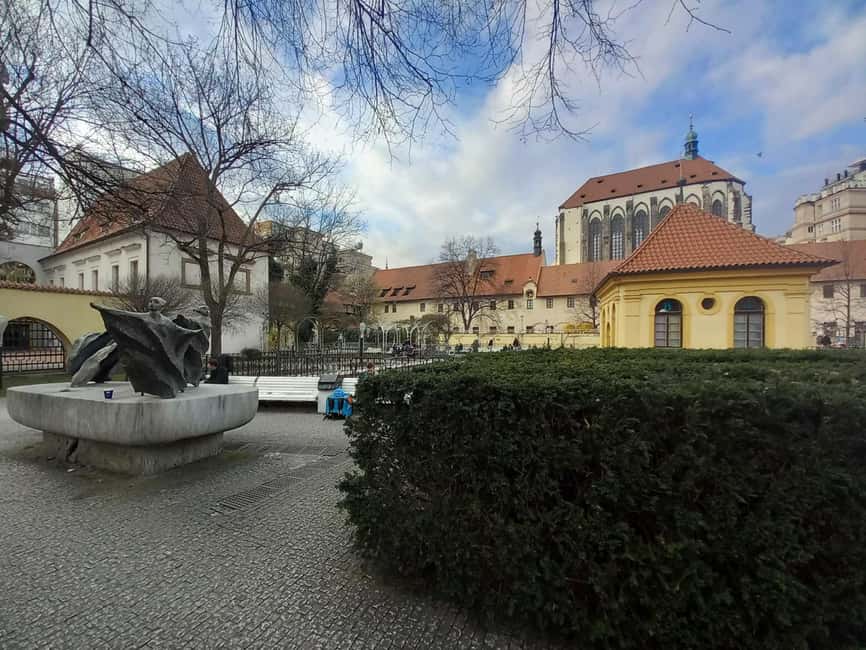
Next up is the Franciscan Gardens, which you visit inside the garden area. This is one of those Prague changes-in-vibe stops, from city streets into something quieter and more enclosed. Ivitsa’s explanations help you notice what you might otherwise breeze past, and it’s an easy place to reset.
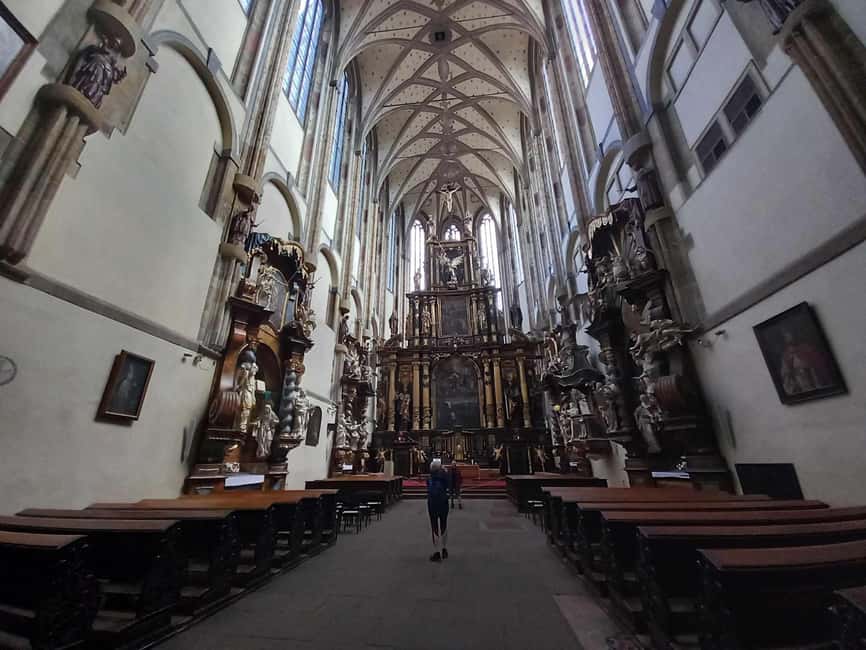
Right after the garden comes the Church of Our Lady of the Snows, with an interior visit. The tour is built so you don’t just see the church from outside for a quick snap. You get to be inside long enough to absorb the feel, then you move on with the story still fresh.
I like that this part of the itinerary gives you variety. A walking tour can turn into one style of sightseeing only. Here you get garden stillness, then a church stop, then the route keeps rolling.
If you’re planning photos
Go slower here than you think you need to. Even in churches, you’ll want a moment where you stop trying to get the perfect shot and just look.
Oldest Jewish cemetery site and the rotating head of Kafka
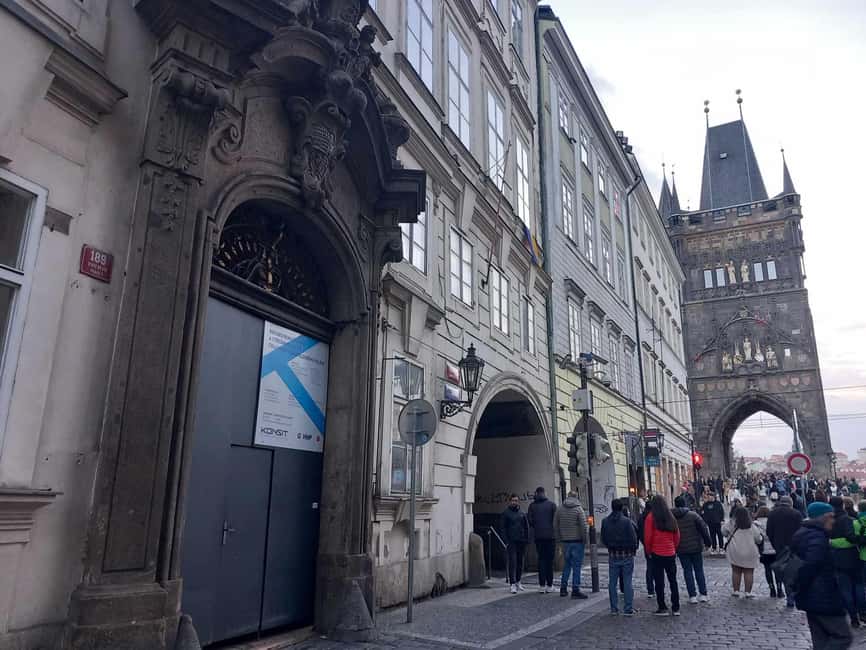
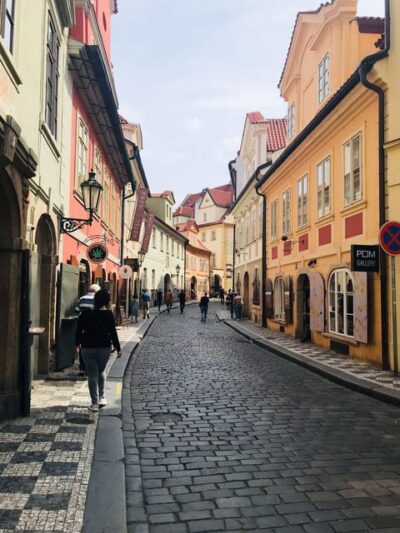
The tour then heads into Old Town alleys and passages, which is where you start feeling the city’s “hidden routes” advantage. Instead of only sticking to the main lanes, you’re guided through smaller streets and passages, so the city starts to feel more like a maze you can understand.
From there, two signature stops stand out:
- The site of the oldest Jewish cemetery in Prague, with explanations on-site.
- The rotating head of Franz Kafka, also explained on location.
These stops are not just famous names. They’re anchors that show Prague as a place where multiple cultures and eras overlap. And because the guide explains what you’re seeing as you’re seeing it, you’re not left googling later just to figure out why a location matters.
What to expect in this section
This is where you’ll likely ask questions. Ivitsa is the type who keeps conversations going rather than talking at you for the entire walk. In past tours, he’s also been praised for clear explanations and for being friendly and funny, which helps when the material turns more thoughtful.
Mozart and Don Giovanni places, plus Kepler’s Renaissance-era work
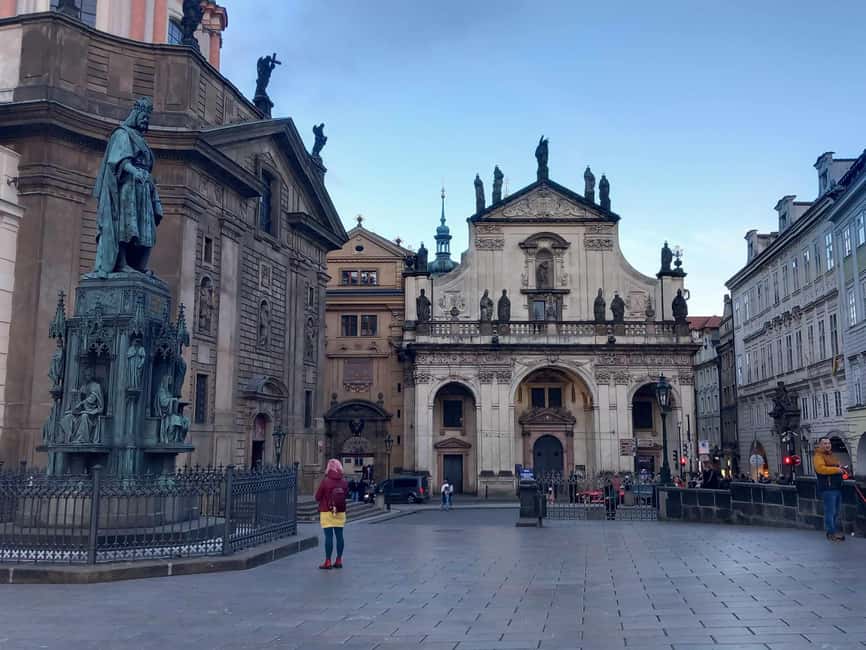
Next, you hit the Mozart thread. You’ll see the house where Mozart lived with history explained from outside, and you’ll also visit the opera house where he premiered the famous “Don Giovanni.”
The reason I like this sequence is simple. It pairs a personal place (Mozart’s home) with a performance place tied to a specific premiere. Even without going deep into dates, that connection helps your brain organize the story.
Then the tour moves to another big name: Johannes Kepler. You stop by a Renaissance house where Kepler lived and worked, with explanations from outside. This is another “from the street” moment, but it matters because Prague’s layers of science, art, and theater are all stacked close together.
A note on pacing
With stops like this, it can be easy for a walking tour to feel like trivia only. Here, the stops are spaced so you can actually take in what’s around you: streets, façades, and the way Prague’s buildings sit next to each other.
Bethlehem Chapel, Charles IV, and the Old Town passage finale
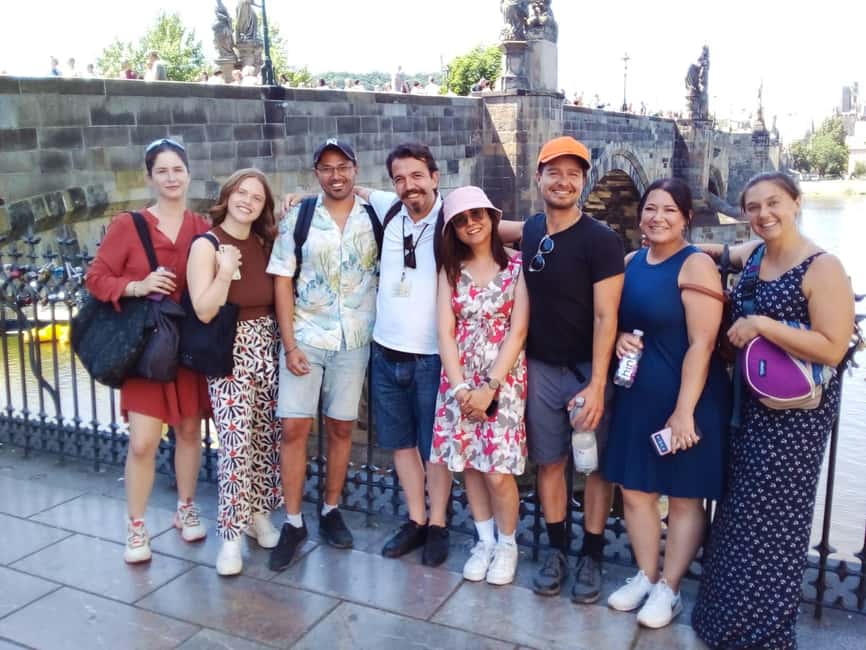
Old Town keeps unfolding through guided walking. You’ll go through old town alleys and passages, then you’ll reach the Bethlehem Chapel. This stop is tied to a Czech priest who started the reformation of the Catholic church, with history explained from outside.
From there, you continue on to a Renaissance house stop for Kepler earlier, and later you end Old Town by pausing at the statue of King Charles IV. That moment works like a transition beat. You’re not just sightseeing randomly. You’re being guided toward the Prague that opens up across the river.
Crossing Charles Bridge with a view of Prague Castle
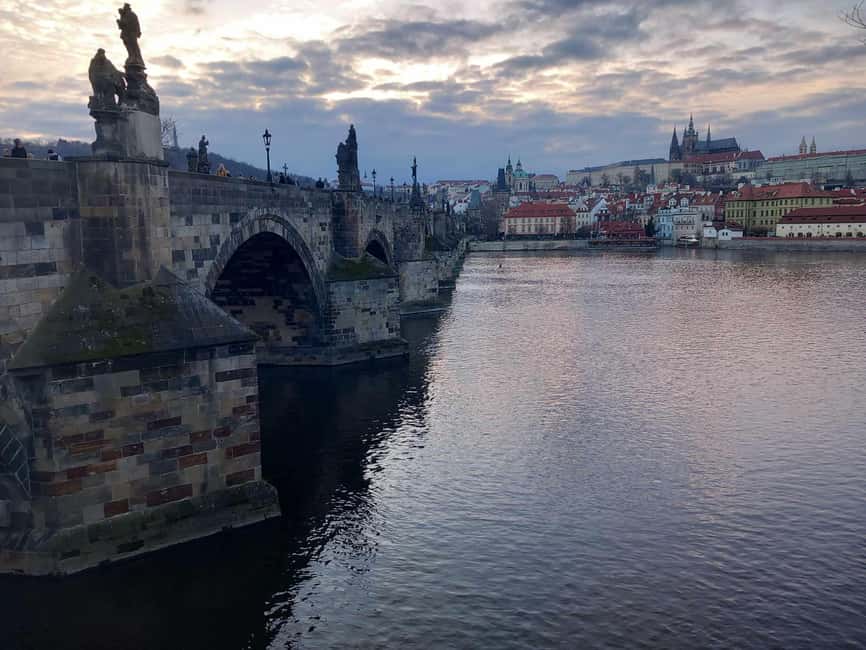
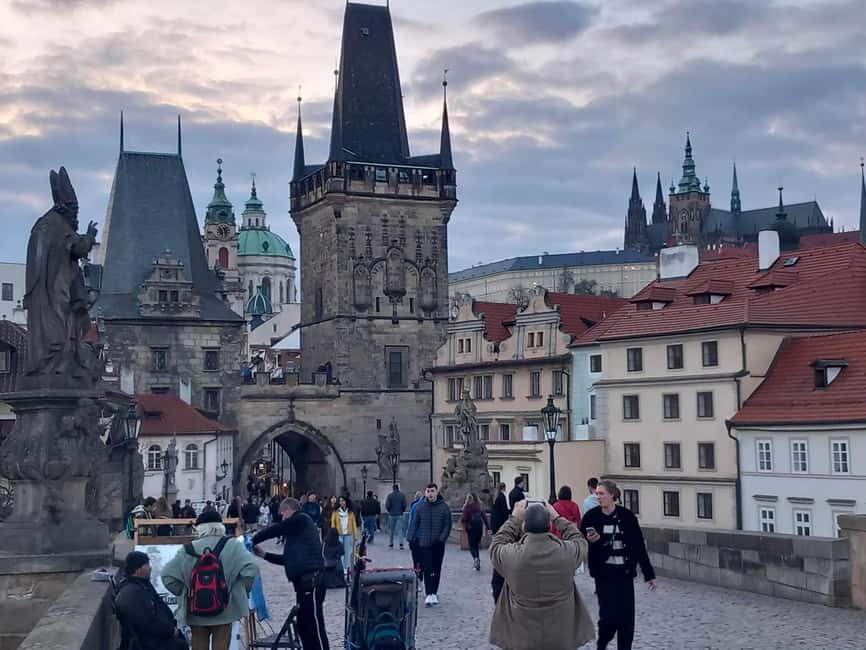
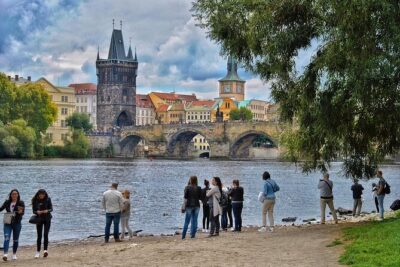
Then comes the big postcard walk, the Charles Bridge crossing. The tour includes guidance on the bridge’s history as you cross, plus time to look at the statues and take in the panorama.
This is a key payoff moment because you get views of Prague Castle while you’re still in motion. And if you’ve only ever seen Prague Castle from far away in photos, it hits differently when you’re standing at the right angle.
A pro move for this stretch is to slow your photo habits down. If you stop every few steps, you break the flow of the guide’s explanations. If you keep walking and just pause at the right spots, you get both the story and the scenery.
John Lennon Wall to finish, with a final change of mood
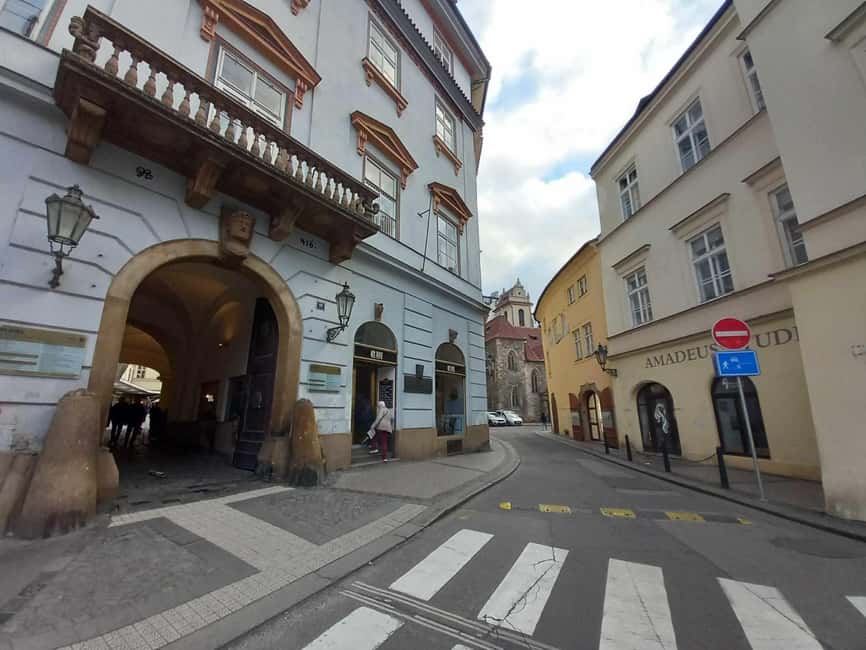
The tour ends at the John Lennon Wall, at Velkopřevorské nám., 118 00 Praha 1-Malá Strana. The guide explains what you’re seeing there on-site, which helps turn the wall from a quick stop into a meaningful finish.
I like that the ending isn’t another “stand in the same famous spot” moment. It’s more of a cultural, modern marker, and it gives your feet a breather at the close.
Price, value, and why the small-group size matters
The price is $20 per person for about 150 minutes. For Prague, that’s a fair deal if you care about having a guide connect the dots, especially since this route includes multiple interior visits: the Art Nouveau palace, Franciscan Gardens, and the medieval church, plus stops tied to Kafka, Mozart, and Charles Bridge.
You also don’t have to plan for added costs during the tour, since there are no additional fees noted. That matters when you’re budgeting for multiple paid entrances in one day.
The small-group limit of up to 10 participants is where the value gets real. Reviews for Ivitsa emphasize that the group is kept small enough for personal attention and questions, even when it’s just a few people. If you prefer a guide who can talk to you rather than perform at you, this size makes a difference.
What to wear, what to bring, and who should book this tour
This tour is built on walking through historical sites, and the important physical detail is simple: it’s two hours of walking with a moderate level of fitness required. Wear comfortable shoes. Bring layers, because much of the route is outdoors and weather can change fast.
You’ll probably enjoy this most if you:
- Want a route that mixes New Town and Old Town without feeling trapped in the busiest squares.
- Like when your guide points out details, not just famous names.
- Enjoy Prague’s art and architecture angle, including Art Nouveau and the garden and church stops.
- Appreciate cultural variety, since the tour threads Jewish cemetery history, Kafka, Mozart, Kepler, and Prague’s monument landscape.
If you want a purely relaxed day with minimal walking, this might be too active. But if you’re okay with a steady stroll and you want a lot of meaningful stops in one go, it fits nicely.
Should you book Prague Unique Walking Tour with a Local Historian?
Yes, I’d book it if your goal is to understand Prague instead of only collecting landmarks. The route feels well designed: it starts with context, adds art and architectural stops like Lucerna Passage and the upside-down horse, slows down with the Franciscan garden and a medieval church, then builds into Kafka, Mozart, Kepler, and the Charles Bridge view of Prague Castle before finishing at the John Lennon Wall.
Skip it only if you know you dislike walking for about two hours or you want a very quiet pace with lots of solo downtime. Otherwise, this is a strong value for a focused, story-led route with a friendly guide named Ivitsa Manovski who’s been praised for clear explanations, humor, and helpful recommendations.
FAQ
How long is the tour?
It runs for about 150 minutes, with around two hours of walking through historical sites.
Where does the tour start and end?
You meet in front of the National Museum, right next to the fountain, at Václavské nám. 68. The tour ends at Velkopřevorské nám., 118 00 Praha 1-Malá Strana.
Is it a small group tour?
Yes. It is a small group limited to 10 participants.
What language is the tour guide?
The live tour guide speaks English.
Are there additional fees during the tour?
No additional fees are listed for the tour.
What kinds of places are included?
The tour includes guided stops at places like the National Museum (from outside), the Good King Wenceslas statue, an Art Nouveau palace (inside), Franciscan Gardens (inside), a medieval church (inside), sites tied to the oldest Jewish cemetery, Franz Kafka, Mozart, Don Giovanni, Johannes Kepler, Charles Bridge, and the John Lennon Wall.
Is it suitable if I am not very fit?
It requires a moderate level of fitness since you will walk for about two hours. Comfortable shoes are recommended, and you should be prepared for outdoor weather conditions.
Newly posted under the arches of Prague

Walking Tours, compared.
3-Hour Walking Tour of Old Town & Prague Castle
Read our review →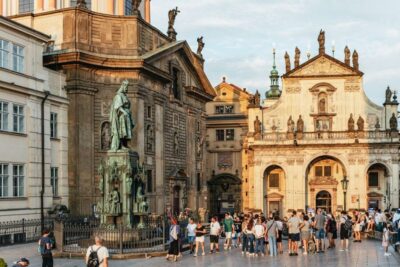
Ghost Walking Tour Where Legends Come To Life
Read our review →
Jewish Quarter Walking Tour with Admission Tickets
Read our review →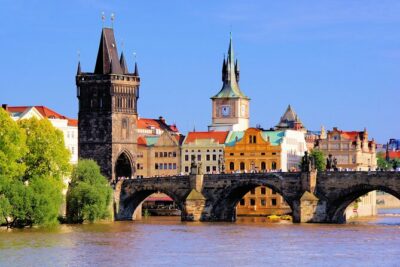
Prague Guided Walking Tour and Cruise with Authentic Czech Lunch
Read our review →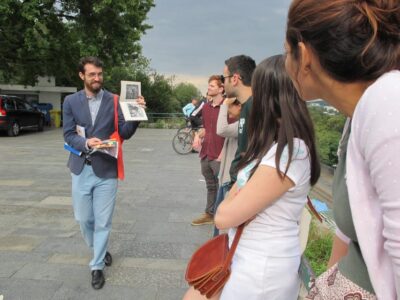
Old Town and Jewish Quarter Guided Walking Tour
Read our review →
Prague Ghost and Legend of Old Town Walking Tour
Read our review →
Prague 3-hour Afternoon Walking Tour including Prague Castle
Read our review →
Ghosts and Legends Nighttime Guided Walking Tour
Read our review →Browse the lists this tour appears in