
Reviewed · MUSEUMS
Spiritual Prague: An Exhibition
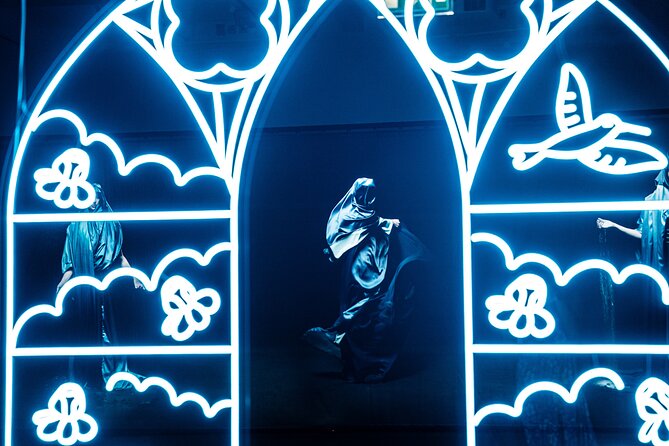
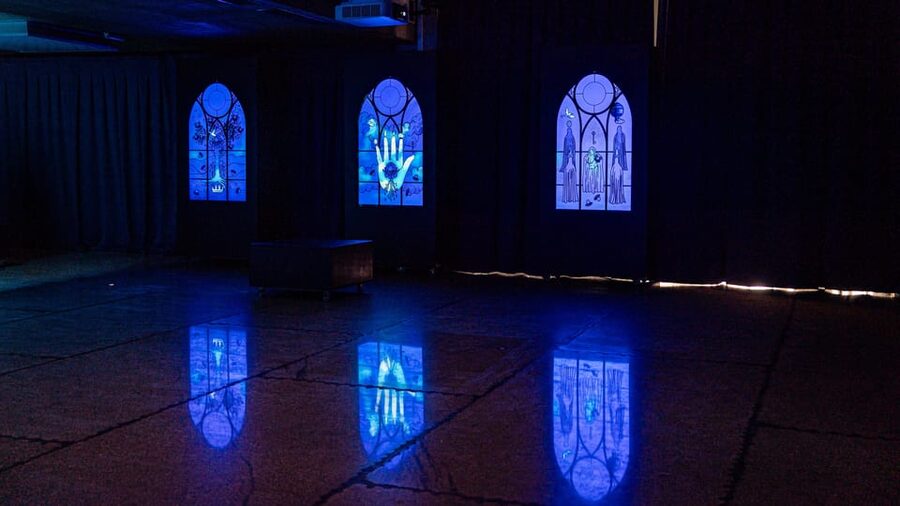
Blue light turns Prague history into theater. This one-day exhibition, held in the center of Prague at Hybernia Theatre, uses modern projections and sound to bring the story of the U Hybernů house to life in a way you can feel in your body, not just your brain. I especially like how the show is tied to the building you are standing in, so history has a physical address.
What I love most is the focus on the Blue Flower symbolism and how it shapes the mood. The exhibition leans into Christian imagery, with the color blue linked to purity, reflection, and rest, then ties that tone to major events you recognize from Prague’s past, like the medieval flood, the plague epidemic, and the Thirty Years’ War.
One thing to consider: this is not a strict lecture that checks facts like a textbook. It is a spiritual, art-driven way of processing history, so if you want only hard, linear facts, you may prefer a more traditional museum or guided walk.
In This Review
- Key Things That Make Spiritual Prague Feel Different
- Hybernia Theatre: The Setting That Makes the Story Stick
- The Blue Flower Theme and Why the Atmosphere Works
- 3D Multimedia Scenes: Flood, Plague, and the War Years
- The U Hybernů House Story: History Grounded in Architecture
- How the Show Uses Sound, Projections, and Your Own Imagination
- Terrace Tour and Skyline Views: The Reset You Want After the Show
- Price, Duration, and Value at $14 per Person
- Who Should Book Spiritual Prague (and Who Might Skip It)
- Should You Book Spiritual Prague at Hybernia Theatre?
- FAQ
- Where is Spiritual Prague located?
- How much does the exhibition cost?
- How long is the experience?
- Is the terrace tour included?
- Is Spiritual Prague wheelchair accessible?
- Can I cancel and get a refund?
Key Things That Make Spiritual Prague Feel Different
- Blue Flower symbolism shapes the whole experience, not just the title, with blue used for purity, reflection, and calm.
- Hybernia Theatre location gives the exhibition extra punch because the story is tied to the site itself, not a random room.
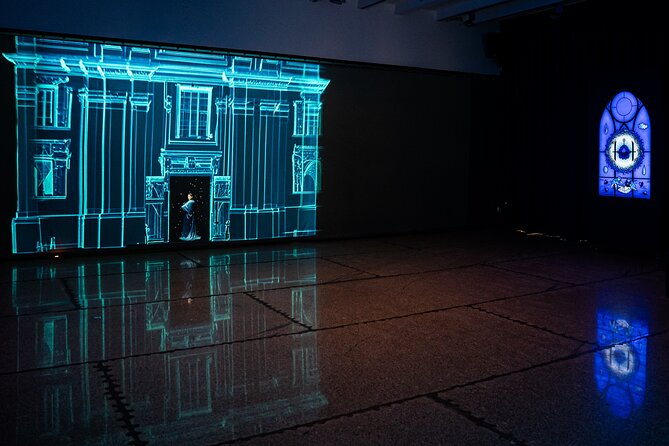
- 2D and 3D animations plus sound effects help the scenes connect to more than sight.
- Major historical moments appear as moments you experience, not just dates you memorize, including flood, plague, and the war era.
- The historical arc of the U Hybernů area is explained through the changing religious and architectural layers on the site.
- Terrace tour with skyline views gives you a quiet reset after the show, so your evening in Prague stays easy.
Hybernia Theatre: The Setting That Makes the Story Stick
If you care about place, start with where this happens. Hybernia Theatre is the kind of central Prague building that feels like it has been through multiple lives. The exhibition uses that advantage well, because you are not only watching Prague history, you are watching it inside the historical shell of the area.
Here is the background that gives the show context. Before the theater, a 14th-century monastery of St. Ambrose stood on this site. It was destroyed during the Hussite Wars, then later the area changed hands: in 1629 Ferdinand II donated the site to the Franciscan Order of Ireland. In 1637, they began building a new monastery and the Church of the Immaculate Conception of the Virgin Mary based on plans by architect Carlo Lurag.
That matters for you because it changes how you interpret the visuals. When the exhibition talks about spiritual Prague, it is not floating in fantasy. It is drawing a line from real religious architecture, real conflict, and real rebuilding to the way people tried to make sense of fear, illness, and war.
Practical note: because it is in the city center, it is easy to pair with other Prague stops on the same day. You will likely feel like you walked into a show and walked out into the city with sharper context.
The Blue Flower Theme and Why the Atmosphere Works
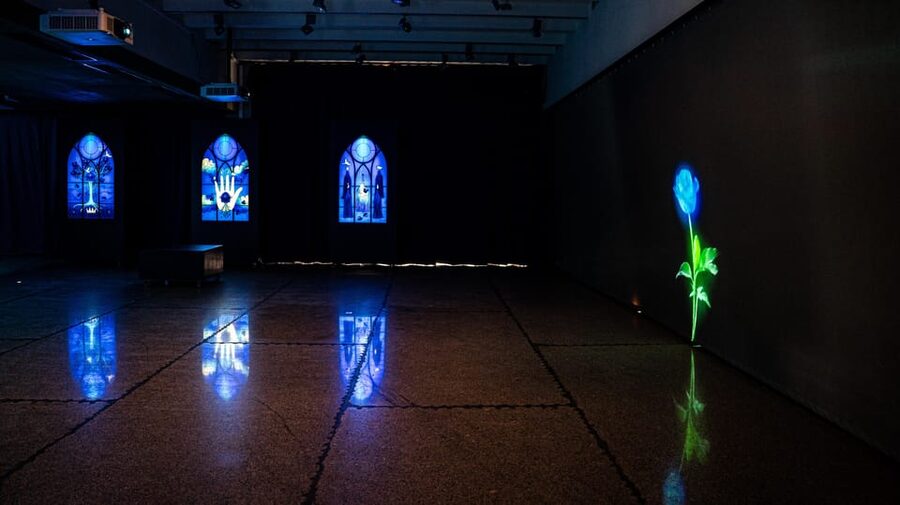
The exhibition title is not just branding. The whole experience leans on the color blue as spiritual symbolism, and it is a big clue to how to watch.
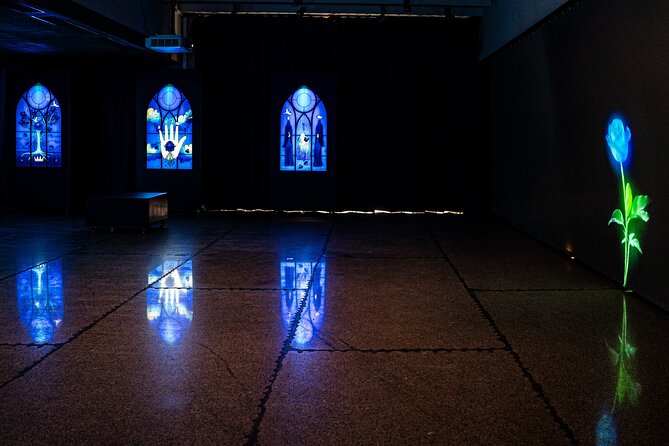
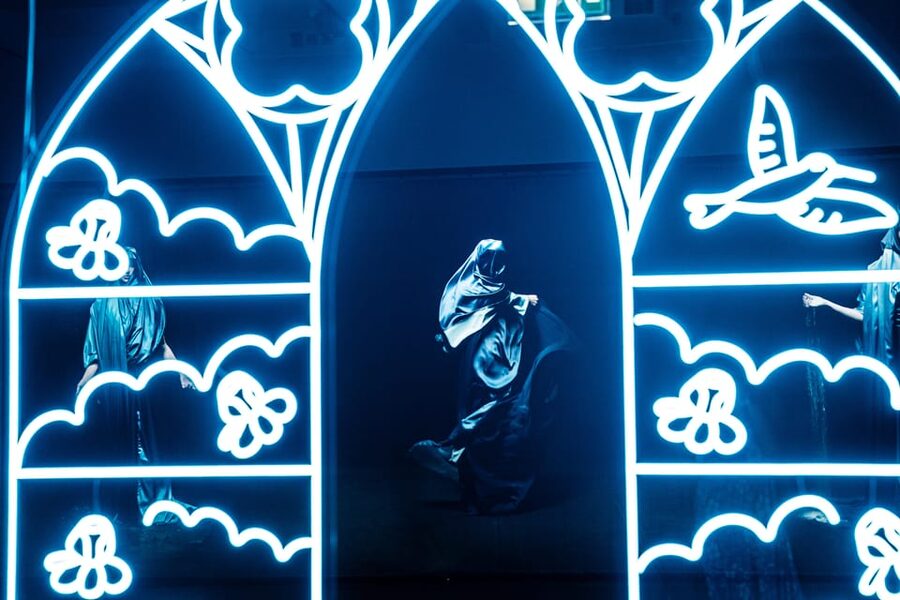
In the project’s framing, blue represents purity and innocence, which is why the Virgin Mary is often depicted in blue. It is also the color of reflection and rest, so the show uses blue shades to slow your pulse down a bit while it moves through intense historical events.
This is where I think the show is most clever. It does not ask you to be coldly analytical the whole time. It asks you to notice mood, rhythm, and symbolism, which is exactly what many religious audiences historically did, even when events like floods and plagues were not spiritual at all.
You should expect Christian symbolism mixed with animation in 2D and 3D space. The show is guided by audiovisual storytelling directed by artist Maria Krajplová, including the way historical sources are transformed into emotional images. You are not expected to treat it like a documentary. Instead, you get history filtered through spirituality and art, with the viewer’s perception playing an active role.
If you are the type who likes meaning, not just facts, you will probably enjoy how the color and imagery steer your attention.
More exhibition halls out of the rain:
- Prague: Museum of Fantastic Illusions Entry Ticket
★ 4.3 · 4,337 reviews - IAM Illusion Art Museum Entry Ticket
★ 4.2 · 1,664 reviews - Prague: Museum of Senses Admission Ticket
★ 4.0 · 1,445 reviews
3D Multimedia Scenes: Flood, Plague, and the War Years
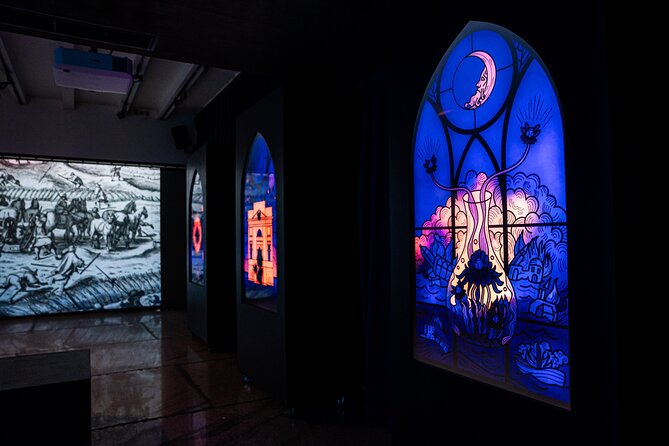
The centerpiece is a 3D multimedia exhibition in Prague city center, built around animations, sound, and visual effects. The show uses state-of-the-art technology to place you in the action, so your eyes and ears work together rather than competing for attention.
What scenes should you mentally prepare for? The exhibition specifically references major moments that shaped Prague, including:
- a medieval flood
- a plague epidemic
- the Thirty Years’ War
- other events tied to the changing shape of Prague
This matters for your planning because you can go in knowing the emotional range. Flood and plague are heavy subjects. The war era brings its own tension. Yet the show is designed so you do not feel thrown around. The blue-toned design and sound choices help keep the experience coherent, like walking through a dream where the visuals keep changing but the theme stays steady.
Also, pay attention to the way the exhibition treats “experience.” It is not only showing images. It is layering sensory cues so you feel connections between past and place. In practical terms, that means you may not catch every tiny historical detail, but you will likely remember the impression of the scenes.
One more helpful idea: because the footage and projections are made from contemporary documents and materials, then transformed, the show is built to communicate atmosphere. So if you miss a moment while you are reading the context, do not panic. Wait for the next sequence to land. The narrative is designed to flow through your senses, not just through captions.
The U Hybernů House Story: History Grounded in Architecture
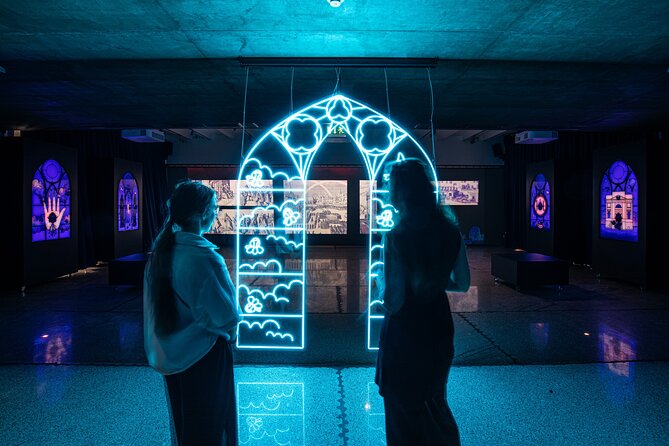
The exhibition has a historical track, focused on the history of the U Hybernů building and the area around it. This is the part that gives the show backbone.
You are essentially being guided through layers of what happened on the site and why it mattered. The monastery of St. Ambrose, the destruction during the Hussite Wars, the donation in 1629 by Ferdinand II to the Franciscan Order of Ireland, then the later build-out from 1637, including the Church of the Immaculate Conception of the Virgin Mary based on architect Carlo Lurag’s plan.
If you like context, this is where you will feel most satisfied. You can stand there and connect the projection to something real and structural. It turns the show from, this is cool, into, this actually connects to the way Prague grew, shifted, and rebuilt itself.
The exhibition’s tone also explains why the project is called Spiritual Prague. It is not just about churches. It is about how spiritual life, symbols, and art responded to upheaval. After all, medieval and early modern people lived inside buildings that reflected their fears and hopes. Art was not separate from survival.
The only drawback here is one you should expect from any art-forward program: the show is not trying to be a complete historical reference book. It is selecting moments and shaping them into a shared emotional experience. If you want a deep timeline, you might want to do one extra Prague walking segment on your own afterward, so you can anchor what you felt to more details.
Also chalked up in Prague
How the Show Uses Sound, Projections, and Your Own Imagination
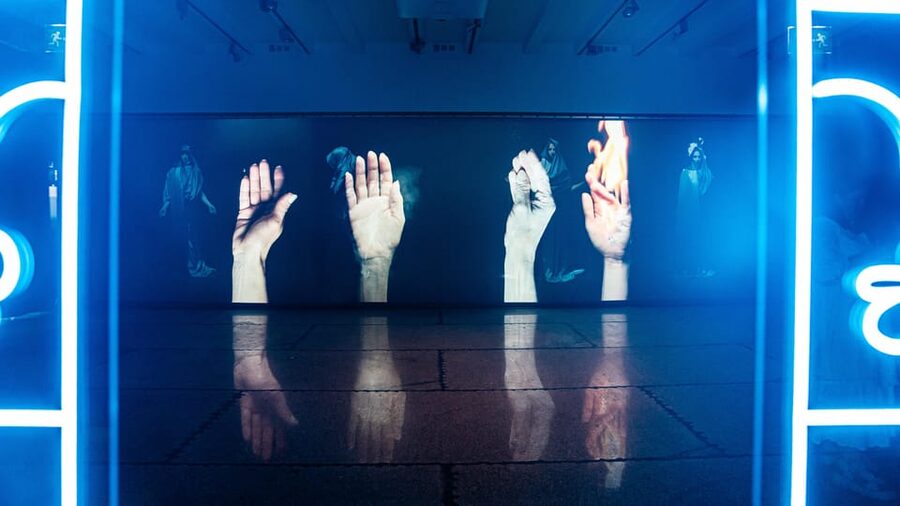
This exhibition is built around special projections and audiovisual storytelling in 2D and 3D space. You do not need a technical background to enjoy it, but it helps to know what to look for so you get more out of it.
The show blends:
- animations
- sound and visual effects
- historical artifacts and Christian symbolism
- an editing style that mixes collected footage into emotive imagery
A key point for you as a visitor: the project notes frame it as not just historical facts, but processing them so the mystical atmosphere reaches each viewer differently. That explains why this exhibition can feel personal. Two people can experience the same sequence and come away with different takes, because the show is designed to leave space for perception.
So, how should you watch? I suggest you go with the intent to feel the connections, not to catch every detail. When the sound ramps up and the visuals change dimension, treat that as the story’s way of guiding attention. When the blue tones return, take that as a cue to slow down and let symbolism lead again.
Also, because this is an exhibition in a theater environment, your comfort matters. Wear layers if the room tends to be cooler during projections. Keep your phone in your pocket unless you truly need it. The show works best when you do not spend the middle wondering if you are missing something on your screen.
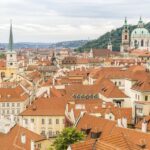
Terrace Tour and Skyline Views: The Reset You Want After the Show
After the multimedia time inside, you get a terrace tour with panoramic views of Prague’s skyline. This is a smart pairing. You need a breather after strong sensory input.
Practically, this helps you in two ways:
- You let your brain switch from symbolism back into real geography.
- You get an easy chance to orient yourself for the rest of your day, including where you might want to walk next.
The information provided is simple, but the value is clear. A terrace view turns your visit into more than a ticketed show. It becomes a moment where you reconnect with Prague as a living city, not only as projected history.
If you like photos, this is the best moment. Don’t wait until you leave the building. The terrace is where you get the wide look that makes the city feel whole again.
If you dislike heights or long standing times, plan to take it slow up there. But since it is included, you might as well use it.
Price, Duration, and Value at $14 per Person
At $14 per person for a one-day experience, the value comes from what you actually get included. You are not just paying for a short performance. You are paying for:
- a 3D multimedia exhibition in a historic theater setting
- the historical layer focused on U Hybernů and the site’s shifting religious history
- a terrace tour with skyline panoramas
For Prague, where many cultural add-ons pile up fast, this is a manageable price point. It is also a good option for one-day travelers who want more than walking but do not want to commit to a full day-long guided tour.
The duration is listed as 1 day, so it fits into your schedule without swallowing it. I like that because it makes the planning simpler. You can build the rest of your day around it, rather than building everything around the exhibition itself.
Who gets best value? People who enjoy art and atmosphere, plus anyone who wants context for Prague’s layers of religious and political history. If you only want a fact-heavy format, you might feel like you need more. If you want a story told with mood and technology, you are in the right place.
Who Should Book Spiritual Prague (and Who Might Skip It)
I think this exhibition is a strong match if you:
- like 3D multimedia shows that connect sound, light, and storytelling
- enjoy religious symbolism and how artists interpret history
- want a Prague experience that feels centered, not scattered across multiple neighborhoods
- appreciate setting-based history, where the building itself matters
It might be a less perfect match if you:
- want a traditional museum format with lots of straightforward, chronological labeling
- feel impatient with interpretation and symbolism
- are very sensitive to heavier themes like plague and war imagery, even though the tone is shaped with blue-toned design and sound choices
One practical bonus: it is wheelchair accessible, which makes it easier to plan if mobility is a factor. Also, the show language is not clearly stated in the info provided, so if language is crucial for you, check before you go.
Should You Book Spiritual Prague at Hybernia Theatre?
Yes, if you want a worthwhile Prague indoor experience that still feels grounded in place. The best reason to book is the combination of blue symbolism plus real architectural history tied to the Hybernia Theatre site. You get a story about U Hybernů and the monastery layers, then you feel the big events through modern projections and sound.
If you go in expecting a spiritual art interpretation rather than a strict history lesson, you will probably leave satisfied and with better context for what you see next in Prague. If you go in hunting only for facts, you may feel slightly shortchanged, and you will want to add a walking tour or reading time afterward.
FAQ
Where is Spiritual Prague located?
It takes place in the Hybernia Theatre in Prague city center, in the Central Bohemian Region of the Czech Republic.
How much does the exhibition cost?
The price is $14 per person.
How long is the experience?
It is valid for 1 day, from first activation.
Is the terrace tour included?
Yes. The Blue Flower exhibition includes a terrace tour offering panoramic views of Prague’s skyline.
Is Spiritual Prague wheelchair accessible?
Yes, the activity is wheelchair accessible.
Can I cancel and get a refund?
Free cancellation is available if you cancel up to 24 hours in advance for a full refund.
Newly posted under the arches of Prague

Museums, compared.
IAM Illusion Art Museum Prague Fast Pass Ticket
Read our review →
Ticket to Audiovisual Light Art at Lumia Gallery
Read our review →
Browse the lists this tour appears in