
Reviewed · JEWISH QUARTER & JOSEFOV HISTORY WALKS
Stories of Jewish Prague Walking Tour
Prague’s Jewish Quarter tells hard truths on foot. This walking tour links medieval origins, the golden age, wartime devastation, and today’s community, led by a local historian guide you might meet as Martina, Petr, Katerina Prusova, or Bonita, depending on the day. You start at the Old-New Synagogue, then move through the Jewish Quarter’s major landmarks with a route designed to connect people, power, and places.
I love the small group size (max 8), because questions stay easy and the pace feels human, not rushed. I also love the way the guide ties big events to street-level details, from Mordechai Maisel’s money-driven paving and charity to the ideas associated with Rabbi Judah Loew ben Bezalel.
One possible drawback: if you’re hoping for a deep lesson in Jewish religious rituals and practice, this tour may feel heavier on history and story than on day-to-day religious mechanics. Also, while it’s listed at about 3 hours, some groups have run closer to 4.
In This Review
- Key Highlights You Should Know Before You Go
- Entering the Jewish Quarter, Starting at the Old-New Synagogue
- Medieval Origins and a Surprising Building Story
- Mordechai Maisel and the Renaissance Town Hall That Paid for the Streets
- Rabbi Judah Loew ben Bezalel and the Intellectual Prague Angle
- Maria Theresa, the Edict of Toleration, and the Cycle of Expulsion
- Nazi Germany, Decimation, and What Comes Before the Invasion
- The Communist Era and Prague’s Jewish Community Today
- The 3-Hour Walk: Pace, Comfort, and Footnotes You Will Actually Use
- Price and Entrance Fees: Real Value Check for $126.03
- Meeting Point, Getting There, and What to Plan in Your Day
- Who Should Book This Jewish Prague Walking Tour?
- Should You Book It?
- FAQ
- How long is the Stories of Jewish Prague Walking Tour?
- Is the tour offered in English?
- What is included in the tour price?
- Do I need to pay entrance fees during the tour?
- Where do I meet the guide?
- How many people are in a group?
- Can I choose a morning or afternoon departure?
Key Highlights You Should Know Before You Go
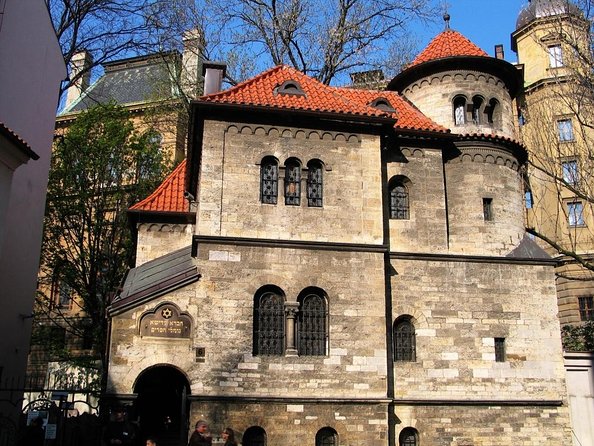
- Old-New Synagogue focus first, so the tour’s timeline has a powerful anchor from minute one
- Small group (max 8) keeps the walking route conversational and easy to adjust
- Stories about Mordechai Maisel connect architecture to community impact
- The tour covers major turning points, from Maria Theresa’s expulsion to the Edict of Toleration
- Wartime sections explain how Nazi Germany crushed Prague’s Jewish life and how tensions built before the invasion
- You’ll end with how Prague’s Jewish community looks today, not just a history lesson that stops
Entering the Jewish Quarter, Starting at the Old-New Synagogue
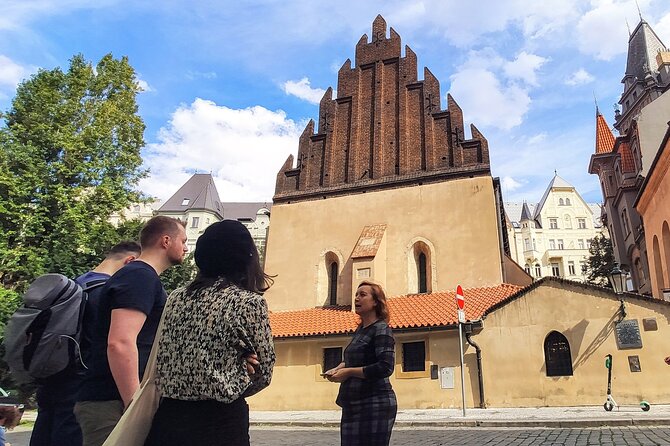
This tour begins at Maiselova 38/15, right in Josefov, Prague’s Jewish Quarter. From the start, you get a clear sense that you’re not just sightseeing. You’re stepping into a neighborhood where Jewish life has repeatedly been shaped, limited, protected, and threatened.
The first big stop is the Old-New Synagogue, often described as the longest functioning synagogue in Europe. Seeing it at the beginning helps you understand the rest of the route. The guide can frame centuries of change as a story that starts before modern borders, before modern borders moved people around, and before modern nationalism hardened identities.
What I like here is the logic. When you start with a living institution, the later events do not feel like isolated chapters in a textbook. They feel like pressure applied to real people. And because the tour is built around walking the Quarter, you’ll connect the synagogue to the surrounding urban layout, not just stand in front of a sign.
Practical tip: wear shoes you don’t mind using all day. Even with a slow, thoughtful pace, you’re still doing real walking through cobbled streets and tighter lanes.
Medieval Origins and a Surprising Building Story
One of the tour’s most striking early threads is medieval Prague itself. You’ll learn about the deep roots of the local Jewish community, including how, in the late 13th century, local Jews hired Christians to help build the synagogue. That detail does two things at once.
First, it undercuts the idea that medieval life was purely closed off. Second, it gives you a realistic view of how communities survived and built things even under complicated social conditions.
As you walk from place to place, the guide also shares Jewish religious and social customs from the medieval period. Even if your own background differs, you’ll likely find it helpful because it turns architecture and street plans into lived behavior. You start to notice how community identity shows up in what gets built, what gets protected, and what gets funded.
This is a great moment to ask questions. If something feels unfamiliar, you’ll get the context you need. A few guides have been praised for fluent explanations and even humor, which matters because the topic can get heavy fast. (More on that later.)
Other Jewish Quarter and Josefov history walks:
- Prague: Jewish Quarter Walking Tour with Admission Tickets
★ 4.7 · 3,729 reviews - Prague: Old Town and Jewish Quarter Guided Tour in German
★ 4.8 · 3,143 reviews - Prague: Old Town and Jewish Quarter Guided Walking Tour
★ 4.6 · 2,847 reviews
Mordechai Maisel and the Renaissance Town Hall That Paid for the Streets
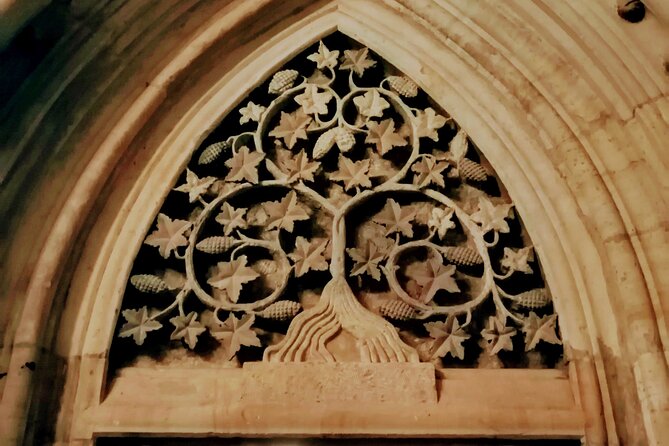
Next comes the Renaissance Town Hall built by Mordechai Maisel during what’s often called the golden age of Prague’s Jewish community. This stop is more than an architectural break in the walking route. It’s a lesson in civic power.
Maisel was not just a patron in the background. The story explains that he served as mayor of the Jewish Quarter and used his own money to pave neighborhood streets and provide charity. You can stand there and picture a community leader deciding that daily life should work better, safer streets included.
From a value standpoint, this is where the tour shines. Many tours list famous people but don’t show why their money and decisions mattered. Here, the guide helps you see impact. Streets, services, charity, and local governance all connect back to how communities grow when conditions allow it.
If you like history that connects to real infrastructure, you’ll enjoy this stop. It’s also a good place to slow down and look around, because you’ll feel how a single person’s choices could alter a whole block’s feel.
Rabbi Judah Loew ben Bezalel and the Intellectual Prague Angle
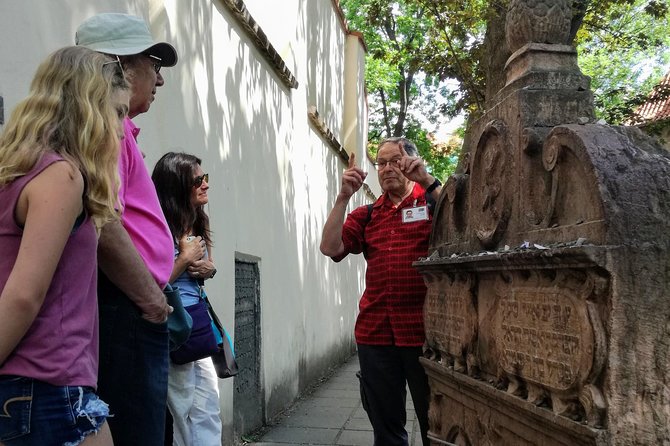
A standout theme is the intellectual world connected with Rabbi Judah Loew ben Bezalel. The tour describes him as a writer and theologian, and it places him in the wider flow of ideas that shaped Prague’s Jewish community during major cultural periods.
This section is especially useful if you’re tired of tours that only talk politics and persecution. You still get the hard history, but you also get proof that Jewish life was not only reacting to pressure. It was creating thought, debate, and learning that gave the community internal strength.
That said, one balance note: one earlier experience reported that a guide could sound very intellectual and assume familiarity. If you want everything translated into plain language, don’t be shy about asking for simpler explanations. A good guide will know how to step down a level without losing accuracy.
My advice: listen for the human part of the story. When the tour talks ideas, you’ll get more if you connect those ideas to the people living through them.
More lanes taken at street level:

Maria Theresa, the Edict of Toleration, and the Cycle of Expulsion
Then the mood changes. You’ll hear about the period when Empress Maria Theresa expelled the entire Jewish community, followed by her son’s reversal with the Edict of Toleration.
This is one of the tour’s most important narrative arcs because it shows the difference between an official threat and the institutional shift that followed. In other words, history didn’t just happen to Prague. It was driven by policy decisions made by specific rulers, which means the same city could swing from restriction to limited acceptance.
As you walk, the guide’s job is to make the policy feel real. You should come away understanding the practical effects of expulsion, not only the emotional headline. Where would people go? How would daily life be disrupted? How did tolerance change what people could do?
If you’re the type who likes seeing cause-and-effect, this section will click. And if you’re sensitive to heavy topics, it may also hit hard, especially as the route moves toward wartime years.
Nazi Germany, Decimation, and What Comes Before the Invasion
The tour then addresses life in the Jewish Quarter as Nazi Germany decimated Prague’s Jews. It also covers the local politics and ethnic tensions that preceded Hitler’s invasion of Czechoslovakia.
This is not only about dates. You’re guided through how societies fracture, how tensions build, and how discrimination can be prepared long before the most extreme violence arrives. It helps you understand that persecution often has a roadmap.
One practical way to get value here is to keep your attention on how the guide connects street-level settings to political shifts. Even if you cannot picture exact events outside a museum, you’ll build mental maps. That makes Prague’s Jewish Quarter feel like a place with consequences, not a stage set.
Emotionally, this part can be moving. If you prefer to keep some distance, it’s okay to take a slower moment at a stop. You can also ask for a reset, since the route is guided and discussion-based, not a rigid script.
The Communist Era and Prague’s Jewish Community Today
After the wartime material, the tour shifts to the Communist era, explaining what Jewish life looked like under that system. Then it finishes with a discussion of Prague’s Jewish community today.
This modern ending is a big deal. It prevents the tour from turning into a history-only experience that ends with tragedy and stops there. Instead, you get a sense of what continuity looks like, what community institutions still matter, and how the story continues in current life.
In my view, the value of the ending is practical. It helps you decide what to do after the walk. You’ll likely want to keep exploring the Quarter at your own pace, maybe returning to sites you found most meaningful, or seeking out related exhibitions at a Jewish museum.
Also, it’s a good moment to ask your last questions. Guides like Martina and Bonita have been praised for balancing personal storytelling with a bigger timeline, and that balance helps you leave with a clearer overall picture.
The 3-Hour Walk: Pace, Comfort, and Footnotes You Will Actually Use
The tour is listed at about 3 hours, and the experience is described as small-group and unhurried. In practice, you should plan for a solid walking block and expect that you’ll be on your feet the whole time. One experience noted the scheduled time ran closer to 4, so treat the duration as approximate.
Maximum group size is 8 travelers, which matters for logistics and comfort. With that many people, the guide can stop, wait, and adjust when someone needs a moment to read a sign or take a photo. That keeps you from feeling like you’re herding through history.
Because it’s outdoors and involves multiple stops, bring simple essentials:
- comfortable shoes
- a light rain layer, Prague weather can change without asking
- a bottle of water, since food is not included
If your priority is intense museum time, this walk may feel like a sampler. But if your goal is context, and you want the Quarter’s story stitched together as you walk, it’s a strong format.
Price and Entrance Fees: Real Value Check for $126.03
The tour price is $126.03 per person, and it includes a historian guide. What’s not included is important: entrance fees to the Jewish Museum and the Old-New Synagogue are listed at 600 CZK for adults and 400 CZK for students.
So the real value question is not only the base fee. It’s the total you’ll pay if you want to enter those sites during the tour. Since the Old-New Synagogue is a central start point and the Jewish Museum is part of what the tour covers, those paid entrances are not optional in the experience.
Where the value lands well is in the guide. The tour’s concept is built around interpretation, context, and connecting events across centuries. Many self-guided audio tours can tell you facts, but they don’t always help you understand why places matter. A local historian guide does.
Add in the small group size and the option for morning or afternoon departures, and the price looks more like a guided education than a simple ticketed walk.
One more detail: you’ll get a mobile ticket, and there are group discounts. If you’re booking with friends or family, it can help the cost feel more manageable.
Meeting Point, Getting There, and What to Plan in Your Day
You’ll meet at Maiselova 38/15, Josefov (Praha 1). The listing notes it’s near public transportation, which is great because you can build the walk into a broader Prague day without hunting for parking.
You also get a choice between morning and afternoon departure, and you choose when booking. That flexibility helps because Josefov is best paired with nearby sights, and it keeps you from forcing your whole schedule around a single time.
A clean day-planning trick: give yourself time before the tour starts to find your bearings. The Quarter is walkable, but confusing for first timers. Ten minutes of calm beats arriving flustered.
At the end, you finish somewhere in Prague (the end point is listed as Prague, Czechia). That’s normal for walking tours, but it also means your last stop might be a different area than where you started. If you have a dinner reservation, pick one with buffer time.
Who Should Book This Jewish Prague Walking Tour?
This is a smart choice if you want:
- a guided walk focused on Prague’s Jewish Quarter and the story behind the landmarks
- expert context from a historian guide
- a timeline that moves from medieval origins to wartime, then on to the Communist era and today
It’s also a good fit if you like the structure of a route, but you don’t want museum-hopping for hours.
Consider skipping or adjusting expectations if:
- you mainly want hands-on religious ritual explanations, not just history and customs
- you’re very time tight and can’t handle a walk that might run a bit long
- you prefer fully indoor experiences, since this is primarily a street-level walk
If you’re someone who likes asking questions and getting straight answers, the small group size helps a lot.
Should You Book It?
I’d book this Jewish Prague walking tour if you want the Quarter to make sense. Starting with the Old-New Synagogue, then linking it to Mordechai Maisel’s civic impact, Rabbi Judah Loew ben Bezalel’s intellectual world, and the heavy political turns through Maria Theresa and Nazi Germany gives you a connected story. The ending on the Jewish community today is especially useful, because it brings you back to life, not only tragedy.
If you’re hoping for a more ritual-centered religious class, go in with the right expectation: the tour appears built around history, culture, and community experience, not a systematic explanation of religious practice.
FAQ
How long is the Stories of Jewish Prague Walking Tour?
It runs for about 3 hours.
Is the tour offered in English?
Yes, it is offered in English.
What is included in the tour price?
The tour includes a historian guide.
Do I need to pay entrance fees during the tour?
Yes. Entrance fees to the Jewish Museum and the Old-New Synagogue are not included. The listed fees are 600 CZK for adults and 400 CZK for students.
Where do I meet the guide?
You meet at Maiselova 38/15, 110 00 Praha 1-Josefov, Czechia.
How many people are in a group?
The tour has a maximum of 8 travelers.
Can I choose a morning or afternoon departure?
Yes. You can choose a morning or afternoon departure when booking.
Newly posted under the arches of Prague

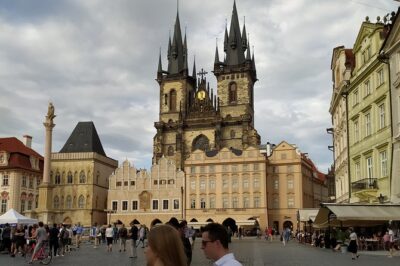
Jewish Quarter & Josefov History Walks, compared.

Jewish Quarter Walking Tour with Admission Tickets
Read our review →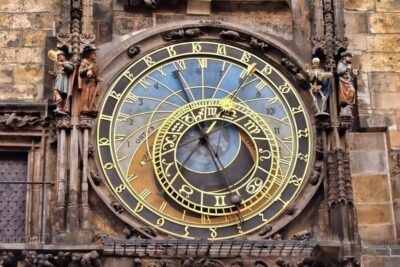
Old Town and Jewish Quarter Guided Tour in German
Read our review →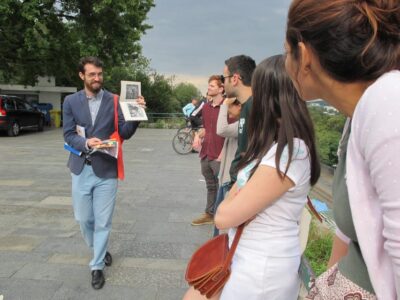
Old Town and Jewish Quarter Guided Walking Tour
Read our review →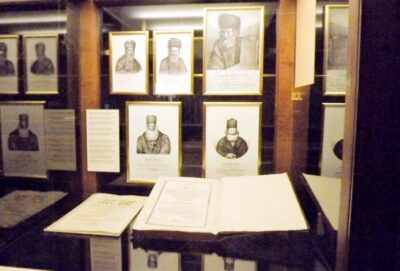
Jewish Quarter Ticket with optional Audio Guide
Read our review →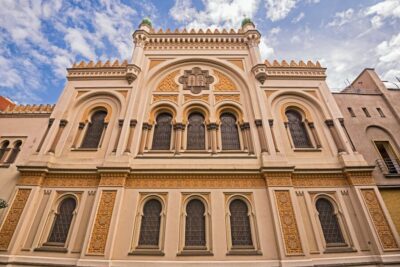
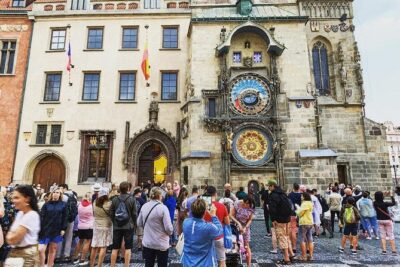
Prague’s TOP Sights – Old Town, Jewish Quarter, Charles Bridge (Tip-based tour)
Read our review →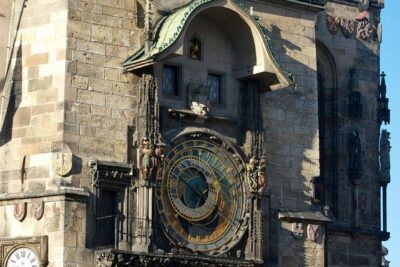
Prague Old Town New Town and Jewish Quarter Morning Tour
Read our review →Iconic Prague Tour Old Town, Jewish Quarter and Charles Bridge
Read our review →Browse the lists this tour appears in