
Reviewed · COMMUNIST HISTORY & COLD WAR WALKS
20th Century Prague: WW2 and Communism
Prague’s 20th century comes into focus fast. This 3-hour route connects independence, WWII, and communism through real landmarks, and I like that the stops are mostly quick hits with free entry at each one. You will get a clean, logical storyline from 1918 to the aftermath of Heydrich, without needing to hunt between sites on your own.
The only real drawback is time. Many stops are about 10 minutes, so if you want to linger, take photos slowly, and read every plaque, you might feel a bit on the clock.
In This Review
- Key highlights you will feel on the walk
- A 3-hour spine through Prague’s WWII and communist era
- Who it suits best
- Obecní dům: starting at independence, not just a pretty building
- What you are really looking for
- Václavské náměstí: the main square where the XX century turned
- A practical tip for the square
- Lucerna Arcade and Lucerna Palace: the Havel family link in plain sight
- Why this Havel connection matters
- Pasáž Světozor: a time capsule in the middle of Prague
- How to get more out of a short time capsule visit
- Franz Kafka’s spinning head: the moment that keeps the tour human
- A quick photography and focus strategy
- National Theater and Václav Havel: from dissident to president
- Why this stop lands later in the route
- Narodní třída and the Velvet Revolution beginning: the story gets personal
- What to do in your 10 minutes here
- Finishing at the Heydrich terror memorial crypt: last stand, final stop
- Where the tour finishes
- Passing Frank Gehry: modern Prague on a historic route
- Price and what you get for it: $107.63 for a tight, meaningful route
- Timing, meeting points, and how to show up ready
- Transit and mobility considerations
- How the guide experience can shape what you take away
- Should you book this 20th Century Prague walk?
- FAQ
- How long is the 20th Century Prague tour?
- What language is the tour offered in?
- Where do I meet, and where does the tour end?
- What is the group size limit?
- Are admission tickets required at the stops?
- Is free cancellation available?
Key highlights you will feel on the walk
- Obecní dům as the starting point, tied to the 1918 Czechoslovakia declaration of independence
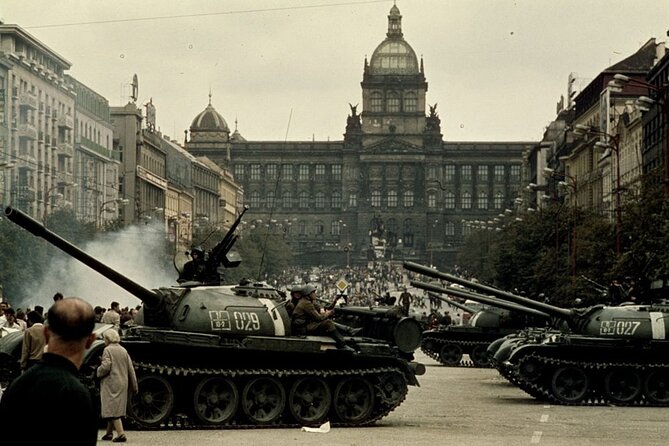
- Václavské náměstí as a major square where key XX century turning points took place
- Lucerna Arcade and Lucerna Palace as an early XX century connection through the Havel family
- Pasáž Světozor as a literal time capsule stop
- The spinning Franz Kafka head for a fast, memorable Prague pop moment between heavier sites
- Narodní třída and the Velvet Revolution beginning, plus a finishing crypt linked to the Heydrich terror
A 3-hour spine through Prague’s WWII and communist era
This tour is built like a timeline you can walk. In about 3 hours, you move from early-20th-century turning points to the darker end of WWII and then into the political shock that reshaped modern Czech life.
What makes it practical is how compact the pacing is. With a small group size of up to 10 people and a route designed for walking, you spend less time figuring out where to go and more time looking at the places that tell the story.
Who it suits best
This is a smart pick if you want a focused introduction to Prague’s 20th century without committing to a full-day museum program. It also works well as a second or third day activity, after you have some basic bearings in the city center.
If you prefer slow, sit-down reading time at each stop, you might do better pairing this with a longer independent visit later. The tour gives you the map of meaning, not the whole novel.
Other communist-era and Cold War history walks:
- Prague: Communism History and Nuclear Bunker Guided Tour
★ 4.7 · 2,417 reviews - Prague Communism History and Nuclear Bunker Tour
★ 5.0 · 1,742 reviews - Communism & Nuclear Bunker Tour + 70s Canteen Lunch (own expense)
★ 5.0 · 1,036 reviews
Obecní dům: starting at independence, not just a pretty building
You begin at the Municipal House, Obecní dům, tied to the 1918 declaration of independence of Czechoslovakia. Starting here matters. It frames the whole tour so you are not only reacting to catastrophe and repression, you are also seeing the political ambition that came before.
It is a quick stop, about 10 minutes, with the admission ticket marked as free. That is just enough time to register the setting and get the tour’s main thread in your head.
What you are really looking for
Think of this as the opening scene. You are mentally setting the baseline: what independence meant, and why later events hit so hard when the world changed.
Also chalked up in Prague

Václavské náměstí: the main square where the XX century turned
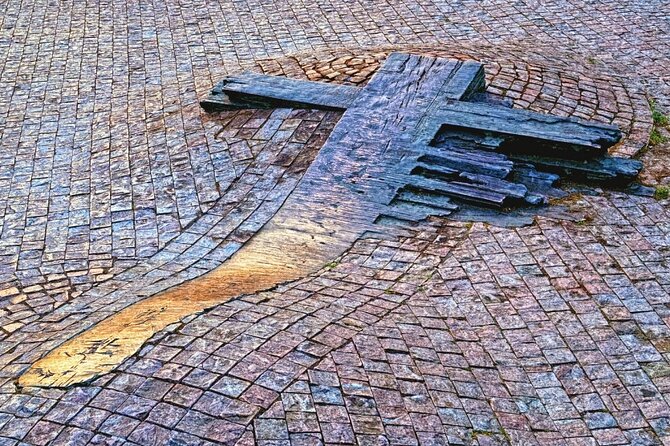
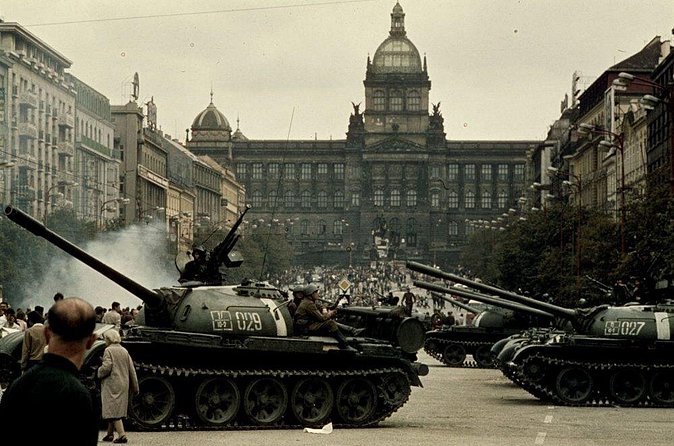
Next is Václavské náměstí, described as one of Prague’s main squares and a place where turning points of the XX century took place. This is the kind of stop that helps the tour feel bigger than a list of monuments.
You will have about 40 minutes here, which is noticeably longer than the other stops. That extra time is useful because a major city square is where you can get your bearings, absorb the atmosphere, and let the political context settle.
A practical tip for the square
Bring your walking mindset. Squares can be visually loud, and it is easy to get distracted by everyday city life. Use the longer time to orient yourself and then refocus on what you are being shown about the century’s shifts.
Lucerna Arcade and Lucerna Palace: the Havel family link in plain sight
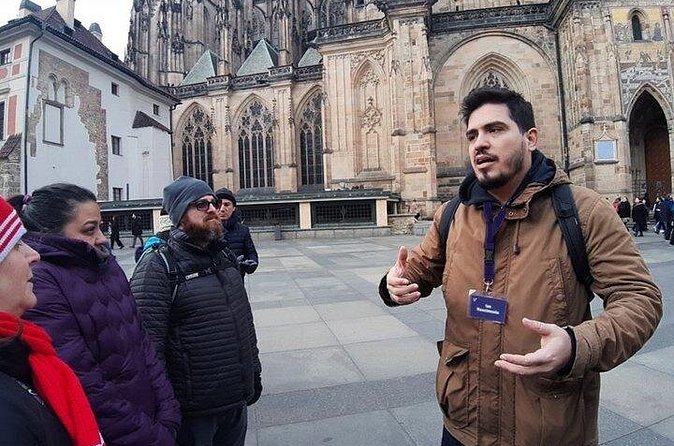
Then you move through Lucerna Palace, connected to the Havel family and built in the early XX century. Even though the stop is brief, around 10 minutes, the connection is specific, and it anchors the story in real names.
This is also where the tour gives you variety in tone. After heavier themes, walking through an elegant, well-known passage helps break the emotional intensity without losing the political thread.
Why this Havel connection matters
The tour keeps returning to Václav Havel later, so this earlier stop helps set up that relationship. It is easier to understand why the tour highlights him again when you have already seen the family connection tied to the built environment.
Pasáž Světozor: a time capsule in the middle of Prague
One of the most intriguing stops is Pasáž Světozor, described as a time capsule in the heart of Prague. It is only about 10 minutes, with free entry, but the idea is strong.
A time capsule stop is useful on a short tour because it compresses a whole vibe into a small space. You are not asked to decode everything. You are given a feeling for how different eras can exist side by side.
How to get more out of a short time capsule visit
If you only have 10 minutes, do not try to read every detail. Instead, look for what visually signals a different time period, then let that impression support the bigger storyline you just heard.
Franz Kafka’s spinning head: the moment that keeps the tour human
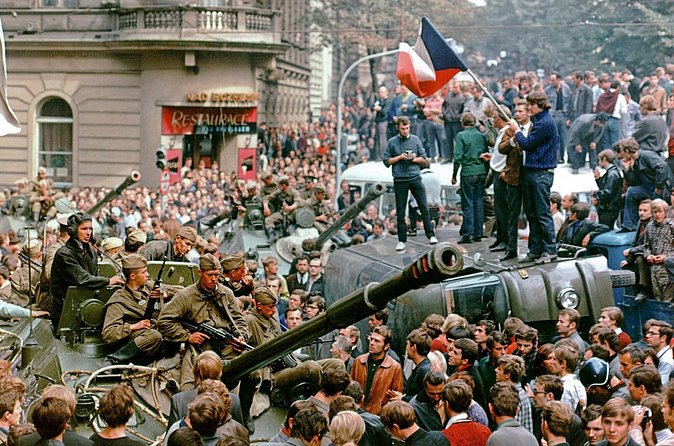
Next comes the Franz Kafka Statue, known for the famous spinning head. This stop is also around 10 minutes and free.
On paper, it could sound like a detour from WWII and communism. In practice, it works as a pressure-release valve. Kafka is not just a literary figure here, he is part of Prague’s cultural identity, and cultural identity often survives regimes.
A quick photography and focus strategy
Use this stop as a reset. Take your quick photos, then mentally switch back to the political theme so the next monument hits with full impact.
National Theater and Václav Havel: from dissident to president
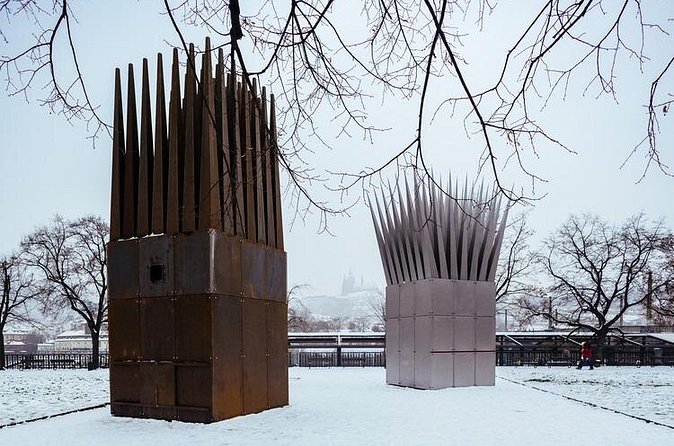
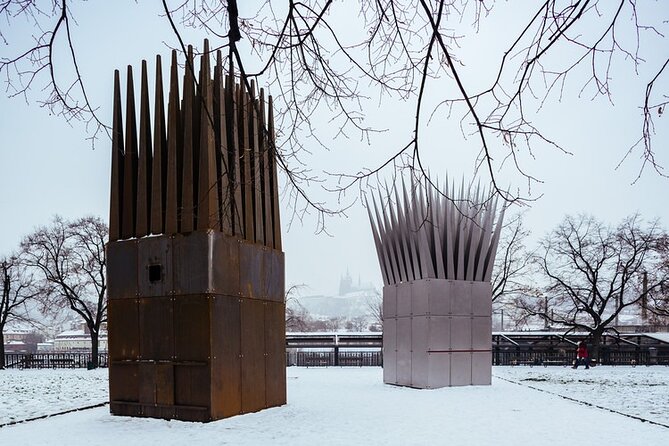
You then visit the National Theater area for a monument to dissident turned president Václav Havel. This stop is about 10 minutes and free entry.
Even in a short window, this moment gives you a bridge between suffering and transformation. The tour is not only about what broke. It also points to who helped rebuild what a free future could look like, using Havel as a clear focal point.
Why this stop lands later in the route
You reach Havel after seeing independence framing, major square context, and the Havel family link. That progression helps you understand why Havel is treated as a central figure rather than a random name.
Narodní třída and the Velvet Revolution beginning: the story gets personal
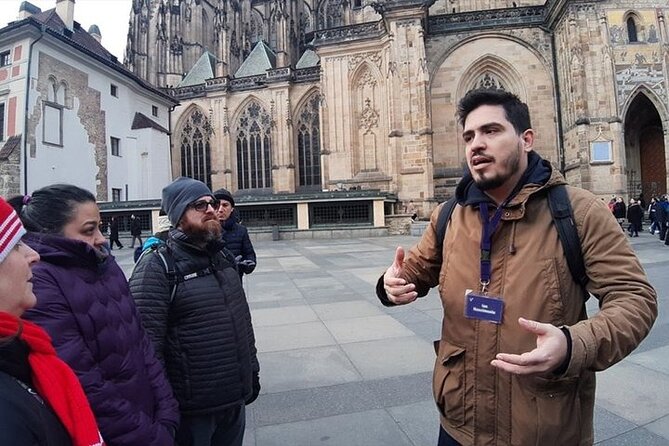
The tour then goes to Hands reaching out of the wall on Narodní třída, identified as the place where the Velvet Revolution began. This stop is about 10 minutes and free.
This is where the tour shifts from explanation to impact. Instead of only learning that political change happened, you stand at the symbol of the start point, which makes the whole narrative feel more immediate.
What to do in your 10 minutes here
Look at the setting as a “before and after” location. Even if you already know the broad terms, the value of this stop is connecting the idea of revolution with a real spot you can point to later.
Finishing at the Heydrich terror memorial crypt: last stand, final stop
The tour ends at the National Memorial to the Heroes of the Heydrich Terror, finishing at the crypt where the assassins of Heydrich made their final stand. This final stop is about 10 minutes and free.
Finishing in a crypt linked to a final stand changes how you feel about everything you saw earlier. It is darker, more final, and it closes the timeline with consequences, not slogans.
Where the tour finishes
The end point is at Dittrichova 1940/16, Nové Město, Praha 2. Plan to grab a nearby bite after, because this kind of ending can make you want a quiet reset.
Passing Frank Gehry: modern Prague on a historic route
As you go, you also pass by the famous building by Frank Gehry. This is not presented as the main storyline, but it adds a layer that matters for a city like Prague.
You are seeing how modern architecture sits in the same urban fabric as political memory. It helps the tour feel like a living city, not a set of museum pieces.
Price and what you get for it: $107.63 for a tight, meaningful route
The price is listed as $107.63 per person, for about 3 hours. That might sound steep if you compare it to a self-guided walking loop. But for a tour like this, you are paying for structure and context.
Here is the practical value you get for the money:
- A route that strings together specific sites tied to the century’s turning points
- Small group size (maximum 10 people), which usually means less rushing and easier pacing
- English narration, plus a mobile ticket
- Multiple stops marked as free admission, so you are not stacking paid museum visits on top
If your goal is to learn the names and connections that make Prague’s WWII and communism story easier to remember, a guided format is often worth it. If you only want photos and casual wandering, you might spend the money on a longer, self-paced day instead.
Timing, meeting points, and how to show up ready
The start time is 11:00 am, and the meeting point is at the Powder Tower, Nám. Republiky 5, Staré Město, 110 00 Praha 1.
You finish at the crypt at Dittrichova 1940/16. Since you are mostly walking and each stop is short, you will want comfortable shoes and a simple plan for hydration. Prague center walking is not usually hard, but it is steady.
Transit and mobility considerations
The tour notes it is near public transportation and allows service animals. It also says most people can participate, with the remaining duration for walking and consideration for travelers. If you have any mobility concerns, this short, stop-and-go structure usually helps compared to tours that keep you in one place for a long stretch.
How the guide experience can shape what you take away
The tour is led by Heart of Europe, and one standout detail from the feedback is the guide name Klara. The praise for Klara focuses on being friendly, very pleasant, and able to connect what you see in Prague to Czech culture beyond the obvious.
That is what makes a difference on a tour like this. WWII and communism can sound like big abstract terms, but a good guide turns them into something you can hold in your mind as you walk from place to place.
If you care about understanding, not just checking boxes, look for that kind of storytelling energy.
Should you book this 20th Century Prague walk?
I think this tour is worth booking if you want a structured introduction to Prague’s WWII and communism story with clear stops tied to key moments. It is especially appealing because entry at the stops is marked as free and the group stays small.
Skip it or consider a different option if you want deep time at each location. This is a timeline walk with short visits, so it works best as a first layer. Then you can return on your own if a specific site grabs you.
If your ideal Prague day includes a walking route, a coherent narrative, and a strong emotional finish at the Heydrich memorial crypt, this one fits nicely.
FAQ
How long is the 20th Century Prague tour?
It runs for approximately 3 hours.
What language is the tour offered in?
The tour is offered in English.
Where do I meet, and where does the tour end?
You start at the Powder Tower, Nám. Republiky 5, Staré Město, Praha 1, and you finish at Dittrichova 1940/16, Nové Město, Praha 2.
What is the group size limit?
The maximum group size is 10 travelers.
Are admission tickets required at the stops?
The tour lists admission ticket free at each stop.
Is free cancellation available?
Yes, you can cancel up to 24 hours in advance for a full refund.
Newly posted under the arches of Prague


Communist History & Cold War Walks, compared.
Communism History and Nuclear Bunker Guided Tour
Read our review →
Prague Communism History and Nuclear Bunker Tour
Read our review →
Communism & Nuclear Bunker Tour + 70s Canteen Lunch (own expense)
Read our review →
WWII Guided Tour & The Crypt of Operation Anthropoid
Read our review →
WWII in Prague Tour & The Crypt of Operation Anthropoid
Read our review →
Communism and Bunker Tour with 70s Canteen Lunch
Read our review →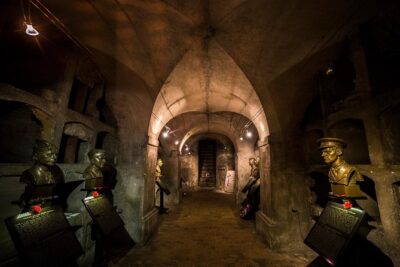
Small-Group World War 2 & Operation Anthropoid Tour in Prague
Read our review →Browse the lists this tour appears in