
Reviewed · COMMUNIST HISTORY & COLD WAR WALKS
Prague Communism History and Nuclear Bunker Tour
Prague turns chilling when you go underground. This tour stitches together communist-era Prague with a real nuclear bunker experience, so the city walk and the underground museum hit as one story.
Two things I especially like are the guided stop-by-stop context, and the way the bunker experience comes with practical extras like a bunker survival guide plus a photo booklet. The main drawback to keep in mind is that the underground portion is tight and stair-heavy, so it is not a fit for claustrophobia or mobility limitations.
Key things I’d circle before you go
- StB Holding Cells stop gives you a concrete view of Czechoslovakia’s secret police world
- Velvet Revolution Memorial anchors the story in 1989, not vague Cold War talk
- Wenceslas Square and August 1968 connect Soviet pressure to real people and choices
- Olšanské náměstí lets you read socialist architecture still standing in the city
- Four-floor bunker museum makes the fear feel physical, not theoretical
In This Review
- Prague Communism and the Four-Floor Nuclear Bunker
- Meeting at Malé Náměstí and Expecting a City-Walk Rhythm
- StB Holding Cells: Seeing How Repression Looked in Real Life
- Velvet Revolution Memorial and Národní třída: Where 1989 Became a Street Story
- Wenceslas Square and August 1968: Dubček, Invasion, and the Cost of Reform
- Olšanské náměstí: Socialist Architecture That Never Fully Went Away
- Inside the Nuclear Bunker Museum: Four Floors Down, Fear Up Close
- The Tour Guide Effect: When Personal Stories Make It Stick
- Value Check: Is $45.16 Worth It?
- Who Should Book This Tour, and Who Should Skip It
- Should You Book This Prague Communism History and Nuclear Bunker Tour?
- FAQ
- FAQ
- How long is the Prague Communism History and Nuclear Bunker Tour?
- How much does the tour cost?
- What is included in the ticket?
- Where do I meet the guide?
- Is the tour suitable for people with mobility issues?
- Is the tour suitable for claustrophobia?
- What language is the tour in?
- Are photos and videos allowed?
- What is the cancellation policy?
Prague Communism and the Four-Floor Nuclear Bunker
What makes this tour work is the sequence. You start above ground with key locations tied to the communist period and the fall of the regime, then you finish in a nuclear bunker hidden four floors underground. That contrast matters. You see how politics shaped streets and daily life, then you step into a place built for a worst-case scenario.
The tour has a clear theme: Czechoslovakia and the Soviet era, and how ordinary people lived inside that reality. If you like history that has fingerprints, this is the kind of experience that links slogans and power structures to real buildings, real neighborhoods, and the physical design of survival.
One more practical point: this is a structured, guided format. You are not wandering around trying to piece together which building is which. Your guide keeps moving, and the stops are chosen so you do not miss the places you would likely walk past on your own.
Meeting at Malé Náměstí and Expecting a City-Walk Rhythm
The meeting point is in the Passage at Malé Náměstí 459/11, inside the ticket office. It is about 20 meters to the right from Hotel U Prince, so once you see that classic Old Town corner, you are close.
From there, the pace follows a walk-and-transport rhythm. You should expect some riding between stops, because the route connects several sites across the inner city and then down to the bunker area. Some groups report that a tram segment can take a sizable chunk of time, so do not plan to treat this as a short, mostly-on-foot history sprint.
Group size is capped at 26 people, which helps the guide keep control and keep the story coherent. Also, the tour requires you to speak the chosen language of the tour, and there is no translating during the walk. That rule is there for safety and flow, especially once you go underground.
Before you go, wear comfortable shoes. This is not just an easy stroll, because the bunker portion involves a lot of stairs and up-ramp walking once you are inside.
StB Holding Cells: Seeing How Repression Looked in Real Life
One of the most important early stops is the StB Holding Cells, a former secret police building. The point is not only architecture. It is what the space represents, and the kinds of power that could move through it.
You also hear about Václav Havel, which matters because Havel is one of the most famous symbols of the anti-communist resistance story. Connecting his role to a specific site helps the larger history feel less like a textbook chapter and more like a chain of decisions and consequences.
What I like here is that the stop gives you a concrete anchor before the tour gets to 1989 and the wider political shifts. If you want to understand why the Velvet Revolution mattered, you need to know what people were pushing against.
Other communist-era and Cold War history walks:
- Prague: Communism History and Nuclear Bunker Guided Tour
★ 4.7 · 2,417 reviews - Communism & Nuclear Bunker Tour + 70s Canteen Lunch (own expense)
★ 5.0 · 1,036 reviews - Prague: WWII Guided Tour & The Crypt of Operation Anthropoid
★ 4.7 · 1,030 reviews
Velvet Revolution Memorial and Národní třída: Where 1989 Became a Street Story
The tour includes the Velvet Revolution Memorial, and it comes with admission included. This stop frames 1989 as a lived turning point, not just a date in a timeline.
From there, you move to Národní třída, a street tied to both historical events and more recent political memory in the Czech Republic. This is the kind of location that can look ordinary if you only see it as a shopping street, which is exactly why a guided approach helps. Your guide turns the street into context: what was happening nearby, why people cared, and how political tension played out in public space.
A small caution: the way the tour is paced can depend on group size and the guide’s style. If you prefer very fast factual summaries, you might find some explanations take longer than you expected. The upside is that when the guide is strong, these stops give you context that helps everything after it make sense.
Wenceslas Square and August 1968: Dubček, Invasion, and the Cost of Reform
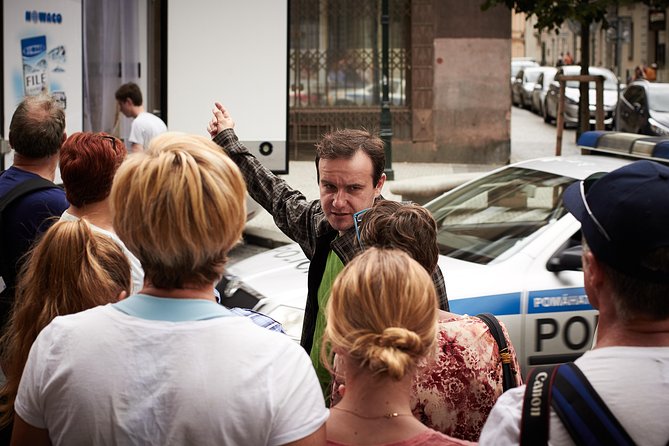
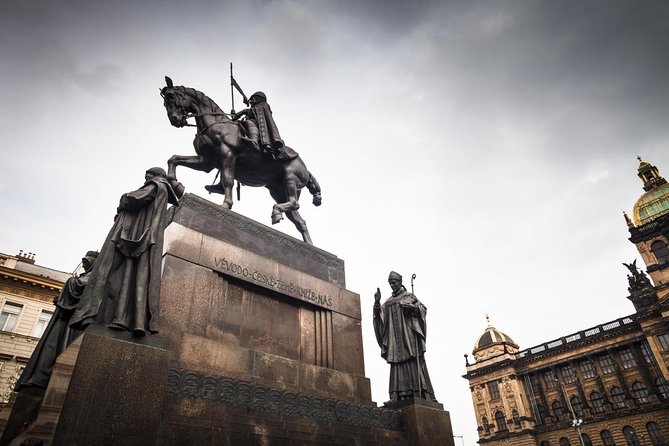
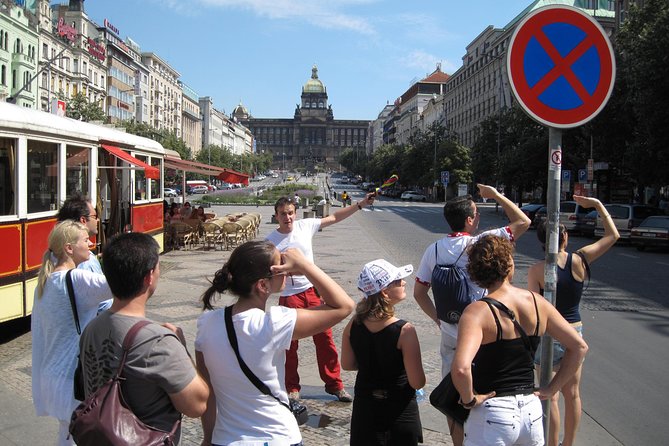
Next up is Wenceslas Square, one of Prague’s most famous public stages. Here, the story centers on the Soviet invasion in August 1968 and the significance of Alexander Dubček.
This is a key moment in any discussion of communist rule, because it shows how reform and control collided. You are not just hearing that something happened. You are learning why the invasion shaped the political atmosphere for years after, and how that pressure showed up in everyday life.
I like this stop because it connects big geopolitics to a place you can still stand in today. When you know what you are looking for, Wenceslas Square stops being just a famous landmark and becomes an exhibit you can walk through.
More dynasties in a single walk:
Olšanské náměstí: Socialist Architecture That Never Fully Went Away
The tour also takes you to Olšanské náměstí, in a former workers district. This stop is about what stayed behind after the ideology faded.
You are looking at socialist-era architecture, including buildings from the 1970s concrete period. Even if you are not an architecture nerd, you can usually spot the logic of these neighborhoods: utilitarian design, mass housing layouts, and a visual style built for a particular kind of society.
This is one of those places where a guide’s framing makes a big difference. The architecture can look like ordinary old buildings until you connect it to the system that produced it. Then you start noticing details that show how policy becomes built form.
Inside the Nuclear Bunker Museum: Four Floors Down, Fear Up Close
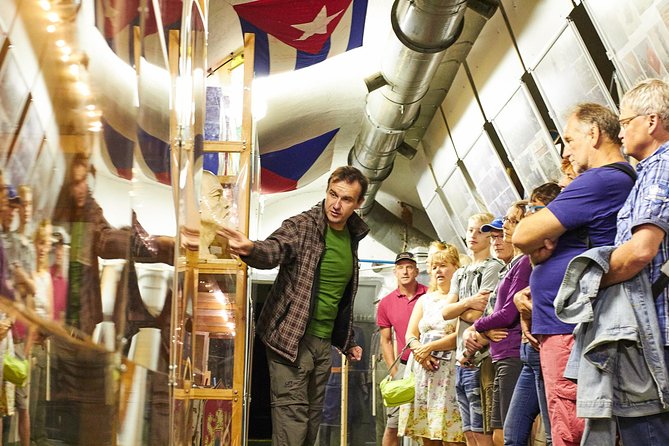
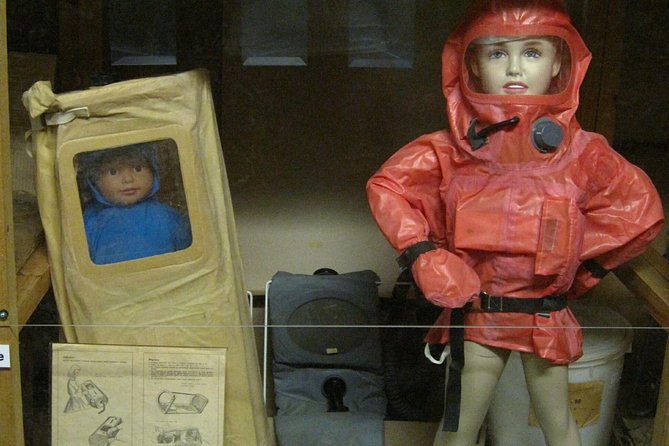
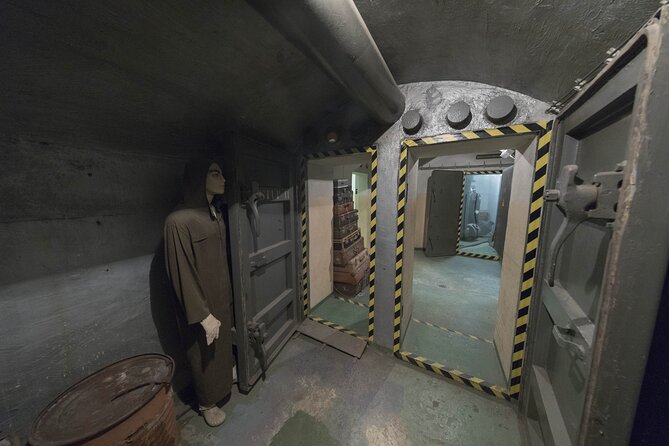
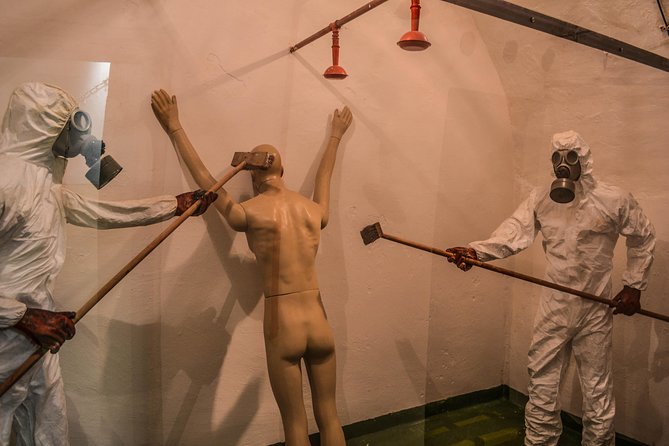
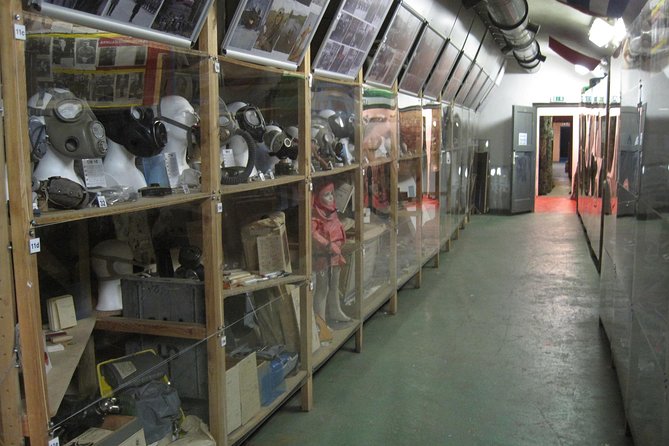
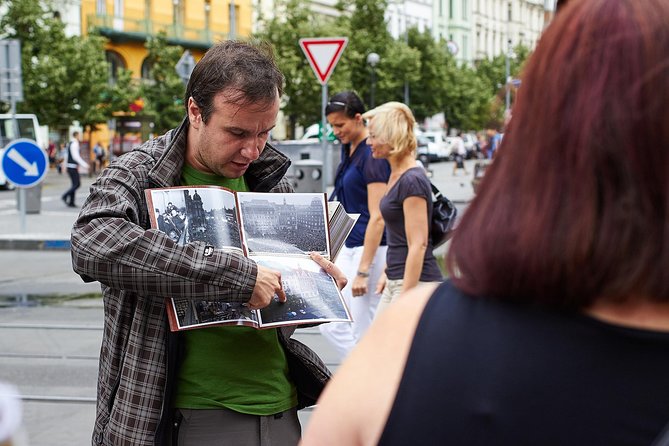
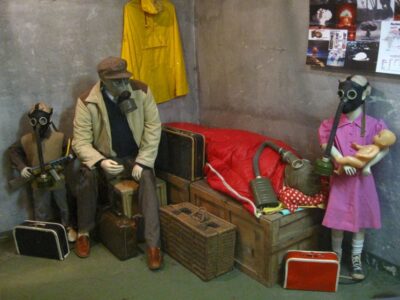
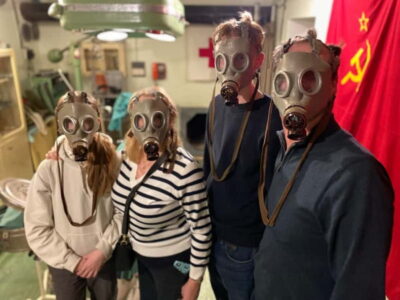
Now for the main event: the Nuclear Bunker, a Cold War museum hidden four floors underground. Admission is included, and you go in with an English live guide.
This is where the tour becomes more than history. It becomes a physical experience. The bunker setting is tightly designed, and you should assume you will be walking through multiple levels with stairs and ramps. Photos are allowed, but video recording requires special permission.
One thing to watch for in your expectations: bunkers are not the same as a theatrical reenactment of everyday communist life. Some visitors feel the museum leans heavily on displays and themed exhibits. That said, many people find the overall tone and the details of Cold War thinking still hit hard, especially when your guide connects the bunker’s purpose to real fear and real planning.
Also, take the safety warnings seriously. This tour is not recommended for claustrophobia or serious heart issues, and the underground environment is not the place to push through discomfort. If you are even slightly unsure, it is worth thinking twice before booking.
The Tour Guide Effect: When Personal Stories Make It Stick
A standout feature of this tour is the quality of guiding. The best versions of the experience hinge on one thing: the guide’s ability to explain the topic and also make it personal.
I saw a pattern in the strongest performances from guides who share lived perspective. People have praised guides such as Ladislav, Stan, Pavel, Lada, Tom, Karl, and Paul for bringing humor, patience, and a genuine sense of the stakes behind the history. That combination matters. Communist history can tilt toward heavy, and humor and pacing help keep it understandable.
There can also be a downside. If a guide spends too much time repeating points or steering into unrelated tangents, the tour can start to feel longer than expected. In one case, the underground time and city time seemed mismatched to how the tour was advertised. Your best defense is to go in with flexible expectations and focus on the sites themselves, because they do the heavy lifting.
Two practical tips I’d follow:
First, show up ready to listen, the tour requires speaking the chosen language and there is no on-the-fly translating. Second, bring comfortable patience, this is not a 60-minute hit, the story takes time.
Value Check: Is $45.16 Worth It?
At $45.16 per person, the value depends on what you want out of the tour.
Here is what you are paying for, and why it can be fair:
- The English live guide
- Entrance to the Nuclear Bunker Museum
- A photo booklet and a bunker survival guide
- Transport to and back from the bunker
- Admission included for at least one key site, the Velvet Revolution Memorial
So you are not just paying for a walk and a couple of photos. You are paying for a guided story plus paid entry into a major underground attraction, with logistics handled.
When it might feel overpriced:
If your goal is mostly to explore everyday life in communist Prague and you want lots of nitty-gritty policy detail, some people feel the tour focuses more on big events and less on daily contradictions. Also, if you think a tram segment will feel like time you could use elsewhere, plan for that. Some groups report a long transport block, which can affect how quickly the tour feels like it is moving.
My take: for history enthusiasts who want both the city landmarks and the bunker, this price can make sense. For someone who only wants a bunker visit with minimal context, you may find other bunker options across Czechia that feel more efficient.
Who Should Book This Tour, and Who Should Skip It
This is a strong pick if you:
- Like Cold War history and want it connected to specific Prague locations
- Want an English live guide who can explain the story in a way that feels clear, not just memorized
- Are comfortable with a city walk plus a very active underground museum visit
It is not a good fit if you:
- Have walking disability or mobility issues, since it is not possible for those travelers
- Have claustrophobia or similar anxiety concerns, since the bunker is underground and tight
- Have serious heart issues, due to the physical nature of the bunker visit
- Are traveling with very young children, since it is not allowed for the smallest children under school age
- Prefer to join tours without speaking the selected language, because speaking the tour language is required for safety and participation
If you are pregnant, it is not recommended for high pregnancy, mainly because the tour involves walking and stairs.
Should You Book This Prague Communism History and Nuclear Bunker Tour?
I’d book this tour if you want a guided, well-structured way to understand Prague’s communist and Cold War story, and you also want the added punch of going into a real nuclear bunker setting. The best tours here feel sobering and human, especially when your guide uses personal stories to translate the history.
I would think twice if you hate tight spaces, dislike stairs, or you are very sensitive to pacing. Also, if you only care about the bunker and want less city context, consider whether this format matches your travel style.
If you can handle underground spaces, bring good shoes, and pick this as your history anchor day in Prague, you will likely leave with a sharper understanding of how the Cold War lived inside the city.
FAQ
FAQ
How long is the Prague Communism History and Nuclear Bunker Tour?
It is listed at about 2 hours 20 minutes, though the duration can vary by about 10 to 15 minutes depending on group size.
How much does the tour cost?
The price is $45.16 per person.
What is included in the ticket?
You get entrance to the Nuclear Bunker Museum, an English live guide, a photo booklet and a bunker survival guide, and transport to and back from the bunker.
Where do I meet the guide?
Meet at the Passage at Malé Náměstí Square 459/11. The ticket office is inside the Passage, about 20 meters to the right of Hotel U Prince (Malé Náměstí 459/11, Praha 1-Staré Město).
Is the tour suitable for people with mobility issues?
No. It is not possible for people with any walking disability or mobility issue.
Is the tour suitable for claustrophobia?
No. It is not recommended for people with claustrophobia, and it is also not for serious heart issues.
What language is the tour in?
You must speak the chosen language of the tour for safety. It is also not allowed to translate during the tour to other languages.
Are photos and videos allowed?
Photos are allowed. Video recording is only allowed with special permission.
What is the cancellation policy?
Free cancellation is available up to 24 hours in advance for a full refund. If you cancel less than 24 hours before the start time, the amount paid is not refunded.
Newly posted under the arches of Prague

Communist History & Cold War Walks, compared.
Communism History and Nuclear Bunker Guided Tour
Read our review →
Communism & Nuclear Bunker Tour + 70s Canteen Lunch (own expense)
Read our review →
WWII Guided Tour & The Crypt of Operation Anthropoid
Read our review →
WWII in Prague Tour & The Crypt of Operation Anthropoid
Read our review →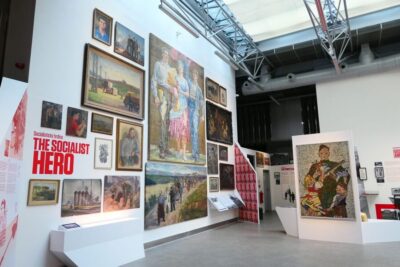
Communism and Bunker Tour with 70s Canteen Lunch
Read our review →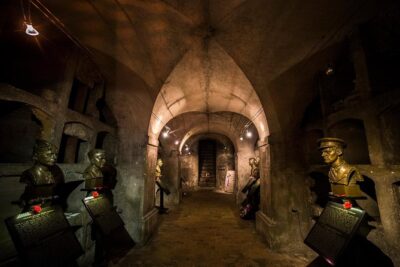
Small-Group World War 2 & Operation Anthropoid Tour in Prague
Read our review →
World War 2 and Operation Anthropoid Walking Tour
Read our review →Browse the lists this tour appears in