
Reviewed · COMMUNIST HISTORY & COLD WAR WALKS
Communism & Nuclear Bunker Tour + 70s Canteen Lunch (own expense)
Prague has a Cold War secret underground. This small-group walking tour connects Communist-era Czechoslovakia to real sites in the city, and it ends with a visit to a genuine 1950s nuclear bunker. I also love the small group size here, because the guide can actually answer your questions without rushing you.
One important heads-up: the bunker spaces are tight, and the experience is not recommended for claustrophobic people. Expect narrow areas and some stairs once you enter the shelter.
In This Review
- Key Highlights You’ll Care About
- Where the Tour Starts, and How the Walking Actually Feels
- Republic Square: The Big Turn, From 1918 to Post-WWII Power
- Staroměstské Náměstí: 1948, Stalin, and Life Under Fear
- Narrow Streets and Secret Police Footprints: The Walk Through Repression
- Wenceslas Square for 1968 and 1989: Prague Spring to Velvet Revolution
- The 70s Canteen Break on Your Own Time and Your Own Wallet
- Inside the Cold War Nuclear Bunker: What You’ll See and Feel
- Price and Value: Why This Often Feels Like a Bargain
- Who Should Book This Tour (And Who Should Skip It)
- Should You Book This Prague Communism and Nuclear Bunker Tour?
- FAQ
- Where is the meeting point for the tour?
- How long is the tour?
- What size is the group?
- Is admission to the bunker included in the price?
- Is the canteen lunch included?
- Is the bunker visit suitable for claustrophobic people?
Key Highlights You’ll Care About
- Real 1950s nuclear bunker access: you get inside the shelter, not just photos outside.
- A tightly guided timeline across Prague: independence, Nazi occupation, Communist rule, 1968, and 1989.
- Small group, max 10 people: more conversation with your guide, less group-herding.
- Secret police era in specific street locations: you walk past places tied to repression.
- Stop for a 70s-style workers canteen break: try Czech classics and drinks like kofola, pay on your own.
- Plan for a physical bunker visit: elevator down one level, then steps, plus confined areas.
Where the Tour Starts, and How the Walking Actually Feels
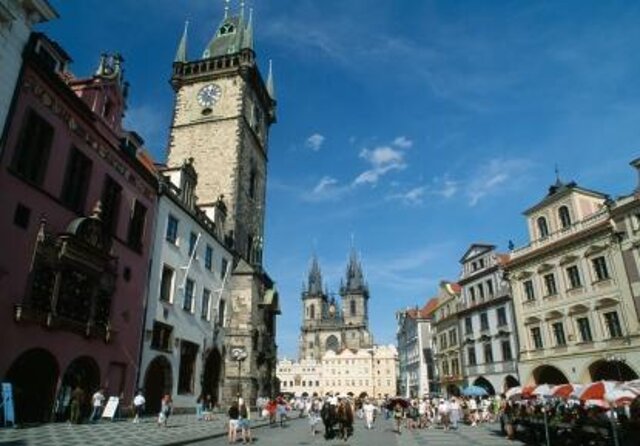
You’ll meet at the Powder Tower on Náměstí Republiky in Prague 1. Look for a guide holding a blue umbrella. It’s an easy area to find, and the tour ends on Václavské náměstí, in the upper part, so you’re back in the most practical sightseeing zone for the rest of your day.
This is a 3 hour 30 minute experience, and it’s done in a small group (up to 10). That matters. In places like Old Town Square and around Wenceslas Square, Prague can feel crowded and chaotic. Here, the group stays tight, so the guide can point out details you’d normally miss while you’re just trying to navigate.
The pace is walking plus stops, not a bus tour. You should be ready for uneven sidewalks, standing at corners to hear stories, and moving between areas tied to specific events.
Republic Square: The Big Turn, From 1918 to Post-WWII Power
The story begins at Republic Square, where you’ll set the historical framework. The guide talks about the moment Czechoslovakia became independent in 1918, and why Adolf Hitler was focused on the state early on. That opening matters, because it explains the “why” behind later decades, instead of tossing dates at you like a worksheet.
From there, you’ll connect the WWII shockwaves to what happened after the fighting. You’ll hear how the Communist Party of Czechoslovakia won elections in 1946, and how that shifted the country toward a tightly controlled system.
If you’ve ever wondered how a place can go from political optimism to hard control in a single generation, this first stop gives you the hinge points. You start to see how power changes are often legal and social at first, then tighten into something far less free.
Other communist-era and Cold War history walks:
- Prague: Communism History and Nuclear Bunker Guided Tour
★ 4.7 · 2,417 reviews - Prague Communism History and Nuclear Bunker Tour
★ 5.0 · 1,742 reviews - Prague: WWII Guided Tour & The Crypt of Operation Anthropoid
★ 4.7 · 1,030 reviews
Staroměstské Náměstí: 1948, Stalin, and Life Under Fear
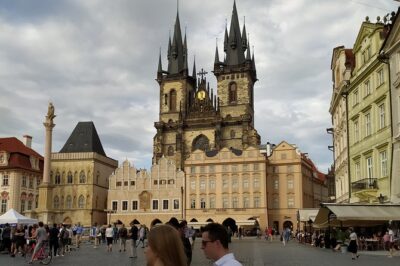
Next comes Staroměstské náměstí (Old Town Square), where the guide places you at the center of Communist celebrations after 1948. You’ll also hear about the “50s era of fear,” including working camps, manipulated trials, collectivisation, and the secret police.
What I like about this part is that you don’t just get big political milestones. The stop is built to explain what those policies meant for everyday life. The goal is to help you understand how normal routines get reshaped under surveillance and forced compliance.
You’ll also learn about what stood there before, including the location of the biggest monument of Stalin in the past. Even if you don’t care about monuments, the point is useful: statues are messages, and controlling the public space is part of controlling the public mind.
Narrow Streets and Secret Police Footprints: The Walk Through Repression
After the squares, the tour moves through street-level Prague that helps you “see” Communist-era control in real geography. You’ll pass by areas such as Bartolomejska Street, where the guide discusses the former headquarters of the secret police.
You may also notice places like the Kotva shopping mall as a contrast, modern Prague layers on top of older power systems. This is where the tour becomes less like a lecture and more like a walking map of cause and effect.
This part is especially good if you want to connect the official story to the physical one. In other words, you’re not only learning what happened, you’re learning where the pressure landed.
Also chalked up in Prague

Wenceslas Square for 1968 and 1989: Prague Spring to Velvet Revolution
The tour spends time at Wenceslas Square in two different chapters, and I found that structure helpful because it keeps the political story from blurring together.
First stop on Wenceslas Square looks at August 1968, tied to the Prague Spring and the Soviet military occupation. The guide focuses on where the occupation played out, including Wenceslas Square and Vinohradská Street. You’ll hear the contrast between the idea of peaceful help and the reality of crushing democratic hopes.
Then, the second Wenceslas Square moment shifts to November 1989, when protests pushed back against Communist rule. You’ll learn why this moment is called the Velvet Revolution, and you’ll hear names tied to the modern Czech story, including Václav Havel.
One detail I appreciated here is the lead-in to Narodní Street, where the guide references the student massacre by state police on 17 November 1989. It gives the Velvet Revolution more emotional weight than a headline. You understand it as people standing up and paying a price, not just a clean political transition.
The 70s Canteen Break on Your Own Time and Your Own Wallet
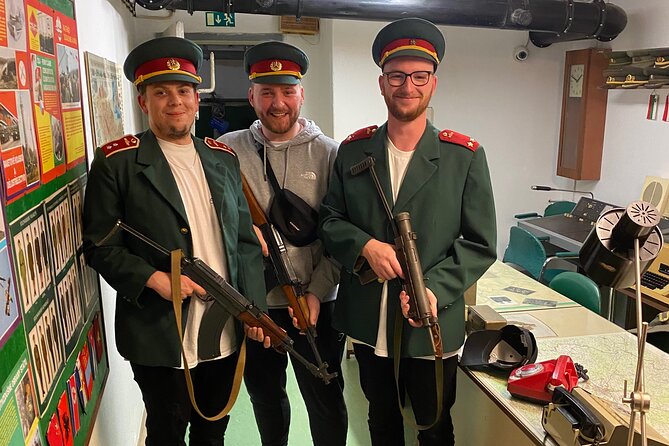
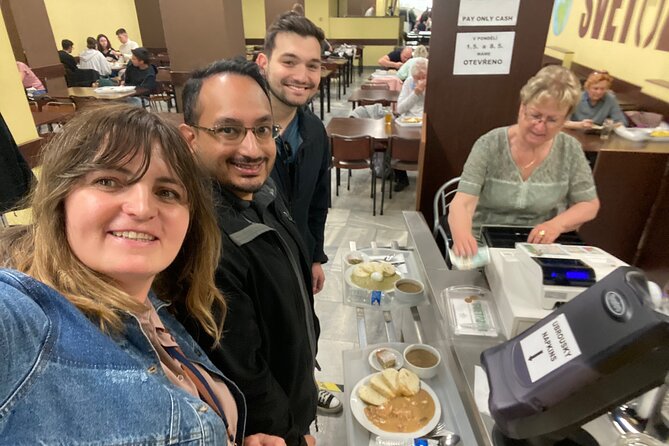
You’ll stop for a break at a local workers canteen with a very 1970s feel. This is where you get to swap your walking shoes for something more normal, at least for a meal.
You can buy drinks and food on your own, but the tour is designed so you can try Czech-style working-class options. The guide may steer you toward things like kofola, a popular Czech soda, and you might also be able to order something like beer. Food and drinks are not included in the ticket price, so bring some cash or be ready to pay at the canteen.
I like this stop because it’s not just “food as an afterthought.” It’s placed right after a heavy political section, and it gives you a lived-in pause. You’re tasting a slice of the everyday world that existed alongside the propaganda.
Inside the Cold War Nuclear Bunker: What You’ll See and Feel
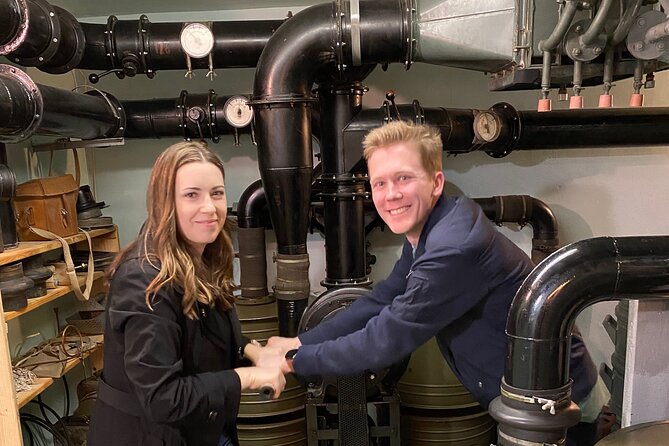
Now for the part most people remember. The tour finishes at a nuclear shelter in the upper area of Václavské náměstí, and the bunker entrance fee (10 EUR) is included.
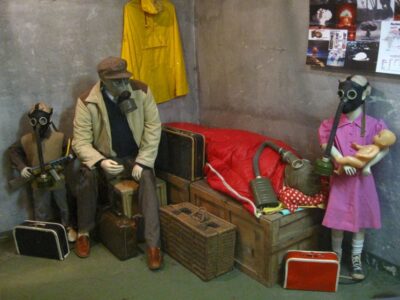
This is where the Communist story turns from theory into a physical experience. You’re stepping into an actual nuclear bunker dating from the 1950s, and the guide explains what the space was designed to do.
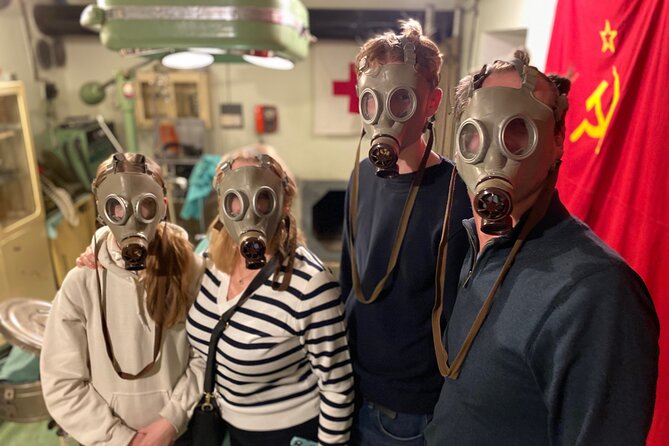
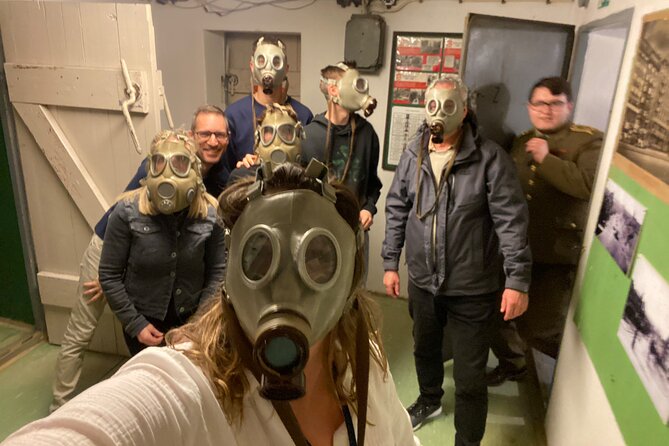
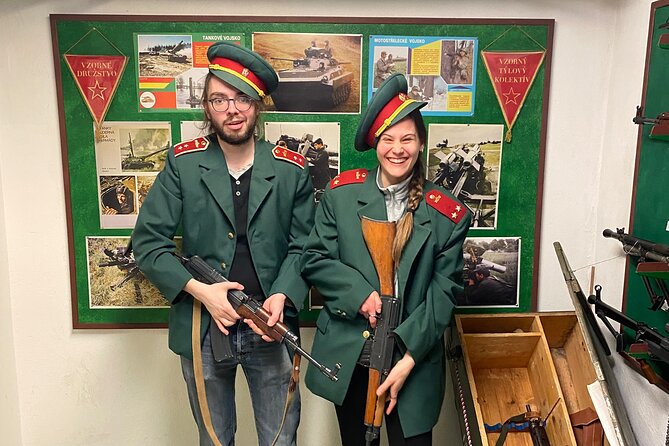
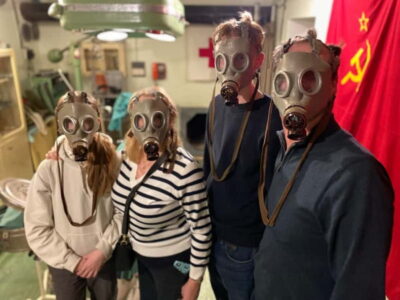
In at least some visits, you may have interactive moments too, like trying on a gas mask and seeing how the space works. One group also mentioned feeling like they were part of a secret police style moment. Even if those extras vary by visit, the core experience stays the same: you learn how fear was built into planning.
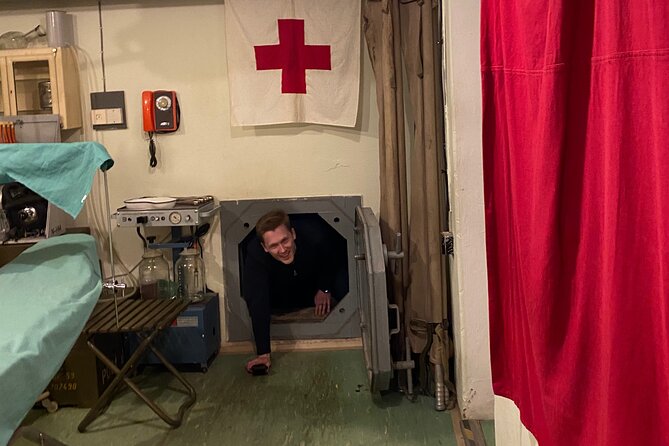
One practical note for your body: access can involve an elevator down one level, then you walk about 30 steps to reach another level below. Also, the spaces can be narrow, which is why claustrophobic people are advised against it.
Price and Value: Why This Often Feels Like a Bargain
At $35.07 per person, the price looks low for a tour that includes both a multi-stop guided walk and an included Cold War Museum style admission (10 EUR).
Here’s the value math that matters in real life:
- You’re paying for a guided route across key locations, not just a museum ticket.
- You get small-group attention, and that usually means more Q and A time.
- The bunker admission is included, so you are not gambling on surprise add-ons for the main event.
If you were to buy only a bunker or museum ticket in Prague, you’d likely pay more than this. The only extra cost you should expect is the canteen food and drinks, which is on your own tab. If you budget for a simple lunch and a drink, the rest of the experience is already covered.
Who Should Book This Tour (And Who Should Skip It)
I’d steer you toward this tour if you:
- want more than a photo walk and you like history connected to real places
- are curious about the Communist-era everyday reality, not just major dates
- like tours where the guide can talk through questions, not just recite facts
- enjoy the “see it, then understand it” style, especially with the bunker visit
I’d skip it or think twice if you’re:
- claustrophobic
- uncomfortable with enclosed spaces and some stair walking once you’re inside
It also helps if you have at least a basic curiosity about events like Prague Spring and the Velvet Revolution. You don’t need to be an expert, but you’ll get more out of it with some interest in Central European 20th century history.
Should You Book This Prague Communism and Nuclear Bunker Tour?
Yes, if you want an honest Prague experience that mixes streets, stories, and a real Cold War survival space. The small group size and the way the route ties together independence, Communist power, 1968, and 1989 make this feel like a coherent lesson, not a scattered set of stops.
If you’re sensitive to tight spaces, skip the bunker portion or choose a different tour. But if you can handle narrow areas, this is one of the most distinctive ways to understand Prague after dark history, and it’s very good value for what you actually get.
FAQ
Where is the meeting point for the tour?
You’ll meet at the Powder Tower, Náměstí Republiky 5, Staré Město, Prague 1. Look for your guide holding a blue umbrella.
How long is the tour?
The experience runs about 3 hours 30 minutes.
What size is the group?
The tour is limited to a maximum of 10 people.
Is admission to the bunker included in the price?
Yes. The entrance fee to the Cold War Museum style bunker admission (10 EUR) is included.
Is the canteen lunch included?
Food and drinks are not included. You can buy items such as kofola or a proper working-class lunch at the 70s-style canteen on your own.
Is the bunker visit suitable for claustrophobic people?
No, it is not recommended for claustrophobic people, since the bunker spaces are enclosed and you may need to walk stairs once inside.
Newly posted under the arches of Prague

Communist History & Cold War Walks, compared.
Communism History and Nuclear Bunker Guided Tour
Read our review →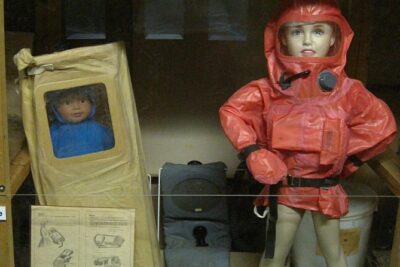
Prague Communism History and Nuclear Bunker Tour
Read our review →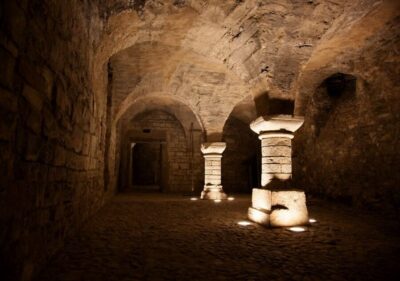
WWII Guided Tour & The Crypt of Operation Anthropoid
Read our review →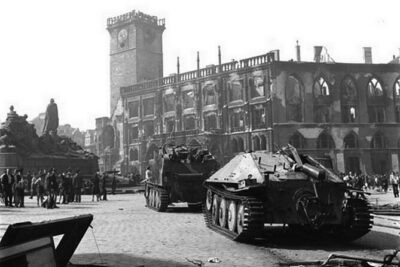
WWII in Prague Tour & The Crypt of Operation Anthropoid
Read our review →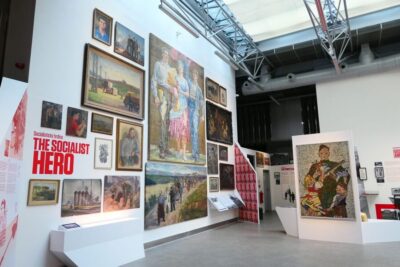
Communism and Bunker Tour with 70s Canteen Lunch
Read our review →
Small-Group World War 2 & Operation Anthropoid Tour in Prague
Read our review →
World War 2 and Operation Anthropoid Walking Tour
Read our review →Browse the lists this tour appears in