
Reviewed · COMMUNIST HISTORY & COLD WAR WALKS
Cold War Communism Prague with a Local Historian Semiprivate
Cold War Prague still stings in the pavement.
This Cold War Communism Prague tour walks you through the ideas, propaganda, and turning points that shaped the city for nearly 50 years. You’ll follow the story through the Prague Spring and Soviet invasion in 1968, the protest of Jan Palach, and the Velvet Revolution that swept Communism out in 1989.
What I like most is how the guide, Jiri, brings the era down to human scale. He shares personal perspective as the son of a student leader from the Velvet Revolution, and he keeps the timeline clear as you move from square to street. I also love that the route mixes heavy themes with everyday Prague, like a quick stop at Lucerna Arcade to see the upside down horse art.
One consideration: it’s a walking tour at roughly 2 hours 30 minutes (give or take), and it expects good weather. If you dislike standing and reading street-level history, or if rainy days turn you cranky, plan accordingly.
In This Review
- Key highlights you will feel right away
- Why Prague’s streets still talk about 1968 and 1989
- Wenceslas Square to Lucerna Arcade, where power and daily life overlap
- Franz Kafka’s head and the living conditions of Communism
- Narodni Trida wall of hands, and the emotion of 1989
- National Theatre and Vaclav Havel’s story, plus secret police shadows
- Dancing House ending, brutalism, and the feeling of a city moving on
- Price and value for a semi-private Cold War walking tour
- How long it really takes, and how to be comfortable on the route
- Who this Cold War Communism Prague tour fits best
- Should you book? A quick decision guide
- FAQ
- How long is the Cold War Communism Prague tour?
- How much does the tour cost per person?
- How big is the group?
- What is included in the price?
- Where do you meet for the tour?
- Where does the tour end?
- Is there a mobile ticket?
- What is the policy if weather is poor?
- Is cancellation free, and how far in advance do I need to cancel?
Key highlights you will feel right away
- A semi-private size with a max of 6 people, so your questions actually get answered
- Jiri’s personal connection to the Velvet Revolution, plus a logical way of connecting events
- Landmarks that carry dates, from Wenceslas Square to Narodni Trida and the National Theatre
- An art and culture break at Lucerna Arcade, including the upside down horse art
- The Jan Palach and Vaclav Havel threads, tied into real city locations you can point at
- Ending at the Dancing House, a visual clue that Prague keeps changing
Why Prague’s streets still talk about 1968 and 1989
Prague during the Cold War wasn’t just a place on a map. It was a daily system. Communism shaped what people said, what they feared, and what they hoped for, and you can see those pressures in the city’s layout and landmark choices. On this walk, you move through those pressure points without getting lost in a textbook.
The tour’s backbone is the sequence of turning points. First comes the Prague Spring and the Soviet invasion in 1968, when reform hopes met hard force. Then you hear about Jan Palach, remembered as a protest symbol who sacrificed his life. After that, the story swings toward 1989, with the Velvet Revolution and the dissident Vaclav Havel, who later became the last president of Czechoslovakia.
What makes this version especially useful is that you’re not just hearing names. You’re seeing how the city held meaning. When you stand near major civic spaces and pass architecture linked to Communist-era governance, the past stops feeling abstract. You also get mentions of brutalist architecture and the former Communist parliament, which helps you understand that ideology left physical fingerprints, not just speeches.
If you like history that connects directly to what you’re looking at outside your window, this is a strong match.
Wenceslas Square to Lucerna Arcade, where power and daily life overlap
Your walk starts at the Statue of Saint Wenceslas on Václavské náměstí. This is one of those locations where Prague’s modern identity and political history rub shoulders. The guide spends about an hour here, using the square as a hub for explaining Cold War pressures and the revolution era.
You’ll trace how different parts of the area connect to the Revolution of 1968 and 1989. Along the way, you hear about landmarks in the vicinity, including the National Museum. Even if you’ve seen the square from a distance before, having the timeline attached changes how you see it. It turns a photo spot into a story map.
After that, you shift into a smaller, more surprising layer of the Communist-era experience with a quick stop at Lucerna Arcade, about 15 minutes. This is where the tour does something smart: it shows you that history wasn’t only protest and police. It was also culture, shopping, and art.
Inside Lucerna Arcade, you get the upside down horse art. It’s brief, but it’s memorable, and it gives you contrast. One moment you’re thinking about ideology and control, and the next you’re looking at an art detail people could enjoy while the system around them persisted.
Practical note: Wenceslas Square is wide and open. You’ll want a hat or sunglasses in bright weather, and in cooler months, a jacket you can keep on without overheating while walking.
Other communist-era and Cold War history walks:
- Prague: Communism History and Nuclear Bunker Guided Tour
★ 4.7 · 2,417 reviews - Prague Communism History and Nuclear Bunker Tour
★ 5.0 · 1,742 reviews - Communism & Nuclear Bunker Tour + 70s Canteen Lunch (own expense)
★ 5.0 · 1,036 reviews
Franz Kafka’s head and the living conditions of Communism
Next you move toward the Franz Kafka statue area, with a short stop of about 10 minutes. This part may sound like a detour if you expected only politics. But in Prague, that instinct can be useful.
Kafka is a way to talk about atmosphere, daily life, and how people lived with constraints. You’ll hear about living conditions during Communism in Czechoslovakia as you pass the famous Kafka head. The point is not to turn Kafka into a politician. It’s to use a recognizable Prague landmark to discuss what the environment felt like.
This stop is short by design. The tour keeps momentum, and it uses quick land markers to anchor bigger themes. For you, that means you don’t have to sit and process a lecture. You keep moving, keep looking, and pick up context in small bites.
If you’re the type who enjoys connecting literature and society, you’ll get extra value here. If not, it still works as a tone-setter between big civic spaces.
Narodni Trida wall of hands, and the emotion of 1989
The walk then leads you to Narodni Trida for a more powerful moment, about 30 minutes. The stop is at the hands reaching out of the wall, a specific 1989 Velvet Revolution location.
This is the part of the tour that tends to land emotionally, even if you already know the headlines. The physical image helps you understand what 1989 meant beyond policy change. It was a shift in permission, a feeling that the old fear might actually end. You also get the sense that Prague’s public spaces were stages for courage and grief.
From here, the tour continues with the theme that dissidents and ordinary citizens mattered, not just leaders. The guide connects the events in a logical way, and because the group is small, you can ask questions about how protests built pressure and how public life changed after Communism started collapsing.
If you’re sensitive to heavy stories, this segment is where you should slow down and take it at your pace.
Also chalked up in Prague
National Theatre and Vaclav Havel’s story, plus secret police shadows
Your next stop is the National Theatre, around 20 minutes. This area helps you connect politics to performance, and public culture to power. You’ll hear about Vaclav Havel’s story here, along with additional Cold War locations, including references to the secret police.
That last detail matters. A system that depends on fear will show up in behavior, and it will leave traces. When you hear how the secret police shaped life, the tour makes the Communist era feel less like a distant chapter and more like a web of everyday consequences.
The National Theatre stop also supports the broader arc of the tour. You start with the public face of Prague, then you move through art and symbols, then you reach the feeling of consequence. By the time you’re at the National Theatre, you can see why 1989 felt different. It wasn’t only a political event. It was a change in what people believed they could say and do in public.
This is also where you benefit from a patient guide. Jiri’s style is described as easy going and very responsive to questions. If you ask about how a dissident movement worked, you’ll likely get a clearer answer than you would from a quick museum caption.
Dancing House ending, brutalism, and the feeling of a city moving on
The tour finishes at the Dancing House area, with about 15 minutes allocated here. The Dancing House is a strong visual cue for modern Prague, and using it as the ending point makes the contrast feel natural.
Earlier in the walk, you hear about brutalist architecture and the former Communist parliament. That physical contrast sets up the ending nicely. The Dancing House helps you see the aftereffects of 1989, because it represents Prague’s move into a new era of identity and confidence.
You’ll also connect the dots on what changed after Communism ended in Czech and European contexts. The guide ties in enough political background to make the ending more than just a cool building. It becomes a final checkpoint for your mental timeline: from Soviet-era pressure to a different kind of public life.
If you want a simple photo strategy, this is the stop to go for it. Stand where you get the full shape, not just a close-up detail. The building reads best when you can see it as part of the street.
Price and value for a semi-private Cold War walking tour
At $62.60 per person for about 2 hours 30 minutes, this is priced in the midrange for a specialized historic walking tour. The real value is not only the theme. It’s the structure.
You get a semi-private format with a maximum of 6 travelers, which usually means you’ll spend more time talking to your guide and less time waiting for a group leader to gather everyone. That matters on a history tour, because questions are part of the experience. You’re not just collecting facts. You’re trying to understand why people acted the way they did.
You also get bottled water and all fees and taxes. And since it uses a mobile ticket, you won’t have to hunt for a paper voucher. Small stuff like that can make a big difference when you’re already juggling multiple stops in Prague.
If you’re deciding between a general guided sightseeing route and this one, choose this if your main goal is meaning. This tour is worth it when you want Prague’s Communist-era story anchored to locations you can physically visit, not only remembered from afar.
How long it really takes, and how to be comfortable on the route
The tour runs about 2 hours 30 minutes, but plan some buffer time if your questions keep the conversation going. The route is paced with short segments, so it doesn’t feel like one long lecture. You spend around an hour at Wenceslas Square, then 15 minutes at Lucerna Arcade, 10 minutes near Kafka, 30 minutes at Narodni Trida, 20 minutes at the National Theatre, and 15 minutes at the Dancing House.
Because it’s a walking experience, wear shoes you trust. Prague sidewalks can be uneven, and you’ll be stopping and starting frequently. If it’s warm, bring water. You’ll get bottled water, but it still helps to have a plan for how you want to pace yourself.
Also, dress for the weather. The experience is described as requiring good weather. If rain moves in, expect it may be rescheduled or offered a refund.
Who this Cold War Communism Prague tour fits best
This is a good match if you want history that connects directly to street corners and recognizable landmarks. It’s especially ideal if you care about the Prague Spring, the Soviet invasion in 1968, the symbolic protest of Jan Palach, and the dissident impact of Vaclav Havel leading into 1989.
It also suits you if you appreciate a guide who can manage questions patiently. Jiri is described as pleasant, easy going, and very knowledgeable, with the added strength of being patient. That combination helps when the topic is sensitive and you want clarity, not a rushed script.
If your trip style is more about museums and indoor audio guides, you might not love the outdoor walking pace. But if you like to learn by moving, this tour is built for you.
Should you book? A quick decision guide
Book it if:
- You want Prague’s Cold War story connected to specific places like Wenceslas Square, Narodni Trida, the National Theatre, and the Dancing House.
- You prefer small group history, not a large crowd shuffle.
- You’re interested in the human stories, including Jan Palach and Vaclav Havel, and how they show up in the city.
Skip it (or swap dates) if:
- You’re not comfortable walking for about 2.5 hours.
- Bad weather ruins your plans.
- You only want light, quick sightseeing with minimal political context.
If you fit the first list, this is a strong use of a half-day. You’ll leave with a clearer timeline and the feeling that Prague’s streets are doing more than hosting tourists.
FAQ
How long is the Cold War Communism Prague tour?
It lasts about 2 hours 30 minutes.
How much does the tour cost per person?
The price is $62.60 per person.
How big is the group?
The tour has a maximum of 6 travelers.
What is included in the price?
It includes bottled water, all fees and taxes, and one admission ticket is included during the tour.
Where do you meet for the tour?
You meet at the Statue of Saint Wenceslas on Václavské náměstí, Praha 1.
Where does the tour end?
The tour ends at the Dancing House on Jiráskovo náměstí, Praha 2.
Is there a mobile ticket?
Yes, the tour uses a mobile ticket.
What is the policy if weather is poor?
If the experience is canceled due to poor weather, you’ll be offered a different date or a full refund.
Is cancellation free, and how far in advance do I need to cancel?
Free cancellation is offered. You can cancel up to 24 hours in advance for a full refund. If you cancel less than 24 hours before the start time, the amount paid is not refunded.
Newly posted under the arches of Prague


Communist History & Cold War Walks, compared.
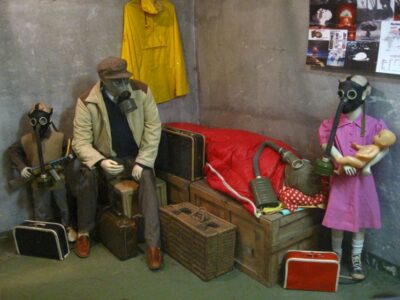
Communism History and Nuclear Bunker Guided Tour
Read our review →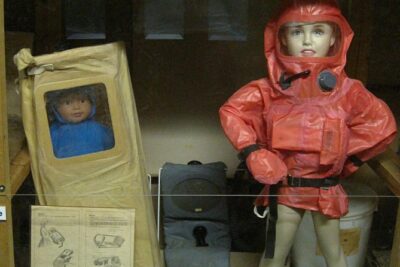
Prague Communism History and Nuclear Bunker Tour
Read our review →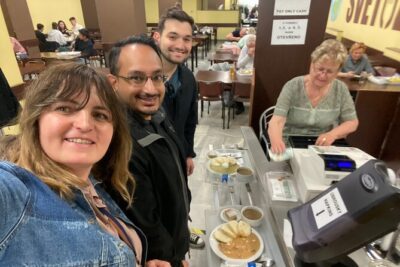
Communism & Nuclear Bunker Tour + 70s Canteen Lunch (own expense)
Read our review →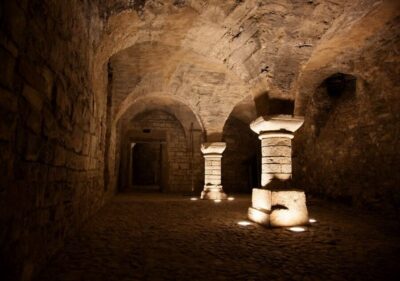
WWII Guided Tour & The Crypt of Operation Anthropoid
Read our review →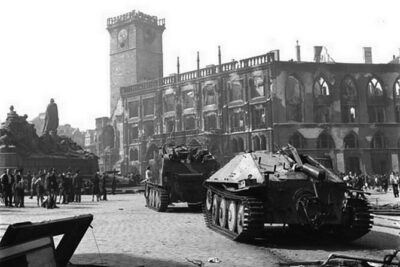
WWII in Prague Tour & The Crypt of Operation Anthropoid
Read our review →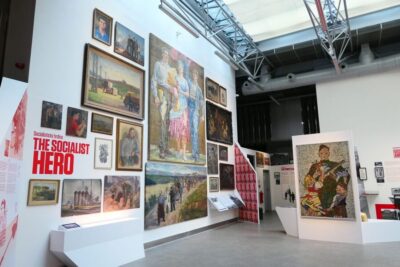
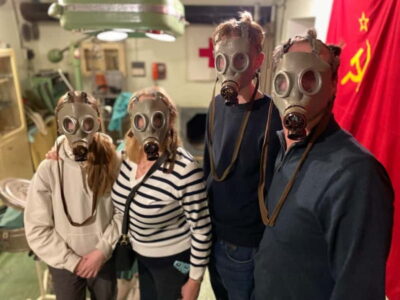
Communism and Bunker Tour with 70s Canteen Lunch
Read our review →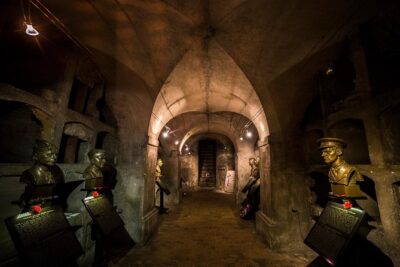
Small-Group World War 2 & Operation Anthropoid Tour in Prague
Read our review →Browse the lists this tour appears in