
Reviewed · COMMUNIST HISTORY & COLD WAR WALKS
Communism and its fall Prague private tour
Communism hits different when you walk it. This focused private tour ties major landmarks to the stories you usually only hear in books, with special attention to the Velvet Revolution and the people behind it. I especially like how the route moves from culture to protest, and I love the way Jana Neubergova brings it to life with firsthand recollections. One drawback to plan for is that it is mostly on foot with only limited stops, so if you want lots of time inside buildings, you may feel a bit rushed.
You also get real structure in just about 2 hours. Pickups are on foot from your Prague hotel area, and you get a professional, fully licensed guide plus a free map of Prague to help you keep the rest of your trip moving. The main consideration is the lack of private transportation, so you’re relying on the walking route and nearby public transport access if needed.
In This Review
- Key highlights you will feel fast
- Why Prague’s communist story is best told street by street
- Meet the guide: Jana Neubergova and the power of personal memory
- 2 hours on foot: how the pacing works in real Prague time
- National Theater: where Czech identity shows up in stone and ceremony
- Narodni Street: the street where change started to feel unstoppable
- Lucerna Arcade: culture, social life, and Vaclav Havel’s family connection
- Wenceslas Monument at the heart of demonstrations
- Memorial to the Victims of Communism: the quiet reality behind the story
- What you learn beyond dates and names
- Price and value: is $85 per person worth it?
- Who this Prague communism tour is best for
- Should you book this tour?
- FAQ
- What is the duration of the Communism and its fall Prague private tour?
- How much does the tour cost?
- Is the tour private?
- Is pickup available?
- What languages is the tour offered in?
- Are tickets included for the stops?
- What is included in the tour price?
- Is private transportation included?
- Is the tour suitable for people with moderate fitness?
- What is the cancellation policy?
Key highlights you will feel fast
- Jana Neubergova’s firsthand context from November 1989 and close ties to Václav Havel’s world
- A tight, walkable route built around turning points, not random photo stops
- Stop-by-stop focus on protest geography, especially around Wenceslas Square and Narodni Street
- Memorial visit with free entry, plus paid sights where tickets are not included
- Practical trip value for history-minded people, including a free Prague map and mobile ticket
Why Prague’s communist story is best told street by street
Prague does not hide the communist era. It shows it in architecture, street names, and the way public space was used as a stage for pressure and change. This tour works because it keeps the story grounded in places you can point to, not just eras you need to memorize.
You start with the idea that communism was enforced through institutions, but it was challenged through culture, crowds, and civic will. And you’ll see the shift from controlled public life to open confrontation. You don’t need to be a political expert. You just need to pay attention to how each location connects to the next.
Meet the guide: Jana Neubergova and the power of personal memory
This experience is anchored by Jana Neubergova, and that matters. In the small moments of the walk, Jana adds context that you cannot fake. She is friendly and approachable, and her English is clear enough that you do not have to work to follow details.
What makes her stand out is the personal side. She shares memories connected to demonstrations against communism held in November 1989, plus stories from her later connection to Václav Havel’s office after the revolution. Even when the facts are “history class,” the delivery feels human, like you are hearing it from someone who watched it unfold.
Also, because this is a private tour for your group, you are not just listening to a script. You can ask questions in a way that feels natural. That’s the difference between collecting facts and actually understanding what mattered.
Other communist-era and Cold War history walks:
- Prague: Communism History and Nuclear Bunker Guided Tour
★ 4.7 · 2,417 reviews - Prague Communism History and Nuclear Bunker Tour
★ 5.0 · 1,742 reviews - Communism & Nuclear Bunker Tour + 70s Canteen Lunch (own expense)
★ 5.0 · 1,036 reviews
2 hours on foot: how the pacing works in real Prague time
This tour runs about 2 hours and is designed as a walking experience. Pickup is offered on foot from Prague hotels, which keeps you from having to figure out a complicated meeting logistics day.
A few practical notes matter:
- Expect a moderate walking pace and a reasonable amount of time outdoors.
- Some stops involve crossing busy areas or standing and listening briefly at viewpoints.
- Admission tickets are not included for most stops, so you should treat ticketing as your responsibility if you want to go inside.
The upside is that the itinerary is tight. You are not zigzagging across Prague all day. You are staying focused on the places that connect directly to the fall of communism.
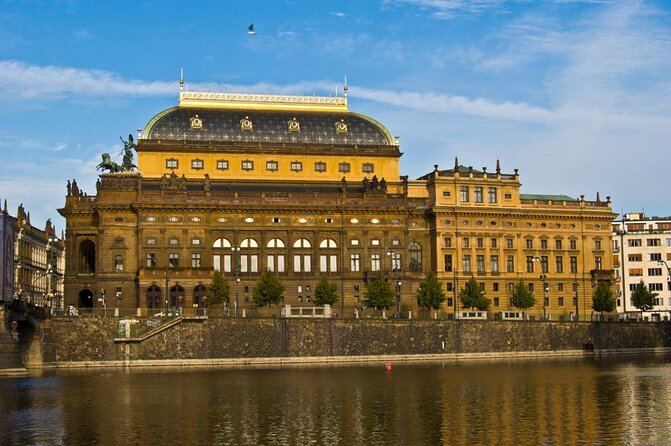
National Theater: where Czech identity shows up in stone and ceremony
The first landmark is the National Theater, a site tied to national history and a major cultural reference point. Even if you do not step inside, it frames the bigger idea that culture was not separate from politics in Prague. Cultural institutions helped people hold onto identity, especially when public life was controlled.
You’ll spend around 10 minutes here. Admission is not included, so if you plan to enter, you will need to handle that separately.
Practical takeaway: use this stop to orient your understanding. If you only focus on protest sites, you miss the background. This theater stop gives you the “why people cared” layer, not just the “when things happened” layer.
Also chalked up in Prague

Narodni Street: the street where change started to feel unstoppable
Next is Narodni Street, and this is one of the itinerary’s core moments. This is described as the street where the Velvet Revolution started. That turns a normal city street into a timeline marker.
You get about 15 minutes here, and again, tickets are not included. The value comes from the explanation: why the location mattered, how movement and crowds shaped momentum, and what it meant for people to act in public when public action carried risk.
Practical takeaway: stand where the guide points, and watch how the street layout helps you visualize gatherings. Even if you know the story in broad terms, it hits harder when you can see how people would have moved and gathered.
Lucerna Arcade: culture, social life, and Vaclav Havel’s family connection
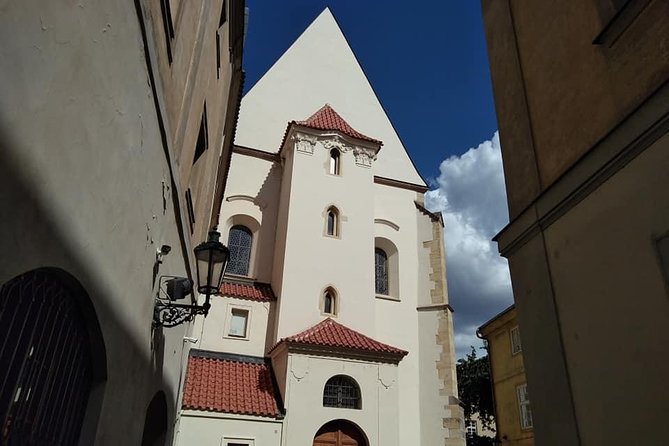
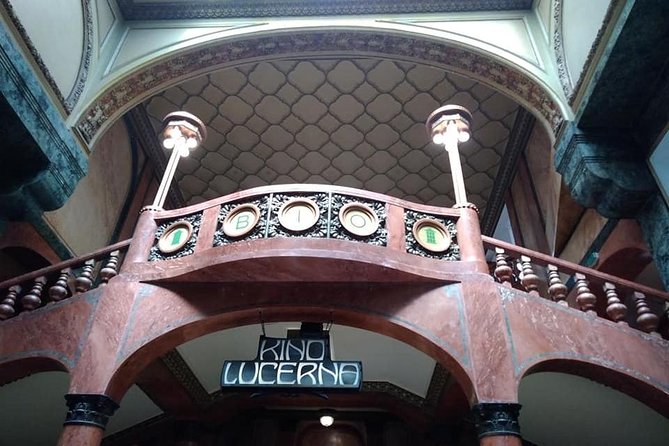
Then you head to Lucerna Arcade, about 10 minutes. This stop is tied to social life and culture, and it includes a specific detail that helps it feel real: it was founded by Václav Havel’s family.
That connection does more than add trivia. It highlights how the revolution was not only about slogans and demonstrations. It also involved networks of people shaped by culture, ideas, and public influence.
Admission is not included, so treat this as a story-and-setting stop. You are looking for context and atmosphere, not a “paid attraction moment.”
Practical takeaway: if you want to understand why the revolution had staying power, focus on the human support systems. This is where you start seeing culture as infrastructure.
Wenceslas Monument at the heart of demonstrations
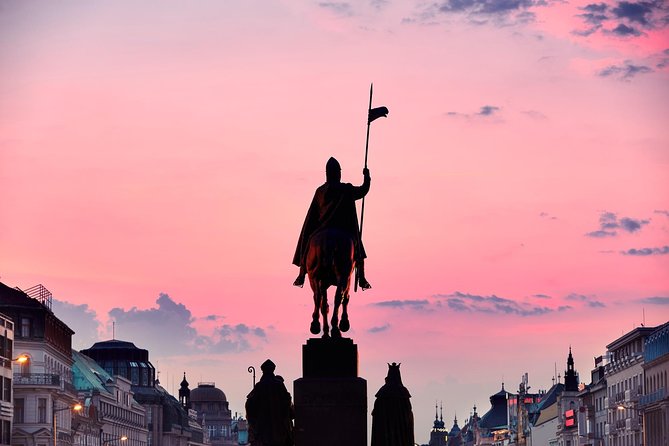
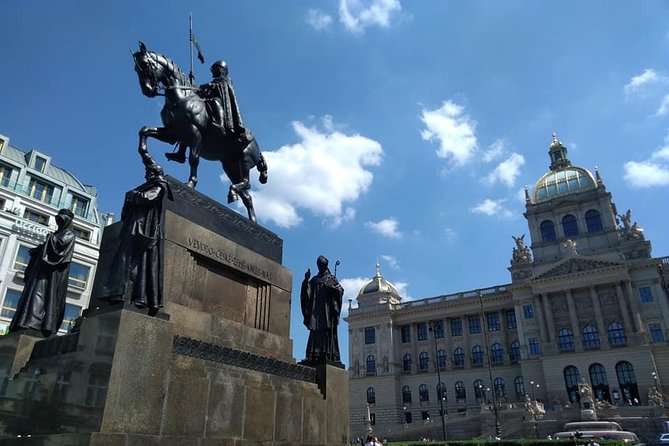
The route then arrives at the Wenceslas Monument on Wenceslas Square, with about 20 minutes here. This is described as the heart of Prague and the place where demonstrations have taken place.
This stop is powerful because it is spatial. A square gives crowds room. It also gives leaders and speakers visibility. When you stand here with a guide, you start to understand how protest becomes organized when the public space supports it.
Admission is not included. The main “ticket” is your attention. You’ll get the best value if you listen for how the guide connects this square to the push and pull between public life and state control.
Practical takeaway: take a moment to look around and imagine the square filled for an event. The guide’s explanation helps your brain connect present-day Prague with what it likely felt like during major demonstrations.
Memorial to the Victims of Communism: the quiet reality behind the story
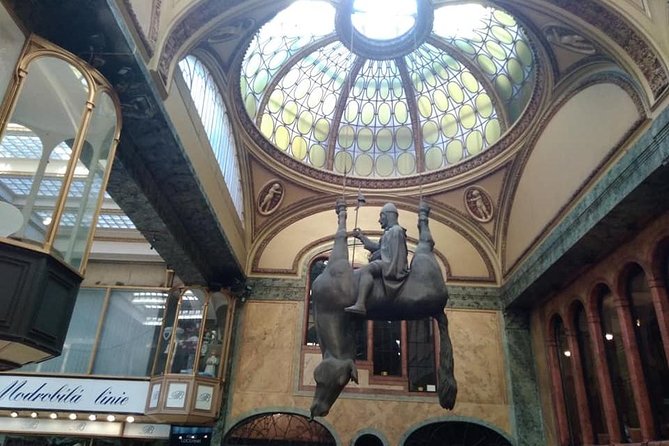
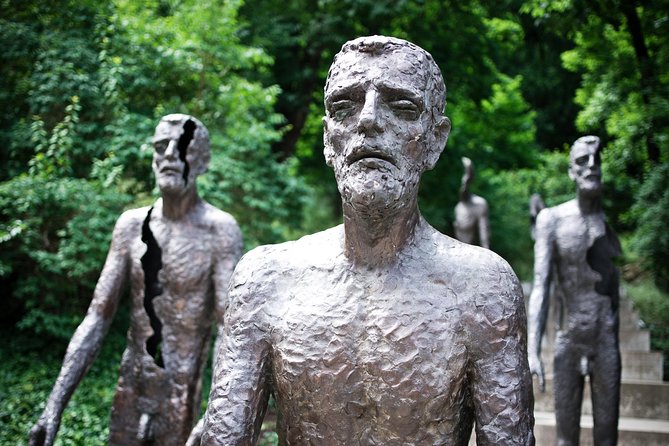
The last stop is the Memorial to the Victims of Communism, created by sculptor Olbram Zoubek. You get around 15 minutes, and the good news is that admission is free.
This is the emotional counterweight to the earlier stops. Earlier, you see action and movement. Here, you slow down and think about the cost. That shift is important. It prevents the tour from becoming a straight “cool history wins” story.
Practical takeaway: you might find yourself lingering a minute longer than planned. That’s normal. This memorial is designed to be remembered, not just photographed.
What you learn beyond dates and names
A tour like this can easily turn into a timeline. This one tries to go further, and you’ll feel it in how Jana links locations to motivations.
Here are the themes that usually click on this walk:
- Institutions and culture mattered before the protests, not just after.
- Public space shaped outcomes, because crowds need visibility and room to gather.
- Personal networks mattered, including connections related to Václav Havel.
- The fall of communism was not only a political event. It was also a human story with winners and victims.
And because Jana’s background includes participation in the revolution and later work connected to Havel, the tour avoids sounding like a generic lecture. It stays grounded in lived experience.
Price and value: is $85 per person worth it?
The price is $85.00 per person for about 2 hours, and it is a private tour where only your group participates. That pricing can make sense when you value (1) a licensed guide, (2) a personal, story-driven approach, and (3) not having to share your time with strangers.
It may feel steep if you are traveling solo or if your group is not history-focused. On the other hand, if you are the type of traveler who wants to understand why events happened, not just where they happened, this tour tends to justify itself quickly. You are paying for a guided connection between multiple key sites in a short time, plus a guide who can explain details in clear English.
One more value point: you get a free map of Prague. It sounds small, but it helps you keep your bearings once the tour ends.
Who this Prague communism tour is best for
This tour fits best if you:
- Like history grounded in real places, not only museums
- Want context for the Velvet Revolution and the spaces where demonstrations mattered
- Enjoy a guide who can speak with firsthand credibility and warmth
- Are comfortable walking for about 2 hours with a moderate fitness level
It can be less ideal if you want a long, slow pace with lots of indoor time. Most stops are brief, and several sights do not include admission. You will get more out of the tour if you treat it as a focused guided walk.
Also, if you travel with accessibility needs, it can help to know that service animals are allowed and that it is near public transportation. Still, the walking component means you should consider your comfort with outdoor standing and movement.
Should you book this tour?
If your goal is to understand Prague’s communist era through the actual geography of the revolution, I think you should strongly consider booking. The biggest reason is not the route alone. It is Jana Neubergova: friendly, approachable, and able to connect sites to what it meant in November 1989, plus her later connection to Václav Havel’s circle.
Book it if you want a short, high-impact walk that turns major landmarks into a coherent story. Consider skipping it only if you prefer self-guided sightseeing, very long museum visits, or a tour where you spend most of your time indoors.
FAQ
What is the duration of the Communism and its fall Prague private tour?
The tour duration is approximately 2 hours.
How much does the tour cost?
The price is $85.00 per person.
Is the tour private?
Yes. It is a private tour or activity, and only your group will participate.
Is pickup available?
Yes. On foot pickup is offered from all Prague hotels.
What languages is the tour offered in?
The tour is offered in English.
Are tickets included for the stops?
Admission tickets are not included for several stops. The Memorial to the Victims of Communism is free.
What is included in the tour price?
Included items are a professional, fully licensed guide and a free map of Prague. A mobile ticket is also included.
Is private transportation included?
No. Private transportation is not included.
Is the tour suitable for people with moderate fitness?
The tour is recommended for travelers with a moderate physical fitness level.
What is the cancellation policy?
You can cancel for a full refund up to 24 hours in advance of the experience start time. Changes less than 24 hours before the start time are not accepted.
Newly posted under the arches of Prague
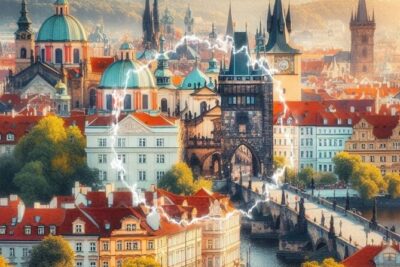


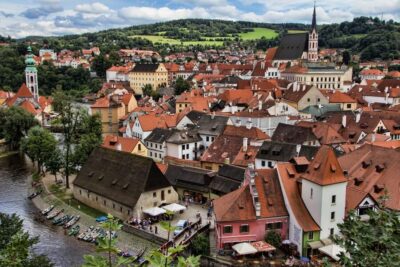
Communist History & Cold War Walks, compared.
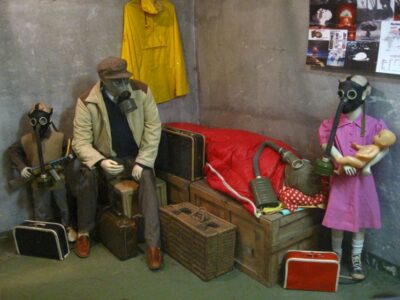
Communism History and Nuclear Bunker Guided Tour
Read our review →
Prague Communism History and Nuclear Bunker Tour
Read our review →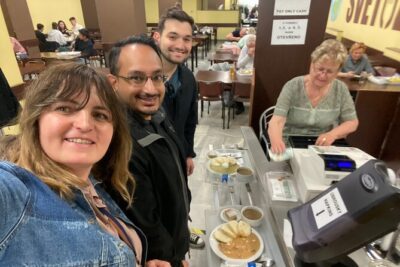
Communism & Nuclear Bunker Tour + 70s Canteen Lunch (own expense)
Read our review →
WWII Guided Tour & The Crypt of Operation Anthropoid
Read our review →
WWII in Prague Tour & The Crypt of Operation Anthropoid
Read our review →
Communism and Bunker Tour with 70s Canteen Lunch
Read our review →
Small-Group World War 2 & Operation Anthropoid Tour in Prague
Read our review →Browse the lists this tour appears in