
Reviewed · COMMUNIST HISTORY & COLD WAR WALKS
Prague: Communism Tour & Museum Visit
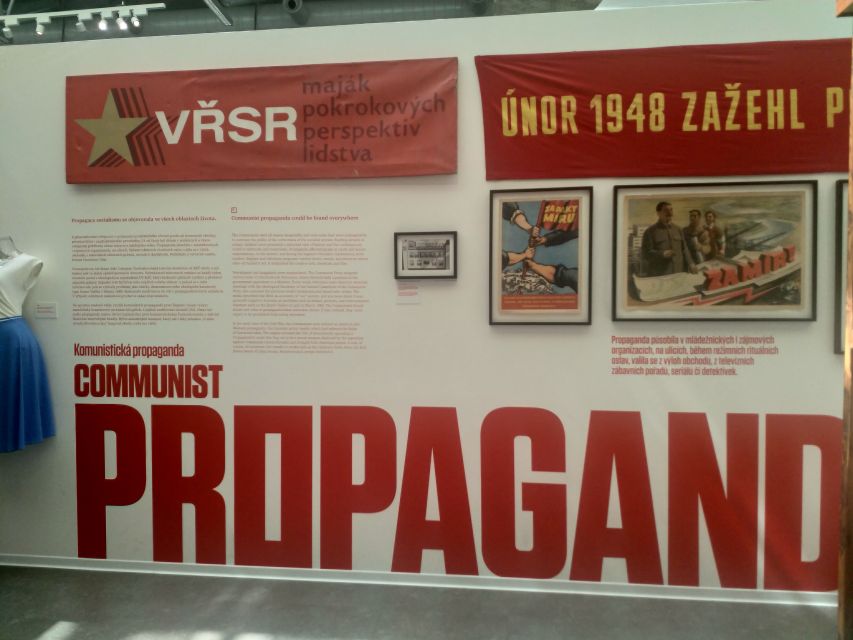
Prague makes the past feel close. This Communism tour uses the Museum of Communism to connect state power to everyday life, and I especially liked how the guide ties major turning points to what regular people experienced behind the Iron Curtain. You also get a guided museum circuit, then time to re-walk the exhibits on your own so the details actually stick.
The one tradeoff to know up front is that museum tickets are not included, and the tour is not suitable for small children. If you are traveling light and you can handle a history-focused visit, it is a strong way to understand Prague beyond pretty postcards.
Key points to know before you go
- Museum first, then city center: Learn inside the Museum of Communism, then connect it to what happened outside at Wenceslas Square and National Avenue.
- Short, focused timing: A 3-hour format that keeps you moving without turning into a lecture marathon.
- Real everyday artifacts: You will see items that were once normal life objects under Communist rule, not just political posters.
- Your guide matters: Reviews highlight top-notch guiding from Eva and Lenka, with clear explanations and a pace that works.
- Small-group feel: It is priced per group up to 2 people, so you are not lost in a crowd.
In This Review
- Why this Museum of Communism tour makes Prague click
- The 3-hour flow, from museum meeting point to city center walk
- Inside the museum: coup, Prague Spring, and the Velvet Revolution
- Everyday artifacts and family stories you can actually picture
- The Prague city center walk: Wenceslas Square and National Avenue
- Price, group size, and whether it is good value
- What to bring, and what rules to follow
- Languages, guide quality, and how to get the most out of the tour
- Who should book this Communism tour
- Should you book this Prague Communism tour?
- FAQ
- How long is the Prague Communism Tour & Museum Visit?
- Where do I meet my guide?
- Are museum tickets included?
- What languages are offered for the live guide?
- Is this tour suitable for young children?
- Do I need to bring anything?
- Are luggage or large bags allowed?
- Can I cancel for a full refund?
- Can I reserve now and pay later?
Why this Museum of Communism tour makes Prague click
Prague can look timeless, but this experience forces you to notice what the city hid during the 20th century. The Museum of Communism gives you the context first, then the walk through the city center helps you match museum themes to real public spaces. It is a smart order.
Two things I liked a lot are the way the tour links big political moments to daily life, and the fact that you can replay the museum exhibits yourself right after the guide finishes. That second pass is underrated. It turns a guided explanation into something you can revisit, slow down for, and actually remember.
The tour also has the right balance of structure and human stories. You are not only told what happened, you hear how systems touched ordinary routines like education, travel, and the pressure of the secret police. That is the kind of context that makes a guidebook feel thin.
The 3-hour flow, from museum meeting point to city center walk
You start by meeting your guide at the Museum of Communism in the city center. The exact handoff is simple: your guide stands at the cashier holding a placard with your name. Then you head inside to begin the tour.
From there, the timing is straightforward:
- Guided museum walkthrough focused on major Communist-era events and life under Communist rule.
- Time to walk the museum again on your own so you can linger over what grabbed you.
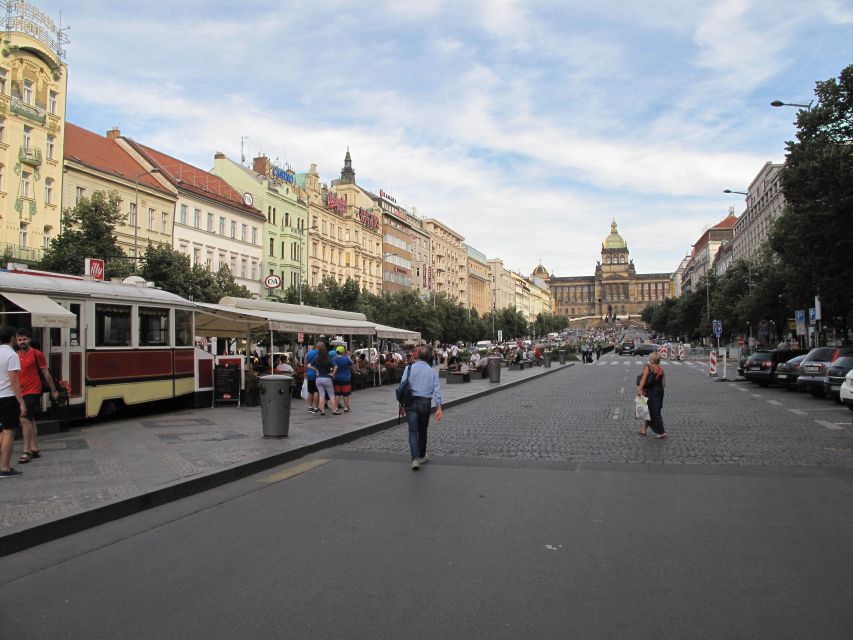
- A walk through Prague’s city center, centered on Wenceslas Square and National Avenue, where key public events played out.
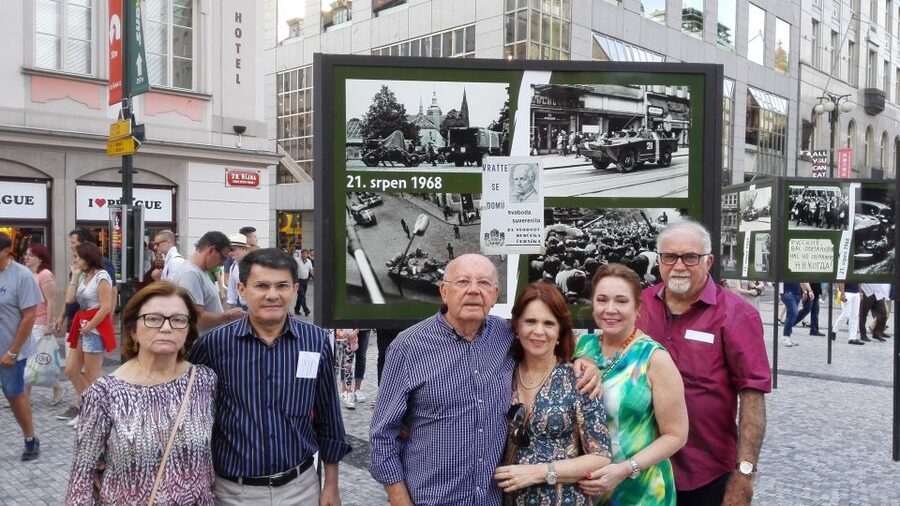
The duration is 3 hours, which matters for two reasons. First, it is long enough to cover the major themes like the 1948 coup, the Prague Spring of 1968, and the Velvet Revolution in 1989. Second, it does not eat your whole day, so you can still do classic Prague sights afterward without feeling rushed.
Inside the museum: coup, Prague Spring, and the Velvet Revolution
The museum exhibition starts with political development in the first half of the 20th century. From there, it walks you through the major turning points you likely already know from history classes, but here you see them explained in a way that connects to how people lived.
Here are the big moments you will cover as part of the guided route:
- Communist coup in 1948
- Prague Spring in 1968
- Velvet Revolution in 1989
What I think makes this more than a recitation is how the exhibits step away from only leaders and laws. You also learn about systems that shaped everyday life, such as:
- the education system
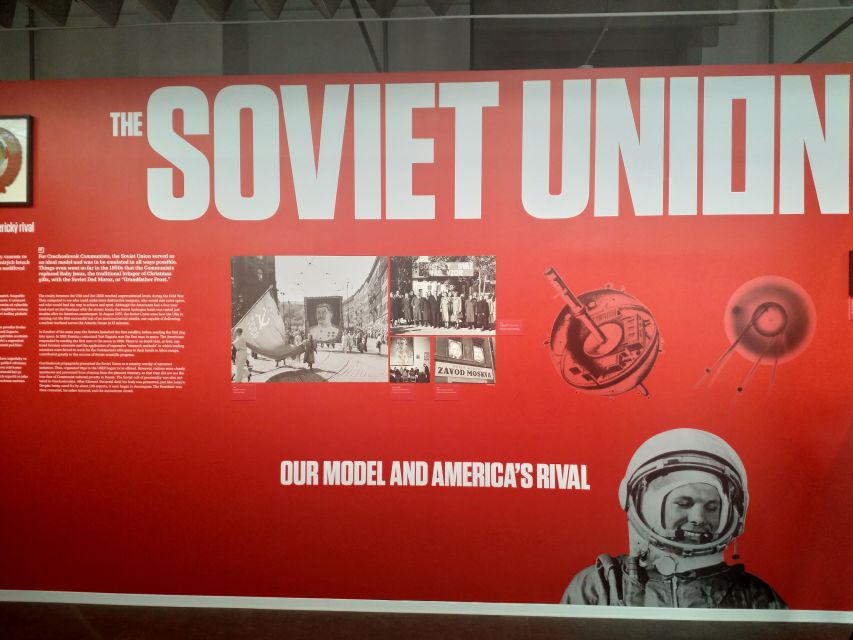
- ties with the Soviet Union
- travel under the regime
- the role and reach of secret police
- how money and value worked day to day
This is where the tour becomes practical for travelers. When you understand how controlled information, surveillance, schooling, and travel restrictions shaped ordinary routines, you start to notice those themes in how a city is arranged and remembered.
Other communist-era and Cold War history walks:
- Prague: Communism History and Nuclear Bunker Guided Tour
★ 4.7 · 2,417 reviews - Prague Communism History and Nuclear Bunker Tour
★ 5.0 · 1,742 reviews - Communism & Nuclear Bunker Tour + 70s Canteen Lunch (own expense)
★ 5.0 · 1,036 reviews
Everyday artifacts and family stories you can actually picture
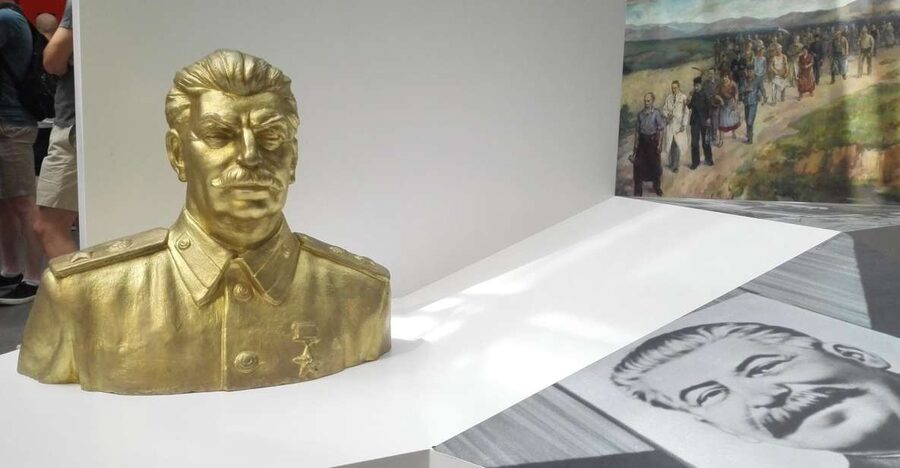
One reason this kind of museum works well is that it refuses to stay abstract. Instead of only showing documents, you will also see artifacts that were once part of everyday life behind the Iron Curtain.
Your guide mixes historical context with family stories about life under Communist rule. That combination helps your brain build a mental scene: someone trying to get an education, someone navigating travel limits, someone thinking about money and what it could or could not buy. It turns politics into human scale.
I also took note of the guiding quality highlighted in two independent reviews. One guest praised Eva for being an exceptional guide. Another praised Lenka for speaking clearly and covering Prague and the history of the country with strong knowledge, plus good pacing. Clear speaking and pacing are not small details here. In a subject as heavy as this, they are what keep you engaged instead of exhausted.
The Prague city center walk: Wenceslas Square and National Avenue
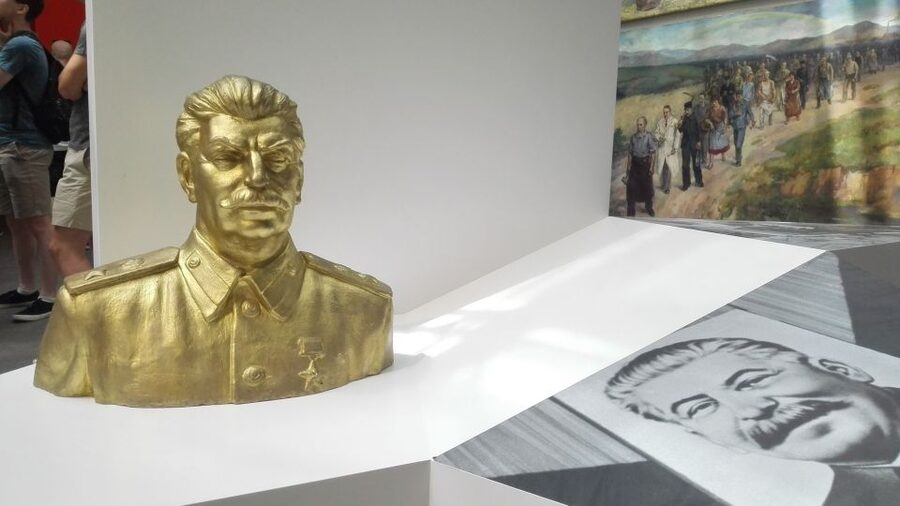
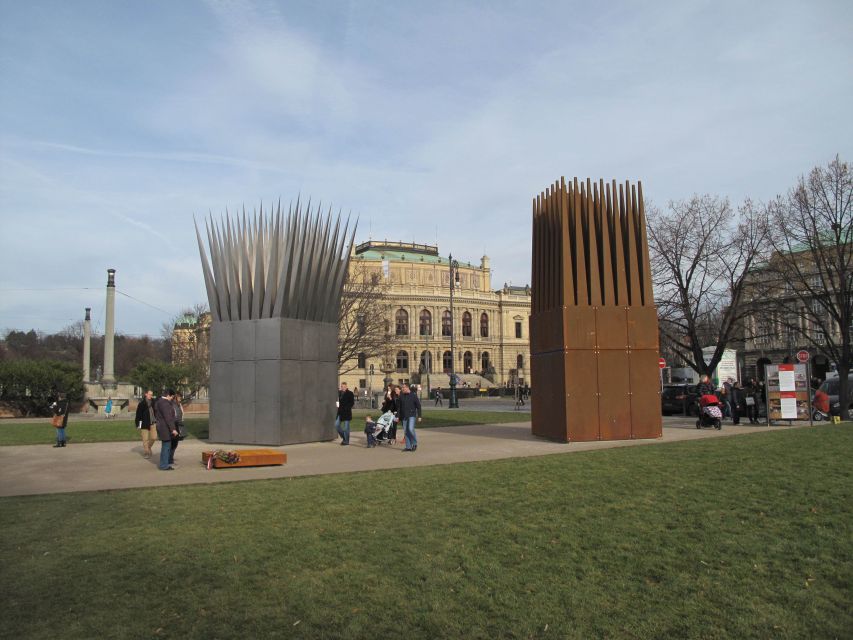
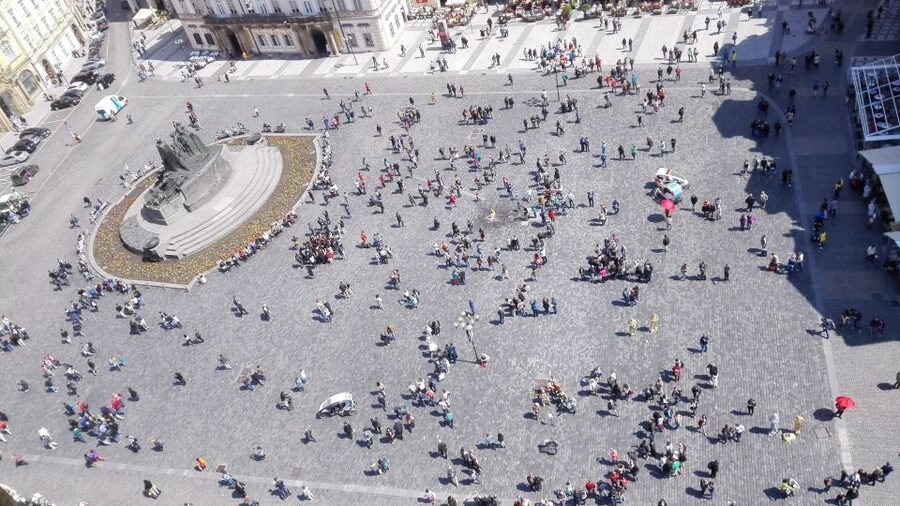
After the museum, you shift from inside rooms to the open air of Prague’s center. The walk focuses on Wenceslas Square and National Avenue, and that choice is logical because these areas are where major public moments unfolded.
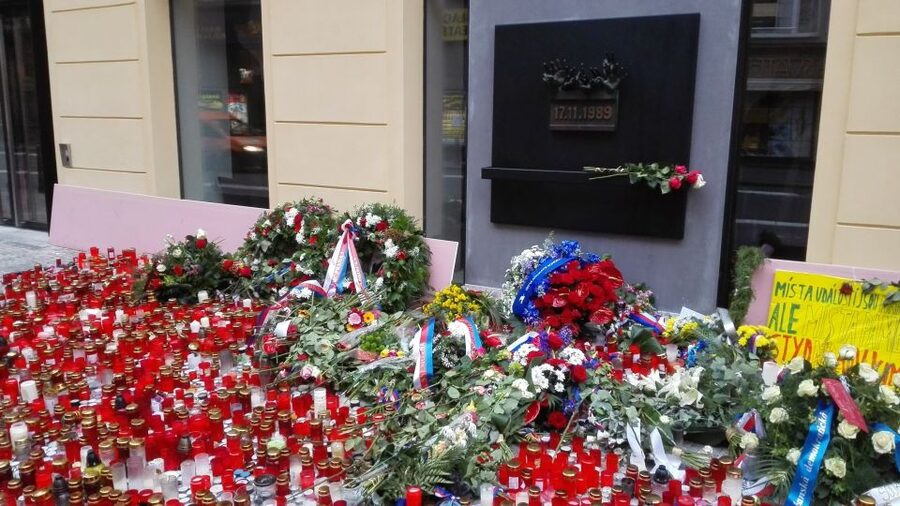
This part is not just for photos. It helps you anchor what you learned in places where history became visible. When you connect the museum’s themes, like political control and major regime changes, to real city space, the story becomes easier to follow when you continue exploring on your own.
Keep your eyes open for the way grand public areas are used for state visibility. Even if you only catch a slice of that during the walk, you will leave with a different lens for the rest of Prague.
More exhibition halls out of the rain:

Price, group size, and whether it is good value
The price is $229 per group, up to 2 people, for a total duration of 3 hours. That setup can be a great value if you are traveling with a partner or friend, because the cost is for the small group, not per person in a large crowd.
If you are deciding between solo versus shared bookings, think about this: the experience is guide-led and discussion-heavy, so you benefit from the smaller group format. A small group also makes it easier to ask questions if something in the museum themes sparks your curiosity.
Also factor in what is included. You get a live tour guide, but museum entry tickets are not included. So budget for that extra cost. Still, paying for a guide for a specialized topic like life under Communism can save you time and guesswork, because the story is organized for understanding, not just browsing.
What to bring, and what rules to follow
This tour comes with a few simple constraints.
What to bring:
- A student card
Not allowed:
- Luggage or large bags
Why this matters: museums move best when everyone travels light. If you have a big daypack or rolling luggage, it can slow your pace and make it harder to focus inside. If you are coming straight from another stop in Prague, consider storing luggage before you meet your guide.
You should also know that the tour is not suitable for small children. It is not listed as a kid-focused experience, and the subject matter requires an attention span and willingness to process historical and political themes.
Languages, guide quality, and how to get the most out of the tour
The tour is offered with live guides in English, French, and German. That is helpful if you want to match language comfort without relying on audio devices.
To get the most out of a museum-based political tour, I recommend going in with two attitudes:
- Be ready to connect events to daily life, not just memorize dates.
- Do not rush the second museum walk. Use it like a replay button. Go back to the sections that made you pause during the guided portion.
Guide quality really shows here. With a recommendation like Eva as a standout guide, and Lenka as clearly spoken with good pacing, you have reason to expect the experience will be readable and not overwhelming.
Who should book this Communism tour
I think this fits best if you want:
- a guided way to understand Communist history in Prague
- a museum experience that explains systems like surveillance, education, and money
- a short walk afterward that ties themes to real places
It is also a strong choice if you like structured storytelling. Even if you already know broad European history, the museum coverage of the 1948 coup, 1968 Prague Spring, and 1989 Velvet Revolution gives you a clear spine, then fills in daily-life details.
If you prefer purely casual wandering with no guided explanation, you might find a history-first format less your style. But if you enjoy being taught, and you want Prague to make sense, this is a solid match.
Should you book this Prague Communism tour?
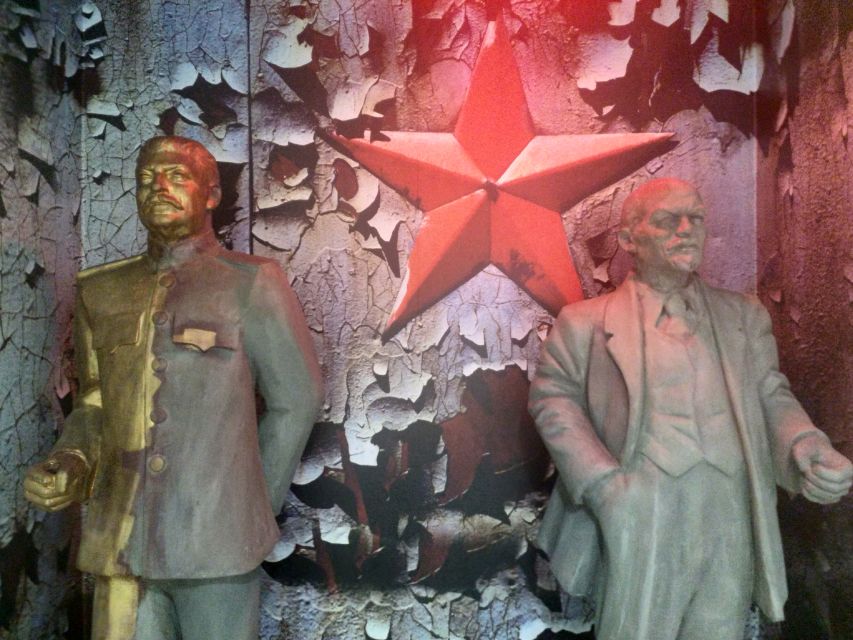
Yes, if you want a focused, guide-led way to understand what Communist rule looked like beyond slogans. The combo of Museum of Communism, artifacts from everyday life, and a short city walk through Wenceslas Square and National Avenue is efficient and memorable for 3 hours.
I would skip it or reconsider if you are traveling with small children, traveling with large luggage, or you were hoping for a ticket-inclusive package. Once you account for the museum ticket and travel light, you are set up for a very strong, small-group learning experience led by people who know how to explain this subject clearly.
FAQ
How long is the Prague Communism Tour & Museum Visit?
The tour lasts 3 hours.
Where do I meet my guide?
Meet your guide at the cashier of the Museum of Communism. Your guide will hold a placard with your name.
Are museum tickets included?
No. Museum tickets are not included.
What languages are offered for the live guide?
The live tour guide is available in English, French, and German.
Is this tour suitable for young children?
No. This tour is not suitable for small children.
Do I need to bring anything?
You should bring a student card.
Are luggage or large bags allowed?
No. Luggage or large bags are not allowed.
Can I cancel for a full refund?
Yes. You can cancel up to 24 hours in advance for a full refund.
Can I reserve now and pay later?
Yes. The option to reserve now and pay later is listed.
Newly posted under the arches of Prague



Communist History & Cold War Walks, compared.
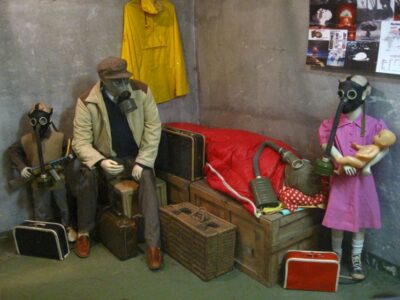
Communism History and Nuclear Bunker Guided Tour
Read our review →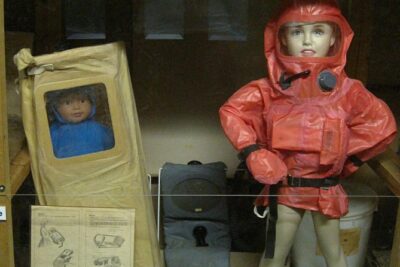
Prague Communism History and Nuclear Bunker Tour
Read our review →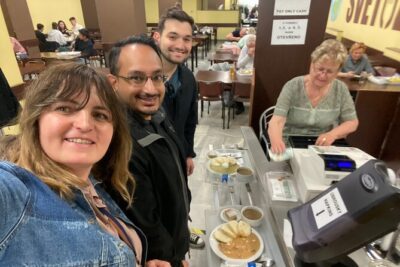
Communism & Nuclear Bunker Tour + 70s Canteen Lunch (own expense)
Read our review →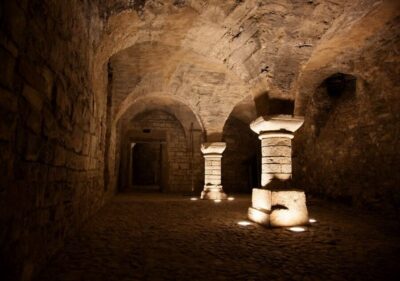
WWII Guided Tour & The Crypt of Operation Anthropoid
Read our review →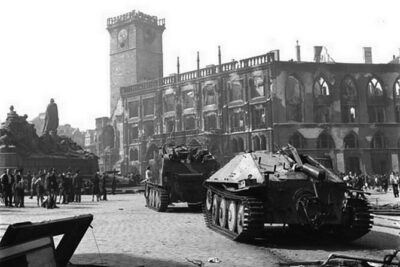
WWII in Prague Tour & The Crypt of Operation Anthropoid
Read our review →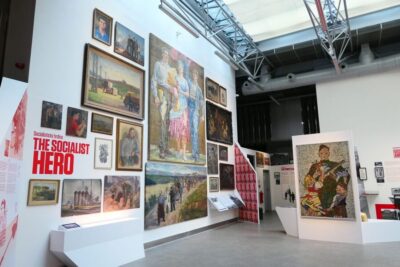
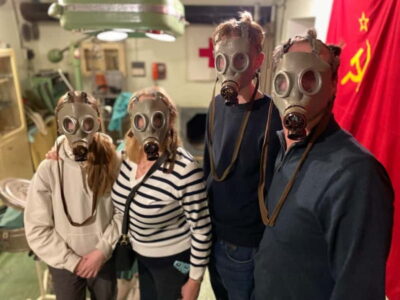
Communism and Bunker Tour with 70s Canteen Lunch
Read our review →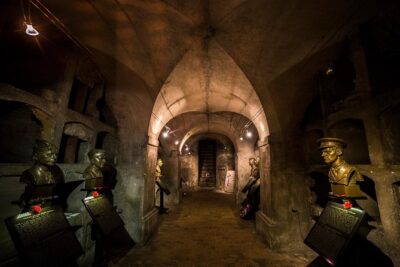
Small-Group World War 2 & Operation Anthropoid Tour in Prague
Read our review →Browse the lists this tour appears in