
Reviewed · COMMUNIST HISTORY & COLD WAR WALKS
Prague Private Tour and Museum of Communism with transfer
Communism is right here in Prague. This private hotel pickup and skip-the-line Museum of Communism combo saves time, and guides like Iva, Hana, and Pavel bring the era to life with firsthand stories rather than just dates. One thing to consider: the subject is heavy, and you will do a moderate amount of walking on city streets, so wear comfortable shoes and bring a mentally tough mindset.
What I like most is the balance. You get a focused museum visit inside, then an easy-paced walk outside where you can decide how much you want to see once the big story is underway. At the end, you are dropped back at your hotel or a central spot if you want to keep exploring on your own.
In This Review
- Key things that make this tour worth your time
- Why this private Prague communism tour makes sense
- Hotel pickup by Mercedes, plus time saved
- Albertov: where the Velvet Revolution spirit began
- Wenceslas Square and the National Museum bullet holes
- Narodni Trida memorial: the cost of resistance
- Museum of Communism: what you actually see, not just what you hear
- Letna Park: the Stalin monument base and a modern city view
- Choosing where to go after the museum
- How much walking, what to wear, and how to make it comfortable
- Price and value: is $221.60 per person a fair deal?
- Who should book this tour, and who might not love it
- Should you book the Prague Private Tour and Museum of Communism?
- FAQ
- How long is the Prague Private Tour and Museum of Communism with transfer?
- Is admission to the Museum of Communism included?
- What language is the tour offered in?
- Do you get hotel pickup and drop-off?
- How much walking is involved?
- What are the tour operating hours?
- What is the cancellation policy?
Key things that make this tour worth your time
- Skip-the-line museum entry so you do not waste your Prague morning in a queue
- Private Mercedes transfer with a driver who helps the day run smoothly
- Velvet Revolution stops outside tied directly to what you see inside the museum
- Guides with real-life context shared by people like Iva, Hana, Pavel, and others
- A flexible walking finish where you can follow the route or choose where to focus
- Letna Park viewpoint that connects the Stalin era to what Prague became after
Why this private Prague communism tour makes sense
Prague can feel like a museum already, but this experience adds a very specific layer. You are not just looking at old buildings, you are tracing how power worked in Czechoslovakia from after World War II until the Velvet Revolution in 1989.
I like that the day is built like a narrative. The museum gives you the inside view of everyday life, politics, education, censorship, and repression. Then the outdoor stops show the city’s physical reminders, like bullet holes and street-level memorials, so the story stays grounded.
Because it is private, the pace is easier to control. If a stop hits your interests, you can ask more questions. If it does not, you can keep moving without feeling stuck in a big group rhythm.
Hotel pickup by Mercedes, plus time saved
This tour starts with a pickup from your hotel lobby in Prague, usually a little before the tour start time. You ride in a comfortable Mercedes Benz with a driver, and you get bottled water in the car, which sounds small until it is hot or your schedule is tight.
The time advantage is real. Museum of Communism entry is handled so you can get in faster rather than waiting around. That matters because Prague has plenty of things to do, and 4 hours can disappear quickly if you spend them in lines.
It is also practical that the tour is offered in English and includes a mobile ticket. That keeps the day simple, especially if you are hopping between neighborhoods.
Other communist-era and Cold War history walks:
- Prague: Communism History and Nuclear Bunker Guided Tour
★ 4.7 · 2,417 reviews - Prague Communism History and Nuclear Bunker Tour
★ 5.0 · 1,742 reviews - Communism & Nuclear Bunker Tour + 70s Canteen Lunch (own expense)
★ 5.0 · 1,036 reviews
Albertov: where the Velvet Revolution spirit began
The first stop is Albertov, tied to the student demonstrations that sparked the Velvet Revolution in 1989. The time here is short, about 10 minutes, so think of it as orientation. You are anchoring the day’s timeline right at the beginning, and then you move on while the momentum is still fresh.
The value of starting here is how it frames everything that comes next. When you later see communist-era structures inside the museum and the street memorials outside, you understand that the story is not only about oppression. It is also about people organizing, protesting, and changing the system.
Albertov is also a good example of how the outdoor stops are designed to stay relevant. They do not feel like random sightseeing. They feel like chapter markers.
Wenceslas Square and the National Museum bullet holes
From Albertov, the tour moves to Vaclavske NamEsti, better known as Wenceslas Square. This is a 30-minute segment packed with context, and it helps to know what you are looking for as you walk.
In 1968, clashes happened here between protesters and Soviet armored units. The National Museum nearby has bullet holes preserved in its walls from that period, and the tour points them out. In November 1989, a protest rally in the square against police brutality helped trigger the Velvet Revolution’s momentum toward overthrowing communism.
The square itself is historic in a different way too. It is lined with hotels, restaurants, clubs, and shops now, so you are seeing layers of time at once. Even the St. Wenceslas equestrian statue from 1912 becomes part of the visual story as you pass in front of the National Museum.
A smart detail is the stop that focuses again on the National Museum’s bullet holes. The tour treats it as more than a photo moment. You get reminded that these marks were preserved as a visible memory during renovation, not erased.
One thing to keep in mind: Wenceslas Square is lively and can be busy. If you are sensitive to crowds, just know this is the most active outdoor area on the route.
More exhibition halls out of the rain:

Narodni Trida memorial: the cost of resistance
Next comes Narodni Trida, with a stop at the memorial area described as the hands reaching out of the wall. This is one of the stops that feels the most emotionally intense because it connects to the worst beating by police during the Velvet Revolution in 1989.
The tour explains what happened: police blocked side streets and formed a narrow cordon, so people trying to escape were forced through a choke point and beaten. You are not just seeing a landmark here. You are seeing the mechanism of control.
This is also where a strong guide makes a noticeable difference. The best tours do not only describe events. They help you understand why they mattered and what people endured in real time.
Because admission here is free and the stop is around 20 minutes, it works well even if you are tired. You get the key emotional beat, then you move on.
Museum of Communism: what you actually see, not just what you hear
The centerpiece of the day is the Museum of Communism, with about 1 hour inside and admission included. If you care about how systems shape daily life, this is the moment where the tour earns its keep.
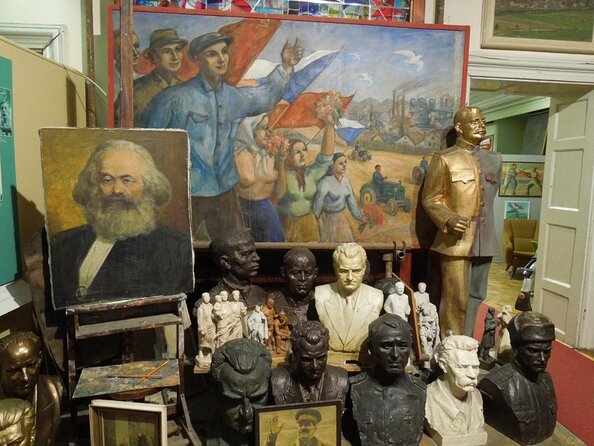
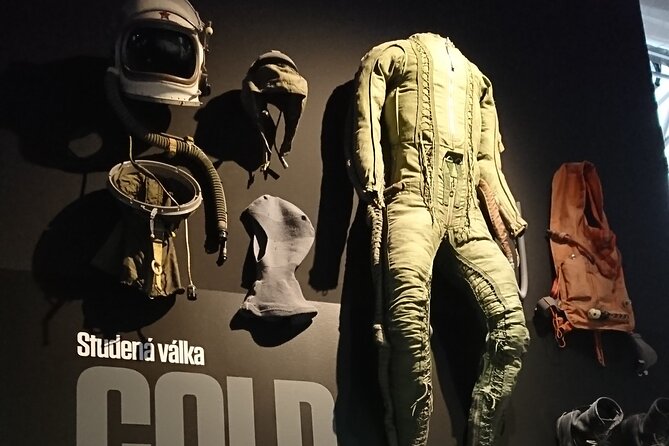
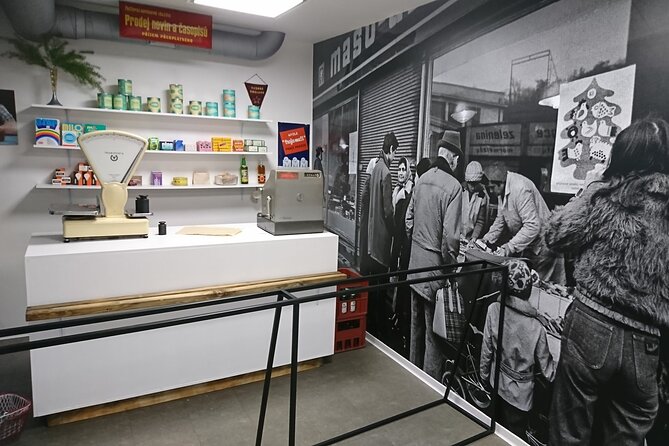
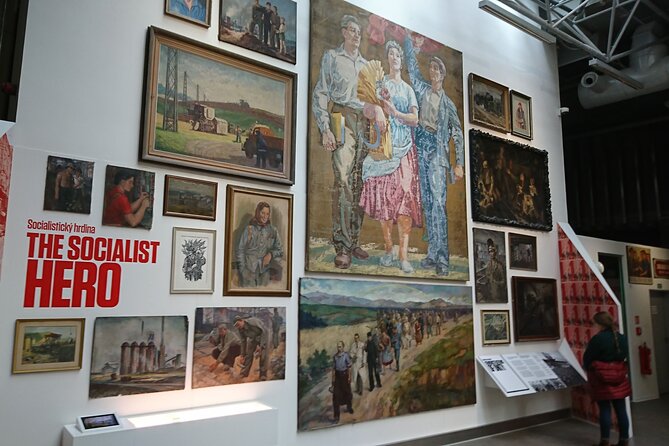
The museum experience is built around multiple angles of communist-era Czechoslovakia. You can expect coverage of daily life, politics, history, sports, economics, education, art (especially Socialist Realism), and propaganda in the media. The museum also focuses on institutions of control, including censorship, courts, and other forms of repression.
There is also a strong emphasis on the security apparatus. The tour context highlights the police and the secret police, including the StB. If you are wondering how fear was used as a tool, this is where the museum answers that question more concretely.
One of the most useful elements is the way the spaces are recreated. The tour description notes areas that recreate an old communist-era classroom, factory, and interrogation room. That kind of staging helps you visualize how everyday routines and state power blended together.
If you are a history enthusiast, you will likely love how the museum is framed from the February putsch in 1948 through the Velvet Revolution in 1989. It is a clear timeframe, and it gives your later city walk extra meaning.
A practical consideration: this museum can feel emotionally heavy. You do not need to rush it, and it is totally okay to take a breath after the more intense sections.
Letna Park: the Stalin monument base and a modern city view
After the museum, you head to Letna Park for about 30 minutes. This stop connects politics to a skyline viewpoint, and it gives your eyes a change of pace after indoor exhibits.
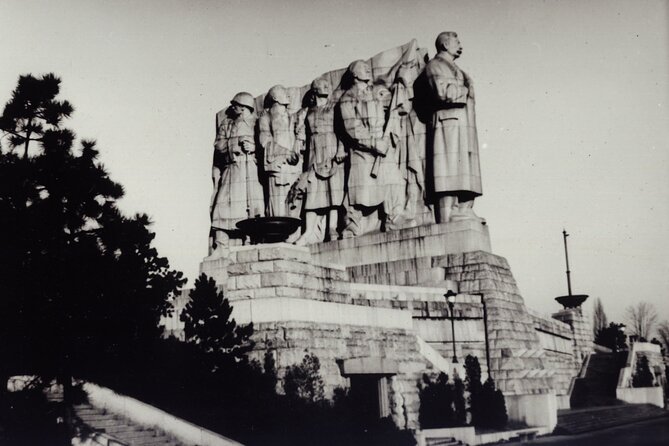
The viewpoint is described as being where a giant statue of Josip Stalin once oversaw Czechoslovak underlings. After Nikita Chruscev revealed Stalin’s atrocities in his famous speech, Stalin’s monument was removed. The surviving base remains, and now there is a large metronome installed in place of the statue.
It is a great example of Prague’s ability to repurpose memory. The location still holds the weight of what came before, but the present-day use is different. The area is popular for young people dating and for skateboarding, which gives you a sense of how the city’s attitude has changed.
You also get a panoramic view from Letna Park. Even if you only have half an hour, the skyline break helps your brain reset before you finish the day.
Choosing where to go after the museum
The walking portion after Museum of Communism is flexible in a helpful way. The guide takes you on a walking tour focused on communist history sites, including areas around Wenceslas Square, the National Museum area, and Letna Park.
The tour description makes it clear that it is your choice where to go. When you book, you can list special interests so the guide can prepare a private route that fits you, not a generic group itinerary.
I like this approach because it keeps the day from feeling overly scripted. If your focus is protest history, you can spend more time on the street-level story moments. If your focus is security and repression, you can ask for more detail on the museum themes that connect to specific sites.
At the end, you get dropped back at your hotel or another convenient central place in Prague. If you want lunch near the action, you can plan around that without spending time backtracking.
How much walking, what to wear, and how to make it comfortable
The walking level is described as moderate. That usually means it is not a marathon, but you are on sidewalks and city terrain for multiple stops across different areas.
My practical advice: wear comfortable walking shoes and dress for the weather. The tour operates in all weather conditions, so a rain layer or umbrella can save your mood.
Also, since you are moving from vehicle to walking and back again, avoid anything too stiff. You want shoes that handle cobblestones and small uneven patches without complaint.
If you are planning this day alongside other major Prague sights, keep in mind that the museum content may slow you down mentally even if your legs feel fine. Build in a gentle evening afterward.
Price and value: is $221.60 per person a fair deal?
At $221.60 per person, this is not a budget tour. But it is a very specific kind of value.
You are paying for three main things:
- Private hotel pickup and drop-off by car
- A professional guide dedicated to your questions and interests
- Included Museum of Communism admission, plus a structured route of key communist-related city stops
If you normally do group tours, the private format is the difference. You can ask follow-up questions and get guidance tailored to your curiosity. The reviews highlight exactly this kind of effect, including guides who share personal experiences from living through communism.
Is it worth it for you? If your travel style is to learn deeply from a good guide, this price can feel reasonable because the day is compact and focused. If you only want a quick surface look at landmarks, you might feel like you could do it cheaper on your own. But then you would lose the context that ties streets to exhibits.
Who should book this tour, and who might not love it
This tour is a strong fit if you:
- Want a guided explanation of Prague’s communist era, not just photos
- Care about the Velvet Revolution and how it unfolded in specific locations
- Appreciate museum learning paired with real-world landmarks
- Prefer private pacing and an easy logistics day
It may not be the best match if you:
- Hate heavy political topics and detailed repression history
- Want a chill sightseeing day with minimal walking
- Prefer self-guided exploring where you set every stop yourself
Still, even with those caveats, the tour’s structure is clear. You get a museum focus, then a street story walk, then you are finished with transport handled.
Should you book the Prague Private Tour and Museum of Communism?
I would book it if you want meaning, not just motion. The private transfer saves time, the museum admission is included, and the outdoor stops connect directly to what you just learned inside. The big payoff is the human layer, with guides such as Iva, Hana, Pavel, and others able to explain what the system felt like, not only how it worked on paper.
If you are on the fence, ask yourself one question: do you want to understand how communism shaped daily life in Prague and how people pushed back? If the answer is yes, this is a well-timed, guided, and efficient way to do it.
FAQ
How long is the Prague Private Tour and Museum of Communism with transfer?
It lasts about 4 hours.
Is admission to the Museum of Communism included?
Yes. Museum of Communism admission is included.
What language is the tour offered in?
The tour is offered in English.
Do you get hotel pickup and drop-off?
Yes. Pickup is from your hotel lobby or a place of your choice in Prague, and the tour ends with drop-off at your hotel or a convenient central place.
How much walking is involved?
There is a moderate amount of walking, so comfortable walking shoes are recommended.
What are the tour operating hours?
The tour runs Monday through Sunday, from 8:00 AM to 2:00 PM.
What is the cancellation policy?
You can cancel for a full refund up to 24 hours in advance of the experience start time. Cancellation within 24 hours is not refundable.
More Private Drivers in Prague
- Prague Airport Private Arrival Transfer★ 4.5 · 991 reviews
- UNESCO Cesky Krumlov from Prague with Guided Tour and Transfer★ 4.0 · 812 reviews
- Prague Airport Private Departure Transfer★ 4.5 · 780 reviews
- Prague: Shared Group/Private Segway Tour with Hotel Transfer★ 4.8 · 574 reviews
Newly posted under the arches of Prague

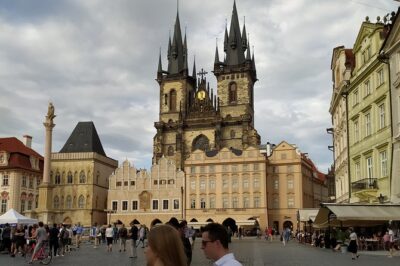
Communist History & Cold War Walks, compared.
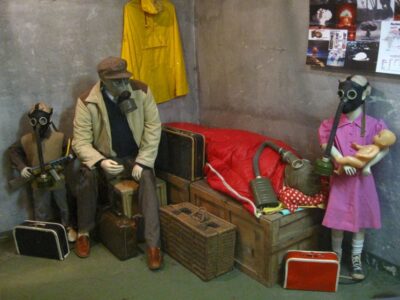
Communism History and Nuclear Bunker Guided Tour
Read our review →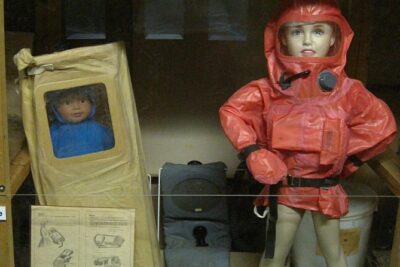
Prague Communism History and Nuclear Bunker Tour
Read our review →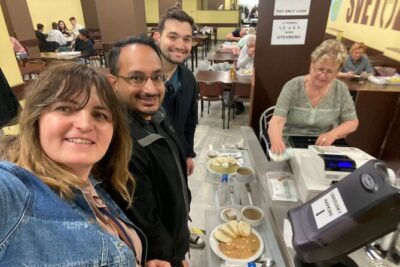
Communism & Nuclear Bunker Tour + 70s Canteen Lunch (own expense)
Read our review →
WWII Guided Tour & The Crypt of Operation Anthropoid
Read our review →
WWII in Prague Tour & The Crypt of Operation Anthropoid
Read our review →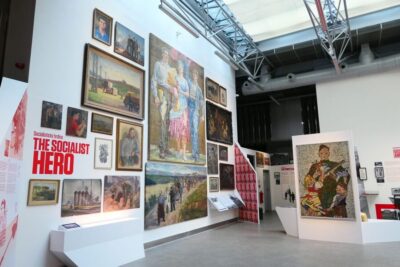
Communism and Bunker Tour with 70s Canteen Lunch
Read our review →
Small-Group World War 2 & Operation Anthropoid Tour in Prague
Read our review →Browse the lists this tour appears in