
Reviewed · COMMUNIST HISTORY & COLD WAR WALKS
Second World War & Communism (Tip-based 3 hour tour)
One square turns into another story of survival. This tip-based Prague walk tracks Czechoslovakia from Nazi occupation to Communism’s fall, stop by stop, in a smart timeline.
I especially liked how the route links big politics to real human consequences, and how the guide keeps it clear and linear instead of drowning you in dates. The one drawback to plan for is that you’ll do a fair amount of walking and it may not suit mobility limits.
What I liked most was the balance of places: you hit the heartbreaking Jewish history at Pinkas Synagogue, then you shift to uprisings and Cold War tension in the open streets of central Prague. What I liked next was the ending, where you finish in the crypt tied to Operation Anthropoid and get a concrete sense of what resistance cost.
If you hate structured walking tours or crowds, ask about group size ahead of time, because the experience can feel tighter when the group is large.
In This Review
- Key highlights you will feel on this walk
- A 3-hour Prague story from WWII to the Velvet Revolution
- Klárov start: independence, occupation, and the Second Resistance signals
- Pinkas Synagogue: when history is written in names
- Old Town Square for the Prague Uprising, then straight to Communism
- Wenceslas Square: 1968, Jan Palach, and the feeling of a divided street
- OC Quadrio: Kafka’s rotating head and art under Communism
- Narodni Třída’s hands out of the wall: the Velvet Revolution made concrete
- National Theater: Vaclav Havel and the story of leadership during change
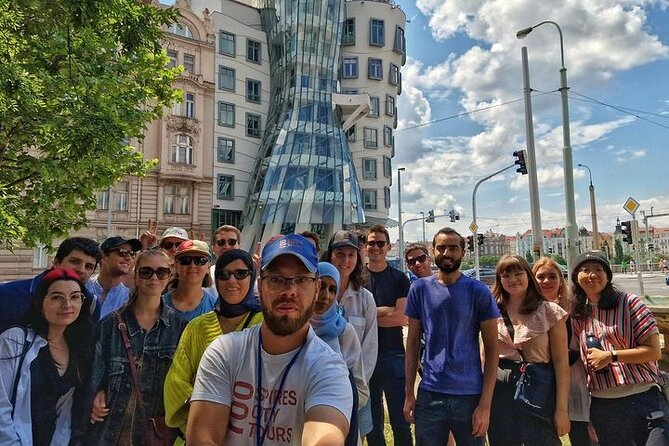
- Dancing House: the building, plus the Valentine’s Day bombing story
- St Cyril and St Methodius Cathedral and the Anthropoid crypt
- Price and logistics: what $3.60 means, and how to plan your time
- What kind of traveler should book this?
- Should you book? My straight answer
- FAQ
- How long is the Second World War & Communism tour in Prague?
- Is the tour offered in English?
- What is included in the tour price?
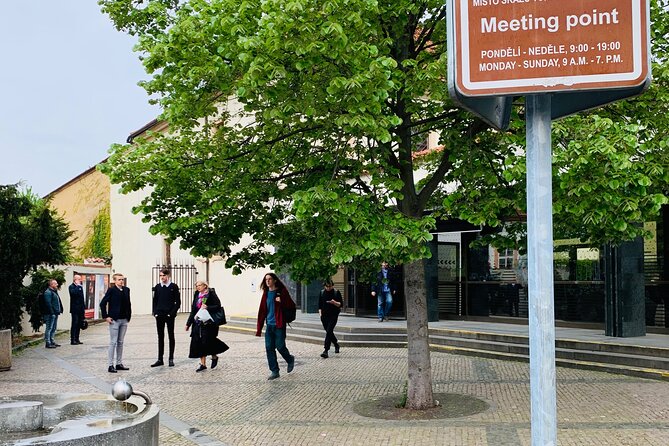
- Where does the tour start and where does it end?
- Is there an admission ticket for the Museum of Anthropoid Operation?
- Is the tour suitable for people with mobility problems?
- Can I bring a service animal?
Key highlights you will feel on this walk
- Second Resistance and the Winged Lion at Klárov, a strong opening with immediate WWII context
- Pinkas Synagogue and the story of Czech Jews, including who could emigrate and who could not
- Prague Uprising and the post-war power shift, connecting the end of WWII to the rise of Communism
- Wenceslas Square and 1968, with the Warsaw Pact invasion and Jan Palach’s self-immolation discussed in place
- Velvet Revolution on Narodni Trida, guided through a memorial that turns a wall into a symbol
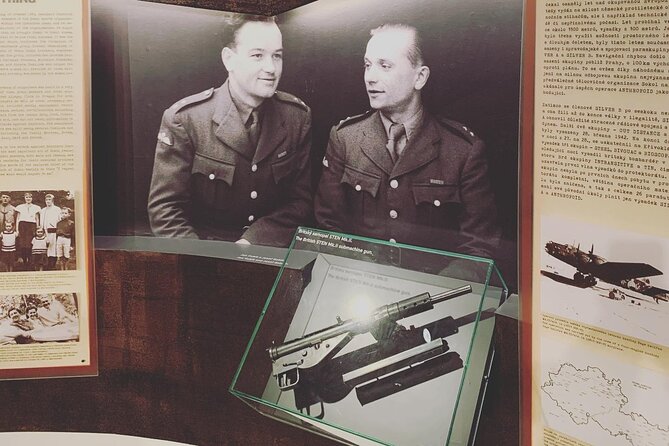
- Operation Anthropoid at the crypt, plus free entry to the Anthropoid Operation Museum
A 3-hour Prague story from WWII to the Velvet Revolution
This tour is built for people who want the Cold War without the textbook. In about three hours, you move through central Prague and get a guided chain of events: Nazi occupation, resistance, the Prague Uprising, then Communism, the 1968 invasion, and finally the Velvet Revolution.
The route is also practical. Most stops are in famous public spaces, so the stories feel grounded rather than stuck behind a museum counter. And since the tour is tip-based, you pay a low base price and then support the guide based on how much you felt it was worth.
Klárov start: independence, occupation, and the Second Resistance signals
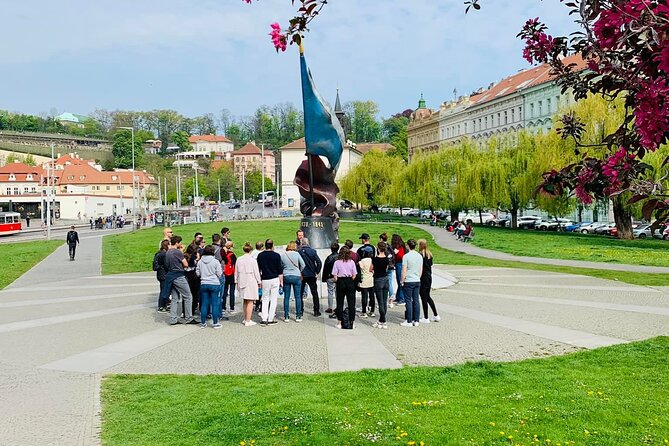
You begin at Metrocafe Klárov, near two key WWII-era reminders: the Memorial to the Second Resistance and the Winged Lion Memorial. This is a good place to start because your guide doesn’t begin with 1939 and forget the rest. You get the lead-in about how Czechoslovakia gained independence after World War I, then why it became one of the first countries Hitler occupied.
Why I like this first stop: it sets up the theme of the tour, that Czech and Slovak history is not a single chapter. It is a sequence where each political decision changes what ordinary people can do next, including soldiers and resistance groups.
What to consider: this is a memorial area, so follow the onsite rules. The tour notes that animals are not allowed inside the war memorial you visit at the end of the tour, so it’s smart to be mindful about site rules throughout.
Other communist-era and Cold War history walks:
- Prague: Communism History and Nuclear Bunker Guided Tour
★ 4.7 · 2,417 reviews - Prague Communism History and Nuclear Bunker Tour
★ 5.0 · 1,742 reviews - Communism & Nuclear Bunker Tour + 70s Canteen Lunch (own expense)
★ 5.0 · 1,036 reviews
Pinkas Synagogue: when history is written in names
Next you stop at Pinkas Synagogue, one of the most powerful history spaces in Prague. The guide focuses on the fate of Czech Jewish communities during the Nazi era, including how many people managed to emigrate and what happened to those who did not.
This stop works because it’s not only about dates. It is about choices, escape routes, and the tragic limits of those routes when governments and borders close. You also get a strong sense of scale and loss, which makes later Cold War stories feel more personal and less abstract.
Timing is tight here, so go in with a quiet mindset. If you need extra time, you can always plan to return after the tour, but during the walk you are there to absorb the context and let the place do its job.
Old Town Square for the Prague Uprising, then straight to Communism
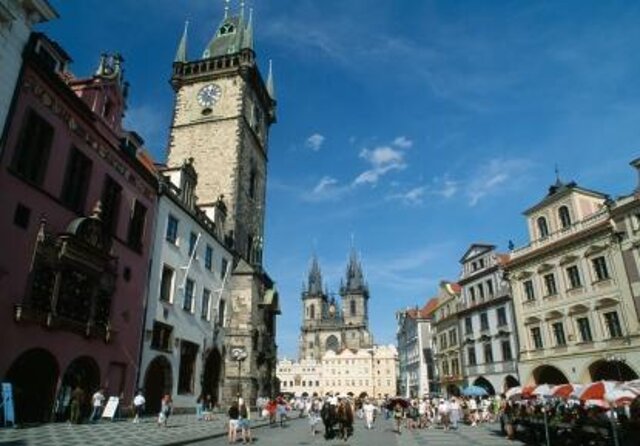
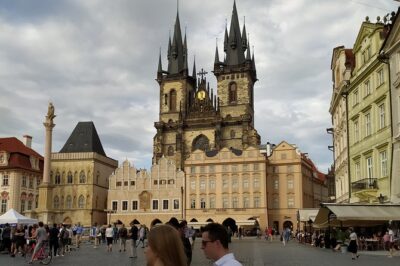
At Staroměstské náměstí, near the Old Town Hall, the story turns to the Prague Uprising. This is where the tour makes a key connection: the end of World War II in Prague did not mean peace in the way people hoped. Your guide explains how the end of WWII set the stage for the rise of Communism in Czechoslovakia.
Why this matters: a lot of history tours treat WWII as a neat finish line. Here, you see the aftermath as a political struggle. That helps you understand why later events are not random, including why the 1968 invasion happened and why people protested.
Also chalked up in Prague

Wenceslas Square: 1968, Jan Palach, and the feeling of a divided street
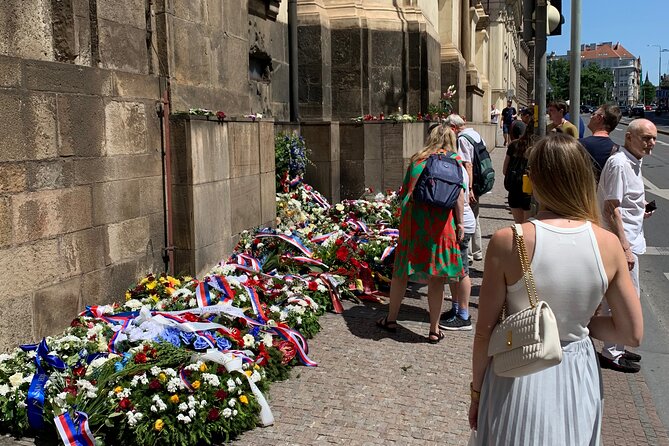
You then reach Wenceslas Square, and the tour shifts from WWII aftermath to Communism and the Cold War. You’ll hear what happened after Communism started in Czechoslovakia and why Warsaw Pact armies invaded in 1968.
The guide also points out where Jan Palach’s self-immolation took place. This detail is important because it turns a political event into something physically located. You are not just hearing about sacrifice in the abstract.
Practical tip: stand where your guide can see the group and where you can listen. Wenceslas Square is wide and active, so it’s easy to lose the narrative if you drift to the edges.
OC Quadrio: Kafka’s rotating head and art under Communism
Next is OC Quadrio, where you see the Rotating Head of Kafka. This is one of the quieter stops, and it’s also a clever one. You use it to talk about art during Communism, and how creativity can be shaped by censorship and ideology.
Even if you are not a Kafka expert, the point lands: culture was not separate from politics. It was a negotiation. A sculpture like this gives you a visual anchor for that idea, right in the middle of modern Prague.
Narodni Třída’s hands out of the wall: the Velvet Revolution made concrete
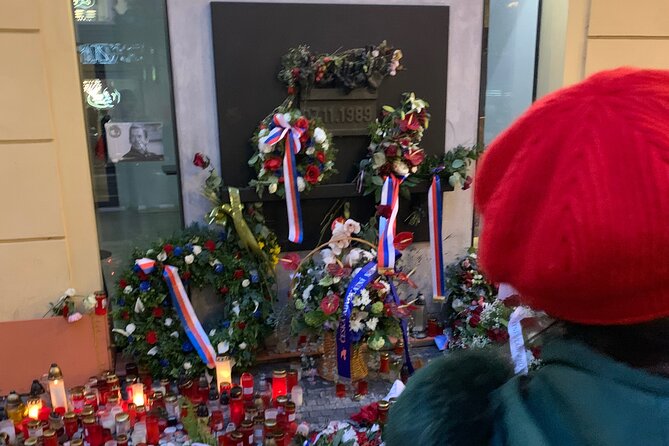
At Narodni třída, you encounter Hands reaching out of the wall. The guide uses this memorial to explain the Velvet Revolution and the fall of Communism.
This is a great stop for anyone who likes human stories more than political speeches. A memorial like this compresses a whole period into a single image: people reaching forward, trying to reclaim control of their lives.
If you are the type who needs a minute before moving on, take it here. The tour flows, but this is one place where you will want to slow down.
National Theater: Vaclav Havel and the story of leadership during change
The tour reaches National Theater and brings in Vaclav Havel, described as the first president of Czechoslovakia after the fall of Communism and discussed for his role during the Velvet Revolution.
This stop is short, but it helps you put names to moments. Havel is often mentioned in connection with later events across Europe, so hearing the local role in this moment makes him easier to remember.
Dancing House: the building, plus the Valentine’s Day bombing story
You end up at the Dancing House, where your guide connects the architecture to the story of the Valentine’s Day bombing.
This works because the tour refuses to keep the WWII story trapped in the early part of the timeline. Instead, you see how the war’s impact and resistance narratives carry through to the city’s later memory.
St Cyril and St Methodius Cathedral and the Anthropoid crypt
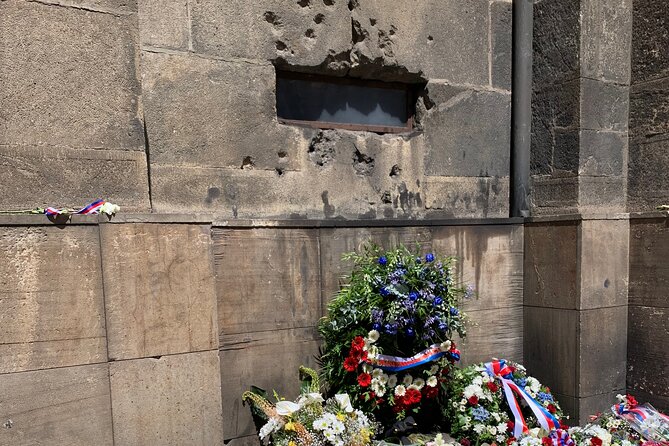
The final stop is St Cyril and St Methodius Cathedral, where you learn about the most important achievement of Czechoslovak resistance during World War II, Operation Anthropoid.
You also finish in the crypt, which the tour notes is the hideout of soldiers from the Anthropoid operation. From there, it is a short walk of about one minute to nearby landmarks like the Dancing House or Charles Square.
This ending is the reason I think the tour is worth choosing over many more generic WWII walks. You get closure in a real space tied to the plan itself, not just an outdoor monument with a plaque. Add in the free entry to the Museum of Anthropoid Operation, and you’ll feel you learned the story, then saw a physical layer of proof.
One more practical note: the tour mentions animals are not allowed inside the war memorial visited at the end, so plan for that if you are traveling with pets. Service animals are allowed.
Price and logistics: what $3.60 means, and how to plan your time
The listed price is $3.60 per person for a tour that runs about 3 hours, and it is tip-based. In practice, that means you should think of the experience as having two parts: a small entry fee and the real value delivered by the guide’s time and storytelling.
If you want to feel good about your budget, set aside a tip that matches your expectations. People often choose to tip more on history walks like this because the narration drives the value, not just the view.
As for movement, the tour includes multiple city-center stops and you’ll be on your feet most of the time. One review described the walking as around 5 km, so treat this as moderate walking rather than a quick shuffle. The tour also says it is not recommended for travelers with mobility problems, so if you need step-free routes, consider that before booking.
Good news: it is near public transportation. That helps if you want to arrive early, use the metro, or break up your day with another Prague stop before or after.
What kind of traveler should book this?
This tour is a strong fit if you:
- want WWII and Cold War history connected in one route
- like to learn from street-level storytelling, not just museum rooms
- enjoy tracing how power shifts affect everyday people
It may be a less ideal fit if you:
- have mobility issues or need a very low-walking schedule
- struggle with long city-center walking in groups
- prefer history focused only on one era, since this is intentionally a through-line from WWII to Communism to the Velvet Revolution
Should you book? My straight answer
I think you should book this if you want a focused, three-hour way to understand modern Prague. The combination of Jewish history, uprising narratives, and Communism turning into protest and change, all anchored by real places, makes it more than a checklist of famous landmarks.
Book it with comfortable shoes and a mindset that you are walking through a century of conflict and survival. If that sounds like your kind of day, you will come away with a much clearer picture of how Prague got from 1939 to 1989, and why the streets you see today hold those memories.
FAQ
How long is the Second World War & Communism tour in Prague?
It lasts about 3 hours.
Is the tour offered in English?
Yes, the tour is offered in English.
What is included in the tour price?
You get an in-person certified guide in English and free entry to the Museum of Anthropoid Operation.
Where does the tour start and where does it end?
It starts at Metrocafe Klárov, and it ends at the Orthodox Cathedral of Saints Cyril and Methodius, in the crypt area.
Is there an admission ticket for the Museum of Anthropoid Operation?
No, entry to the Museum of Anthropoid Operation is included (free entry).
Is the tour suitable for people with mobility problems?
It is not recommended for travelers with mobility problems.
Can I bring a service animal?
Service animals are allowed. The tour also notes that animals are not allowed inside the war memorial visited at the end, so follow site rules on where pets can go.
Newly posted under the arches of Prague

Communist History & Cold War Walks, compared.
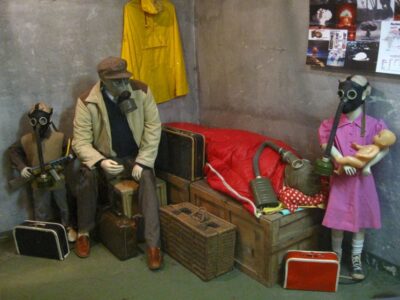
Communism History and Nuclear Bunker Guided Tour
Read our review →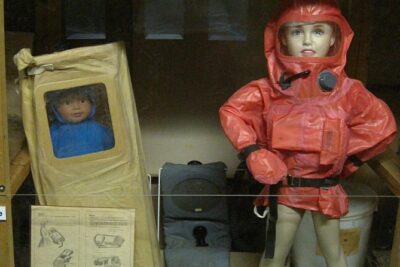
Prague Communism History and Nuclear Bunker Tour
Read our review →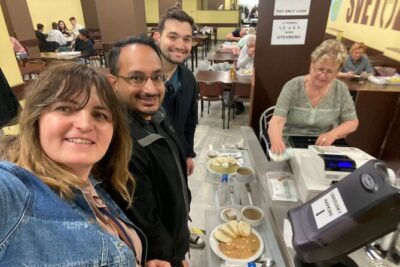
Communism & Nuclear Bunker Tour + 70s Canteen Lunch (own expense)
Read our review →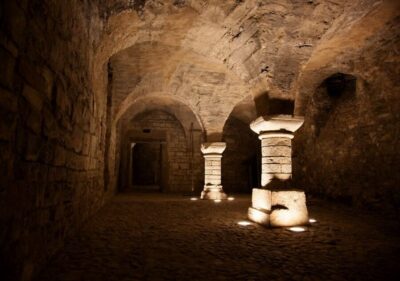
WWII Guided Tour & The Crypt of Operation Anthropoid
Read our review →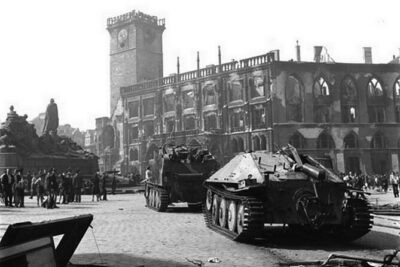
WWII in Prague Tour & The Crypt of Operation Anthropoid
Read our review →
Communism and Bunker Tour with 70s Canteen Lunch
Read our review →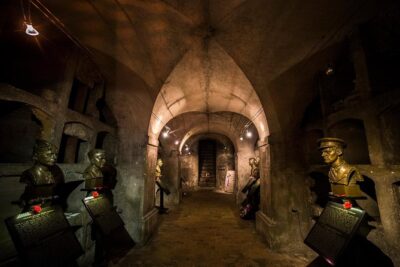
Small-Group World War 2 & Operation Anthropoid Tour in Prague
Read our review →Browse the lists this tour appears in