
Reviewed · COMMUNIST HISTORY & COLD WAR WALKS
Prague Cold War Walking Tour
Communist Prague gets real fast. This historian-led walking tour turns big Cold War ideas into specific places you can stand inside. I like that it is built for understanding, not just sightseeing.
I also love the small group size, capped at 8 people, which makes it easier to ask questions and keep the pace humane. When the historian guide on your date is Vadim, the vibe tends to be smart and intellectually serious, with clear explanations.
One watch-out is the Vitkov Hill climb. The route includes a steep uphill push that can take 20 to 30 minutes, so if stairs and slopes slow you down, plan for that.
In This Review
- Key highlights you will feel on the street
- Entering Prague’s Cold War story, starting near St. Joseph Church
- Karlin-Zhizhkov pedestrian tunnel: where the Cold War goes underground
- The Communist message in stone: Red Army hall symbolism
- Klement Gottwald’s mausoleum and embalming lab: power shown up close
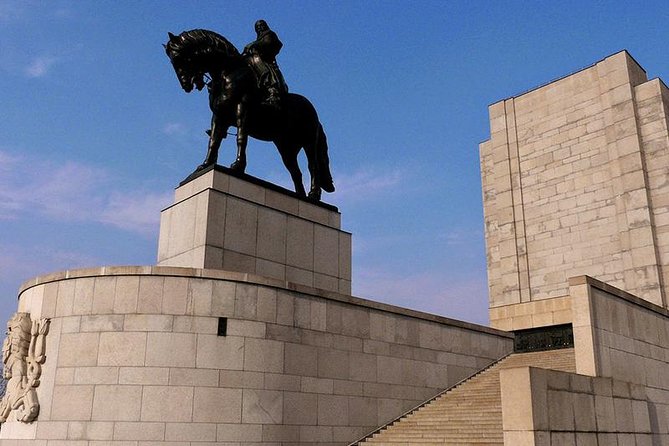
- Vitkov Hill monument: the big equestrian statue, the Hall of the Soviet Soldier, and the political angle
- Zizkov Television Tower: a quick Brutalist hit with a view
- Wenceslas Square: parades, Prague Spring, and the Velvet Revolution energy
- The upside-down statue of King Wenceslas: irony as political commentary
- John Lennon Wall: political protest you can read in real time
- Passing the National Assembly: where Communist government sat
- Letná Hill and the story behind the Stalin statue
- Group size, pacing, and what your legs will notice
- Tram tickets included, and how to plan your day around them
- Price and value: what $126.43 gets you
- Who this tour fits best, and who might want a different style
- Should you book the Prague Cold War walking tour?
- FAQ
- How long is the Prague Cold War walking tour?
- Where does the tour start?
- Is the tour in English?
- What is the group size?
- Are tram tickets included?
- What is not included in the price?
- Does the tour include paid admissions?
- Is the tour physically demanding?
- What is the cancellation policy?
- How soon will I get confirmation?
Key highlights you will feel on the street
- Cold War pedestrian tunnel with bomb-shelter corridors, including locked doors you can see up close in Karlin-Zhizhkov
- Red Army themed statuary and propaganda talk, tied to the 1948 Communist takeover
- Vitkov Hill monument stops that include Gottwald’s story and a major equestrian statue perspective
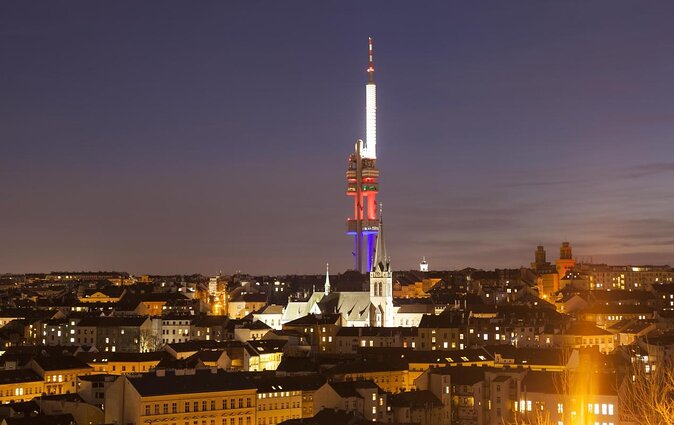
- Zizkov Television Tower viewpoint for a quick but memorable Brutalist-style look
- Wenceslas Square and political turning points, from earlier tensions through the Velvet Revolution
- John Lennon Wall as a living protest symbol, not just a photo stop
Entering Prague’s Cold War story, starting near St. Joseph Church
This is a focused walk through Prague’s Communist-era landmarks, designed for a 3-hour window. You meet in central Prague near Náměstí Republiky 1077/2, then set out toward the first part of the route near St. Joseph Church, which is where the experience begins.
The tour is led by a historian guide in English, and that matters. A historian does not just recite names and dates. You get the themes behind what you see, like how Communist messaging shaped everyday life and how political shifts left echoes you can still notice today.
You also get a choice of morning or afternoon departures, so you can match it to your day. If you like your sightseeing in one clean chunk rather than scattered museum visits, this format fits well.
Karlin-Zhizhkov pedestrian tunnel: where the Cold War goes underground
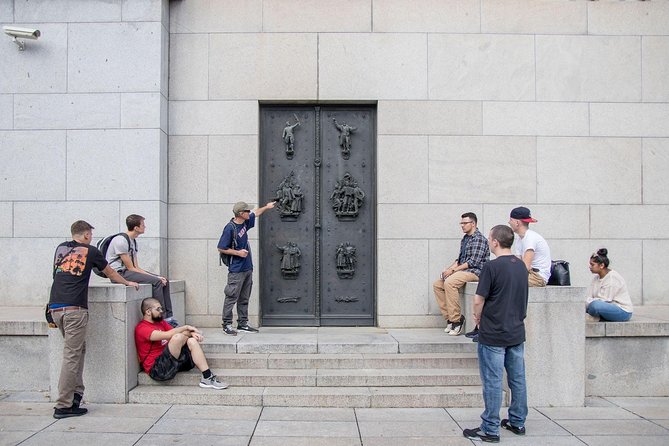
One of the most striking early moments happens at the Pedestrian Tunnel Karlin-Zhizhkov. You walk through the tunnel and look at locked doors that lead to nuclear bomb-shelter corridors built during the Cold War and still maintained.
This stop is valuable because it shifts the conversation from ideology to infrastructure. It is one thing to read about fear and preparedness, and another to stand in a physical space built to handle it.
The big practical upside is timing. This part is short, around 10 minutes, so you are not stuck waiting in a line or losing momentum early in the tour.
If you do not like dark, enclosed spaces, you might want to mentally prepare. The tunnel context is part of the point, but your comfort matters for a good experience.
Other communist-era and Cold War history walks:
- Prague: Communism History and Nuclear Bunker Guided Tour
★ 4.7 · 2,417 reviews - Prague Communism History and Nuclear Bunker Tour
★ 5.0 · 1,742 reviews - Communism & Nuclear Bunker Tour + 70s Canteen Lunch (own expense)
★ 5.0 · 1,036 reviews
The Communist message in stone: Red Army hall symbolism
As you move through Prague’s Communist sites, the focus becomes visual propaganda and political messaging. One of the key themes centers on the Hall of the Red Army, a space built after the 1948 Communist takeover often described as the so-called elegant coup of 1948.
You will also talk through KSC propaganda and politics. That is the difference between a “look at statues” walk and a meaningful history walk. You learn why the decoration looks the way it does, and what kinds of messages the regime wanted people to absorb.
If you are the type who enjoys political context, you will get a lot out of this section. If you prefer purely scenic stops, this portion will feel more like guided interpretation than photo-taking.
Klement Gottwald’s mausoleum and embalming lab: power shown up close
The tour includes a visit to the mausoleum area where Klement Gottwald, the first chairman of the KSC, was displayed in mummified form. Next to that story, there is also an adjoining laboratory where his body was embalmed.
This is intense subject matter, even when it is presented with historical distance. What makes it useful is that it connects personal power to public spectacle, and shows how political authority can be staged through bodies and spaces.
For practical planning, remember that not every stop is free to enter. The major monument complex on the Vitkov Hill section has admission that is not included, and that same structure of “some things are ticketed” carries through the experience. You may want a small buffer budget for entry fees where needed.
More lanes taken at street level:

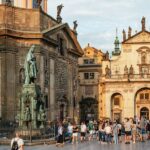

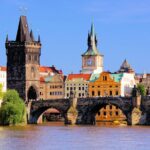
Vitkov Hill monument: the big equestrian statue, the Hall of the Soviet Soldier, and the political angle
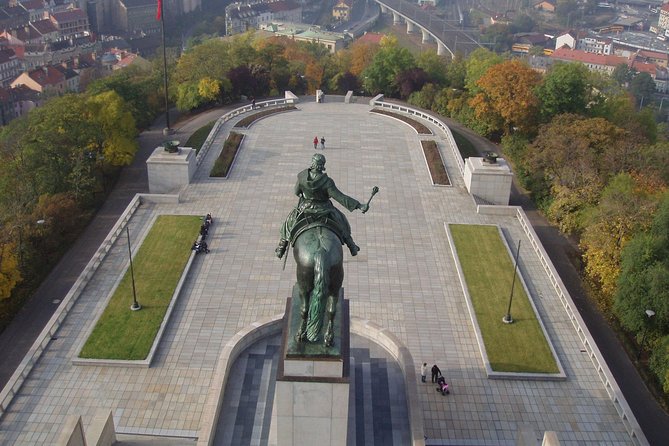
The centerpiece climb is Vitkov Hill, where the National Monument commemorates Czech and Slovak WWI warriors. You also get the Hall of the Soviet Soldier, tied to the broader Communist narrative of alliance and authority.
This is also where you learn about Gottwald’s former mausoleum and how the surrounding presentation supported the regime’s messaging. It is not just “who they were,” it is “how the system wanted you to think.”
Then there is the statue question. The guide points you toward the largest equestrian statue in the world perspective on Vitkov Hill, and connects it to Czech nationalism in Communist rule. That is a clever angle because it shows the regime did not rely only on imported slogans. It also tried to work with local identity.
You should also know this portion is the most physically demanding part of the whole tour. The information you get ahead of time is clear: you will have a steep climb, and the uphill portion can take 20 to 30 minutes. If your legs are not great on slopes, you will likely enjoy the tour more if you ask for a version that leaves out Vitkov Hill.
Admission note: the Vitkov monument admission is not included. You will need to pay separately for the monument entry.
Zizkov Television Tower: a quick Brutalist hit with a view
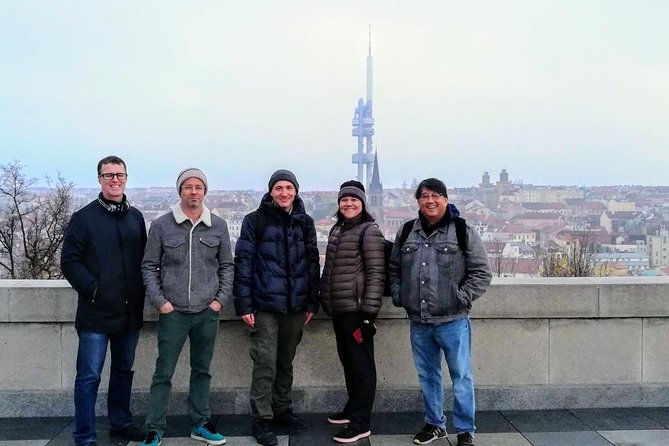
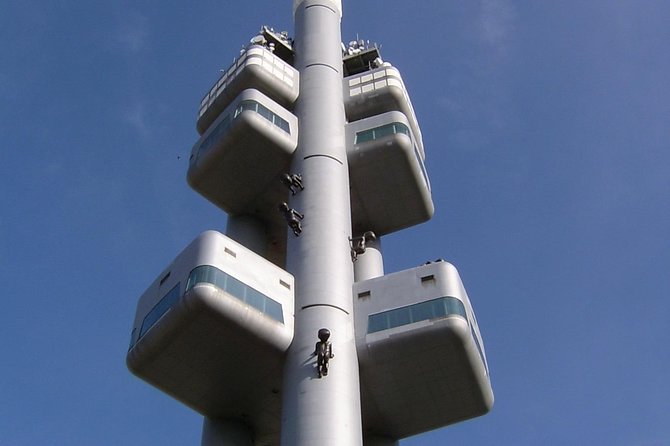
After Vitkov Hill, the walk includes a short stop at the Prague TV tower, also known as the Zizkov Television Tower. This is a brief moment, about 5 minutes, but it works like a reset.
The guide frames it as the best way to see the tower’s Brutalist style, which is a useful pairing with the earlier “propaganda in stone” theme. You go from political monuments to a more modern, hard-edged architecture language in a way that keeps your eye sharp.
If you like dramatic architecture, you’ll appreciate how quickly the tour checks that box. If you want every second to be history-heavy, this section can feel like a breather, but that breathing space is often what keeps a 3-hour tour from getting heavy.
Wenceslas Square: parades, Prague Spring, and the Velvet Revolution energy
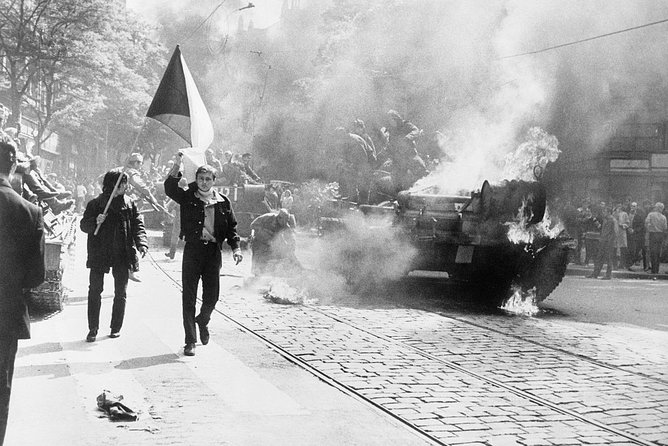
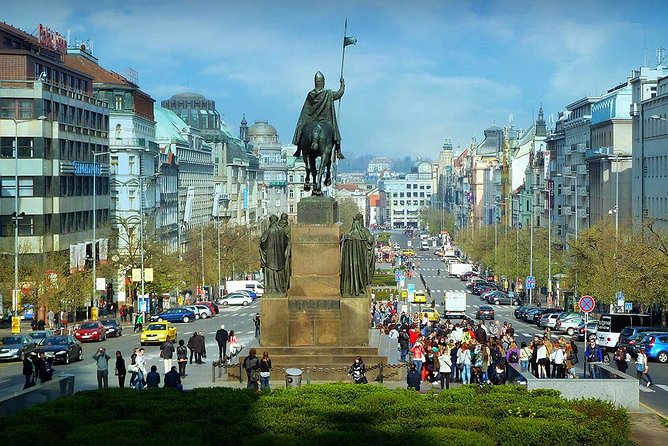
Next comes Wenceslas Square, one of Prague’s most important stages for power and protest. You walk through the square while considering its history from its founding in the 14th century through its tumultuous periods under occupying powers, the tragic events of Prague Spring, and then the ecstatic gathering of the Velvet Revolution.
This stop is powerful because it is not locked into one event. The guide is not just pointing to one moment in 1980s history. You are encouraged to see how earlier eras set the stage for later ones, and how public spaces become repeat actors in political life.
You get a sense that the Velvet Revolution did not arrive as a slow drip. It is presented as something that ignited in a single day. That sharpness helps you understand why crowds mattered and why symbolism mattered on that square.
If you are planning around crowds, Wenceslas Square is the place where you might notice busier street energy. Keep a steady pace and let the guide lead you through where to stand for the best explanation.
The upside-down statue of King Wenceslas: irony as political commentary
A short stop follows at the Upside-Down Statue of King Wenceslas riding a Dead Horse. It is brief, about 5 minutes, but it lands because it turns politics into a visual joke with teeth.
The guide points out the ironic twist and ties it to contemporary Central European political atmosphere. Even if you do not agree with every interpretation, this is exactly the kind of stop that makes the earlier Cold War symbolism feel relevant, not dusty.
This is one of those moments where you will likely want to take a photo, then listen again. The listening part is what makes the photo worth keeping.
John Lennon Wall: political protest you can read in real time
Later in the walk you reach the John Lennon Wall, described as an important site of political protest. This is not framed as a random attraction. It is presented as a place where political pressure and public voice show up in a visible, lived way.
What makes it a strong pairing with the rest of the tour is the contrast. Earlier, you watched how regimes tried to control messaging through official spaces. Here, you see a different kind of message, one that takes physical form through people.
If you want an emotional landing after heavier topics like Gottwald’s story and Cold War fear spaces, this is a good place to pause. Even if the wall is only a segment of the tour time, it gives you something to look at without needing your brain to solve a puzzle.
Passing the National Assembly: where Communist government sat
One more important moving moment is a pass by the National Assembly building, described as the seat of the Communist government. This kind of “pass-by” stop can feel optional on other tours. Here, it is used to tie the earlier ideological story back to power centers.
You are not just seeing a building from outside. You are carrying the theme of political control with you as you walk past it. That turns the street scene into part of the narrative.
Letná Hill and the story behind the Stalin statue
The route also includes Letná Hill, which was the former site of an enormous Stalin statue. The guide also shares the tragic story of the sculptor behind it.
This stop matters because it deals with how power gets physical, even when the power later collapses or changes shape. The tragedy angle also adds a human cost, not just a political headline.
You might not know what to look for at first, and that is normal. That is why the historian guide is key here, because the meaning is not always obvious to the naked eye.
Group size, pacing, and what your legs will notice
This is a small-group tour with a maximum of 8 travelers, which keeps things from turning into a crowded herd. I like that, because Cold War topics can bring up questions, and a smaller group makes it easier for the guide to answer in context.
The tour is about 3 hours total. That is a good length for history walking because it is long enough to build a narrative thread, but short enough that you are not exhausted by hour four.
The one physical issue is the Vitkov Hill climb. If you know you struggle with steep uphill walking, take the tour guidance seriously and consider the option that avoids Vitkov Hill. You will still get Cold War sites in the city center without that extra strain.
Tram tickets included, and how to plan your day around them
You get tram tickets included, which helps in a city where stopping every few minutes on foot can add time quickly. The tour is mostly walking, but those trams keep the experience from feeling like nonstop shoe punishment.
Food and drinks are not included. That is normal on a 3-hour morning or afternoon tour, but you should plan a snack and water so your energy stays steady. If you tend to get hungry while walking, this is the easiest comfort upgrade you can make.
Also note that the tour uses a mobile ticket. That is practical, especially if you are bouncing between plans on your phone.
Price and value: what $126.43 gets you
At $126.43 per person, this is not a budget throwaway. But the price starts to make sense when you look at what you get: a historian guide, a small group size, and tram tickets within a tight 3-hour arc through multiple high-impact sites.
You are paying for interpretation. Stops like the tunnel bomb-shelter corridors and the Gottwald mausoleum story are not just “see it and go.” They require someone to connect the dots between propaganda, politics, and daily life.
The Vitkov monument admission is not included, so think of the price as covering the guided experience plus transit, while entry fees may add a little extra.
One more value angle: this tour is booked far in advance on average, about 195 days. That tells you it is a popular, limited-capacity format. If you are traveling at a busy time, you will get the best odds by booking earlier rather than gambling on last-minute availability.
Who this tour fits best, and who might want a different style
This tour is a great match if you like political history with real-world street scenes. You should enjoy it if you want a guided way to understand how Communist power shaped public imagery and public space, and how the Velvet Revolution changed the story.
It is also ideal if you enjoy contrasts, like comparing propaganda architecture to Brutalist design, then ending at a protest wall that communicates without official approval.
If you want a purely light and scenic walk with minimal heavy topics, this may feel heavy for you. The Cold War era is about control and fear, and the tour treats that seriously. You can still handle it, but the tone is not meant to be fluffy.
Should you book the Prague Cold War walking tour?
I think you should book it if you want one compact, guided way to understand Prague’s Communist era through places you can actually stand in. The historian-led approach, the tight small group of up to 8, and the mix of sites from bomb shelters to the Lennon Wall make this feel like a complete story instead of random stops.
Book it with extra care if Vitkov Hill is a concern for your mobility. That climb is the main factor that can make or break the experience. If you think you will struggle, choose the version that skips Vitkov Hill so you can still enjoy the rest of the route comfortably.
If you can handle the mix of politics and architecture, this is a smart way to see Prague without missing the Cold War layer that still shapes what you notice today.
FAQ
How long is the Prague Cold War walking tour?
It lasts about 3 hours.
Where does the tour start?
The meeting point is Náměstí Republiky 1077/2, Nové Město, 110 00 Praha-Praha 1, Czechia, and the route begins near St. Joseph Church.
Is the tour in English?
Yes, it is offered in English.
What is the group size?
The tour has a maximum of 8 travelers.
Are tram tickets included?
Yes. Tram tickets are included in the tour.
What is not included in the price?
Food and drinks are not included, and there is no hotel pickup or drop-off.
Does the tour include paid admissions?
Some stops have free entry, but the Vitkov Hill monument admission is not included.
Is the tour physically demanding?
You should have moderate physical fitness. There is a steep climb up to Vitkov Hill, which can take about 20 to 30 minutes.
What is the cancellation policy?
Free cancellation is available, and you can cancel up to 24 hours in advance for a full refund.
How soon will I get confirmation?
Confirmation is received within 48 hours of booking, subject to availability.
Newly posted under the arches of Prague

Communist History & Cold War Walks, compared.
Communism History and Nuclear Bunker Guided Tour
Read our review →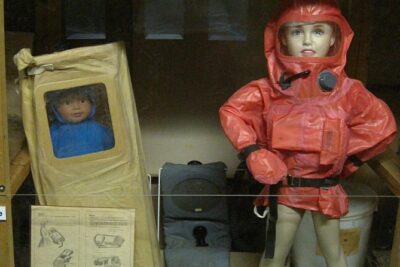
Prague Communism History and Nuclear Bunker Tour
Read our review →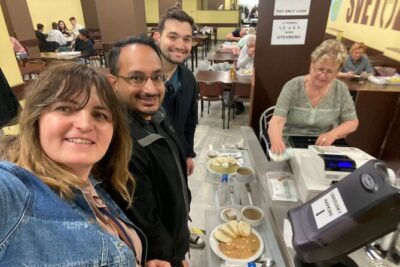
Communism & Nuclear Bunker Tour + 70s Canteen Lunch (own expense)
Read our review →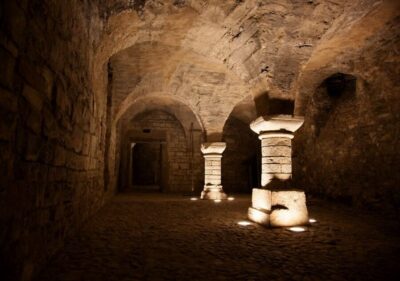
WWII Guided Tour & The Crypt of Operation Anthropoid
Read our review →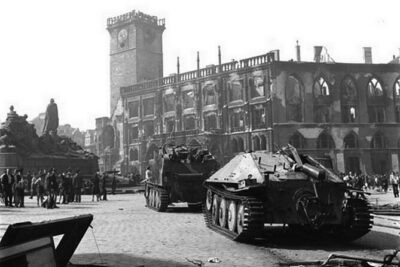
WWII in Prague Tour & The Crypt of Operation Anthropoid
Read our review →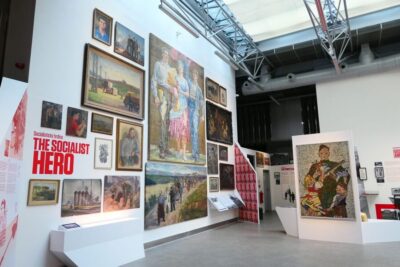
Communism and Bunker Tour with 70s Canteen Lunch
Read our review →
Small-Group World War 2 & Operation Anthropoid Tour in Prague
Read our review →Browse the lists this tour appears in